
Key points
A green signal lets you go straight or turn, but turning vehicles must yield to oncoming traffic and pedestrians.
Source: Handbook p. 80
“A circular green signal means you are permitted to proceed cautiously straight through or make a turn. Turning vehicles must yield the right of way to oncoming traffic and pedestrians.”
North Carolina Driver Handbook, Handbook p. 80A yellow signal means the light is about to turn red. Stop unless you are too close to the intersection to stop safely.
Source: Handbook p. 80
“A circular yellow signal means “caution” and indicates that the signal is about to turn red. Stop for a yellow signal unless you are too close to the intersection to stop safely”
North Carolina Driver Handbook, Handbook p. 80Unless a NO TURN ON RED sign is posted, you may turn right on red after a complete stop.
Source: Handbook p. 80
“A steady red circular signal means “STOP.” Unless there is a sign indicating “NO TURN ON RED,” a right turn can be made after coming to a complete stop.”
North Carolina Driver Handbook, Handbook p. 80Failing to yield to a pedestrian when turning right on red brings a penalty of $100 to $500.
Source: Handbook p. 80
“Failure to yield to a pedestrian under these circumstances will result in a penalty of not more than $500 and not less than $100.”
North Carolina Driver Handbook, Handbook p. 80A red arrow means turning traffic must stop.
Source: Handbook p. 80
“A red arrow means turning traffic must stop.”
North Carolina Driver Handbook, Handbook p. 80A flashing red signal means the same as a stop sign.
Source: Handbook p. 81
“The flashing red signal has the same meaning as the stop sign:”
North Carolina Driver Handbook, Handbook p. 81A flashing yellow arrow permits the turn, but you must yield to oncoming traffic and pedestrians.
Source: Handbook p. 81
“When the flashing yellow arrow is shown, the indicated turn is permitted but drivers must yield to oncoming traffic and pedestrians.”
North Carolina Driver Handbook, Handbook p. 81Yellow lines separate lanes moving in opposite directions. White lines separate lanes moving the same way.
Source: Handbook p. 88
“Yellow lines separate travel lanes moving in opposite directions. White lines separate travel lanes moving in the same direction.”
North Carolina Driver Handbook, Handbook p. 88On a two-lane road, you may pass with care when the broken yellow line is in your lane. Never cross double solid yellow lines to pass.
Source: Handbook p. 88
“When continuous, double, solid, yellow lines are the center lines, you cannot cross them to pass in either direction. On a two-lane road, passing with care is permitted if the skipped-yellow line is in your lane.”
North Carolina Driver Handbook, Handbook p. 88Red reflective pavement markers mean you are going the wrong way.
Source: Handbook p. 88
“Red markers indicate wrong-way movements for motorists.”
North Carolina Driver Handbook, Handbook p. 88
Numbers to know
| Number | What it means | Manual |
|---|---|---|
| $100 to $500 | penalty for not yielding to a pedestrian on a right turn on red | Handbook p. 80 |
Recognize these signs
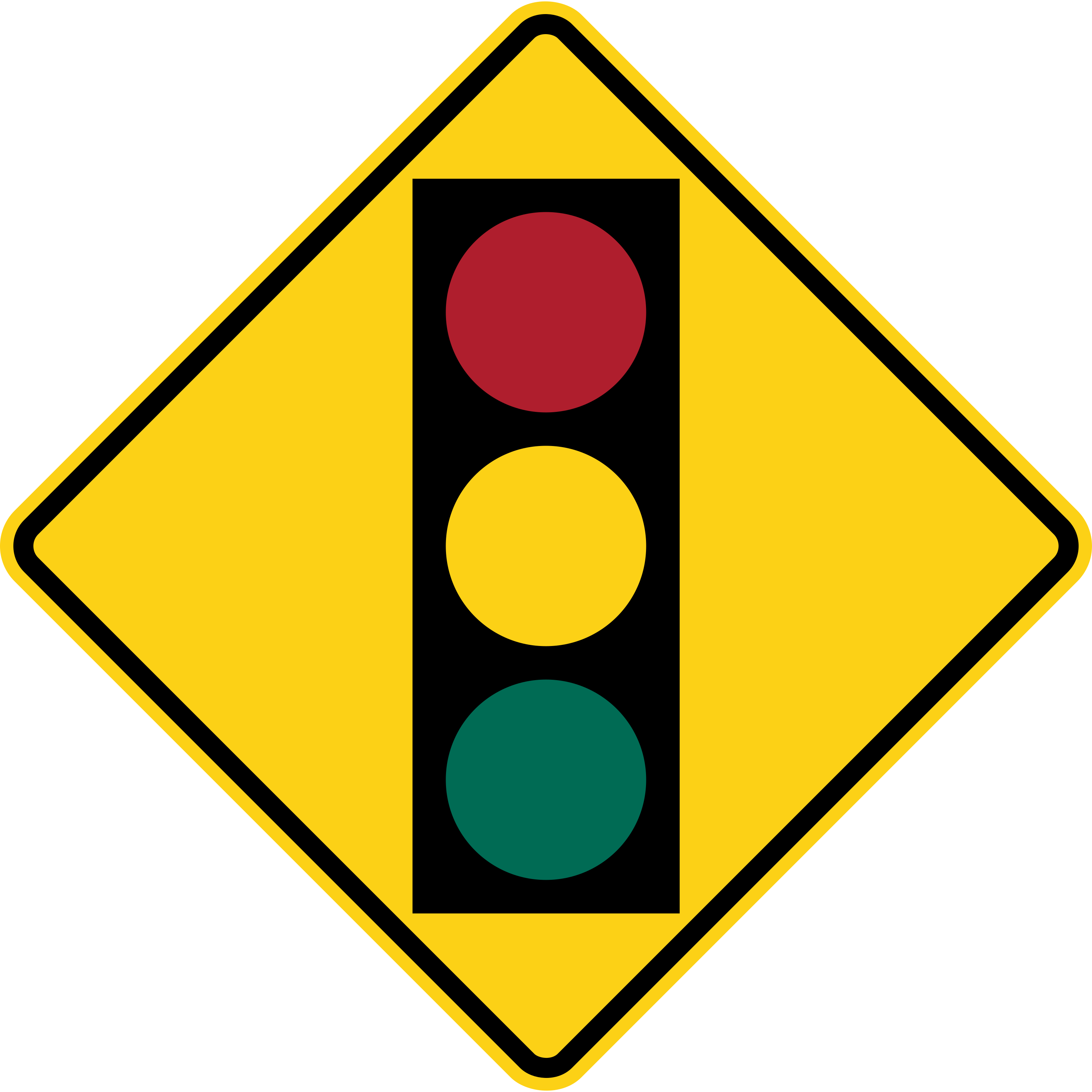
Signal ahead 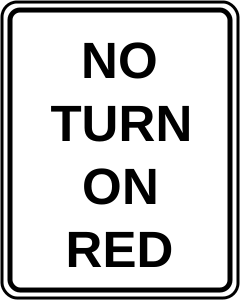
No turn on red
3 questions from the North Carolina practice test
1. A flashing red signal at a North Carolina intersection means you must first:
- Slow down but continue without stopping
- Turn around before reaching the intersection
- Wait for the signal to become a steady yellow
- Stop and wait until entering will not interfere with approaching traffic
Show answer
Stop and wait until entering will not interfere with approaching traffic. A flashing red signal carries the same stopping obligation as a stop sign. Come to a complete stop, then assess approaching traffic before moving. The light does not authorize a rolling approach, even when the intersection looks empty. A driver who merely slows may enter while another vehicle still has priority. Remember the sequence as stop, check, and proceed only after the movement can be made without interference.
2. What does a solid red arrow mean for traffic intending to turn?
- Turning traffic must stop
- The turn is allowed after sounding the horn
- Only pedestrians must stop
- The turn is protected and may proceed
Show answer
Turning traffic must stop. A red arrow stops the movement shown by the arrow. Turning traffic must wait rather than treating the indication like a permissive turn. A green arrow is the protected movement that allows a cautious entry, while a flashing yellow arrow permits a turn only after yielding to oncoming traffic and pedestrians. Sounding the horn cannot replace the signal indication, and pedestrians are not the only road users governed by the red arrow. Identify the arrow direction, stop before entering the intersection, and wait for a signal that authorizes the intended movement.
3. What do yellow lines separate on a North Carolina roadway?
- Parking spaces from traffic lanes
- Travel lanes moving in the same direction
- Only bicycle lanes from sidewalks
- Travel lanes moving in opposite directions
Show answer
Travel lanes moving in opposite directions. Yellow pavement lines divide traffic moving in opposite directions. White lines separate lanes traveling the same way. This distinction helps a driver interpret whether a neighboring lane carries opposing vehicles and whether a crossing movement could create a head-on risk. Do not infer permission to cross solely from the color. The line pattern and local rule still matter, especially where solid or broken markings control passing.
Practice this topic
Lock it in with signals and markings questions from the free North Carolina practice test. Every answer comes with a plain English explanation.
Source: the North Carolina Driver Handbook, Chapter 5: Signals, Signs and Pavement Markings. This lesson is a plain English summary, not the law itself; where it differs, the manual and the statute govern. Last checked 2026-09-27.