
Key points
Even in ideal conditions, at 55 mph your vehicle needs about 211 feet to stop.
Source: Handbook p. 53
“Even with ideal conditions, if you are traveling 55 miles per hour your vehicle requires approximately 211 feet to stop completely.”
North Carolina Driver Handbook, Handbook p. 53Unless posted otherwise, the limit in cities and towns is 35 mph.
Source: Handbook p. 53
“Unless otherwise posted, the speed limit is 35 mph in cities and towns.”
North Carolina Driver Handbook, Handbook p. 53Maximum limits: 35 in cities and towns, 45 for school buses, 55 outside cities and towns and 70 on interstates.
Source: Handbook p. 53
“Maximum Speed Limits In cities and towns 35 For school buses 45 For school activity buses 55 Outside cities and towns 55 For interstates 70”
North Carolina Driver Handbook, Handbook p. 53Never drive faster than the posted limit or than is reasonable for conditions.
Source: Handbook p. 53
“Never drive faster than the posted speed limit or at a speed that is unreasonable or unwise given the existing conditions.”
North Carolina Driver Handbook, Handbook p. 53Driving far below the limit is also dangerous. Observe the posted minimum speed.
Source: Handbook p. 53
“On the other hand, driving below the posted speed limit can also be dangerous. If you must drive slower, you should still observe the posted minimum speed limit.”
North Carolina Driver Handbook, Handbook p. 53Keep a safe distance from the vehicle ahead using the two-second rule.
Source: Handbook p. 53
“Allow a safe distance between you and the vehicle in front of you (the “twosecond rule”).”
North Carolina Driver Handbook, Handbook p. 53At 55 mph, a vehicle travels the length of a football field in 3.7 seconds.
Source: Handbook p. 40
“At 55 mph, a vehicle travels the length of a football field in 3.7 seconds.”
North Carolina Driver Handbook, Handbook p. 40Slow down before a curve so you do not need to brake in it.
Source: Handbook p. 53
“Slow down before you enter the curve so that you will not need to brake while you are in the curve;”
North Carolina Driver Handbook, Handbook p. 53
Numbers to know
| Number | What it means | Manual |
|---|---|---|
| 55 mph | speed in the stopping example | Handbook p. 53 |
| 211 feet | stopping distance at 55 mph | Handbook p. 53 |
| 35 mph | city and town limit | Handbook p. 53 |
| 45 mph | school bus limit | Handbook p. 53 |
| 55 mph | limit outside cities and towns | Handbook p. 53 |
| 70 mph | interstate limit | Handbook p. 53 |
| 3.7 seconds | time to cover a football field at 55 mph | Handbook p. 40 |
Recognize these signs
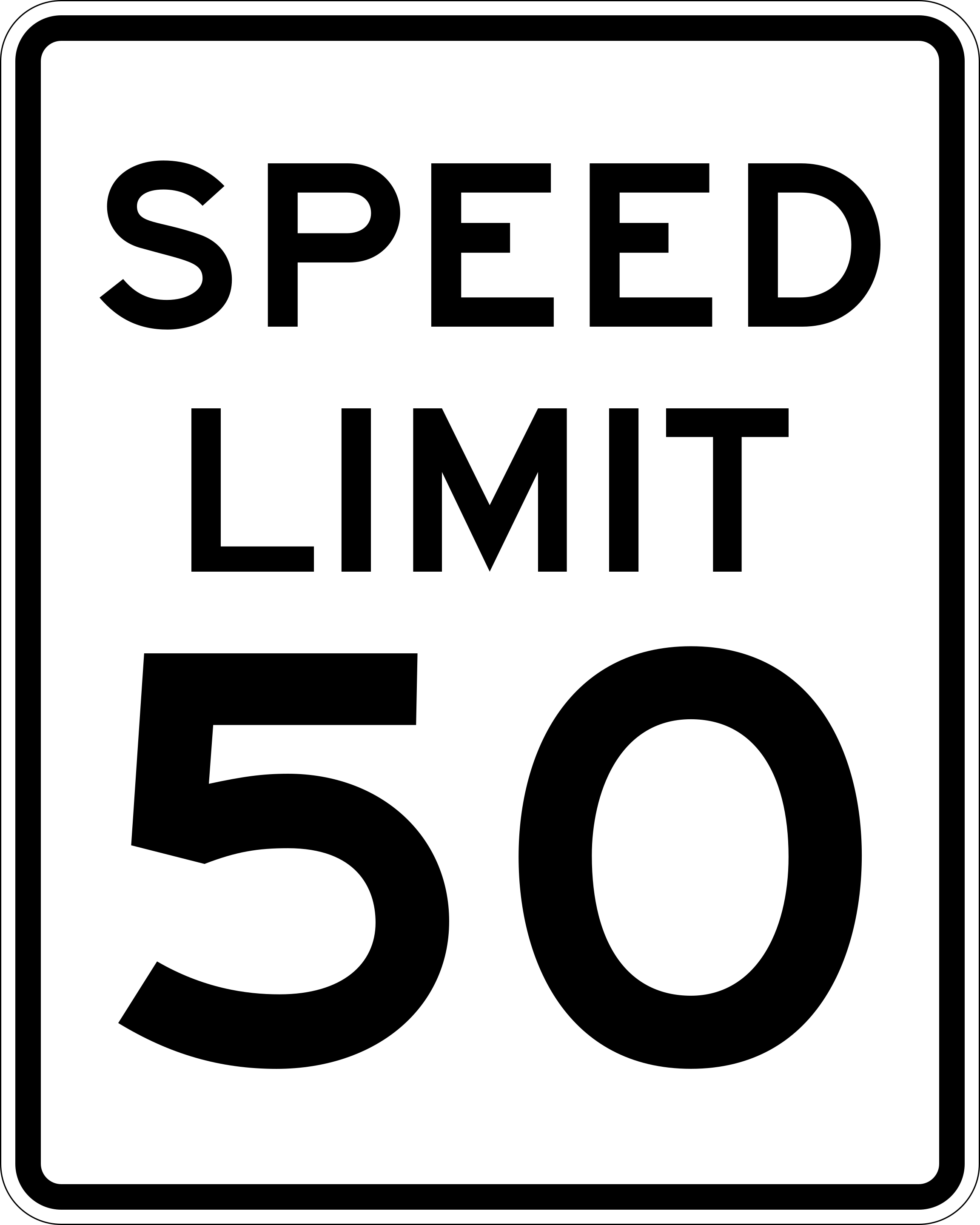
Speed limit
3 questions from the North Carolina practice test
1. Unless a different limit is posted, what speed limit applies in North Carolina cities and towns?
- 25 mph in cities and towns
- 35 mph in cities and towns
- 45 mph in cities and towns
- 55 mph in cities and towns
Show answer
35 mph in cities and towns. The handbook table gives 35 mph as the default maximum in cities and towns unless another limit is posted. A 25 mph limit may appear in a special zone, but it is not the statewide city and town default. Forty five and 55 mph are higher values that may fit other road settings or posted conditions. Check signs first, then remember the unposted municipal baseline as thirty five miles per hour.
2. When driving through changing areas such as open country, residential communities and school zones, what should a driver do?
- Watch for changing conditions and adjust speed accordingly
- Accelerate whenever entering a residential community
- Use the interstate speed in every school zone
- Keep the posted speed regardless of conditions
Show answer
Watch for changing conditions and adjust speed accordingly. The handbook warns that driving conditions change as a trip moves through open country, residential communities and school zones. A driver should watch for pedestrians, animals and other changes, then adjust speed accordingly. Keeping the posted speed in every circumstance ignores the requirement to respond to conditions. Accelerating in a residential area or applying an interstate speed in a school zone creates the same hazard by treating location as permission to travel faster. Scan ahead whenever the surroundings change, and ease off early when people, animals, congestion or limited visibility reduce the safe margin.
3. According to the North Carolina handbook, when should a driver travel below the posted speed limit?
- Only when another driver is following closely
- When conditions make the posted limit unsafe
- Never, because the posted limit is always required
- Only on roads outside cities and towns
Show answer
When conditions make the posted limit unsafe. North Carolina tells drivers that safe operation may require a speed below the posted limit. The posted number is a maximum for ordinary conditions, not a command to maintain that speed through rain, congestion, poor visibility, or hazards. A following vehicle does not determine the safe speed, and the advice applies in every road setting. The handbook also warns against driving faster than the posted limit. Use the condition of the roadway as the cue: if traction, sight distance, or traffic changes, reduce speed while staying within the legal maximum.
Practice this topic
Lock it in with speed limits questions from the free North Carolina practice test. Every answer comes with a plain English explanation.
Source: the North Carolina Driver Handbook, Chapter 4: Your Driving. This lesson is a plain English summary, not the law itself; where it differs, the manual and the statute govern. Last checked 2026-09-27.