
Test 6 of 10 · 20 questions · Free 2026
NC Permit Practice Test 6
Jump to the test ↓A fixed 20 question set from the North Carolina bank with answers and plain English explanations.
Question 1 of 20 · 0 right so far
All 20 questions in test 6
Every question below comes from the North Carolina question bank on this page. Open a question to see the correct answer and the explanation. Nothing here is hidden behind a signup.
1. Unless a different limit is posted, what speed limit applies in North Carolina cities and towns?
- 25 mph in cities and towns
- 35 mph in cities and towns
- 45 mph in cities and towns
- 55 mph in cities and towns
Show answer
35 mph in cities and towns. The handbook table gives 35 mph as the default maximum in cities and towns unless another limit is posted. A 25 mph limit may appear in a special zone, but it is not the statewide city and town default. Forty five and 55 mph are higher values that may fit other road settings or posted conditions. Check signs first, then remember the unposted municipal baseline as thirty five miles per hour.
Study this in the handbook: Speed limits and stopping distance
2. Which headlights does the North Carolina handbook say to use when driving at night in a city?
- High-beam headlights
- Parking lights only
- Low-beam headlights
- No headlights where streetlights are on
Show answer
Low-beam headlights. The North Carolina handbook separates city and open road lighting. When you drive at night in a city, use low beam headlights. On the open road, use high beams unless you are approaching or following another vehicle. Headlights are required from sunset to sunrise, so relying on parking lights or on streetlights is not an option. High beams in city traffic would glare into the eyes of oncoming drivers and the drivers ahead, which is why the city rule calls for the lower setting.
Study this in the handbook: Turn signals, headlights and bad weather
3. When a ramp meter shows a circular green display, what may a North Carolina driver do?
- Proceed down the ramp and merge onto the freeway
- Drive onto the freeway without merging
- Back up and use the shoulder
- Stop at the ramp entrance until the display turns red
Show answer
Proceed down the ramp and merge onto the freeway. A circular green ramp-meter display permits a vehicle facing it to proceed down the entrance ramp and merge onto the freeway. The driver still must make a safe merge and yield as normal conditions require. Green does not remove the need to check the freeway lane. A red display requires a stop, while a dark meter allows movement without stopping under ordinary merge or yield conditions.
4. What can happen to fines for a violation committed while driving a commercial motor vehicle in North Carolina?
- They are halved
- They may be doubled
- They are waived for a first offense
- They are the same as for a car
Show answer
They may be doubled. Any person who commits an offense for which points may be assessed while operating a commercial motor vehicle may be assessed double the amount of any fine or penalty authorized by statute. Commercial drivers also face a separate point schedule, with passing a stopped school bus worth 8 points, and a lower 0.04 alcohol limit. Fines are not reduced or waived because the vehicle was commercial.
Study this in the handbook: Keeping your license: points, suspensions and renewal
5. A hearing does not resolve your North Carolina license revocation. How long do you have to appeal to Superior Court?
- Within 10 days
- Within 90 days
- Within 30 days
- Within one year
Show answer
Within 30 days. If a North Carolina driver believes a revocation was wrong and the DMV hearing does not help, the driver may appeal within 30 days to the Superior Court of the county where they live. The court reviews whether there were proper grounds for the revocation. Ten days is too short, and 90 days or a year are too late. The DMV hearing itself is held in the judicial district where the driver lives.
6. What is the mandatory driver license revocation period for a first DWI conviction in North Carolina?
- Four years
- One year
- Six months
- Permanent revocation
Show answer
One year. The first DWI conviction carries mandatory revocation of the driver license for one year. Four years belongs to a second conviction when the earlier offense occurred within three years, while permanent revocation applies to later circumstances described in the handbook. Six months is not the first conviction period. A good way to separate the stages is one year for the first, four years for the qualifying second, and permanent consequences for specified third or fourth convictions. The question asks only about the initial conviction, so later repeat offender penalties should not be substituted.
Study this in the handbook: Driving while impaired and alcohol limits
7. What alcohol concentration restriction applies after a North Carolina DWI conviction in a commercial motor vehicle?
- 0.00
- 0.02
- 0.04
- 0.08
Show answer
0.00. North Carolina sets a 0.00 alcohol concentration restriction when a person is convicted of DWI in a commercial motor vehicle, of driving after consuming alcohol or drugs while under 21, or of felony death by vehicle. Otherwise, the first restoration after a DWI carries a 0.04 restriction and later restorations carry 0.00. The 0.02 and 0.08 figures are not these restriction levels. A BAC of 0.15 or more also requires an ignition interlock.
Study this in the handbook: Driving while impaired and alcohol limits
8. After satisfactory completion of the North Carolina driver improvement clinic, how many points are deducted?
- One point
- Three points
- All points on the record
- Five points
Show answer
Three points. The handbook says satisfactory completion of the driver improvement clinic deducts three points from the driving record. One and five points are incorrect amounts, and the clinic does not erase every point automatically. The program is connected to accumulating seven points, while reaching as many as twelve within three years may result in suspension. A useful memory pair is seven points can bring the clinic, and three points come off after satisfactory completion. Insurance points are separate, so this deduction refers specifically to the driver license point record.
Study this in the handbook: Keeping your license: points, suspensions and renewal
9. Before passing another vehicle, what must a driver be able to ensure?
- That the driver can return to the original lane before meeting oncoming traffic
- That the vehicle ahead will speed up to create room
- That the road is empty for exactly 100 feet
- That the driver can pass without checking behind
Show answer
That the driver can return to the original lane before meeting oncoming traffic. A pass is safe only when the driver can see far enough ahead to return to the original lane before meeting oncoming traffic. The choice about the vehicle ahead speeding up invents cooperation that the handbook does not promise. A fixed 100-foot distance is not the rule, and checking only ahead ignores traffic already behind the vehicle. Before moving left, scan ahead and behind, signal, and confirm that the entire maneuver can be completed with room to spare. The key cue is a clear path back to the original lane.
Study this in the handbook: Passing, backing and parking
10. What age range must an applicant meet for a North Carolina Level One Limited Learner Permit?
- At least 14 but less than 16 years old
- At least 16 but less than 21 years old
- At least 15 but less than 18 years old
- At least 18 but less than 25 years old
Show answer
At least 15 but less than 18 years old. North Carolina says an applicant for a Level One Limited Learner Permit must be at least 15 years old but less than 18 and must reside in North Carolina. The lower age is 15, not 14, and reaching 16 does not eliminate the upper limit for this permit. Applicants who are already 18 follow the adult licensing path rather than this under-18 graduated stage. Use the age cue as a range: the permit begins at 15 and ends before the applicant’s 18th birthday, alongside the other application requirements.
Study this in the handbook: Graduated licensing: learner permit to full license
11. If a traffic signal changes while a pedestrian remains in the street, what must the driver allow?
- The pedestrian to complete the crossing safely
- The pedestrian to return to the curb immediately
- Only a pedestrian with a guide dog to continue
- Vehicles behind the driver to pass first
Show answer
The pedestrian to complete the crossing safely. When a signal changes to yellow or red while a pedestrian remains in the street, drivers must allow that person to finish crossing safely. The duty is not limited to a blind pedestrian or to someone using a guide dog. Nor may a driver pressure the person to return to the curb simply because the signal changed. Vehicles behind have no priority over someone already crossing. Reduce the conflict by stopping or waiting as needed, keep the crosswalk and pedestrian path clear, and proceed only after the person has reached safety. The cue is the pedestrian still in the street when the light changes.
Study this in the handbook: Pedestrians, school buses and emergency vehicles
12. What type of instruction does a KEEP RIGHT sign provide?
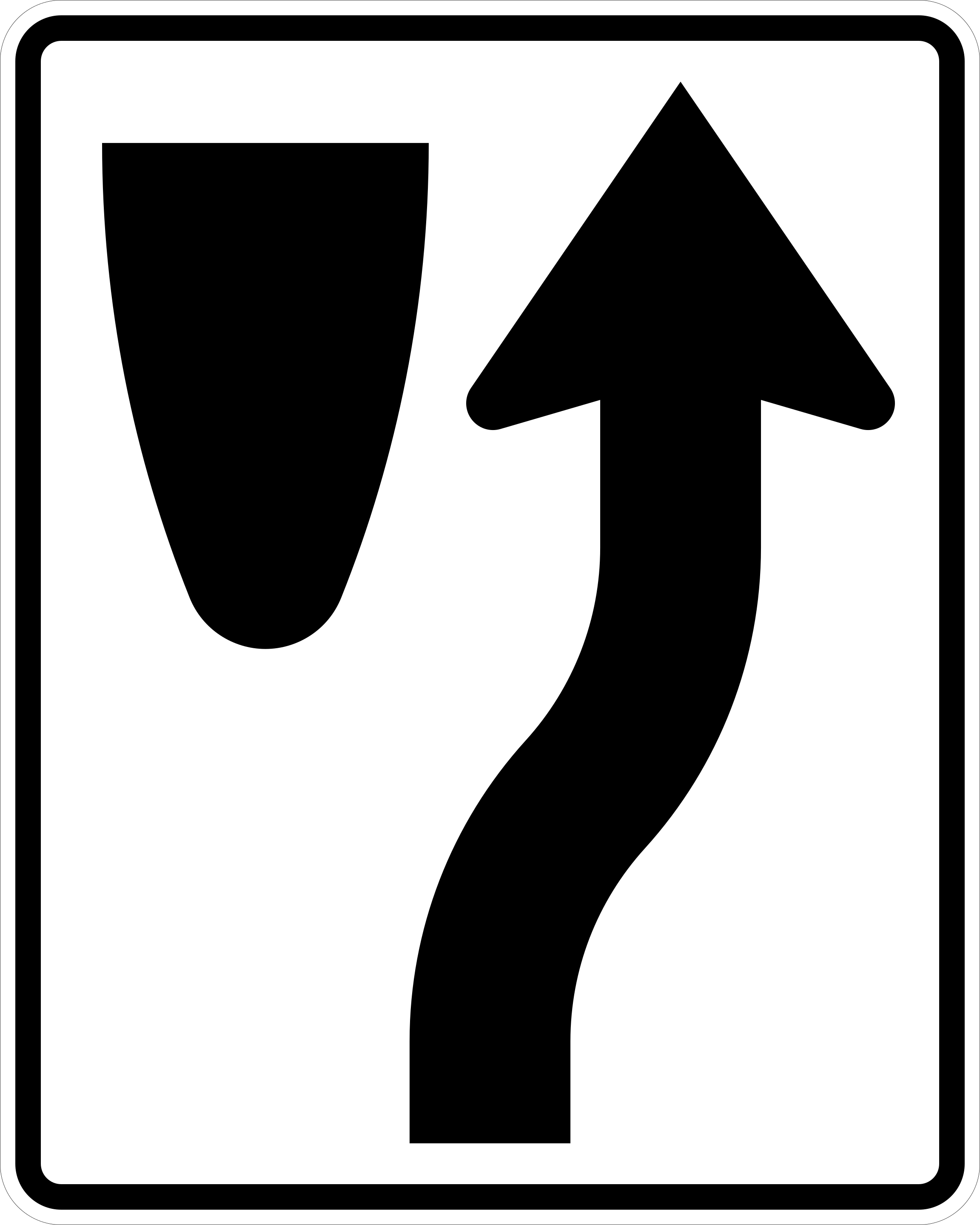
- A notice that parking is reserved
- A warning that the pavement is slippery
- A route shield for a numbered highway
- A regulatory instruction about roadway position
Show answer
A regulatory instruction about roadway position. KEEP RIGHT is an instruction governing the way traffic uses the roadway, so it is regulatory. The handbook names KEEP RIGHT EXCEPT TO PASS as an example of a message on a regulatory sign and says failure to obey such signs violates traffic law. The panel is not warning about traction, identifying a numbered route, or reserving a parking space. Treat the arrow around the obstruction as an immediate lane-position direction and adjust before reaching the divider.
Study this in the handbook: Sign shapes and colors
13. Which message does the North Carolina handbook give as an example on a rectangular or square-shaped regulatory sign?
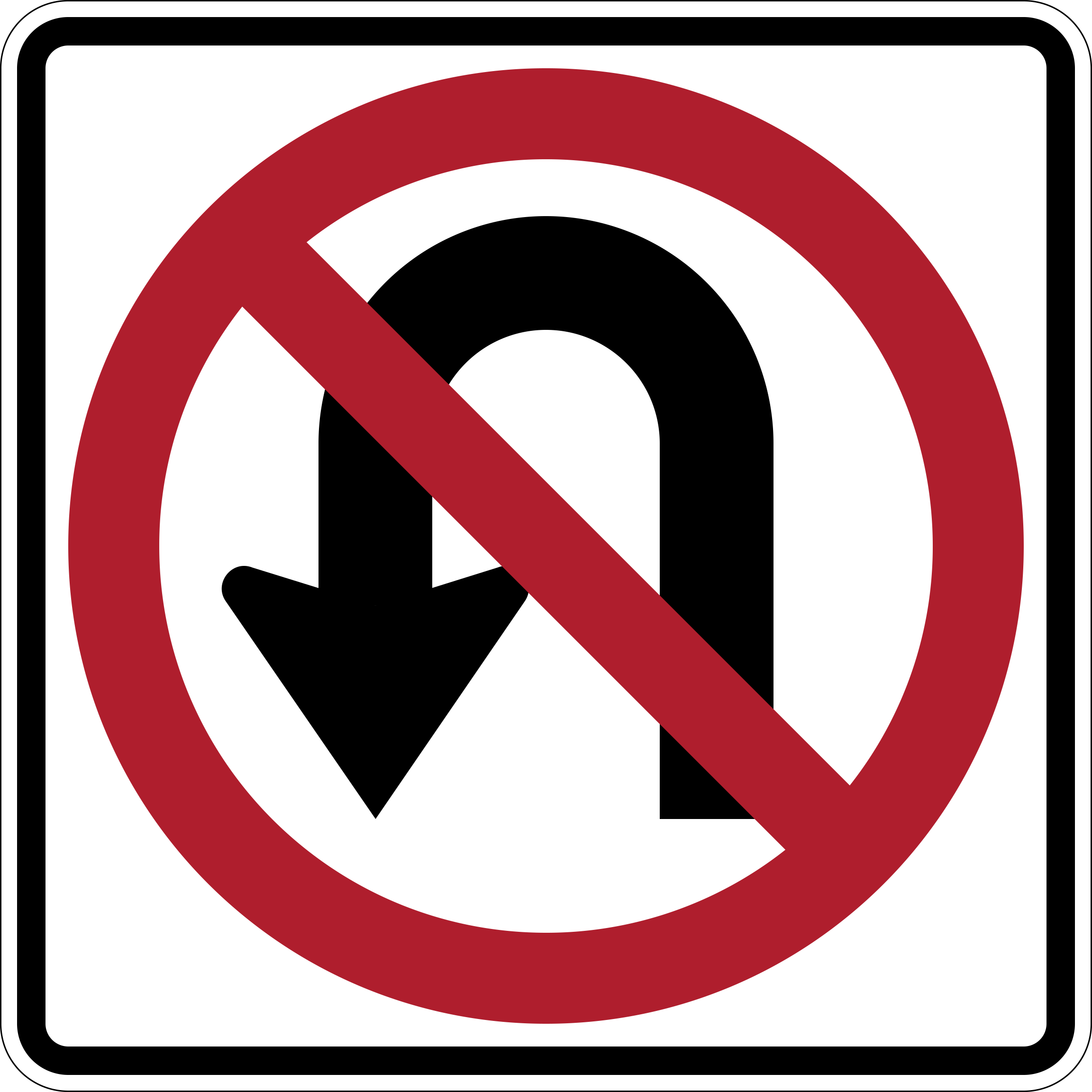
- RAILROAD CROSSING
- HOSPITAL AHEAD
- SCHOOL CROSSING
- NO U-TURN
Show answer
NO U-TURN. The handbook lists NO U-TURN as an example of the messages carried by rectangular and square-shaped regulatory signs. That wording tells drivers that a particular turning movement is prohibited. RAILROAD CROSSING belongs to a crossbuck sign at the tracks, while a school crossing warning uses a five-sided sign. Hospital information is presented with blue and white guide or service signs. Read the words on a rectangular panel carefully because a restriction such as this carries the force of a traffic rule, not a general suggestion.
Study this in the handbook: Sign shapes and colors
14. If a North Carolina vehicle fails inspection, when may it be re-inspected at the same station without another inspection fee?
- Within 10 days
- Within 90 days only after paying twice
- Within 60 days
- Only at a different station
Show answer
Within 60 days. A vehicle that fails inspection may be re-inspected at the same station within 60 days without paying another inspection fee. Returning to the same station is part of the stated condition, so changing stations may not preserve that fee treatment. The 90-day period concerns when an inspection can be performed before registration expiration, not the no-fee reinspection window. Repair the listed problem promptly and return within the allowed period.
Study this in the handbook: Bicycles, mopeds, trucks and insurance
15. What should a North Carolina driver check before entering a vehicle to back up?
- Only the rearview mirror
- The fuel gauge and dashboard lights
- The lane on the opposite side of the street
- The area behind the vehicle for small objects or children
Show answer
The area behind the vehicle for small objects or children. The handbook's backing rules begin before entering the vehicle: check behind it for small objects or children. A rearview mirror alone may not reveal low or nearby hazards, while the fuel gauge and distant lane are not the immediate safety check. Walk around or otherwise inspect the rear area, then continue looking as you back. The key cue is that children and small objects can be hidden below normal mirror sightlines.
Study this in the handbook: Passing, backing and parking
16. What extra space should a driver allow when a passing vehicle needs to move into the gap ahead?
- Enough distance for the passing vehicle to move in safely
- No space, because the passing vehicle must remain outside the lane
- Exactly one car length regardless of speed
- A gap created only after the lead vehicle stops
Show answer
Enough distance for the passing vehicle to move in safely. On the open road, a driver should leave enough room between the vehicle ahead and the following vehicle so a passing vehicle can enter the space safely. Closing the gap denies that vehicle a predictable place to return and can force abrupt braking. The handbook’s advice is not a fixed car length, and waiting until the lead vehicle stops is much too late. Look well ahead, maintain a usable cushion, and enlarge it as speed or road conditions change. The concrete cue is a vehicle completing a pass: it should have room to merge without squeezing into your front bumper.
17. Which emergency contact is named as an allowed call for a North Carolina driver under 18?
- A friend waiting for a ride
- A social media contact
- A hospital, physician’s office, or health clinic
- A business unrelated to the emergency
Show answer
A hospital, physician’s office, or health clinic. North Carolina restricts cell phone and related technology use by drivers under 18 while they operate on a public street, highway, or public vehicular area. The emergency exception names medical contacts, including a hospital, physician’s office, or health clinic. A friend, social media contact, or unrelated business is not one of the listed emergency destinations. The cue is to match the call with a medical or public safety service specifically identified by the rule, rather than treating any useful conversation as permitted.
Study this in the handbook: Graduated licensing: learner permit to full license
18. What is the legal maximum speed of a moped in North Carolina?
- 40 miles per hour
- 30 miles per hour
- 50 miles per hour
- 55 miles per hour
Show answer
30 miles per hour. North Carolina defines the moped’s legal top speed as no more than 30 miles per hour. A machine capable of more than that is illegal for use in the state, even if its design resembles a moped. The 40, 50, and 55 mile-per-hour choices confuse the vehicle’s legal ceiling with roadway speed limits or a faster machine’s capability. Check the moped’s size and maximum speed before purchase, because those details affect whether it can be operated legally.
Study this in the handbook: Bicycles, mopeds, trucks and insurance
19. What precaution does North Carolina require at an intersection even when a driver has priority?
- Maintain speed after sounding the horn
- Accelerate through without scanning
- Stop at every intersection
- Slow down before entering
Show answer
Slow down before entering. North Carolina requires drivers to reduce speed when approaching an intersection, including situations where they otherwise have the right of way. Priority does not guarantee that another road user will obey a sign, signal, or yielding rule. Accelerating removes valuable reaction time, and stopping at every intersection is broader than the handbook requirement. A horn also cannot make the crossing safe by itself. Ease off the accelerator before the intersection, look for conflicting traffic and pedestrians, and be prepared to stop if another road user enters unexpectedly.
Study this in the handbook: Right of way at intersections and roundabouts
20. An emergency vehicle approaches from ahead or behind. Until when must a driver remain stopped after moving aside?
- Until the driver behind begins moving
- Until the emergency vehicle turns off its headlights
- For exactly thirty seconds
- Until the vehicle passes or a traffic officer directs movement
Show answer
Until the vehicle passes or a traffic officer directs movement. After moving to the right-hand curb or edge and stopping, the driver must remain stopped until the emergency vehicle has passed or a traffic officer directs the driver to move. The following driver cannot give permission to proceed, and a fixed thirty-second pause may be too short or unnecessarily long. Headlight use is not the release signal. Watch the responding vehicle and any officer managing the scene. The practical sequence is pull right, stop completely, wait for the vehicle to clear, and then follow lawful directions before reentering traffic.
Study this in the handbook: Pedestrians, school buses and emergency vehicles
QualitySpace is expanding to North Carolina
We are a California-based independent insurance brokerage working on licensing in more states. We cannot help with North Carolina insurance yet. Leave your email and we will let you know when we can.
Every question is written from the official North Carolina Driver Handbook. Need paper? Printable NC practice test with answer key.
Last verified 2026-10-05. How we check every question · Study all 207 as flashcards
Frequently asked questions
How many questions are on this North Carolina practice test?
This fixed set has 20 questions. It is test 6 of 10 from the 207 question North Carolina bank.
How does this fixed test relate to the full North Carolina bank?
Each numbered test is a fixed set of questions in a fixed order, so you can retake the same test later and compare. Every test mixes road signs and the other topics in about the same proportion as the full bank. Tests 1 to 10 together cover 200 of the 207 questions in the North Carolina bank, each once. The full practice page mixes the whole bank at random.
Last verified 2026-10-05. See the North Carolina DMV facts page for sourced state details.
Return to the full North Carolina practice test · Study road signs