
Test 18 of 25 · 20 questions · Free 2026
OR Permit Practice Test 18
Jump to the test ↓A fixed 20 question set from the Oregon bank with answers and plain English explanations. The real OR exam is 35 questions, 80 percent to pass; take the full length version on the main practice page.
Question 1 of 20 · 0 right so far
All 20 questions in test 18
Every question below comes from the Oregon question bank on this page. Open a question to see the correct answer and the explanation. Nothing here is hidden behind a signup.
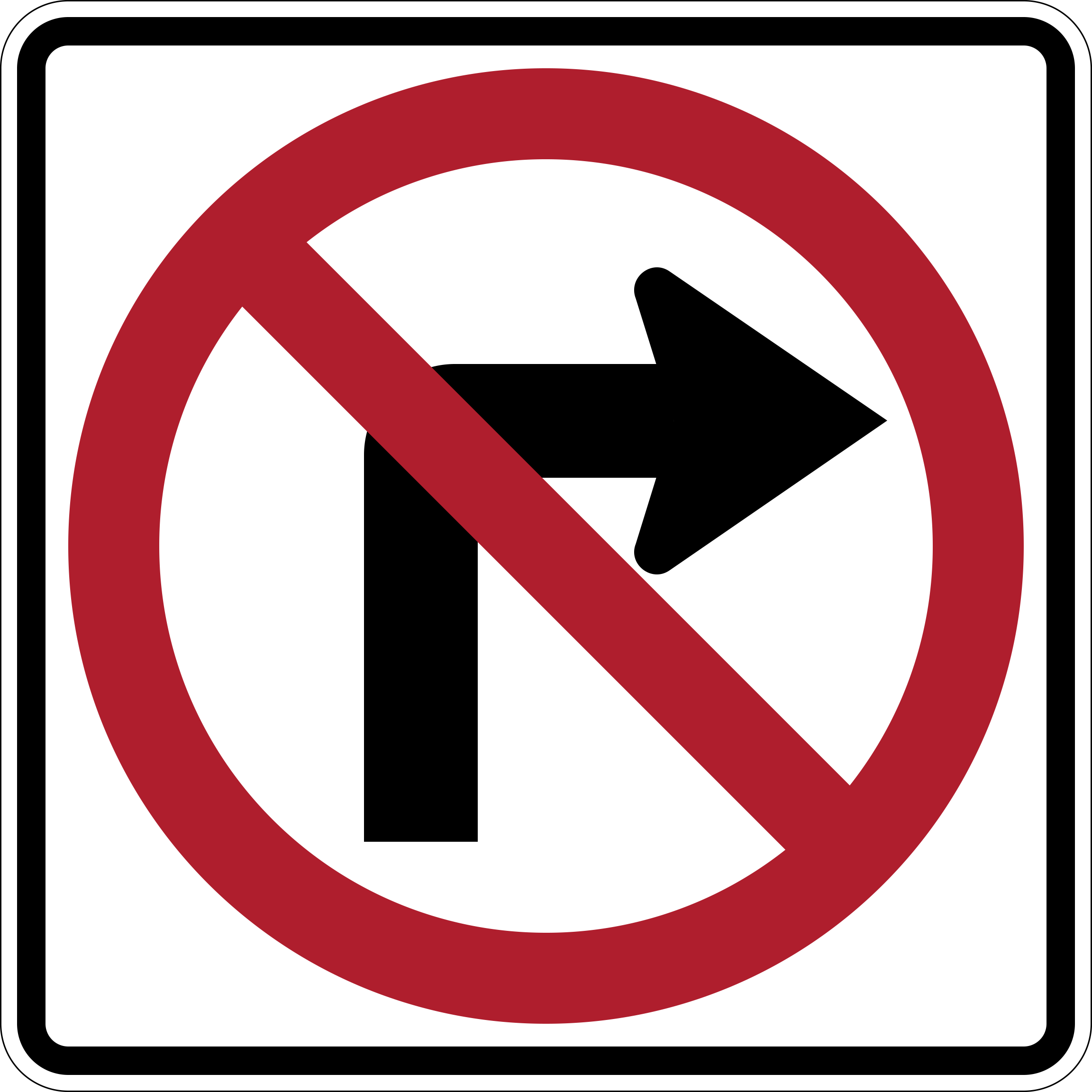
1. On any Oregon sign that shows a turn arrow inside a red circle with a slash through it, what does the slash mean?
- The turn is allowed after a stop
- Do not make the turn shown
- The turn is for buses only
- The turn lane ends ahead
Show answer
Do not make the turn shown. Oregon's prohibitive signs use a red circle and slash. Whatever movement is drawn inside, such as a left turn, a right turn, or a U-turn, the slash means do not make that turn. These red signs increase safety by controlling the flow of traffic through intersections. If the turn you need is prohibited, go on to a place where it is allowed, such as the next intersection, or go around the block.
Study this in the handbook: Regulatory Signs
2. A tire blows out while you are driving on the highway. What should you do?
- Brake hard right away to stop the car
- Grip the wheel and slow gradually
- Speed up to keep the car stable
- Let go of the wheel so it can center
Show answer
Grip the wheel and slow gradually. Oregon's steps for any blowout are short: grip the steering wheel firmly, slow down gradually, and pull off the road. A front blowout makes steering difficult with a strong pull to the side, and a rear blowout makes the back of the vehicle weave or sway, so you need both hands on the wheel. Slowing down gradually, not with a sudden stop, comes next. Once you are slow enough, steer off the road.
Study this in the handbook: Avoiding Collisions and Equipment Failures
3. At night an oncoming car comes within 500 feet, and you switch to low beams. Your fog lights are on. What must you do?
- Turn the fog lights off as well
- Leave them on to light the road edge
- Leave them on, since they point low
- Leave them on if there is fog ahead
Show answer
Turn the fog lights off as well. You must dim high beams when an oncoming vehicle is within 500 feet or when you follow a vehicle within 350 feet. Oregon adds that whenever you are required to dim your headlights, other auxiliary lights, such as fog lights, must be off. These extra lights make it hard for oncoming drivers to see. Turn them back on only when no one is close enough to require dimming.
Study this in the handbook: Headlights and Hazardous Conditions
4. Your light is green and you want to turn right, but this sign is posted for your lane. May you make the turn?
- Yes, since the green light allows it
- Yes, if no pedestrians are crossing
- Yes, after you come to a full stop
- No, a right turn is not allowed here
Show answer
No, a right turn is not allowed here. A steady green signal permits straight ahead, left, and right movements unless a sign prohibits one. A right-turn arrow crossed by a red slash is exactly that kind of sign, so the right turn is not allowed even on green. Continue straight or turn where it is legal. Red regulatory signs like this control the flow of traffic through intersections, and they apply whatever the signal shows.
Study this in the handbook: Regulatory Signs
5. Unless a different speed is posted, what is the speed limit on a narrow residential street in Oregon?
- 20 mph
- 25 mph
- 15 mph
- 10 mph
Show answer
15 mph. Oregon sets some speed limits in law that apply whether or not they are posted. The 15 mph limit covers alleys and narrow residential areas. That is lower than the 25 mph limit for ordinary residential districts and the 20 mph limit for business districts. If a sign posts a different speed, the sign controls. The basic rule may still call for less than 15 mph when conditions such as parked cars, children, or poor visibility make that speed unsafe.
Study this in the handbook: Oregon Speed Limits
6. A sign stands in the street at a crosswalk. You approach it and a person is walking in the crosswalk. What must you do?
- Stop and let the pedestrian finish crossing
- Slow down and drive around the pedestrian
- Honk to warn the pedestrian, then keep going
- Keep going if the pedestrian is on the far side
Show answer
Stop and let the pedestrian finish crossing. An In-Street Pedestrian Crossing sign may appear at a crosswalk, and the Oregon manual says to stop when a pedestrian is in the crosswalk. Because the sign stands in the roadway, some drivers treat it as a hint to slow down. It is a requirement to stop. Wait until the person has finished crossing before you go. Pedestrians are vulnerable road users because they are hard to see and may have no protection in a collision.
Study this in the handbook: Warning, Guide and Service Signs
7. What does the Oregon manual mean by a vehicle's blind spot?
- The road directly in front of your hood
- Any area your headlights do not reach
- An area you cannot see from your seat even with mirrors
- The zone behind you that only mirrors show
Show answer
An area you cannot see from your seat even with mirrors. A blind spot is the area around your vehicle that you cannot see from the driver's seat, even when you use your mirrors. That is why Oregon tells you to glance over your shoulder before changing lanes. It also asks you to avoid driving in another driver's blind spot when you can, because that driver may not know you are there. Bicycles and motorcycles are easily hidden in these areas.
Study this in the handbook: Space Cushion and Following Distance
8. When you stop behind another car at a red light, how far back should you be?
- Close enough to see the top of its bumper
- Far enough to see only its brake lights
- Far enough to see its rear tires touch the road
- About ten car lengths behind it
Show answer
Far enough to see its rear tires touch the road. When you stop behind another vehicle, Oregon says to stop where you can still see the rear tires of the vehicle ahead meeting the road. That gap leaves room to pull around if the car stalls, and it keeps you from being pushed into it if someone hits you from behind. When traffic starts moving again, drop back to a full following distance instead of staying that close.
Study this in the handbook: Space Cushion and Following Distance
9. You are driving in the right lane of a highway when you pass this sign. What should you watch for?

- Your own lane coming to an end very soon
- A new lane being added on your right side
- A divided highway beginning just ahead
- Vehicles joining your road from the side shown
Show answer
Vehicles joining your road from the side shown. The Merge sign warns that traffic is joining your road from the side shown. If you are in the lane it will enter, be ready to adjust your speed or, if it is safe and there is no one beside you, move over a lane to make room. Oregon asks drivers to make room for vehicles entering freeways. The merging drivers must yield, but you can help them merge smoothly.
Study this in the handbook: Warning, Guide and Service Signs
10. As you approach an intersection with no signs or signals, which direction should you look first?
- To the right
- To the left
- Straight ahead
- In your rearview mirror
Show answer
To the left. At an intersection with no signs or signals, Oregon says to look to the left first to make sure cross traffic is yielding, then look to the front and to the right, and be prepared to stop. Yield to any vehicle already in the intersection or approaching from your right. As you enter, check again for unusual or unexpected actions by other drivers.
Study this in the handbook: Right of Way at Intersections
11. Which of these is a clue that the driver ahead of you may be about to slow down or stop?
- Their car is a newer model year
- Their windows are rolled down
- A pedestrian on the road ahead
- Their radio is playing loudly
Show answer
A pedestrian on the road ahead. Oregon asks drivers to scan ahead as far as they can see so they can avoid last-minute moves. Look for clues that a driver ahead may slow down or stop, such as a person riding a bicycle or a pedestrian on the road ahead, brake lights coming on, or blinking turn signals. Scanning includes the sides of the road, where vehicles may enter your path or signs may route you elsewhere.
Study this in the handbook: Space Cushion and Following Distance
12. Which habit does Oregon say helps you avoid hitting someone while you are backing up?
- Back up quickly so you clear the lane sooner
- Rely on your mirrors, because they show the whole area
- Honk once and back up at a steady speed
- Glance to both sides, then back up slowly
Show answer
Glance to both sides, then back up slowly. Oregon says a mistake drivers make when backing up is failing to look both ways behind them, and that mirrors do not give you a full view. Check for pedestrians and approaching traffic by glancing to either side, then back up slowly so you have time to react. Take extra care when backing in or out of a driveway, because children are unpredictable and may be playing behind your vehicle.
Study this in the handbook: Space Cushion and Following Distance
13. You see a railroad warning sign as you approach a crossing. What does Oregon tell you to do?
- Look, listen, and slow down, ready to stop
- Speed up so you clear the tracks quickly
- Keep your speed unless the lights are flashing
- Stop and wait at every crossing for a minute
Show answer
Look, listen, and slow down, ready to stop. Railroad crossings are marked with signs, signals, and pavement markings. When you see them, Oregon says to look, listen, and slow down because you may have to stop. You must stop when flashing red lights are activated, a stop sign is posted, a train is clearly visible or close enough to be a hazard, or a flagger signals you to stop. Never try to beat a train to the crossing.
Study this in the handbook: School Buses and Railroad Crossings
14. You park along a country road that has a shoulder but no curb. Where should your car be?
- Partly in the travel lane, near the shoulder
- On the shoulder, touching the white edge line
- Wherever the shoulder feels the most level
- As close as possible to the shoulder's edge
Show answer
As close as possible to the shoulder's edge. With no curb to measure from, Oregon says to park as close as possible to the edge of the shoulder. That keeps your vehicle as far from moving traffic as you can get it. Where parking spaces are marked, your wheels must be within the marked space. If you stop on a shoulder in limited visibility, your parking lights must be on, and in an emergency use your hazard lights.
15. You are driving a rented moving truck and see a yellow Low Clearance warning sign before an overpass. What does the Oregon manual tell you to do?
- Slow to the advisory speed and drive under the middle
- Do not go on if your truck is too tall to fit under it
- Move to the left lane, where the overpass is higher
- Turn on your hazard lights and pass under it slowly
Show answer
Do not go on if your truck is too tall to fit under it. A Low Clearance sign warns that the overpass ahead has limited height. The manual's instruction is simple: if your vehicle is too tall to pass under it, do not proceed. Know the height of a rental truck, motor home, or anything carried on your roof before you start the trip. Slowing down, changing lanes, or using hazard lights will not make a tall load fit. Find another route instead of hoping it clears.
Study this in the handbook: Warning, Guide and Service Signs
16. On a winding two-lane road, you come up behind a person on a bicycle. A curve ahead hides oncoming traffic. What must you do?
- Slow down and stay behind the rider
- Pass right away, since bicycles are slow
- Honk so the rider pulls off the road
- Squeeze past while staying in your lane
Show answer
Slow down and stay behind the rider. Oregon applies the same passing rules to bicycles as to other vehicles. If you cannot pass safely, you must slow down and remain behind the bicycle until it is safe. A curve that hides oncoming traffic is a place where you should not cross the center line to pass anyone. When you do pass at speeds above 35 mph, leave enough distance to prevent contact if the rider were to fall.
Study this in the handbook: Pedestrians and Bicycles
17. A pedestrian is crossing the far half of a wide street, on the other side of a raised safety island from your lane. Are you required to stop?
- Yes, you must stop for anyone in the crosswalk
- No, not when an island separates you from them
- Yes, until they reach the far curb
- Yes, if they are within six feet of the island
Show answer
No, not when an island separates you from them. Normally you stop for a pedestrian in a crosswalk who is in your lane or the next lane. Oregon makes an exception for a safety island: you are not required to stop if the pedestrian is in the crosswalk on the other side of the island. Watch closely anyway, because the person may come back toward your side. If they step onto your side of the island, the usual stop rules apply.
Study this in the handbook: Pedestrians and Bicycles
18. Your car's turn signal bulb works, but you prefer arm signals. It is dark out. Which signal must you use?
- Your turn signal lights
- Arm signals, held out longer
- Either one, if traffic is light
- No signal, since it is dark
Show answer
Your turn signal lights. Hand-and-arm signals may be used only in daylight, when you can clearly see people and vehicles at a distance of 1,000 feet. At night or when visibility is poor, you must use your turn signal lights. Arm signals should also never be used when driving a wide or long vehicle. Whatever method you use, signal at least 100 feet before turning when you are moving in traffic.
Study this in the handbook: Turns, U-Turns and Roundabouts
19. Late at night, the signal facing you flashes red while cross traffic gets a flashing yellow. What must you do?
- Slow down and go through with caution
- Stop and wait for the light to turn green
- Go first, since flashing lights mean no one controls it
- Stop fully, then go when it is safe
Show answer
Stop fully, then go when it is safe. A flashing red signal is treated the same as a stop sign. Come to a complete stop, yield to traffic and pedestrians, and go when it is safe. The cross street's flashing yellow means those drivers only slow down and proceed with caution, so they may not stop for you. Do not sit waiting for a green, since a flashing red works like a stop sign, not like a steady red light.
Study this in the handbook: Traffic Signals
20. At night on a dark highway, you are using high beams and come up behind a car about 300 feet ahead. What must you do?
- Keep high beams on until you pass
- Dim only if the driver flashes you
- Switch to your low beams
- Turn off all your headlights briefly
Show answer
Switch to your low beams. Oregon requires you to dim your lights when following another vehicle within 350 feet. At 300 feet you are already inside that distance. High beams shining into the other car's mirrors can blind the driver. When you dim, also turn off fog lights or other auxiliary lights. For oncoming traffic, the distance is 500 feet. Switch back to high beams only after you pass and no one is close.
Study this in the handbook: Headlights and Hazardous Conditions
Every question is written from the official Oregon Driver Manual. Need paper? Printable OR practice test with answer key.
Last verified 2026-10-05. How we check every question · Study all 500 as flashcards
Frequently asked questions
How many questions are on this Oregon practice test?
This fixed set has 20 questions. It is test 18 of 25 from the 500 question Oregon bank. The real OR exam asks 35 questions and you need 28 correct.
What is the passing score for the real Oregon test?
28 of 35 correct to receive a passing score That figure comes from the official Oregon source cited on the DMV facts page.
How does this fixed test relate to the full Oregon bank?
Each numbered test is a fixed set of questions in a fixed order, so you can retake the same test later and compare. Every test mixes road signs and the other topics in about the same proportion as the full bank. Tests 1 to 25 together cover every question in the Oregon bank once. The full practice page mixes the whole bank at random.
Last verified 2026-10-05. See the Oregon DMV facts page for sourced state details.