
Key points
If a signal is dark, as in a power failure, stop as if there are stop signs in all directions.
Source: Handbook p. 15
“If a signal appears dark, such as during a power failure, you should stop as if there are stop signs in all directions.”
Oregon Driver Manual, Handbook p. 15On a steady red, after a complete stop, you may turn right onto a two way road unless a sign or officer says otherwise.
Source: Handbook p. 15
“You are allowed to make the following turns on red after coming to a complete stop unless a sign or police officer states otherwise. • • When entering a two-way road, you may turn right.”
Oregon Driver Manual, Handbook p. 15On red, when entering a one way road, you may turn right or left in the direction that road flows.
Source: Handbook p. 15
“When entering a one-way road, you may turn right or left in the direction of the one-way road.”
Oregon Driver Manual, Handbook p. 15A flashing red or dark signal is treated the same as a stop sign.
Source: Handbook p. 15
“Flashing Red or Dark Signal: A flashing red or a dark signal is treated the same as a stop sign.”
Oregon Driver Manual, Handbook p. 15A steady yellow warns the light is about to turn red; stop before the intersection if you can do so safely.
Source: Handbook p. 15
“A steady yellow signal warns you that the signal is about to turn red. Stop before entering the intersection. If you cannot stop safely, drive carefully through it.”
Oregon Driver Manual, Handbook p. 15A flashing yellow means slow down and proceed with caution.
Source: Handbook p. 16
“Flashing Yellow: A flashing yellow signal means slow down and proceed with caution.”
Oregon Driver Manual, Handbook p. 16A flashing yellow arrow allows the turn shown, but first yield to pedestrians and oncoming traffic.
Source: Handbook p. 16
“A flashing yellow arrow means that you may make the movement indicated by the arrow, but first you must yield to pedestrians and oncoming traffic.”
Oregon Driver Manual, Handbook p. 16On a green light, left turns yield to pedestrians and oncoming traffic, and right turns yield to pedestrians.
Source: Handbook p. 16
“Left turns must first yield to pedestrians and oncoming traffic. Right turns must first yield to pedestrians.”
Oregon Driver Manual, Handbook p. 16A steady green arrow gives you the right of way for the movement shown.
Source: Handbook p. 16
“A steady green arrow means you have the right of way and may make the movement indicated by the arrow.”
Oregon Driver Manual, Handbook p. 16
Recognize these signs
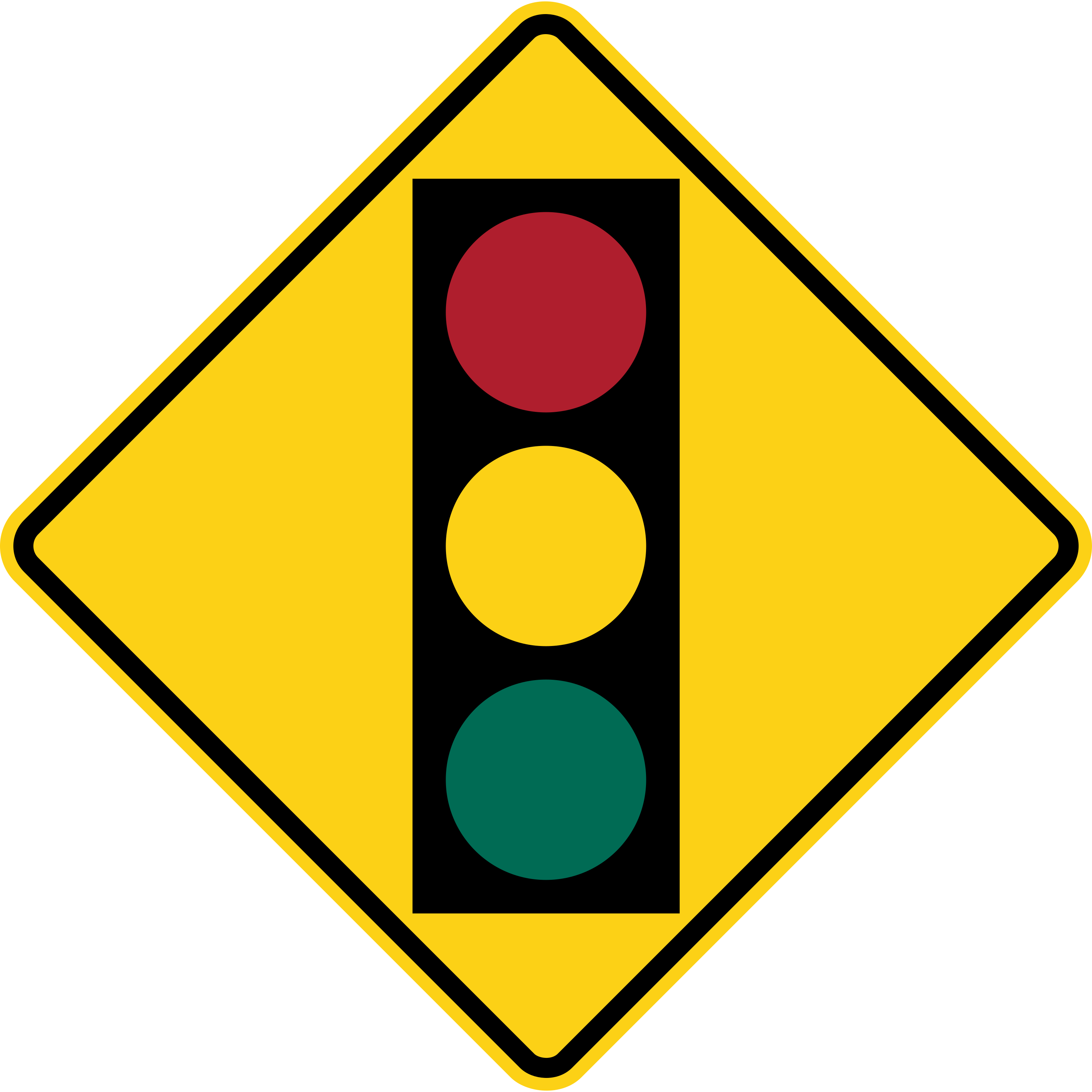
Signal ahead
3 questions from the Oregon practice test
1. What should you do when a traffic signal is dark because of a power failure?
- Treat it as stop signs in all directions
- Wait for a police officer before moving
- Treat it as a yield sign
- Proceed if no vehicle is approaching
Show answer
Treat it as stop signs in all directions. A dark signal is not permission to continue through the intersection. Oregon directs drivers to stop as though every approach had a stop sign, then proceed only after yielding and checking for traffic and pedestrians. Waiting for an officer is unnecessary unless one is present directing traffic. Treating the outage like a yield sign skips the required stop, while simply checking for an approaching vehicle overlooks people or vehicles that may enter from another direction. The practical cue is simple: no lights means four-way stop behavior, even if the signal normally controls a busy intersection.
2. How should you treat a flashing red or dark traffic signal in Oregon?
- Treat it as a flashing yellow signal after slowing
- Treat it as a yield sign unless cross traffic is present
- Treat it the same as a stop sign
- Treat it as an uncontrolled intersection without stopping
Show answer
Treat it the same as a stop sign. A flashing red or dark signal is treated the same as a stop sign. The driver must stop, then assess traffic and pedestrians before proceeding when the movement is safe and permitted. A yield sign allows a different approach, and flashing yellow has its own meaning, so neither is an equivalent response. A dark signal does not remove the stopping duty. Identify the signal early, stop before the marked line or crosswalk, and scan both directions before entering. Power loss changes the signal's appearance, not the need for controlled stopping.
3. What does a flashing yellow arrow allow you to do after yielding as required?
- Treat the signal as a stop sign in every case
- Proceed straight only, regardless of the arrow
- Turn without checking for pedestrians
- Make the movement shown by the arrow
Show answer
Make the movement shown by the arrow. A flashing yellow arrow permits the movement indicated by its direction, but it is not a protected movement. You must yield first to pedestrians and oncoming traffic, then proceed only when the path is safe. Proceeding straight regardless of the arrow ignores the arrow's direction. Turning without checking for pedestrians skips the required yield, and treating the signal as a stop sign in every case misreads a permissive arrow. Remember the sequence as arrow movement, yield, then go when clear. A steady green arrow is different: it means you have the right of way for the movement shown.
Practice this topic
Lock it in with signals and markings questions from the free Oregon practice test. Every answer comes with a plain English explanation.
Source: the Oregon Driver Manual, Signs & Traffic Signals. This lesson is a plain English summary, not the law itself; where it differs, the manual and the statute govern. Last checked 2026-09-27.