
Key points
Warning signs are yellow and alert you to known possible hazards or changes in road conditions ahead.
Source: Handbook p. 10
“Warning signs are yellow and alert you to known possible hazards or a change in road conditions ahead.”
Oregon Driver Manual, Handbook p. 10A crossroad sign means a four way intersection is ahead where cross traffic may enter.
Source: Handbook p. 11
“Crossroad: A four-way intersection is ahead. Crosstraffic may enter the road.”
Oregon Driver Manual, Handbook p. 11An added lane sign means two roadways join and you do not need to merge.
Source: Handbook p. 11
“Add Lane: Two roadways join together. You do not need to merge.”
Oregon Driver Manual, Handbook p. 11A lane reduction sign means the marked lane ends soon and its traffic must merge.
Source: Handbook p. 11
“Lane Reduction: The indicated lane ends soon. Vehicles in that lane must merge into the through lane.”
Oregon Driver Manual, Handbook p. 11An advisory speed sign gives the safe speed for freeway ramps and curves.
Source: Handbook p. 12
“Advisory Speed: Advises the safe speed for freeway ramps and curves. This sign may be used with other signs.”
Oregon Driver Manual, Handbook p. 12At a deer sign, be alert and slow down if you see deer or other wildlife.
Source: Handbook p. 12
“Deer: Deer often cross the road in this area. Be alert. Slow down if you see deer or other wildlife.”
Oregon Driver Manual, Handbook p. 12Guide and information signs are green and give exit information or directions to roads and cities.
Source: Handbook p. 13
“Guide or information signs are green. They give exit information or show the direction of roads or cities.”
Oregon Driver Manual, Handbook p. 13Blue motorist service signs tell you about services or facilities along the highway.
Source: Handbook p. 14
“Motorist Service Signs: These blue signs tell you about services or facilities along the highway.”
Oregon Driver Manual, Handbook p. 14In a signed safety corridor, turn on your lights for safety.
Source: Handbook p. 13
“Turn on your lights for safety. Signs identifying safety corridors may include diamond shaped flags.”
Oregon Driver Manual, Handbook p. 13
Recognize these signs

Crossroad 
Added lane 
Lane reduction 
Stop ahead 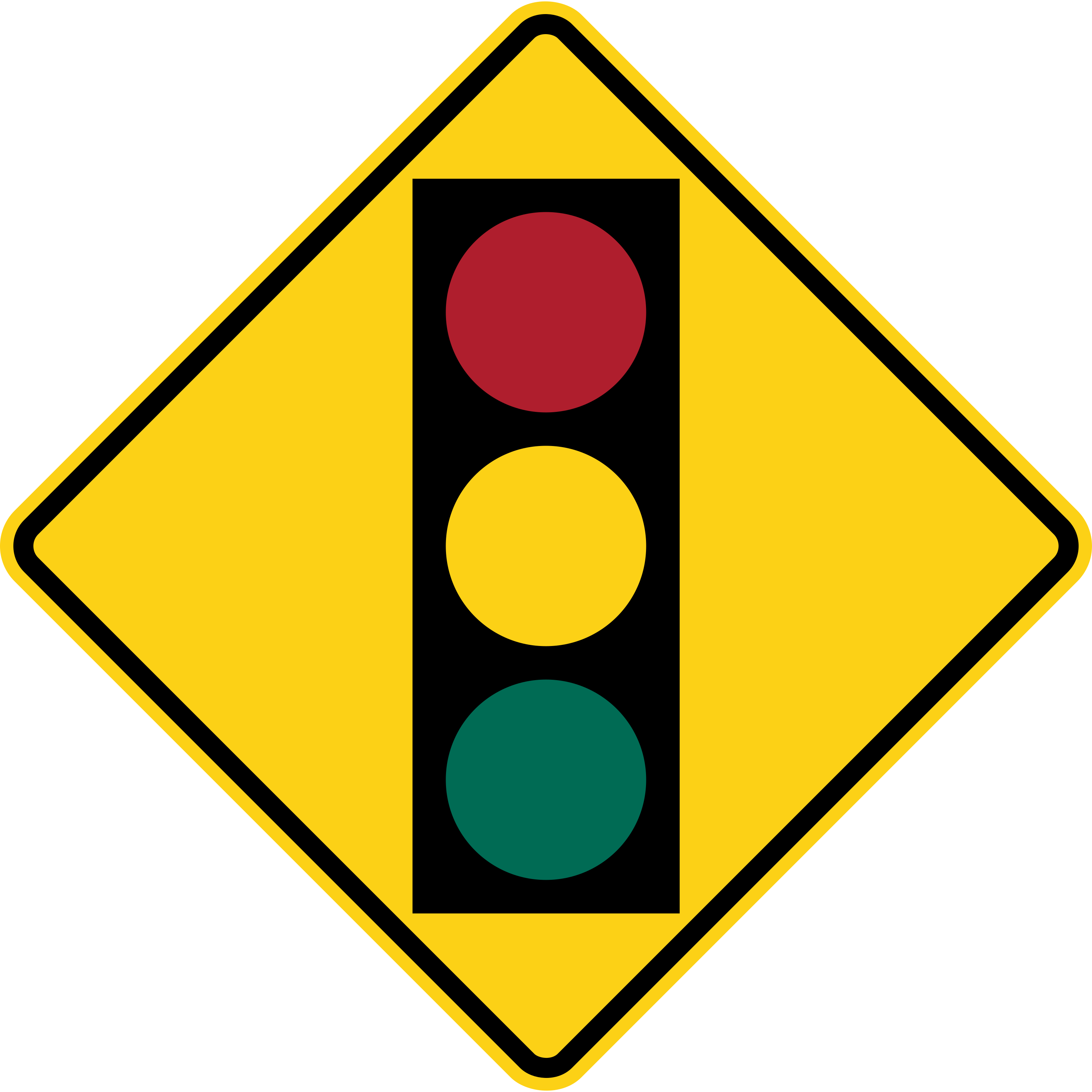
Signal ahead 
Slippery when wet 
Deer crossing 
Winding road
3 questions from the Oregon practice test
1. What do Oregon warning signs generally alert drivers to?
- Routes reserved for emergency vehicles
- The exact maximum speed permitted on every roadway
- Services available at the next highway exit
- Known possible hazards or a change in road conditions ahead
Show answer
Known possible hazards or a change in road conditions ahead. Yellow warning signs alert drivers to possible hazards or changing road conditions ahead. They do not set every roadway's speed, identify motorist services, or reserve routes for emergency vehicles. The manual emphasizes that the driver remains responsible for recognizing and reacting to conditions whether or not a sign is present. When a warning appears, scan farther ahead, reduce speed if needed, and prepare for the maneuver the symbol suggests instead of treating the sign as a guarantee that the hazard is absent.
2. What does an Oregon deer warning sign tell a driver to do?
- Sound the horn continuously
- Stop and wait for deer to cross
- Be alert and slow down if you see deer or other wildlife
- Speed up to clear the area
Show answer
Be alert and slow down if you see deer or other wildlife. The deer crossing sign means deer often cross the road in that area. The manual's instruction for this sign is to be alert and to slow down if you see deer or other wildlife. The sign warns about the area rather than about one animal, so stay alert through the whole stretch even when no deer is visible yet. Speeding up to clear the area works against the instruction to slow down, and the sign does not tell you to sound the horn or to stop and wait for deer.
3. What information do green guide signs generally provide?
- Warnings about slippery pavement
- Exit information or the direction of roads and cities
- Rules prohibiting lane changes
- Locations where fuel and lodging are available
Show answer
Exit information or the direction of roads and cities. Green guide or information signs help drivers navigate by showing exit information and the direction of roads or cities. They are different from yellow warning signs, which announce hazards, and white regulatory signs, which impose requirements. Blue signs point to motorist services such as fuel or lodging. A driver should read the route name, arrow, and exit number early enough to choose a lane safely. The cue is green for guidance: it helps you decide where to go, rather than warning or commanding a maneuver.
Practice this topic
Lock it in with road signs questions from the free Oregon practice test. Every answer comes with a plain English explanation.
Source: the Oregon Driver Manual, Signs & Traffic Signals. This lesson is a plain English summary, not the law itself; where it differs, the manual and the statute govern. Last checked 2026-09-27.