Every question below comes from the Oregon question bank on this page. Open a question to see the correct answer and the explanation. Nothing here is hidden behind a signup.
1. When preparing to turn across a bicycle lane, what should a driver do?
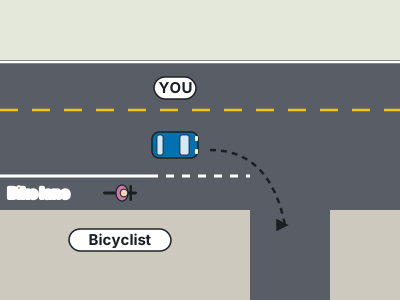
- Yield to people riding bicycles before crossing the lane
- Move into the bicycle lane early and wait there
- Sound the horn so bicyclists must stop
- Turn without checking because bicycles must yield
Show answer
Yield to people riding bicycles before crossing the lane. A driver may cross a bicycle lane to make a turn, but must first check the blind spot and yield to a person riding there or on the sidewalk. Full explanation in Test 1
2. What hazard does the round yellow RXR warning sign announce?

- A railroad crossing ahead where a stop may be necessary
- A circular intersection with traffic entering from the left
- A bicycle route that crosses the roadway
- A reduced speed zone ending immediately
Show answer
A railroad crossing ahead where a stop may be necessary. The round yellow RXR symbol is an advance warning for railroad tracks ahead. Full explanation in Test 2
3. Two drivers at a red light see who can accelerate faster when it turns green, while staying under the speed limit. Under Oregon's definition, is that racing?
- No, racing requires exceeding the speed limit
- No, racing only counts on a closed course
- Yes, any acceleration or speed contest counts as racing
- Only if the drivers bet money on the result
Show answer
Yes, any acceleration or speed contest counts as racing. Oregon makes racing illegal on any road and defines it broadly: any acceleration or speed contest, or an attempt to make a speed record. Full explanation in Test 3
4. On a two lane road, what may an Oregon driver do when approaching a stopped vehicle with flashing lights?
- Drive over any fire hose at the scene without permission
- Pass closely because the stopped vehicle is not moving
- Stop beside the vehicle until its lights turn off
- Allow as much room as safely possible and slow down when needed
Show answer
Allow as much room as safely possible and slow down when needed. When approaching an emergency scene or another stopped vehicle with flashing lights, the driver should slow down and be prepared to stop, wh Full explanation in Test 4
5. In what direction does traffic move in an Oregon roundabout?
- Counterclockwise around the center island
- Clockwise around the center island
- Straight across the center island
- In either direction chosen by the entering driver
Show answer
Counterclockwise around the center island. Oregon roundabouts carry traffic counterclockwise around a center island. Full explanation in Test 5
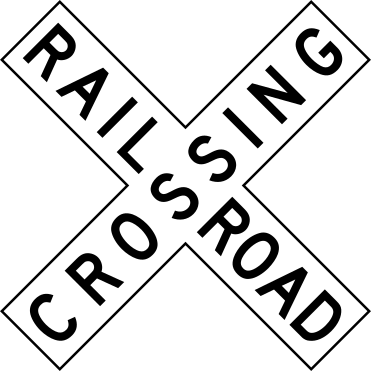
6. When a railroad crossbuck assembly includes another sign, how should the driver respond?
- Use the crossing without checking for trains
- Treat the crossbuck as a construction warning
- Assume horns are prohibited at the crossing
- Obey the yield or stop sign included with the crossbuck assembly
Show answer
Obey the yield or stop sign included with the crossbuck assembly. An Oregon railroad crossbuck assembly includes a yield or stop sign, and the driver must obey whichever sign is posted with it. Full explanation in Test 6
7. What does the regulatory SPEED LIMIT sign in the image establish?
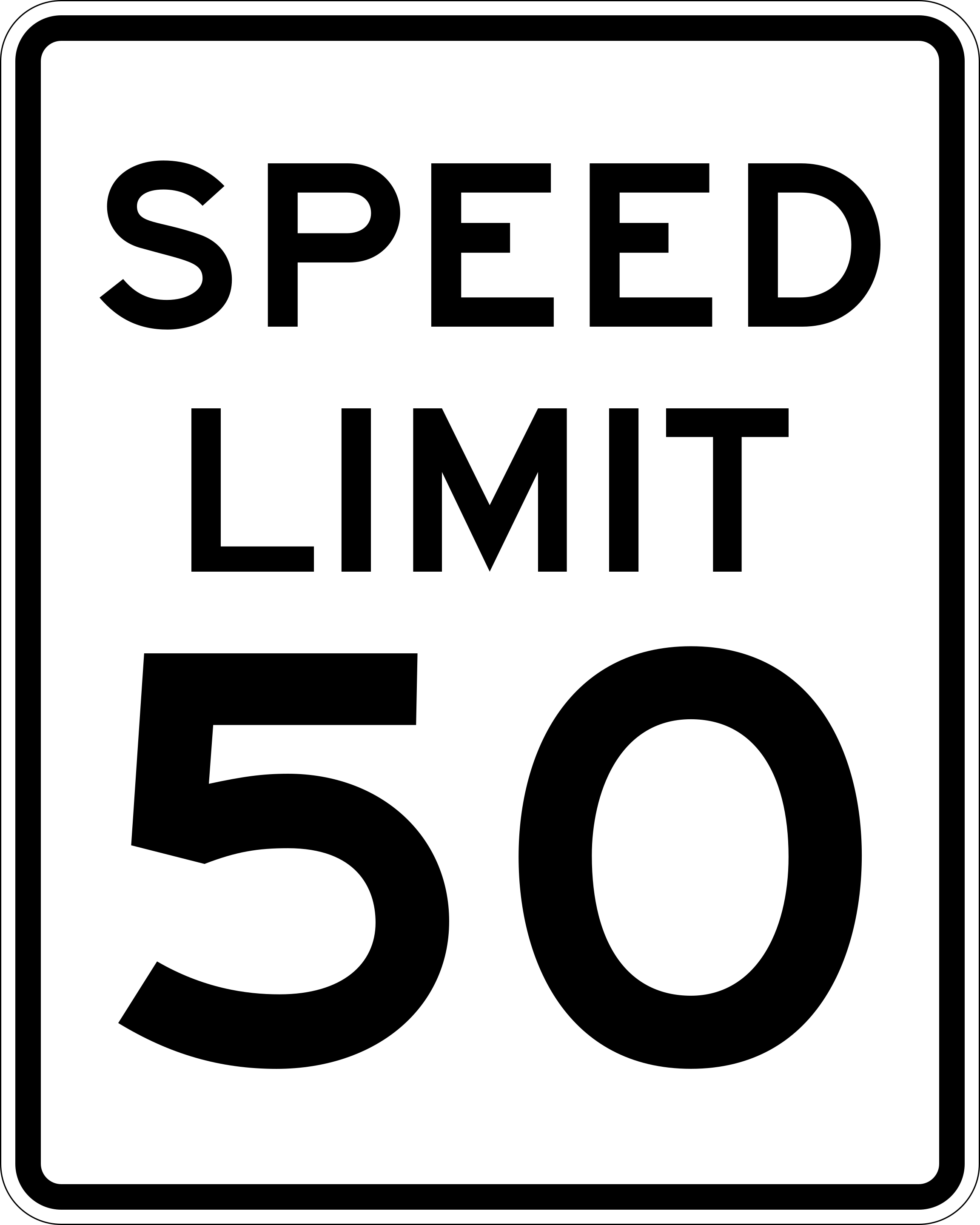
- The maximum speed in miles per hour for the signed condition
- A recommended speed that may be exceeded whenever traffic is light
- A minimum speed required in every lane of the roadway
- A truck-only speed that does not apply to passenger vehicles
Show answer
The maximum speed in miles per hour for the signed condition. A posted speed limit gives the maximum speed in miles per hour for that roadway condition. Full explanation in Test 7
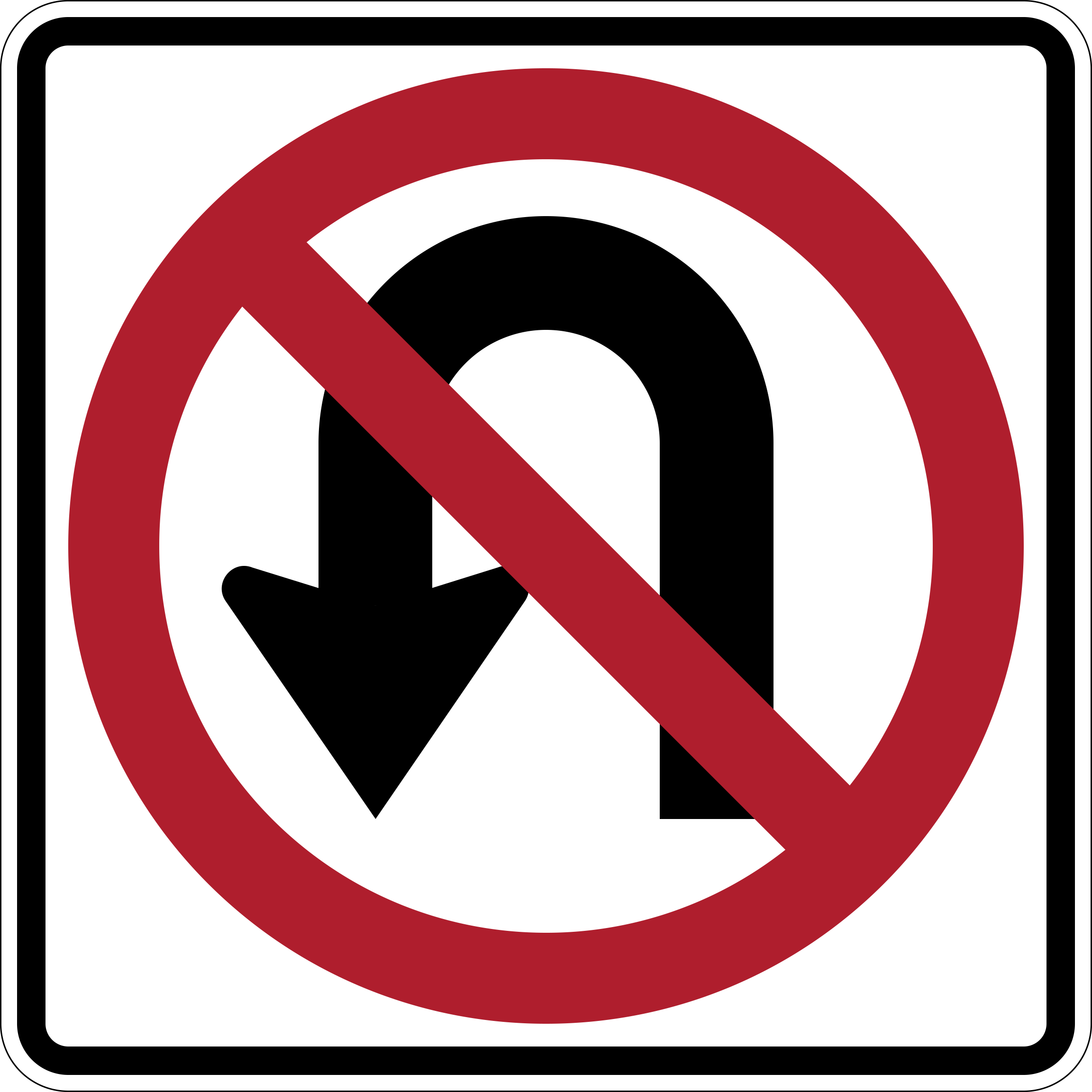
8. The red slash crosses a U-shaped arrow in the image. Which movement is barred?
- Changing from the right lane to the left lane
- Turning right at the next intersection
- Passing a slow vehicle on a straight roadway
- Reversing direction in a U-turn
Show answer
Reversing direction in a U-turn. A red circle and slash over a movement symbol means the pictured action is prohibited. Full explanation in Test 8
9. After how many total online Oregon knowledge-test attempts must an applicant test at a DMV office?
- Two attempts
- Three attempts
- Four attempts
- Six attempts
Show answer
Four attempts. The online knowledge test may be taken four times total. After the fourth attempt, the applicant must test at a DMV office. Full explanation in Test 9
10. What condition does the Slippery When Wet warning sign identify?

- A required tire-chain inspection area
- A road closed during heavy rain
- Pavement that is unusually slick when wet
- A bridge that floods whenever it rains
Show answer
Pavement that is unusually slick when wet. This warning identifies pavement that becomes unusually slick when wet, so a driver should reduce speed and leave extra room for braking. Full explanation in Test 10
11. In an Oregon work zone, when do temporary posted speed limits apply?
- Only while workers are visible
- Only during daylight hours
- Only when traffic is stopped
- At all times
Show answer
At all times. A temporary speed posted in a work zone applies at all times, even when workers are not visible. Full explanation in Test 11
12. Which reporting requirement remains the driver’s responsibility even when police file a report after a reportable Oregon collision?
- The driver's duty to exchange information
- The driver's requirement to file a report with DMV
- The need to remain at the scene until police arrive in every crash
- The requirement to obtain a new driver license
Show answer
The driver's requirement to file a report with DMV. Oregon says a police report does not replace the driver's requirement to file a report with DMV. Full explanation in Test 1
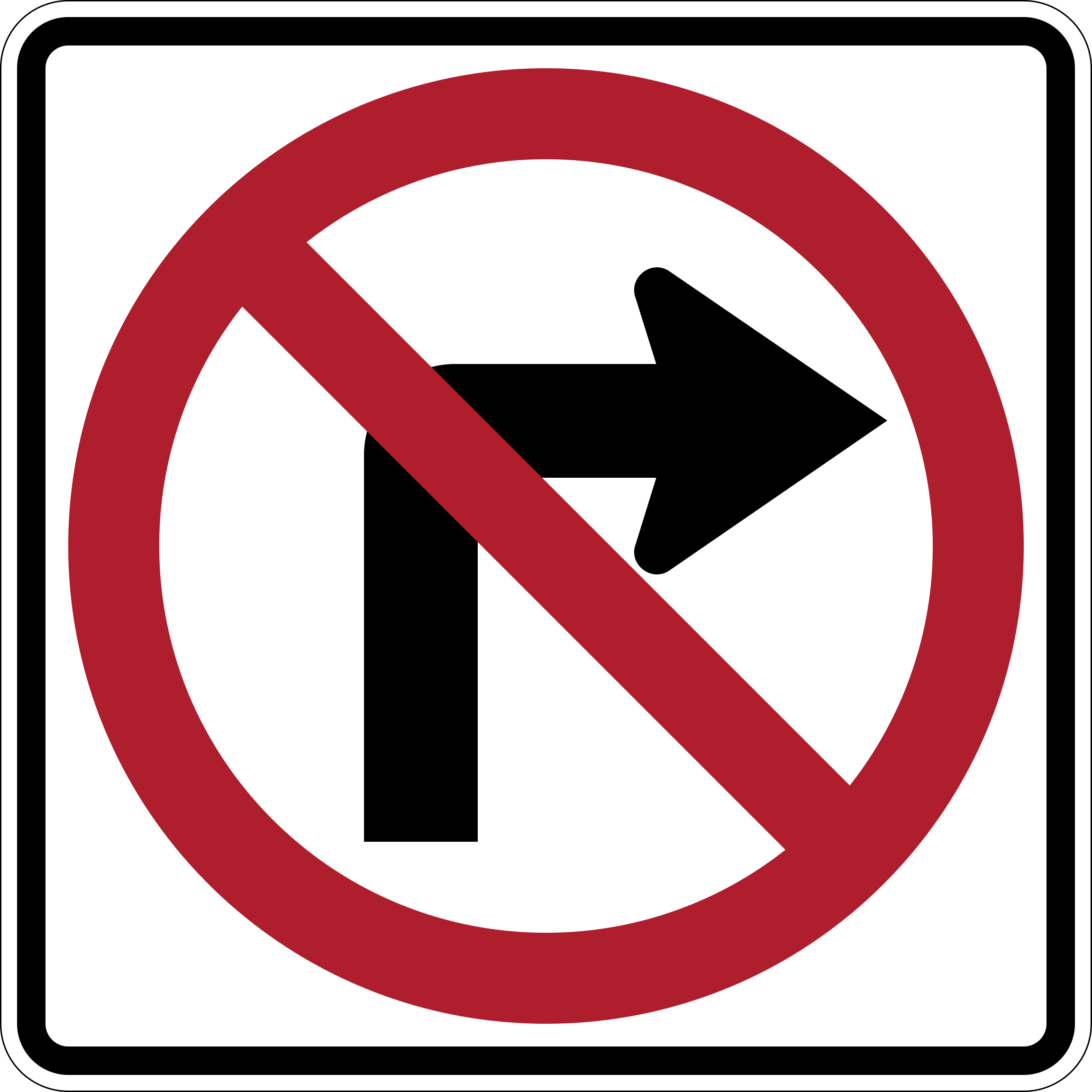
13. The sign displays a right-turn arrow crossed by a red slash. What must you avoid?
- Driving straight through the intersection
- Using the left lane to continue forward
- Yielding to traffic before entering the roadway
- Turning right at the location covered by the sign
Show answer
Turning right at the location covered by the sign. The slash marks the movement represented by the arrow, which is a right turn. Full explanation in Test 2
14. The car in the lane beside you has stopped at a crosswalk. What does Oregon law say about passing it?
- You may pass if you sound your horn first
- Passing it is against the law
- You may pass at 10 mph or less
- You may pass if you cannot see a pedestrian
Show answer
Passing it is against the law. Oregon makes it illegal to pass a vehicle that is stopped at a crosswalk. Full explanation in Test 3
15. Before crossing a transit lane to reach a driveway, whom must the driver yield to?
- Transit vehicles and people riding bicycles
- Only vehicles behind the driver
- No one if the turn signal is on
- Only pedestrians outside the intersection
Show answer
Transit vehicles and people riding bicycles. A driver crossing a transit lane for a permitted movement must yield to transit vehicles and people riding bicycles in the lane. Full explanation in Test 4
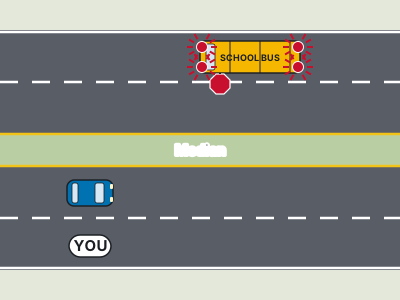
16. A school bus displays flashing red lights on the other side of a divided highway separated by a barrier. What must you do?
- Stop only when the divider is a painted turn lane
- Stop in every lane on both sides of the divided highway
- Continue only if the bus driver waves you through
- Stop only if you are traveling on the same side as the bus
Show answer
Stop only if you are traveling on the same side as the bus. On a divided highway with separate roads divided by an unpaved median or barrier, the stop duty applies only to traffic on the bus's side. Full explanation in Test 5
17. A 17 year old who is legally emancipated applies for an Oregon Class C instruction permit. What happens to the usual parent signature requirement?
- A parent must still sign because every applicant under 18 needs one
- Proof of emancipation is provided and no parent or guardian signature is needed
- A court clerk must sign the application in place of the parent
- The applicant must wait until turning 18 to apply
Show answer
Proof of emancipation is provided and no parent or guardian signature is needed. Applicants under 18 normally need a parent or legal guardian to sign the electronic application. Full explanation in Test 6
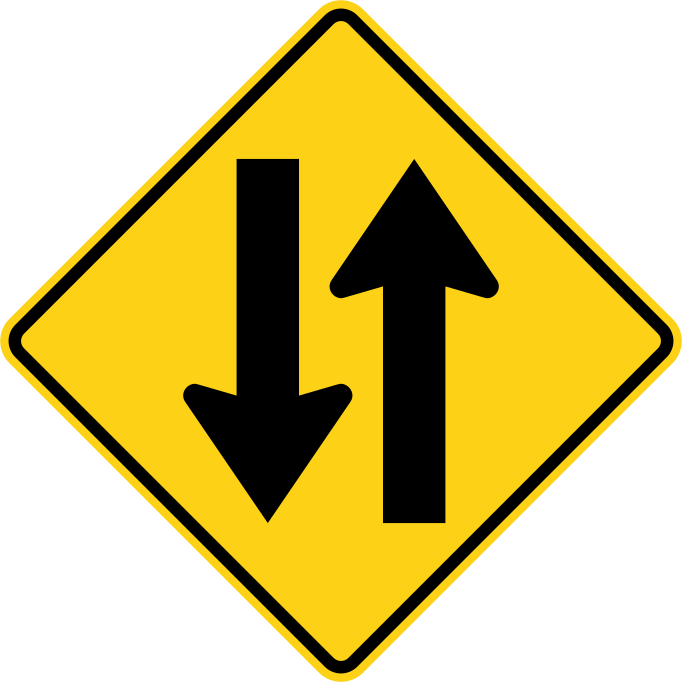
18. What roadway change is represented by the two opposing arrows?
- A divided highway begins and traffic remains separated by a median
- Passing is allowed simultaneously on both sides of the roadway
- A one-way road is joining a two-way road with opposing traffic ahead
- The road becomes one-way in the direction of the upper arrow
Show answer
A one-way road is joining a two-way road with opposing traffic ahead. The opposing arrows warn that the current one-way arrangement will join a two-way road. Full explanation in Test 7
19. When must a driver dim high beams for an oncoming vehicle?
- When the oncoming vehicle is within 500 feet
- When the oncoming vehicle is within 100 feet
- Only after the other driver dims first
- Only when the road has a high-speed designation
Show answer
When the oncoming vehicle is within 500 feet. Dim high beams when an oncoming vehicle is within 500 feet. Full explanation in Test 8
20. What does an Oregon flashing school speed limit sign indicate when its yellow light is flashing?
- A crossing guard has stopped all pedestrians
- The school zone is closed to all vehicles
- The speed limit has increased for school traffic
- Children are arriving at or leaving school
Show answer
Children are arriving at or leaving school. A flashing yellow light on a school speed sign indicates that children are arriving at or leaving school. Full explanation in Test 9
21. How should an Oregon driver under 18 handle a cell phone while operating a vehicle?
- Use it hands free for navigation
- Turn it off or put it in the back seat and ignore it
- Answer only calls from a parent
- Read messages when stopped at a red light
Show answer
Turn it off or put it in the back seat and ignore it. Oregon prohibits drivers under 18 from using a cell phone or another mobile electronic device while operating a vehicle. Full explanation in Test 10
22. Who may be in the vehicle during an Oregon drive test?
- Only the applicant and the examiner
- The applicant, the examiner, and a translator
- The applicant, the examiner, and one parent
- Anyone, as long as pets stay in a carrier
Show answer
Only the applicant and the examiner. Only you and the examiner are allowed in the vehicle during an Oregon drive test; translators, family, friends and pets are not allowed. Full explanation in Test 11
23. What response does Oregon recommend when visibility is reduced or the road is wet, snowy, or icy?
- Follow the vehicle ahead more closely to see its path
- Keep the posted speed and shorten the following gap
- Use cruise control to maintain a steady pace
- Use slower speeds and increase the following distance
Show answer
Use slower speeds and increase the following distance. Hazardous conditions call for slower travel and more space behind the vehicle ahead because visibility and traction can deteriorate while br Full explanation in Test 1
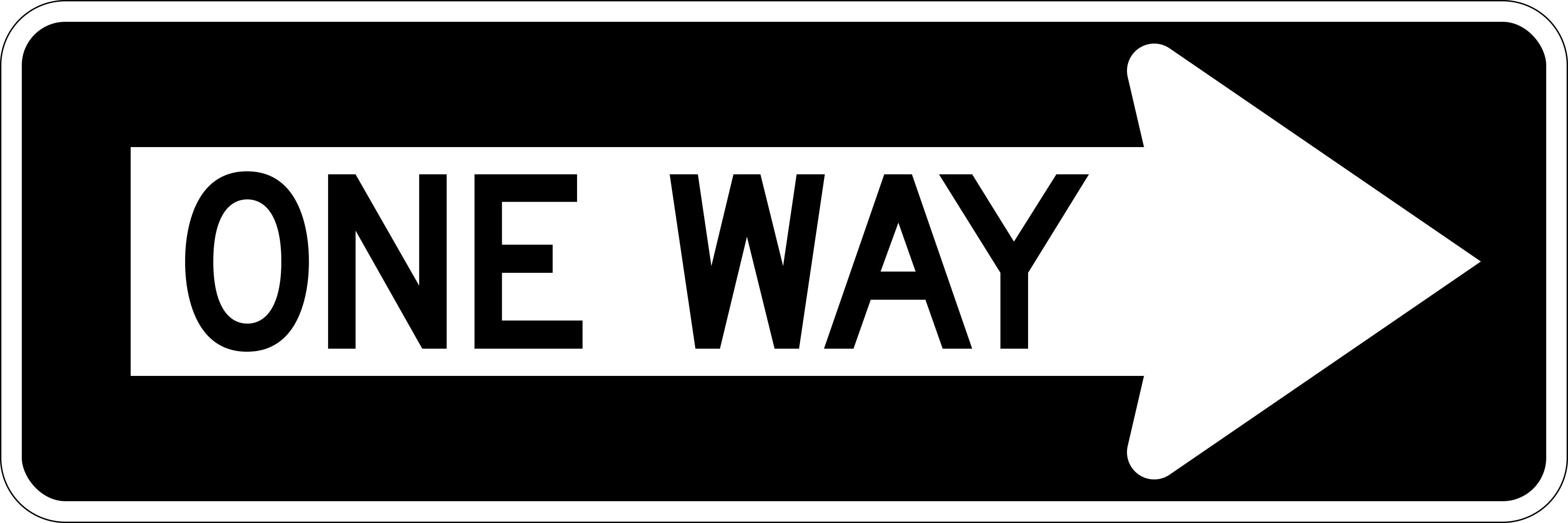
24. What does the arrow on the pictured ONE WAY sign identify?
- The only direction a pedestrian may cross the street
- The direction in which traffic on the street may flow
- A temporary detour that applies only to buses
- A lane where vehicles may reverse during congestion
Show answer
The direction in which traffic on the street may flow. The arrow on a ONE WAY sign describes the permitted flow for traffic on that street. Full explanation in Test 2
25. What does a wide solid white line mark on an Oregon road, and may you cross it?
- It is a barrier that may never be crossed
- It directs traffic into specific lanes and separates bike lanes; crossing is permitted but discouraged
- It separates opposing traffic
- It marks a shoulder that may be used for passing
Show answer
It directs traffic into specific lanes and separates bike lanes; crossing is permitted but discouraged. A wide solid white line is used to direct traffic into specific lanes, such as turn lanes, and to separate bike lanes from other traffic lan Full explanation in Test 3
26. A low speed Oregon crash leaves only $400 of vehicle damage, but the other driver is injured. Is a DMV collision report required?
- No, because damage is under the $2,500 threshold
- No, the injured driver is the one who must report
- Yes, any injury or death makes the collision reportable
- Only if the injured driver goes to a hospital that day
Show answer
Yes, any injury or death makes the collision reportable. Oregon's reporting list includes any collision that results in injury or death, regardless of the dollar amount of damage. Full explanation in Test 4
27. What should you do when a traffic signal is dark because of a power failure?
- Treat it as stop signs in all directions
- Wait for a police officer before moving
- Treat it as a yield sign
- Proceed if no vehicle is approaching
Show answer
Treat it as stop signs in all directions. A dark signal is not permission to continue through the intersection. Full explanation in Test 5
28. You fail your Oregon drive test on a Tuesday. When is the earliest you may retake it?
- Later that same day if an examiner is free
- One week later
- The next business day
- After a 90 day waiting period
Show answer
The next business day. Oregon makes a failed drive test wait until the next business day before a retest, so a same day second attempt is not available even if an Full explanation in Test 6
29. A new Oregon resident is surrendering a license from another state. When may DMV waive the drive test for this driver?
- When that license is valid or expired less than one year
- Only when the license came from a neighboring state
- When the license expired less than five years ago
- Never, because every new resident must take a drive test
Show answer
When that license is valid or expired less than one year. DMV may skip the drive test for a new resident who surrenders an out of state license that is still valid or that expired less than one year Full explanation in Test 7
30. The pictured KEEP RIGHT sign appears before a traffic island. Where should you drive?
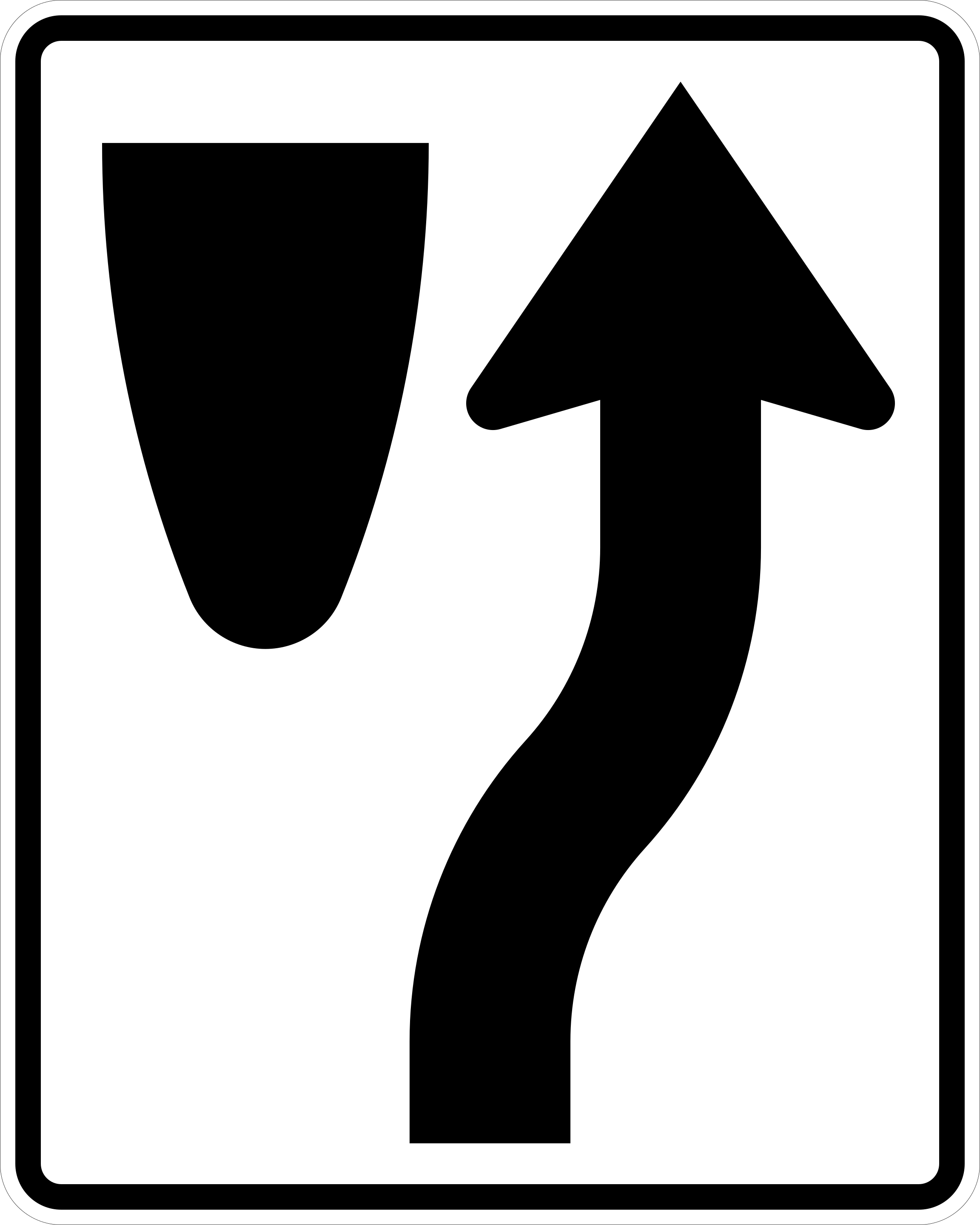
- Across the island if no vehicle is approaching
- To the left of the obstruction because traffic keeps left there
- To the right of the island, median, or obstruction
- Into the opposing lane until the obstruction ends
Show answer
To the right of the island, median, or obstruction. This sign marks an obstruction that divides or interrupts the roadway and directs traffic to pass on its right side. Full explanation in Test 8
31. For an Oregon Class C knowledge test, how many questions must a person answer correctly to pass?
- 28 of 35
- 25 of 35
- 30 of 40
- 20 of 25
Show answer
28 of 35. The Class C knowledge test has 35 multiple-choice questions, and Oregon requires 28 correct answers for a passing score. Full explanation in Test 9
32. What should a driver expect after seeing a Winding Road warning sign?

- A series of turns or curves
- A straight road with a wide shoulder
- A divided highway beginning ahead
- A mandatory detour around construction
Show answer
A series of turns or curves. The Winding Road warning signals repeated changes in direction, not one isolated bend. Full explanation in Test 10
33. What does the Crossroad warning sign indicate?

- The road ends at a railroad crossing
- A four-way intersection is ahead, and cross-traffic may enter
- Traffic must merge into the left lane
- A roundabout is already in the roadway
Show answer
A four-way intersection is ahead, and cross-traffic may enter. Crossroad warns that a four-way intersection is ahead and vehicles may enter from the crossing road. Full explanation in Test 11
34. At speeds greater than 35 mph, when may you pass a bicyclist traveling in your lane?
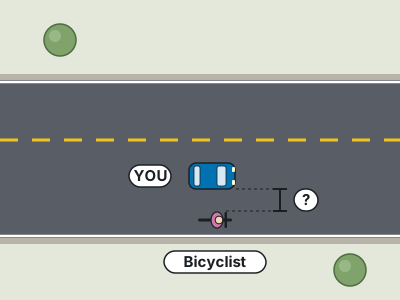
- Whenever the center line is broken and traffic is light
- When you leave enough distance to prevent contact if the rider falls
- When you sound the horn and remain close to the rider
- Only after the bicyclist moves onto the shoulder
Show answer
When you leave enough distance to prevent contact if the rider falls. Above 35 mph, passing a bicyclist in the same lane is permitted only when there is enough distance to prevent contact if the rider falls. Full explanation in Test 1
35. At two-way stop signs across from each other, who should yield when turning left?
- The driver who arrived first must always turn left
- The driver going straight yields in every case
- The driver turning left yields to oncoming traffic going straight
- Neither driver needs to check the other direction
Show answer
The driver turning left yields to oncoming traffic going straight. When opposing approaches are controlled by stop signs, the left-turning driver must yield to approaching or oncoming traffic traveling strai Full explanation in Test 2
