
Test 5 of 11 · 20 questions · Free 2026
OR Permit Practice Test 5
Jump to the test ↓A fixed 20 question set from the Oregon bank with answers and plain English explanations. The real OR exam is 35 questions, 80 percent to pass; take the full length version on the main practice page.
Question 1 of 20 · 0 right so far
All 20 questions in test 5
Every question below comes from the Oregon question bank on this page. Open a question to see the correct answer and the explanation. Nothing here is hidden behind a signup.
1. When may a driver proceed past an automated flagger device in an Oregon work zone?
- When the yellow light is flashing and the stop arm is up
- When the red light is on and the arm is down
- Whenever the lane appears clear, regardless of the device
- After sounding the horn twice
Show answer
When the yellow light is flashing and the stop arm is up. An automated flagger device controls movement with its lights and stop arm. Oregon says to stop when the red light is on and the arm is down, then proceed when the yellow light is flashing and the arm is up. A clear-looking lane does not override the device, and a horn has no permission-making role. Slow before the equipment, read both the light and arm, and continue only after the release indication appears. Keep watching for workers, cones, and another control point farther into the zone.
Study this in the handbook: Emergency Vehicles, Stopped Vehicles and Work Zones
2. On a two-lane road in Oregon, where may a pass begin?
- Anywhere the driver can accelerate
- Inside an intersection if traffic is light
- Only after the start of a passing zone
- Inside a no-passing zone if the vehicle is slow
Show answer
Only after the start of a passing zone. On a two-lane road, a pass must begin after the start of a passing zone and finish before entering a no-passing zone. The driver must check the path, mirrors, blind spot, and speed without exceeding the posted limit. Beginning early because the road looks open can leave the vehicle committed when the restriction starts. Find the marked passing zone first, confirm a clear return path, and abandon the maneuver whenever there is doubt.
Study this in the handbook: Passing and Freeway Driving
3. You back into a parked, empty car in Oregon and cannot find its owner. What are you required to do?
- Leave a note with your name, address, and a brief description of what happened
- Drive away, because no one was in the car
- Leave only your license plate number on the windshield
- Wait beside the car until the owner returns, however long it takes
Show answer
Leave a note with your name, address, and a brief description of what happened. When you hit an unoccupied vehicle, first try to find the owner. If you cannot, leave a note with your name and address plus a short description of what happened. Driving off without leaving that information is not allowed just because the car was empty. A plate number alone does not give the owner your name and address. The rule does not require waiting indefinitely once you have left the note. The same duty to locate an owner applies when you damage property other than a motor vehicle.
Study this in the handbook: Insurance, Collisions and Reports
4. If your brakes stop working while you are driving, which response is recommended first?
- Pump the brakes to try to rebuild pressure
- Turn off the engine immediately and release the steering wheel
- Accelerate until the brakes begin working again
- Shift into park while moving at road speed
Show answer
Pump the brakes to try to rebuild pressure. When your brakes stop working, the Oregon manual's first step is to pump the brakes, because this may build up enough pressure to get them working again. Then shift to a lower gear so the engine can help slow you down, slowly apply the parking brake, use your horn or lights to warn others that you are out of control, and once you have slowed, ease onto the shoulder. Turning off the engine, accelerating, and shifting into park at road speed are not steps on that list.
Study this in the handbook: Avoiding Collisions and Equipment Failures
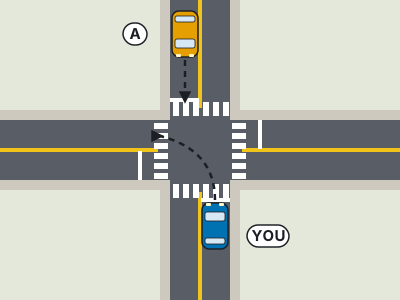
5. When making a left turn on a two-way road, you must yield to:
- No traffic because the turning vehicle has priority
- Only traffic approaching from behind
- Oncoming traffic until it is safe to turn
- Vehicles parked along the road but not moving traffic
Show answer
Oncoming traffic until it is safe to turn. For a left turn on a two-way road, Oregon law requires the driver to yield the right of way to oncoming traffic until it is safe to turn. The driver approaches in the lane just right of the center line and looks left, front, right, and left again for oncoming and cross traffic. Looking only behind the vehicle ignores the main conflict ahead, and the turning vehicle has no priority over oncoming traffic. Parked vehicles are not the concern. Wait for a safe gap before turning.
Study this in the handbook: Right of Way at Intersections
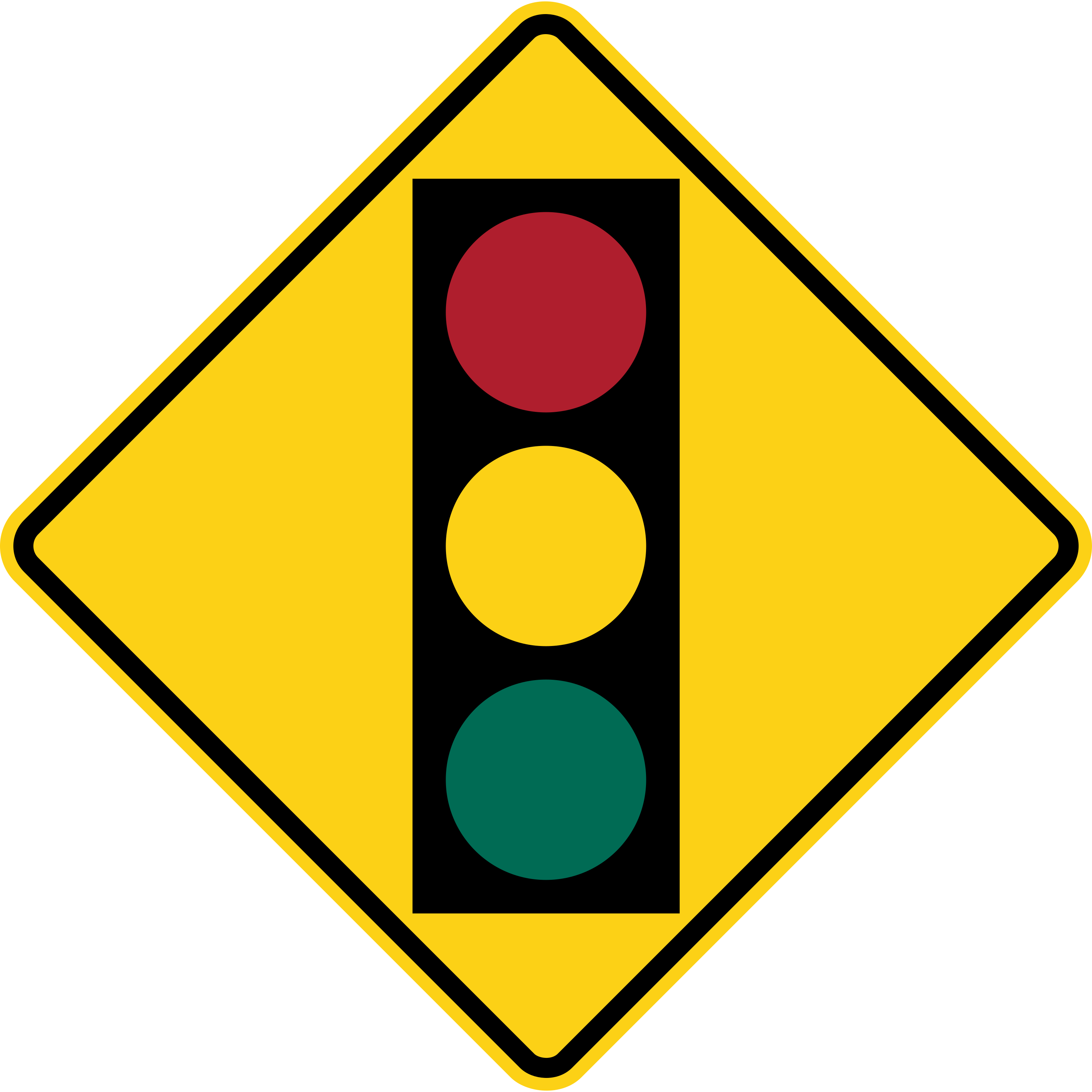
6. What preparation is appropriate when this signal-ahead sign appears?
- Expect a police checkpoint instead of a traffic control signal
- Turn off the vehicle because the streetlights are broken
- Speed up so the next signal cannot change before arrival
- Slow down and be ready to stop for a traffic signal ahead
Show answer
Slow down and be ready to stop for a traffic signal ahead. This yellow warning sign gives advance notice of a traffic signal. The driver should reduce speed as appropriate and be prepared to stop when reaching the signal, which may change before arrival. The choice “Speed up so the next signal cannot change before arrival” encourages rushing toward a control device and removes the time needed for a safe stop. Keep a gap from the vehicle ahead, watch the signal itself as it comes into view, and avoid assuming that the current color will remain unchanged all the way to the intersection.
Study this in the handbook: Warning, Guide and Service Signs
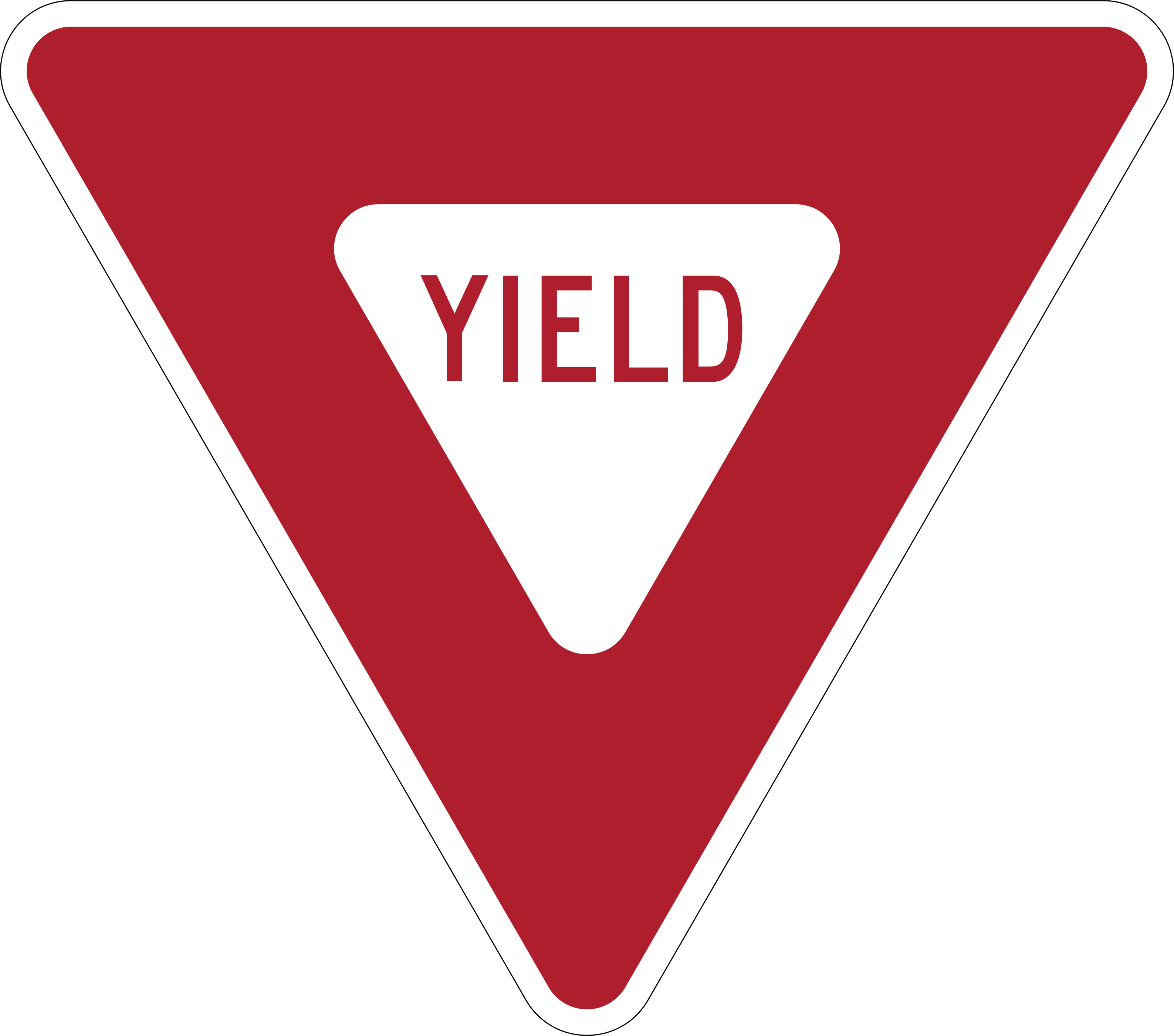
7. What does the inverted triangle in the image tell you to do?
- Stop every time, even when no road user is present
- Reduce speed and yield the right of way, stopping if needed
- Accelerate through the junction before cross traffic arrives
- Enter without looking because the sign grants priority
Show answer
Reduce speed and yield the right of way, stopping if needed. A yield sign calls for a speed reduction and a right of way check. Let other road users proceed when they have priority, and stop if the traffic situation requires a full stop. The choice “Stop every time, even when no road user is present” turns a yield sign into a universal stop sign, which is not what the manual says. Even when a stop is unnecessary, the driver still needs enough control to give way smoothly. Look left, right, and toward the intended path before joining the intersection or roadway.
Study this in the handbook: Regulatory Signs
8. At the pictured octagonal sign, which action is required before entering the intersection?

- Reduce speed and continue if the cross street appears empty
- Stop only when another vehicle is approaching
- Come to a complete stop, yield as required, and enter only when safe
- Stop beyond the intersection so the crosswalk stays clear
Show answer
Come to a complete stop, yield as required, and enter only when safe. An octagon identifies a stop requirement, not a suggestion to slow down. Bring the vehicle to a complete stop, yield to other vehicles, and remain stopped for pedestrians crossing in a marked or unmarked crosswalk. Enter the intersection only after the path is safe. The choice “Reduce speed and continue if the cross street appears empty” is unsafe because an empty-looking approach does not remove the stopping duty. Use the stop line when one is present, otherwise stop before the crosswalk or intersection where you can see without blocking people walking.
Study this in the handbook: Regulatory Signs
9. What do red regulatory signs that prohibit actions or movements do at intersections?
- Control the flow of traffic through intersections to increase safety
- Warn only of weather conditions ahead
- Identify services such as food, fuel, or lodging
- Mark roads where passing is encouraged
Show answer
Control the flow of traffic through intersections to increase safety. Oregon describes prohibitive regulatory signs as red signs that control actions or movements and increase safety by controlling traffic through intersections. They communicate a rule, not a suggestion or a service location. The warning-sign choice confuses red regulatory signs with the yellow signs used to alert drivers to possible hazards or changing road conditions. When a red prohibition appears, identify the movement it restricts before entering the intersection. The color is a useful quick cue, but the symbol or words still tell you exactly which turn, entry, or movement is forbidden.
Study this in the handbook: Regulatory Signs
10. Which reporting requirement remains the driver’s responsibility even when police file a report after a reportable Oregon collision?
- The driver's duty to exchange information
- The driver's requirement to file a report with DMV
- The need to remain at the scene until police arrive in every crash
- The requirement to obtain a new driver license
Show answer
The driver's requirement to file a report with DMV. Oregon says a police report does not replace the driver's requirement to file a report with DMV. A reportable collision may require the DMV form within 72 hours when damage, towing, injury, or death meets the listed conditions. Calling police does not transfer that filing duty, and the other choices describe duties or actions that are not the specific replacement issue in this passage. After a crash, exchange information, determine whether the collision is reportable, and complete the DMV filing even when an officer has documented the scene.
Study this in the handbook: Insurance, Collisions and Reports
11. What does Oregon's basic rule require when choosing a driving speed?
- The speed of the fastest nearby vehicle
- The posted maximum in every circumstance
- A speed reasonable and cautious for existing conditions
- A speed five miles below the sign
Show answer
A speed reasonable and cautious for existing conditions. Oregon's basic rule requires a speed that is reasonable and cautious for existing conditions. A posted maximum is not a command to drive that fast when weather, visibility, traffic, pedestrians, or the road surface call for less. Matching the fastest vehicle can create an unsafe pace, and the manual does not establish a universal five-mph reduction. The cue is conditions first: evaluate what is happening around the vehicle, then stay at or below the applicable maximum while choosing a safe speed.
Study this in the handbook: The Basic Rule and Variable Speed Signs
12. A 17 year old who is legally emancipated applies for an Oregon Class C instruction permit. What happens to the usual parent signature requirement?
- A parent must still sign because every applicant under 18 needs one
- Proof of emancipation is provided and no parent or guardian signature is needed
- A court clerk must sign the application in place of the parent
- The applicant must wait until turning 18 to apply
Show answer
Proof of emancipation is provided and no parent or guardian signature is needed. Applicants under 18 normally need a parent or legal guardian to sign the electronic application. Oregon makes an exception for an applicant who is emancipated or married: that person provides proof of the status, and the parent or guardian signature is then not required. So a parent signature is not mandatory in every case, and no court clerk signs in the parent's place. Emancipation also does not force the applicant to wait until 18, since the permit age remains 15 and the license age remains 16.
Study this in the handbook: Permits and Teen Licenses
13. Apart from the new resident rule, which proof lets Oregon DMV waive the drive test?
- Logging 100 hours of supervised driving
- Scoring 35 out of 35 on the knowledge test
- Holding an instruction permit for at least 12 months
- Completing an ODOT approved driver education course within the past two years
Show answer
Completing an ODOT approved driver education course within the past two years. DMV may waive the behind the wheel test when it receives proof that the applicant finished an ODOT approved driver education course within the past two years. Logging 100 supervised hours is a condition for an under 18 license, not a substitute for the drive test. A perfect knowledge score only shows you passed the written part, where 28 correct answers are enough. Holding a permit longer than the six month minimum also earns no waiver. The course completion proof has to reach DMV for the waiver to apply.
Study this in the handbook: The Knowledge and Drive Tests
14. Outside city limits, Oregon prohibits a U-turn where traffic from either direction cannot see your vehicle within what distance?
- 200 feet
- 500 feet
- 1,500 feet
- 1,000 feet
Show answer
1,000 feet. Outside city limits a U-turn is prohibited anywhere your vehicle cannot be seen by traffic coming from either direction within 1,000 feet. The 500 foot figure is the rule inside city limits. Two hundred feet is far too short, and 1,500 feet is not the stated distance. U-turns are also barred at or on railroad crossings, between intersections in a city, at signal controlled intersections unless a sign permits, and wherever signs or markings prohibit them.
Study this in the handbook: Turns, U-Turns and Roundabouts
15. How should a driver use a two-way special left-turn lane?
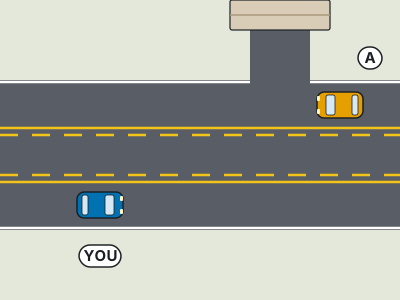
- Enter it just before turning and wait there for traffic to clear
- Travel in it for several blocks to bypass congestion
- Use it as a passing lane when opposing traffic is light
- Make a right turn from it without checking bicycles
Show answer
Enter it just before turning and wait there for traffic to clear. A two-way special left turn lane is for preparing to make a left turn from either direction. Oregon says to enter it just before the turn, wait until traffic clears, and then complete the maneuver. It is illegal to travel in the lane, so using it for several blocks or as a passing lane is improper. The manual describes the lane only for left turns, so a right turn from it is not a listed use. The cue is short entry for one left turn, not a shortcut through congestion.
Study this in the handbook: Pavement Markings
16. When does Oregon allow a driver to use hand-and-arm signals instead of signal lights?
- At night on unlit roads
- Any time the vehicle is wide or long
- Only when visibility drops below 500 feet
- Only in daylight when people and vehicles are clearly visible at 1,000 feet
Show answer
Only in daylight when people and vehicles are clearly visible at 1,000 feet. Hand-and-arm signals are limited to daylight and to conditions where you can clearly see people and vehicles 1,000 feet away. At night or when visibility is poor, turn signal lights are required, so dark roads and low visibility are exactly when arm signals are not allowed. The manual also says hand-and-arm signals should not be used any time you drive a wide or long vehicle. Check conditions before relying on your arm, and switch to the signal lights whenever daylight or the 1,000 foot view is missing.
Study this in the handbook: Turns, U-Turns and Roundabouts
17. What does an Oregon Multiuse Path Crossing warning sign identify?
- A railroad crossing controlled by a gate
- A location where parking is always permitted
- A roadway reserved for emergency vehicles
- An area where people riding bicycles and pedestrians regularly cross
Show answer
An area where people riding bicycles and pedestrians regularly cross. A Multiuse Path Crossing warning sign identifies an area where people riding bicycles and pedestrians regularly cross the road. It is not a parking permission, an emergency-only roadway, or a railroad warning. Treat the sign as an advance cue to look for vulnerable road users entering from the side, reduce speed when needed, and yield as required at the crossing. Scanning early is important because a person on a bicycle may approach more quickly than a walking pedestrian and may be partly hidden until reaching the roadway.
Study this in the handbook: Warning, Guide and Service Signs
18. What is illegal at an Oregon railroad crossing when the gate is down or moving?
- Looking for a second train on another track
- Stopping before the stop line
- Driving around or under the crossing gate
- Waiting until the gate is fully raised
Show answer
Driving around or under the crossing gate. Oregon makes it illegal to drive around or under a railroad crossing gate while it is down or being raised or lowered. Stopping before the line, watching for another train, and waiting for the gate to rise are protective actions. Never treat a partially moving gate as an invitation to cross. After stopping, remain back from the tracks and do not start forward until you are sure the crossing is safe. On crossings with multiple tracks, check for a second train from either direction.
Study this in the handbook: School Buses and Railroad Crossings
19. Is it legal for a non-member to join or drive between vehicles in an Oregon funeral procession?
- Yes, if traffic is slow
- No, it is against the law
- Yes, with headlights on
- Yes, on multi-lane roads
Show answer
No, it is against the law. If you are not a member of the funeral procession, it is against the law to join it or to drive between its vehicles. Processions may pass through intersections without stopping and without obeying traffic control devices, and other vehicles must yield to them. Cutting into the line breaks the group and creates conflicts at the next intersection, where the following vehicles expect to proceed together.
Study this in the handbook: Emergency Vehicles, Stopped Vehicles and Work Zones
20. How long must an Oregon applicant under 18 have held an instruction permit before applying for a driver license?
- At least 3 months
- At least 6 months
- At least 9 months
- At least 12 months
Show answer
At least 6 months. Oregon requires an applicant under 18 to have held an instruction permit for at least six months before applying for a driver license. The requirement is a minimum holding period, not a suggestion to wait until age 18 or a substitute for supervised practice. Three months is too short, while nine and twelve months add time the manual does not require. An out of state permit can count toward this period, so keep documentation showing when the permit was first issued.
Study this in the handbook: Permits and Teen Licenses
QualitySpace is expanding to Oregon
We are a California-based independent insurance brokerage working on licensing in more states. We cannot help with Oregon insurance yet. Leave your email and we will let you know when we can.
Every question is written from the official Oregon Driver Manual. Need paper? Printable OR practice test with answer key.
Last verified 2026-10-05. How we check every question · Study all 220 as flashcards
Frequently asked questions
How many questions are on this Oregon practice test?
This fixed set has 20 questions. It is test 5 of 11 from the 220 question Oregon bank. The real OR exam asks 35 questions and you need 28 correct.
What is the passing score for the real Oregon test?
28 of 35 correct to receive a passing score That figure comes from the official Oregon source cited on the DMV facts page.
How does this fixed test relate to the full Oregon bank?
Each numbered test is a fixed set of questions in a fixed order, so you can retake the same test later and compare. Every test mixes road signs and the other topics in about the same proportion as the full bank. Tests 1 to 11 together cover every question in the Oregon bank once. The full practice page mixes the whole bank at random.
Last verified 2026-10-05. See the Oregon DMV facts page for sourced state details.