
Key points
Signal at least 100 feet before a turn or lane change when moving in traffic.
Source: Handbook p. 38
“If your vehicle is moving in traffic, use your turn signal at least 100 feet before the turn or lane change.”
Oregon Driver Manual, Handbook p. 38Use hand signals only in daylight when you can see 1,000 feet; use signal lights at night or in poor visibility.
Source: Handbook p. 38
“Only use hand-and-arm signals in daylight and when you can clearly see people and vehicles at a distance of 1,000 feet. You must use turn signal lights at night or when visibility is poor.”
Oregon Driver Manual, Handbook p. 38You may turn across a bicycle lane, but do not move into it to prepare for a turn.
Source: Handbook p. 39
“You may turn across a bicycle lane, but do not move into a bicycle lane in preparation for a turn.”
Oregon Driver Manual, Handbook p. 39Turn from the nearest lane in your direction into the nearest lane in the direction you want to go.
Source: Handbook p. 41
“The general rule for turning is to turn from the nearest lane in the direction you are traveling to the nearest lane in the direction you want to go.”
Oregon Driver Manual, Handbook p. 41Turning left from a two way road onto a one way road on red is allowed after stopping and yielding.
Source: Handbook p. 40
“You may make this turn against a red light after stopping and yielding to traffic and pedestrians.”
Oregon Driver Manual, Handbook p. 40U turns are banned in a city where traffic cannot see you within 500 feet, and outside city limits within 1,000 feet.
Source: Handbook p. 41
“Any location within city limits where your vehicle cannot be seen by traffic coming from either direction within 500 feet. • Any location outside city limits where your vehicle cannot be seen by traffic coming from either direction within 1,000 feet.”
Oregon Driver Manual, Handbook p. 41U turns are also banned between intersections in a city and at signal controlled intersections unless a sign permits them.
Source: Handbook p. 41
“Intersections controlled by a traffic signal, unless a sign permits the turn. • Between intersections in a city.”
Oregon Driver Manual, Handbook p. 41In a roundabout, traffic moves counterclockwise around the center island.
Source: Handbook p. 43
“Traffic moves in one direction, counterclockwise, around the center island.”
Oregon Driver Manual, Handbook p. 43Never pass or drive beside a truck inside a roundabout.
Source: Handbook p. 44
“It is illegal to pass or drive beside a truck within the roundabout.”
Oregon Driver Manual, Handbook p. 44
Numbers to know
| Number | What it means | Manual |
|---|---|---|
| 100 feet | minimum signaling distance before a turn | Handbook p. 38 |
| 1,000 feet | visibility needed to use hand signals | Handbook p. 38 |
| 500 feet | U turn visibility limit inside city limits | Handbook p. 41 |
| 1,000 feet | U turn visibility limit outside city limits | Handbook p. 41 |
Recognize these signs
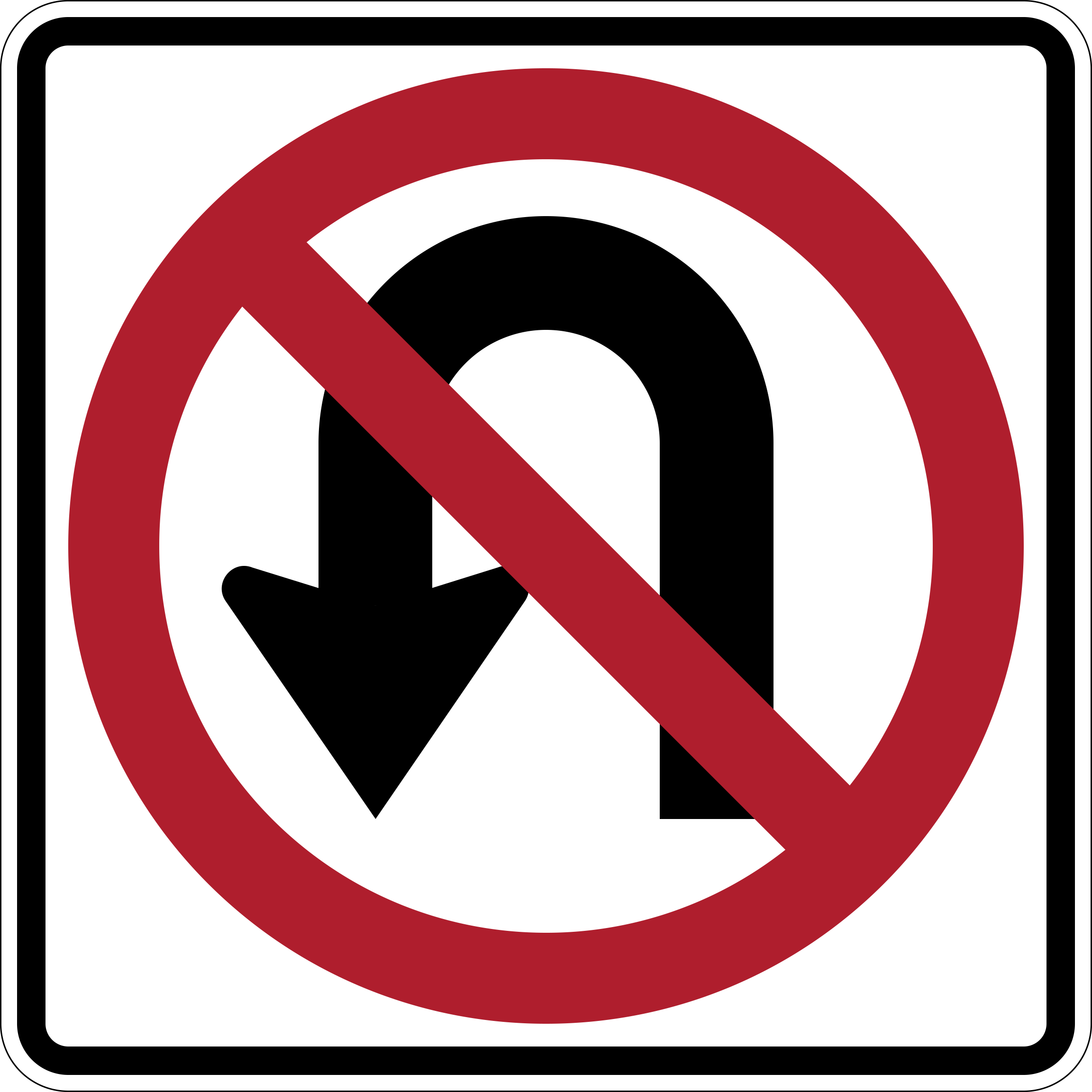
No U turn 
Roundabout ahead
3 questions from the Oregon practice test
1. After stopping at a red light, when may you turn left onto a one-way road?
- Only after the signal turns green
- After stopping and yielding to traffic and pedestrians
- Whenever the cross street has no parked vehicles
- Only when a police officer waves you through
Show answer
After stopping and yielding to traffic and pedestrians. Oregon permits a left turn on red onto a one-way road from either a one-way or a two-way road, after stopping and yielding, unless a sign or police officer prohibits it. A left turn onto a two-way road against a red light remains illegal. An empty curb does not replace the required checks for traffic and pedestrians. Stop completely, confirm the turn is permitted and the way is clear, then turn into the proper lane.
2. Where does Oregon prohibit U-turns in a city?
- Only on one-way streets
- Between intersections, and at signal-controlled intersections unless a sign permits the turn
- Nowhere, U-turns are always legal in cities
- Only near schools
Show answer
Between intersections, and at signal-controlled intersections unless a sign permits the turn. Oregon prohibits U-turns at intersections controlled by a traffic signal unless a sign permits the turn, between intersections in a city, at any location within city limits where the vehicle cannot be seen by traffic from either direction within 500 feet, and at locations outside city limits where it cannot be seen within a longer distance. One way streets and schools are not the manual's tests. Find a legal turnaround such as a side street.
3. In what direction does traffic move in an Oregon roundabout?
- Counterclockwise around the center island
- Clockwise around the center island
- Straight across the center island
- In either direction chosen by the entering driver
Show answer
Counterclockwise around the center island. Oregon roundabouts carry traffic counterclockwise around a center island. The clockwise choice reverses the established flow and would place a vehicle into opposing movement. Driving straight across the island is not a roundabout path, and entering drivers do not choose the direction. Approach slowly, follow the lane-use signs, and keep the center island to your left as you circulate. The direction cue is especially useful when visibility is limited or when a driver is unfamiliar with the intersection's layout.
Practice this topic
Lock it in with safe driving questions from the free Oregon practice test. Every answer comes with a plain English explanation.
Source: the Oregon Driver Manual, Turns & Intersections. This lesson is a plain English summary, not the law itself; where it differs, the manual and the statute govern. Last checked 2026-09-27.