
Key points
At a stop sign, steady red or flashing red signal, stop before the marked stop line or crosswalk, if there is one.
Source: Handbook p. 42
“At an intersection with a stop sign, steady red signal or flashing red signal, you must stop before the marked stop line or crosswalk, if there is one.”
Oregon Driver Manual, Handbook p. 42Even on green, do not enter an intersection unless there is room on the other side.
Source: Handbook p. 42
“Even if you have a green light, do not enter an intersection unless there is room for your vehicle on the other side.”
Oregon Driver Manual, Handbook p. 42At an all way stop, the driver who stops first normally goes first; when in doubt, yield to the driver on your right.
Source: Handbook p. 42
“it is common courtesy to allow the driver who stops first to go first. When in doubt, yield to the driver on your right.”
Oregon Driver Manual, Handbook p. 42At a two way stop, a driver turning left yields to oncoming traffic going straight.
Source: Handbook p. 42
“At intersections with two-way stop signs across from each other, the driver turning left should yield the right of way to approaching or oncoming traffic going straight.”
Oregon Driver Manual, Handbook p. 42At an uncontrolled intersection, yield to any vehicle in the intersection or approaching from your right.
Source: Handbook p. 42
“Yield the right of way to any vehicle in the intersection or approaching from your right.”
Oregon Driver Manual, Handbook p. 42At a T intersection with no signs, the driver on the ending road yields to the through road.
Source: Handbook p. 42
“If you are the driver on a road that ends at a “T” intersection with no signs or signals, you must yield to drivers on the through road.”
Oregon Driver Manual, Handbook p. 42Before entering a roundabout, yield to traffic inside it and to traffic exiting it.
Source: Handbook p. 43
“Before you enter the roundabout, you must yield to traffic inside as well as exiting the roundabout.”
Oregon Driver Manual, Handbook p. 43Stop before you enter or cross a road from an alley, driveway or parking lot that has no signs or signals.
Source: Handbook p. 18
“Stop before you enter or cross a road from an alley, driveway or parking lot not controlled by signs or signals.”
Oregon Driver Manual, Handbook p. 18
Recognize these signs

Stop 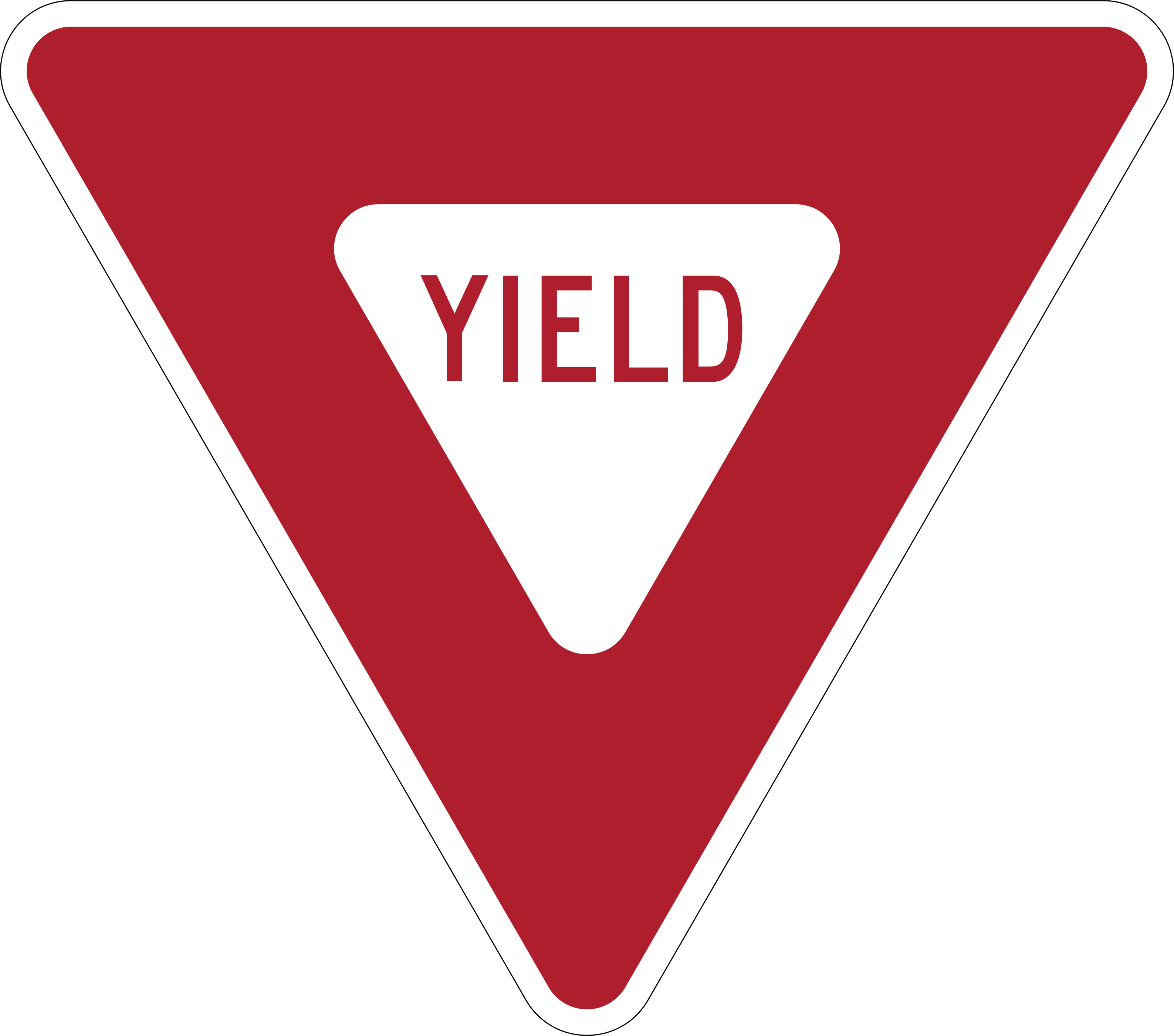
Yield
3 questions from the Oregon practice test
1. At two-way stop signs across from each other, who should yield when turning left?
- The driver who arrived first must always turn left
- The driver going straight yields in every case
- The driver turning left yields to oncoming traffic going straight
- Neither driver needs to check the other direction
Show answer
The driver turning left yields to oncoming traffic going straight. When opposing approaches are controlled by stop signs, the left-turning driver must yield to approaching or oncoming traffic traveling straight. The straight-through driver does not automatically give up priority, and arriving first does not remove the need to stop and check. Both vehicles should confirm that the intersection is clear before moving. The useful cue is the crossing path created by the left turn: wait for the oncoming vehicle to pass, then complete the turn smoothly while staying in the proper lane.
2. When making a left turn on a two-way road, you must yield to:
- No traffic because the turning vehicle has priority
- Only traffic approaching from behind
- Oncoming traffic until it is safe to turn
- Vehicles parked along the road but not moving traffic
Show answer
Oncoming traffic until it is safe to turn. For a left turn on a two-way road, Oregon law requires the driver to yield the right of way to oncoming traffic until it is safe to turn. The driver approaches in the lane just right of the center line and looks left, front, right, and left again for oncoming and cross traffic. Looking only behind the vehicle ignores the main conflict ahead, and the turning vehicle has no priority over oncoming traffic. Parked vehicles are not the concern. Wait for a safe gap before turning.
3. Before entering an Oregon roundabout, what traffic must a driver yield to?
- Traffic inside and traffic exiting the roundabout
- Only vehicles entering from the left
- Vehicles behind the entering driver
- No traffic if the driver signals left
Show answer
Traffic inside and traffic exiting the roundabout. Before entering a roundabout, a driver must yield to traffic already inside and to traffic exiting the roundabout. The entering driver should wait for a gap and merge when safe. A turn signal does not remove the yielding duty, and traffic behind the vehicle does not determine who has priority. The manual also directs drivers to stop for pedestrians in the crosswalk in their lane as they approach. Slow down early, identify the intended exit, and look for both circulating and departing traffic.
Practice this topic
Lock it in with right of way questions from the free Oregon practice test. Every answer comes with a plain English explanation.
Source: the Oregon Driver Manual, Turns & Intersections: Intersections. This lesson is a plain English summary, not the law itself; where it differs, the manual and the statute govern. Last checked 2026-09-27.