
Test 1 of 10 · 20 questions · Free 2026
OK Permit Practice Test 1
Jump to the test ↓A fixed 20 question set from the Oklahoma bank with answers and plain English explanations. The real OK exam is 20 questions, 75 percent to pass; take the full length version on the main practice page.
Question 1 of 20 · 0 right so far
All 20 questions in test 1
Every question below comes from the Oklahoma question bank on this page. Open a question to see the correct answer and the explanation. Nothing here is hidden behind a signup.
1. What hazard is announced by a round yellow and black warning sign?
- A recreational area
- A hospital entrance
- A low clearance underpass
- Railroad tracks ahead
Show answer
Railroad tracks ahead. The round yellow and black sign is an advance warning that railroad tracks are ahead. It gives the driver time to slow, look, listen, and prepare to stop within the required distance. A hospital is identified by a service sign, while an underpass warning uses a different roadway hazard symbol. When this round sign appears, do not assume the crossing is protected by a gate; actively search for a train and follow the crossing controls.
Study this in the handbook: Warning Signs
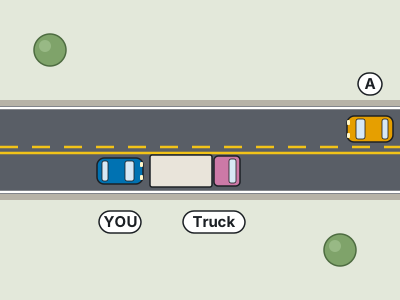
2. If the solid yellow line is in the driver's lane, what passing rule applies?
- Passing is allowed if the driver uses the horn first
- Passing is prohibited from that lane
- Passing is allowed only for motorcycles and farm equipment
- Passing is required to keep traffic moving at the speed limit
Show answer
Passing is prohibited from that lane. A solid yellow line in the driver’s lane marks a no passing zone. The restriction applies whether the marking is a single solid line beside a dashed line or part of a pair of solid yellow lines. A horn does not change the lane marking, and no vehicle class receives the suggested exception. The driver should remain in the lane and wait for a lawful opportunity. The cue is the line’s position relative to the vehicle: solid yellow on your side means do not pass.
Study this in the handbook: Passing and Turning
3. Under Oklahoma's basic speed rule, which condition should make you reconsider a speed that is legal on a clear day?
- A vehicle with a full fuel tank
- A clean windshield with no cracks
- A familiar route with light traffic
- Fog that limits how far ahead you can see
Show answer
Fog that limits how far ahead you can see. The basic speed rule connects safe speed to present conditions, including visibility and weather. Fog reduces the distance a driver can see and leaves less room to recognize a problem and stop, so the posted number may be too fast. The clear-day assumptions in the other choices do not remove the duty to drive prudently, but none describes a condition that directly cuts forward sight distance. Use the visible road ahead, not the sign alone, to judge speed.
Study this in the handbook: The Basic Speed Rule
4. An Oklahoma driver feels drowsy and dizzy, lights seem brighter, and lips turn blue. What does the manual say to do?
- Turn up the heater and keep driving
- Drink coffee and continue
- Pull off the road, park, turn off the motor, and open the windows
- Speed up to reach a rest area
Show answer
Pull off the road, park, turn off the motor, and open the windows. Those are the symptoms of carbon monoxide poisoning: drowsiness or dizziness, lights that seem brighter, blue skin and lips, and a tightening forehead. You cannot see, smell or taste the gas, which is most likely to leak in when the heater is running, the exhaust system is faulty, or you are breathing fumes in heavy traffic. Pull off the road, park, turn off the motor, open your windows, and relax or walk until you feel better.
Study this in the handbook: Floods, Crashes and Roadside Emergencies
5. What does a yellow dashed center line mean on a two lane, two way roadway?
- The center lane is reserved for left turns only
- Traffic travels in the same direction and passing is never allowed
- Traffic travels in opposite directions and passing is permitted when safe
- The roadway is one way until the next intersection
Show answer
Traffic travels in opposite directions and passing is permitted when safe. A yellow dashed line separates traffic moving in opposite directions. It permits passing when the driver has enough clear distance and the maneuver can be completed safely. It does not indicate same direction traffic, which is associated with white markings. A center turn lane has different markings and a one way roadway does not change the meaning of this yellow centerline. The visual cue is the broken yellow divider: stay right of it during normal travel, and cross it only for a safe, lawful pass.
Study this in the handbook: Pavement Markings and Lanes
6. What is the maximum speed limit on Oklahoma turnpikes, unless otherwise posted?
- 70 mph
- 75 mph
- 65 mph
- 80 mph
Show answer
80 mph. Oklahoma's speed limit table lists turnpikes at 80 mph, undivided state highways at 65 mph and county roads at 55 mph. The number is a maximum for ideal conditions, and the manual says to carefully observe and obey all posted speed limits, since cities and towns can set their own speed limits. Rain, fog, heavy traffic and darkness all call for less than the posted figure.
Study this in the handbook: Speed Limits and Expressway Speeds
7. What hazard does a round yellow railroad warning sign announce?

- A bicycle-only path crossing the road
- A mandatory circular traffic pattern ahead
- A railroad crossing ahead
- A no-passing zone that has already ended
Show answer
A railroad crossing ahead. The round yellow and black design is advance notice of railroad tracks, giving the driver time to prepare before reaching the crossing. The appropriate response is to reduce speed and be ready to stop within the required area if a train or blocked view makes stopping necessary. It is not a roundabout marker, bicycle facility sign, or an announcement that passing restrictions are over.
Study this in the handbook: Warning Signs
8. What do single or double solid yellow lines mean on an Oklahoma roadway?
- Do not pass, although you may cross to turn left
- Passing is permitted in either direction
- Only trucks may cross the line
- The road is one-way
Show answer
Do not pass, although you may cross to turn left. Single or double solid yellow lines separate traffic moving in opposite directions and mean do not pass. The manual permits crossing the line for a left turn, so the rule is not an absolute ban on every crossing. A dashed yellow line, by contrast, can permit passing when safe. The truck-only and one-way choices change the meaning entirely. Read solid yellow as a no-passing boundary, then consider a left-turn movement separately.
Study this in the handbook: Pavement Markings and Lanes
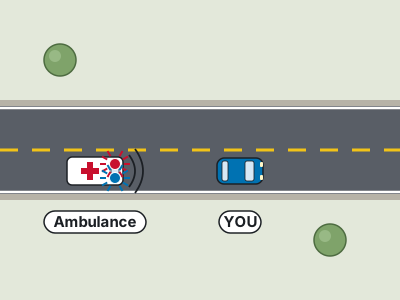
9. A police car, fire engine, or ambulance approaches with a siren or flashing warning lights. What should the driver do?
- Turn around and follow the emergency vehicle
- Keep speed and remain in the intersection
- Pull left and stop beside the center line
- Pull to the right edge, clear of intersections, and stop
Show answer
Pull to the right edge, clear of intersections, and stop. The manual directs drivers to yield to an emergency vehicle using a siren or flashing warning lights. Pull to the right edge of the roadway, stay clear of intersections, and stop until the vehicle has passed. Stopping beside the center line can leave the emergency path blocked, and following the vehicle creates another hazard. The concrete cue is right edge plus clear intersection, followed by a full stop rather than a sudden turn or pursuit.
Study this in the handbook: Right of Way at Intersections
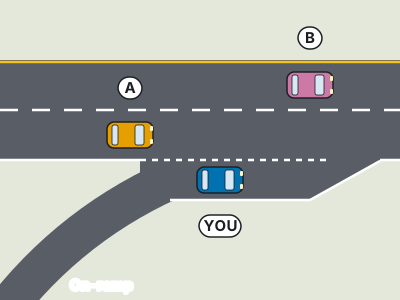
10. A driver entering an expressway must yield to which vehicles?
- No vehicles because the acceleration lane has priority
- Only vehicles behind the entrance ramp
- Vehicles waiting on the shoulder to merge
- Vehicles already on the expressway
Show answer
Vehicles already on the expressway. Expressway traffic already has an established path and speed, so a driver entering must yield before merging. Use the acceleration lane to adjust speed, signal left, watch the traffic, and enter only when a gap is sufficient. The acceleration lane helps you match traffic; it does not give you priority. Do not force a vehicle already on the highway to brake or swerve. If the opening is not adequate, continue adjusting until the merge can happen without disrupting normal flow.
Study this in the handbook: Expressway Driving
11. What should a driver do when other traffic may be moving into the driver's lane during a merge?

- Assume other traffic must stop without checking
- Watch for traffic in the new lane and adjust speed or lane safely
- Accelerate into the narrowing space and refuse to yield
- Move onto the shoulder before looking for an opening
Show answer
Watch for traffic in the new lane and adjust speed or lane safely. During a merge, other traffic may be moving into your lane, so the driver should watch the new lane and be ready to change speed or lane. That response requires mirror checks, a blind-spot check, a signal, and a safe opening. Assuming the other driver must stop removes the needed observation. Accelerating into a narrowing gap and using the shoulder create additional hazards. Keep a cushion, communicate early, and complete the merge only when the path is clear.
Study this in the handbook: Warning Signs
12. At this red octagonal sign, where must you stop and how long must you wait?
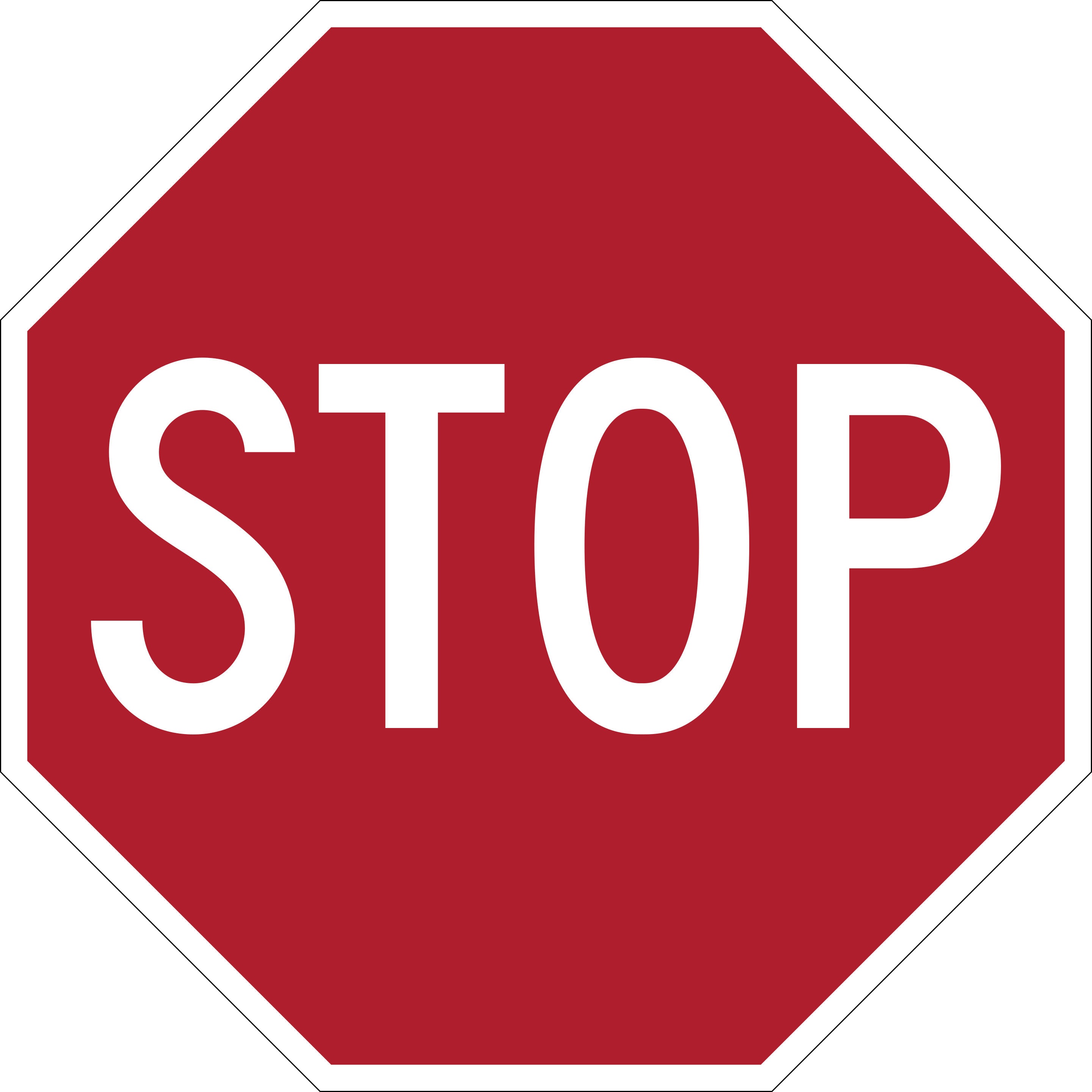
- Stop before the pedestrian crosswalk and remain stopped until every direction is clear
- Stop after entering the intersection, then continue if traffic is light
- Reduce speed at the crosswalk, then continue without stopping when no one is walking
- Stop only when a vehicle is approaching from the opposite direction
Show answer
Stop before the pedestrian crosswalk and remain stopped until every direction is clear. The octagon identifies a full stop, not a rolling pause. Oklahoma places the stopping point before the pedestrian crosswalk, whether or not that crosswalk has painted lines, and requires the vehicle to stay stopped until every direction is clear. The choice “Stop after entering the intersection, then continue if traffic is light” moves the stopping point too far forward. A driver should scan left, right, and ahead after stopping, then proceed only when people and vehicles no longer create a conflict.
Study this in the handbook: Stop, Yield and Regulatory Signs
13. What BAC level causes an Oklahoma driver's license to be revoked even without a DUI court conviction?
- 0.05 or more for every driver
- 0.10 or more unless a crash occurred
- 0.08 or more, or any measurable amount for a driver under 21
- Only a BAC above 0.15
Show answer
0.08 or more, or any measurable amount for a driver under 21. Oklahoma treats a BAC of 0.08 or more as a license revocation threshold, even when the court does not convict the driver of DUI. A driver younger than 21 faces the stricter rule: any measurable alcohol amount can trigger revocation. The 0.05 figure in another choice is relevant evidence that driving ability may be impaired, but it is not the stated automatic license threshold. A useful memory cue is to separate the adult 0.08 rule from the under 21 zero tolerance rule before choosing a number.
Study this in the handbook: Implied Consent and DUI Penalties
14. An Oklahoma teen holds a license with the "T" graduated driver restriction and is driving alone to a movie. During which hours may the teen drive?
- Any time, because the restriction covers passengers only
- Only from 5 a.m. to 10 p.m.
- Only from 6 a.m. to midnight
- Only during daylight hours
Show answer
Only from 5 a.m. to 10 p.m.. The "T" restriction limits a graduated license holder to driving between 5 a.m. and 10 p.m. The exceptions are trips for school, church or work activities, or any trip with a licensed driver at least 21 years old in the car. A movie is none of those, so the time window applies. Midnight and daylight only are not the limits Oklahoma prints, and the restriction is not limited to passengers; it controls hours as well.
Study this in the handbook: Learner Permits and the Graduated License
15. How close to a crosswalk at an intersection may you park in Oklahoma?
- No closer than 20 feet
- No closer than 5 feet
- No closer than 50 feet
- Right up to the painted line
Show answer
No closer than 20 feet. Oklahoma prohibits parking within 20 feet of a crosswalk at an intersection. Five feet and right up to the line are too close, and 50 feet is the distance from the nearest rail of a railroad crossing. Other Oklahoma distances are 15 feet from a fire hydrant and 30 feet before a flashing beacon, stop sign or traffic signal at the roadside.
Study this in the handbook: Parking Rules
16. What penalty does the Oklahoma Driver Manual warn about for using, carrying, borrowing or buying a fake ID?
- A $50 fine
- It is a felony with up to 7 years in prison and a $10,000 fine
- A misdemeanor with a warning
- Only confiscation of the ID
Show answer
It is a felony with up to 7 years in prison and a $10,000 fine. The manual warns that every time you use, carry, borrow or buy a fake ID it is a felony, and you could spend 7 years in prison and face a $10,000 fine. It is not a minor fine, a warning, or just confiscation. The manual notes that many alcohol purchases by young adults are aided by fake IDs, and a license or ID card can also be canceled for displaying or possessing a counterfeit or altered card.
17. What is the maximum penalty in Oklahoma for violating a restriction printed on your license, such as corrective lenses?
- A $50 fine only
- A $500 fine, 6 months in jail, or both
- A warning for the first offense
- A $1,000 fine and one year in jail
Show answer
A $500 fine, 6 months in jail, or both. Violating a license restriction carries the same penalty as driving with no valid license: on conviction, a fine of up to $500, up to 6 months in jail, or both. A $50 fine and a warning understate it, and $1,000 with a year in jail is not what the manual lists. Restrictions such as corrective lenses (code B) are conditions of the license, so driving without meeting them is treated seriously.
Study this in the handbook: Learner Permits and the Graduated License
18. A 15 year old in Oklahoma loses driving privileges under the Zero Tolerance law, and the revocation would end before the 16th birthday. What does Service Oklahoma do?
- Ends the cancellation on schedule
- Makes the cancellation permanent
- Extends the cancellation until the person turns 16
- Replaces it with community service
Show answer
Extends the cancellation until the person turns 16. When a person is under 16 at the time, or would still be under 16 when the cancellation ends, Service Oklahoma extends the cancellation until the person reaches 16. So it does not simply end on the original date. It is not permanent, and community service is a possible penalty alongside revocation rather than a replacement for it. This keeps a young offender from driving before the normal licensing age.
Study this in the handbook: Zero Tolerance for Drivers Under 21
19. A rectangular speed-limit sign belongs to which category?
- A regulatory sign
- A recreational area sign
- A railroad advance warning sign
- A driver-service sign
Show answer
A regulatory sign. Rectangular signs communicate regulations, laws, or instructions. A posted speed limit is therefore regulatory, and the driver must obey it. The shape helps identify the category even when the wording is hard to read from a distance. Yellow diamonds warn of hazards, blue signs identify services, and round yellow or black and white railroad signs warn about tracks. Treat a rectangular speed posting as an enforceable instruction, while remembering that conditions may require driving slower than the posted maximum.
Study this in the handbook: Stop, Yield and Regulatory Signs
20. What road rights and duties do animal-drawn vehicles have in Oklahoma?
- The same rights to use the road and the same rules as motor vehicles
- No right to use a state highway after sunset
- Priority over every motor vehicle in every situation
- Permission to ignore signs and traffic signals
Show answer
The same rights to use the road and the same rules as motor vehicles. Animal-drawn vehicles are lawful road users. The manual gives them the same rights to use the road as a motor vehicle and says they must follow the same rules of the road. That does not give them automatic priority over every driver, remove their duty to obey signs, or ban them from highways at night. The manual warns that these vehicles are subject to heavy damage and injury to occupants if hit by a car. Warning signs may identify areas where these vehicles are common, so watch ahead and be ready for a slow-moving road user.
QualitySpace is expanding to Oklahoma
We are a California-based independent insurance brokerage working on licensing in more states. We cannot help with Oklahoma insurance yet. Leave your email and we will let you know when we can.
Every question is written from the official Oklahoma Driver Manual. Need paper? Printable OK practice test with answer key.
Last verified 2026-10-05. How we check every question · Study all 218 as flashcards
Frequently asked questions
How many questions are on this Oklahoma practice test?
This fixed set has 20 questions. It is test 1 of 10 from the 218 question Oklahoma bank. The real OK exam asks 20 questions and you need 15 correct.
What is the passing score for the real Oklahoma test?
15 out of 20 questions correct to pass That figure comes from the official Oklahoma source cited on the DMV facts page.
How does this fixed test relate to the full Oklahoma bank?
Each numbered test is a fixed set of questions in a fixed order, so you can retake the same test later and compare. Every test mixes road signs and the other topics in about the same proportion as the full bank. Tests 1 to 10 together cover 200 of the 218 questions in the Oklahoma bank, each once. The full practice page mixes the whole bank at random.
Last verified 2026-10-05. See the Oklahoma DMV facts page for sourced state details.
Return to the full Oklahoma practice test · Study road signs