
Key points
Warning signs are diamond shaped with a yellow background and black letters.
Source: Handbook p. 21
“WARNING SIGNS are diamond-shaped, with a yellow background and black letters.”
Oklahoma Driver Manual, Handbook p. 21They signal hazards, changes in direction or other conditions immediately ahead; be prepared to use extra caution or to make changes as you drive.
Source: Handbook p. 21
“They signal conditions immediately ahead, such as road hazards, changes in direction or other situations. When you see a warning sign, be prepared to use extra caution or to make changes as you drive.”
Oklahoma Driver Manual, Handbook p. 21A merge sign means other traffic may move into your lane; adjust your speed and lane.
Source: Handbook p. 21
“Merge. Other traffic may be moving into your lane. Be ready to change your speed and lane so other drivers can merge safely.”
Oklahoma Driver Manual, Handbook p. 21An added lane sign means two roadways join with a new lane, so you do not have to merge.
Source: Handbook p. 21
“Two roadways come together ahead with a new lane added. You do not have to merge”
Oklahoma Driver Manual, Handbook p. 21A two way traffic sign means drive in the right lane and expect oncoming traffic on the left.
Source: Handbook p. 21
“Two-way traffic ahead. Drive in the right-hand lane and expect oncoming traffic in the left-hand lane.”
Oklahoma Driver Manual, Handbook p. 21At a pedestrian crossing sign, slow down, prepare to stop and yield.
Source: Handbook p. 21
“Pedestrian Crossing. Slow down and prepare to stop. Watch both sides of the street. You must yield.”
Oklahoma Driver Manual, Handbook p. 21At a steep hill sign, approach with caution; a lower gear can help slow the vehicle.
Source: Handbook p. 21
“Steep hill ahead. All drivers approach with caution. You may want to use a lower gear to slow your vehicle.”
Oklahoma Driver Manual, Handbook p. 21Diagonal stripes on a warning sign or barricade show which side traffic should pass.
Source: Handbook p. 22
“The diagonal stripes on a warning sign or barricade show the direction in which the traffic is to pass.”
Oklahoma Driver Manual, Handbook p. 22
Recognize these signs
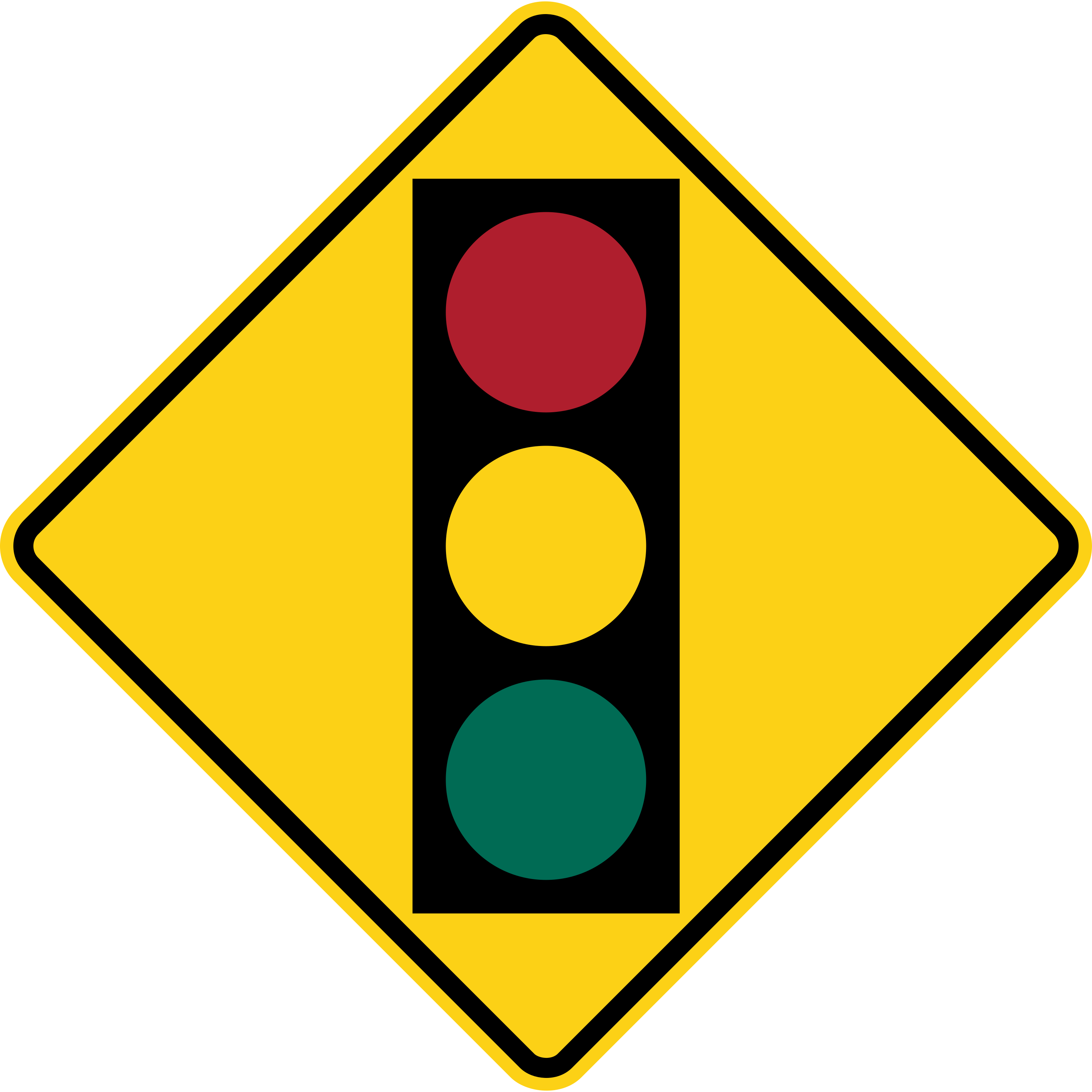
Signal ahead 
Stop ahead 
Right lane ends 
Added lane 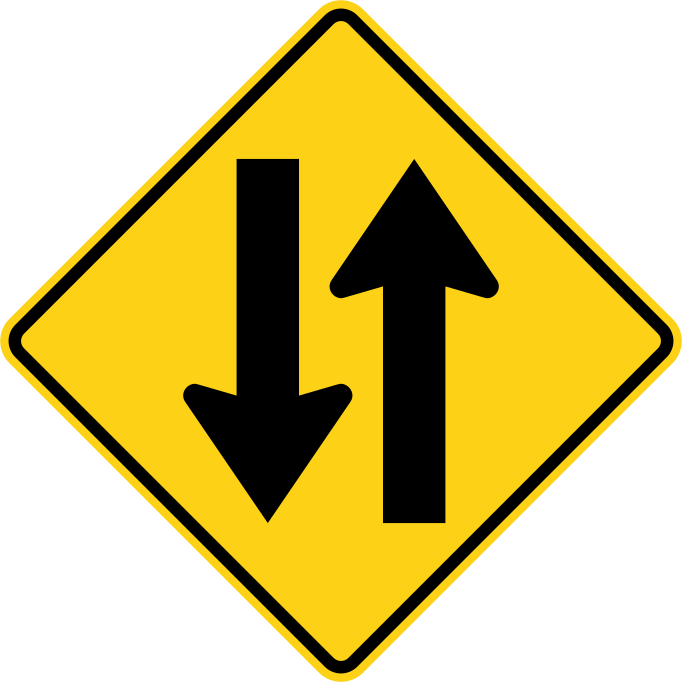
Two way traffic 
Pedestrian crossing 
Steep hill 
Deer crossing
3 questions from the Oklahoma practice test
1. What does the shape and color of an Oklahoma warning sign generally indicate?
- A yellow diamond warns of conditions immediately ahead
- A blue circle marks a mandatory stop
- A green octagon gives a route distance
- A white triangle identifies a parking service
Show answer
A yellow diamond warns of conditions immediately ahead. The standard warning sign has a diamond shape, a yellow background, and black letters. Its message concerns a condition immediately ahead, such as a road hazard or a change in direction. The blue circle, green octagon, and white triangle descriptions do not match the manual’s warning format or its stated purpose. Seeing the yellow diamond combination is a cue to scan ahead, reduce speed if needed, and prepare for a change rather than treating the sign as a route or parking marker.
2. In Oklahoma, what does a yellow diamond warning sign tell a driver to expect?
- A law that applies only to commercial drivers
- A service station location
- A condition or hazard immediately ahead
- A route distance and exit name
Show answer
A condition or hazard immediately ahead. Yellow diamond signs are warnings rather than commands, service markers, or route guides. They alert the driver to a condition, change in direction, or other situation ahead. Because the message concerns what is coming, reduce speed as needed, scan for the pictured hazard, and prepare to stop or adjust position. The blue service choice belongs to facilities such as gas or food. Green signs provide travel information, while rectangular black and white signs regulate traffic and must be obeyed.
3. How should you respond when a yellow merge warning appears?

- Assume your lane ends immediately and stop in the travel lane
- Expect other traffic may enter your lane and adjust speed or lane safely
- Accelerate without checking because merging traffic must always yield to you
- Turn at the next side street to avoid the joining roadway
Show answer
Expect other traffic may enter your lane and adjust speed or lane safely. A merge warning alerts you to traffic joining your lane, so cooperation is the useful response. Be ready to adjust speed and lane position while checking mirrors and surrounding vehicles. The sign does not automatically end your lane, authorize acceleration without observation, or require a turn onto another street. Leaving room and maintaining awareness gives the entering driver a safe path without creating a sudden conflict.
Practice this topic
Lock it in with road signs questions from the free Oklahoma practice test. Every answer comes with a plain English explanation.
Source: the Oklahoma Driver Manual, Chapter 4: Signs, Signals and Markings. This lesson is a plain English summary, not the law itself; where it differs, the manual and the statute govern. Last checked 2026-09-27.