
Key points
You may not exceed the speed limit to pass another vehicle.
Source: Handbook p. 35
“You may not exceed the speed limit to pass another vehicle.”
Oklahoma Driver Manual, Handbook p. 35Before passing on the left, check for at least 200 feet of clear road without a no passing zone.
Source: Handbook p. 35
“Check ahead for at least 200 feet of clear roadway without a “No Passing Zone.””
Oklahoma Driver Manual, Handbook p. 35Do not return to the right lane until you can see the car you passed in your rearview mirror.
Source: Handbook p. 35
“don’t return to the right lane until you can see that car in the rearview mirror.”
Oklahoma Driver Manual, Handbook p. 35You may never pass on the right by driving off the pavement or main part of the highway.
Source: Handbook p. 35
“You can never legally pass on the right by driving off the pavement or main portion of the highway.”
Oklahoma Driver Manual, Handbook p. 35Never pass when the solid yellow line is in your lane.
Source: Handbook p. 35
“When the solid yellow line is in your lane, whether there are two yellow lines or a single solid line and a dashed line.”
Oklahoma Driver Manual, Handbook p. 35Do not pass within 100 feet of an obstructed view or where vehicles or pedestrians might cross.
Source: Handbook p. 35
“DO NOT PASS within 100 feet of an obstructed view or if vehicles or pedestrians might cross your path.”
Oklahoma Driver Manual, Handbook p. 35When being passed on the left, stay in your lane and move right.
Source: Handbook p. 35
“Stay in your lane and move right if being passed on the left.”
Oklahoma Driver Manual, Handbook p. 35Turning without signaling is illegal; signal at least 100 feet or 1/3 of a block before you turn.
Source: Handbook p. 36
“It is illegal to turn without signaling. You should signal for at least 100 feet or 1/3 of a block before you turn, slow down or stop.”
Oklahoma Driver Manual, Handbook p. 36The recommended speed when turning is 10 mph or less.
Source: Handbook p. 37
“Recommended speed when turning 10 mph or less.”
Oklahoma Driver Manual, Handbook p. 37
Numbers to know
| Number | What it means | Manual |
|---|---|---|
| 200 feet | clear road needed before passing on the left | Handbook p. 35 |
| 100 feet | no passing distance before an obstructed view | Handbook p. 35 |
| 100 feet or 1/3 block | minimum signaling distance before a turn | Handbook p. 36 |
| 10 mph | recommended maximum turning speed | Handbook p. 37 |
Recognize these signs
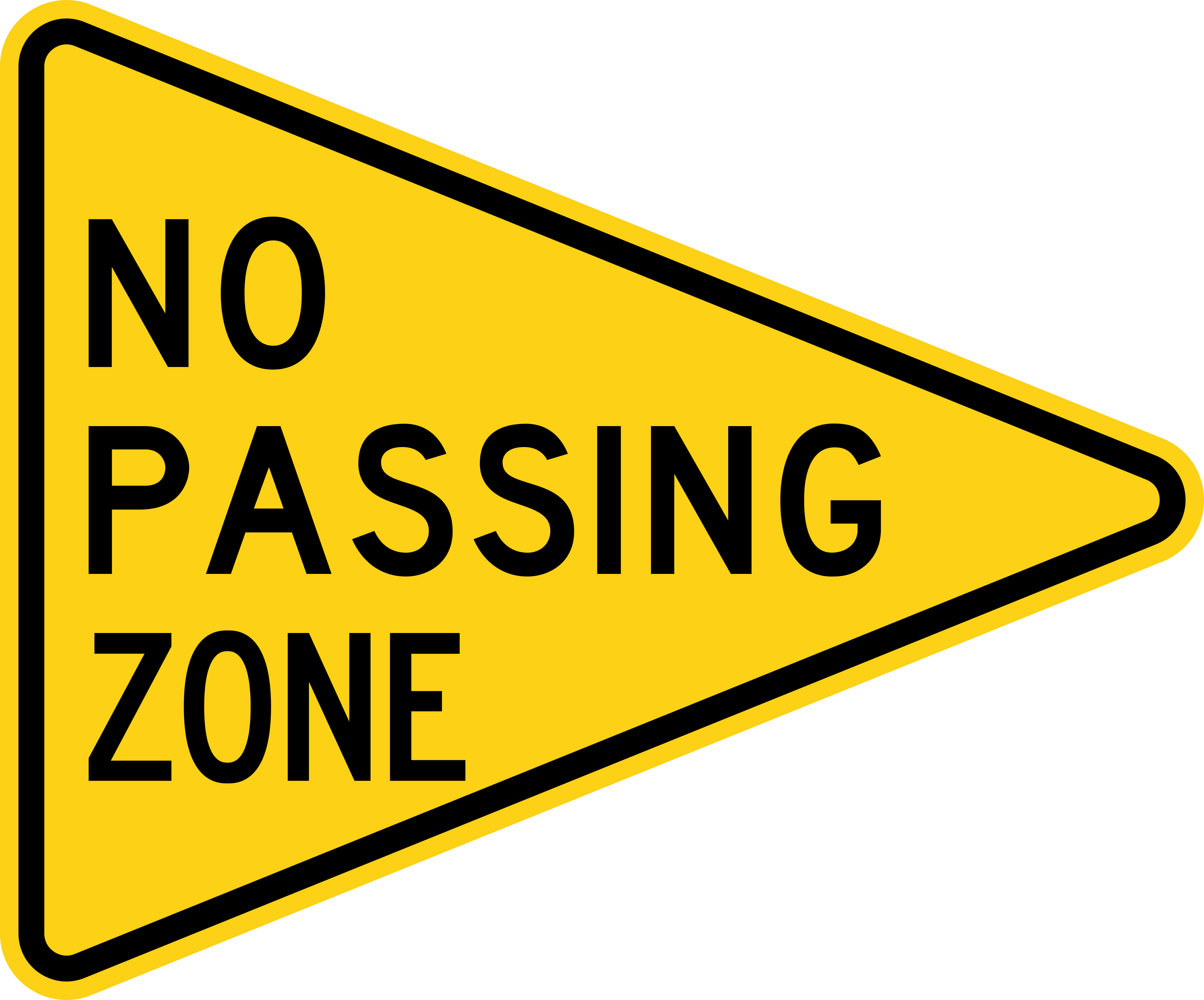
No passing zone
3 questions from the Oklahoma practice test
1. How far before an obstructed view does the manual prohibit passing?
- Within 500 feet
- Within 10 feet
- Within 100 feet
- Only at the exact point where the view disappears
Show answer
Within 100 feet. Passing is prohibited within 100 feet of an obstructed view because a driver may not see an approaching vehicle, pedestrian, or other conflict soon enough. The rule applies even if the road has no painted no-passing symbol at that exact location. Ten feet is too short to provide a meaningful safety margin, while 500 feet is not the stated threshold. Treat hills, curves, and listed crossing areas as places to wait rather than gamble on visibility.
2. If the solid yellow line is in the driver's lane, what passing rule applies?
- Passing is allowed if the driver uses the horn first
- Passing is prohibited from that lane
- Passing is allowed only for motorcycles and farm equipment
- Passing is required to keep traffic moving at the speed limit
Show answer
Passing is prohibited from that lane. A solid yellow line in the driver’s lane marks a no passing zone. The restriction applies whether the marking is a single solid line beside a dashed line or part of a pair of solid yellow lines. A horn does not change the lane marking, and no vehicle class receives the suggested exception. The driver should remain in the lane and wait for a lawful opportunity. The cue is the line’s position relative to the vehicle: solid yellow on your side means do not pass.
3. How far before a turn should a driver generally begin signaling?
- Exactly 500 feet on every road
- At least 10 feet
- Only after entering the intersection
- At least 100 feet or one-third of a block
Show answer
At least 100 feet or one-third of a block. The manual says to signal for at least 100 feet, or one-third of a block, before turning, slowing down, or stopping. Early signaling gives other road users time to understand the plan and adjust their speed or position. Signaling only after entering the intersection gives no useful warning, while 10 feet is too late. An exact 500-foot requirement is not the stated general distance and may confuse drivers at different road layouts. The cue is to signal before the maneuver, then cancel it after the vehicle completes the movement.
Practice this topic
Lock it in with signals and markings questions from the free Oklahoma practice test. Every answer comes with a plain English explanation.
Source: the Oklahoma Driver Manual, Chapter 6: Lane Usage and Maneuvers. This lesson is a plain English summary, not the law itself; where it differs, the manual and the statute govern. Last checked 2026-09-27.