
Test 5 of 10 · 20 questions · Free 2026
OK Permit Practice Test 5
Jump to the test ↓A fixed 20 question set from the Oklahoma bank with answers and plain English explanations. The real OK exam is 20 questions, 75 percent to pass; take the full length version on the main practice page.
Question 1 of 20 · 0 right so far
All 20 questions in test 5
Every question below comes from the Oklahoma question bank on this page. Open a question to see the correct answer and the explanation. Nothing here is hidden behind a signup.
1. At a yield sign, when may you enter the flow of traffic?
- After slowing and yielding when entering can be done safely
- Immediately, because a yield sign gives the entering vehicle priority
- Only after stopping for one full minute
- Before checking for pedestrians if no vehicle is approaching
Show answer
After slowing and yielding when entering can be done safely. Yield control means slowing down and being prepared to stop if traffic or pedestrians are approaching. The driver may enter the flow only when the movement is safe and does not interfere with traffic that already has priority. The entering-vehicle choice reverses the rule, the one-minute requirement is not in the manual, and pedestrians must be considered even when a vehicle is absent. Approach with the foot ready for the brake, look in both directions, and wait for a usable opening rather than forcing other road users to react.
Study this in the handbook: Right of Way at Intersections
2. Which roadway condition permits passing another vehicle on the right?
- Only when the vehicle ahead is stopped at a red light
- By driving onto the shoulder whenever the vehicle ahead is slow
- On any two lane road if the driver sounds the horn
- On a one way road, or where two or more lanes move each way without obstruction
Show answer
On a one way road, or where two or more lanes move each way without obstruction. Passing on the right is allowed when the road has at least two lanes moving in each direction and no parked cars or other obstructions block the roadway. It is also allowed on a one way road, or when the vehicle ahead is turning or about to turn left. Driving off the pavement or main portion of the highway is never a lawful shortcut for this maneuver. The cue is adequate paved space and an unobstructed path, followed by a complete safety check before moving right.
Study this in the handbook: Expressway Driving
3. Within what distance of an oncoming vehicle must high beams be changed to low beams?
- Within 500 feet only on a divided road
- Within 100 feet
- Within 1,000 feet
- Only after the oncoming driver flashes headlights
Show answer
Within 1,000 feet. The manual directs drivers to dim high beams to low beams within 1,000 feet of an oncoming vehicle. This protects the other driver's vision before glare becomes a serious hazard. The 100-foot choice confuses headlight distance with other roadway measurements, and the divided-road condition is not the stated limit. Waiting for a flash from the other driver delays the safety action and can still cause blindness. Look ahead for approaching headlights and make the change early enough that both drivers can see their lanes clearly.
Study this in the handbook: Headlights, Night Driving and Distractions
4. When is an Oklahoma driver given the opportunity to become an organ and tissue donor?
- Only at a hospital
- Only through a lawyer
- Never through the license process
- When the driver license or identification card is issued
Show answer
When the driver license or identification card is issued. The manual notes a critical shortage of organs and tissues for people who need transplants. When you are issued your Oklahoma driver license or identification card, you are given the opportunity to become an organ and tissue donor. To join, you check the YES box on the signature pad, and checking NO keeps you off the donor registry. The offer comes with the license process itself, so no separate hospital visit or lawyer is needed, and it is not withheld from license applicants.
Study this in the handbook: License Rules, Points and Penalties
5. If a vehicle breaks down on an Oklahoma expressway, where should the driver move it when safe?
- The extreme right shoulder away from moving traffic
- The left travel lane
- The median facing oncoming traffic
- The nearest intersection
Show answer
The extreme right shoulder away from moving traffic. For a breakdown or other necessary stop on an expressway, the manual directs the driver to signal and pull to the extreme right shoulder, away from moving traffic, where it is safe. The left lane and median can expose the vehicle to faster traffic or opposing movement, and an intersection is not a safe stopping destination. The key cue is shoulder placement plus emergency flashers, followed by staying away from the roadway when outside the car.
Study this in the handbook: Expressway Driving
6. When a school or church bus on an undivided road displays flashing red lights or a red stop sign, what must an approaching driver do?
- Pass slowly if no child is visible
- Stop and remain stopped until the bus releases traffic
- Stop only when traveling behind the bus
- Continue after checking the opposite lane
Show answer
Stop and remain stopped until the bus releases traffic. Flashing red lights or a displayed red STOP sign means children are getting on or off, so the approaching driver must stop and remain stopped. The wait ends when the bus moves, the driver motions traffic forward, or the red lights end and the sign is withdrawn. Visibility of children is not the test, and passing slowly is not permitted. The rule applies to the approach described, subject to the manual's listed different-roadway and divided-highway exceptions.
Study this in the handbook: Right of Way at Intersections
7. When can a posted 65 mph limit be too fast under Oklahoma's Basic Speed Rule?
- Only when a police officer orders the driver to stop
- At night on a two-lane state highway when it is raining or very foggy
- Never, because a posted limit is always safe
- Only on a turnpike with light traffic
Show answer
At night on a two-lane state highway when it is raining or very foggy. The manual gives a direct example of conditions that can make a posted 65 mph speed too fast: driving at night on a two-lane state highway while it is raining or very foggy. The posted number does not cancel the duty to choose a careful speed for visibility and traction. The answer claiming a limit is always safe conflicts with the Basic Speed Rule. A turnpike is not the condition described. Reduce speed when darkness, rain, fog, traffic, or the road surface makes stopping harder.
Study this in the handbook: The Basic Speed Rule
8. What does a yellow traffic signal symbol warn you to expect?
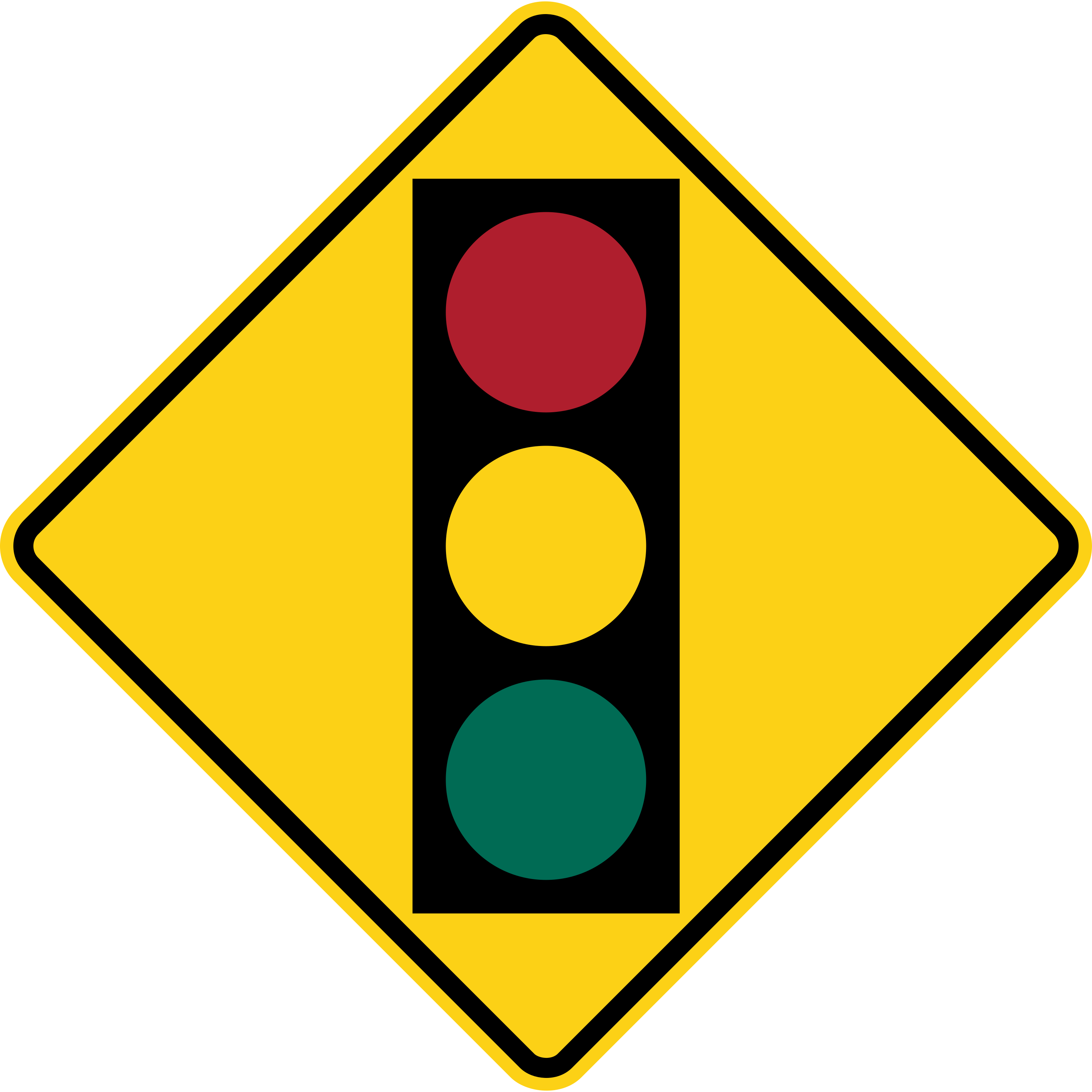
- A traffic control signal ahead where the driver should be prepared to stop
- A streetlight outage that requires use of the emergency shoulder
- A police checkpoint at which every vehicle must turn around
- A railroad gate that permits crossing without looking
Show answer
A traffic control signal ahead where the driver should be prepared to stop. This warning gives advance notice of a traffic control signal. The driver should approach with enough space and a manageable speed to respond if the light changes, rather than racing toward the intersection. It does not describe a lighting failure, a police checkpoint, or a railroad gate. Looking beyond the sign for the actual signal and cross traffic helps convert the warning into a safe approach.
Study this in the handbook: Warning Signs
9. What should a driver anticipate after seeing this pedestrian-crossing warning sign?

- The road becomes a no-passing zone only for trucks
- A lane ends and traffic must merge without yielding
- People may be crossing, so slow down and be ready to stop
- A hospital entrance is ahead and traffic has priority
Show answer
People may be crossing, so slow down and be ready to stop. A pedestrian-crossing warning calls for a slower approach and readiness to stop. The manual also emphasizes watching both sides of the street and yielding to people in the crossing. A lane ending is a separate merge warning, and no-passing rules are not limited to trucks. A hospital entrance does not give the driver priority over pedestrians. The practical cue is to check the edges of the roadway before reaching the crossing, especially where a person could enter from a side path or between parked vehicles.
Study this in the handbook: Warning Signs
10. What can happen to an Oklahoma learner permit or intermediate license holder who uses a hand-held electronic device while driving, when there is no life-threatening emergency?
- Only a verbal warning, because the rule applies to commercial drivers
- The license can be suspended or canceled
- A fine, but the license is never affected
- Nothing, if the device is used at a red light
Show answer
The license can be suspended or canceled. Oklahoma singles out new drivers: learner permit and intermediate license holders can have the license suspended or canceled for using a hand-held electronic device while operating a vehicle, unless it is for a life-threatening emergency. That is more than a warning, and the rule is not limited to commercial drivers. The manual gives no red light exception. Texting while driving has also been illegal for every Oklahoma driver since 2015.
Study this in the handbook: Headlights, Night Driving and Distractions
11. What license penalty does Oklahoma impose for failing to stop for a school bus with its red loading lights flashing?
- Mandatory revocation for one year
- A warning for a first offense
- 30 day suspension
- Points only, with no revocation
Show answer
Mandatory revocation for one year. Oklahoma makes license revocation for one year mandatory when a driver fails to stop for a school bus with red loading or unloading lights flashing. A warning or a 30 day suspension understates it, and although the offense also carries 4 points, points are not the only consequence. Drivers must stay stopped until the bus moves, the driver waves them on, or the red lights go off and the stop sign is pulled back.
Study this in the handbook: Right of Way at Intersections
12. What jail range does Oklahoma list for a first DUI offense with a BAC of 0.08 or more?
- No jail is possible for a first offense
- Exactly 48 hours
- Not less than ten days nor more than 1 year
- 1 to 10 years in prison
Show answer
Not less than ten days nor more than 1 year. A first DUI at 0.08 or more is a misdemeanor punished by jail of not less than ten days and not more than 1 year, along with a fine. Saying no jail is possible is wrong, 48 hours is not the Oklahoma figure, and 1 to 10 years is the range listed for a third or later offense. A second offense within 10 years is a felony with 1 to 5 years of imprisonment.
Study this in the handbook: Implied Consent and DUI Penalties
13. Why does Oklahoma require drivers to move over or slow down near roadside vehicles with flashing lights?
- The action gives the roadside vehicle permission to enter any travel lane
- The action allows drivers to inspect the stopped vehicle more closely
- The action helps prevent secondary crashes caused by distraction at the scene
- The action applies only when the stopped vehicle belongs to police
Show answer
The action helps prevent secondary crashes caused by distraction at the scene. Moving over or slowing down creates more space around a roadside incident and helps prevent a secondary crash. A secondary crash can happen when a driver becomes distracted by the first crash, looks away from the road, and strikes another vehicle or person. Looking more closely is precisely the behavior to avoid, and the law covers more than police vehicles. The cue is the flashing roadside light: protect the scene, keep your eyes on the travel path, and follow the move over or slow down instruction.
Study this in the handbook: Right of Way at Intersections
14. At a stop sign, where should the driver stop before yielding and proceeding?
- After the crosswalk, so the front bumper reaches the intersection
- Before the crosswalk, then yield to pedestrians and traffic
- Only at the edge of the intersection when another vehicle appears
- Before the sign, even if that blocks the sidewalk
Show answer
Before the crosswalk, then yield to pedestrians and traffic. The stop sign rule requires a stop before the crosswalk, followed by yielding to pedestrians and vehicles in or approaching the intersection. Stopping after the crosswalk can put the vehicle in the pedestrian path. Waiting for another vehicle before stopping ignores the sign’s instruction, while stopping so far back that the sidewalk is blocked creates a separate hazard. The cue is the crosswalk line or its expected location: stop before it, check every direction, and cross or turn only when safe.
Study this in the handbook: Right of Way at Intersections
15. What does a flashing yellow arrow authorize for a left-turning driver?
- An immediate protected turn without checking traffic
- A cautious left turn after yielding
- A complete stop until a red arrow appears
- A U-turn from any lane
Show answer
A cautious left turn after yielding. The flashing yellow arrow allows a left turn only as a permissive movement. The driver must slow down, assess the intersection, and yield before turning because oncoming traffic retains priority. Treating the arrow like a green arrow removes that required yield and can put the vehicle in the path of approaching traffic. It also does not authorize a U-turn. Look through the turn, wait for a safe opening, and complete the maneuver smoothly.
Study this in the handbook: Traffic Signals
16. What kind of information does a rectangular traffic sign generally provide?
- A railroad crossing symbol only
- A warning that an animal may cross
- A route distance to a park only
- Laws, regulations, or driving instructions
Show answer
Laws, regulations, or driving instructions. Rectangular signs are regulatory signs. They tell drivers about laws and regulations or give instructions, including speed limits and lane movements. A diamond shape is used for general warnings, while green or brown guide signs identify routes and destinations. The shape is a useful first clue, but the words and symbols still control the specific movement. Read the entire rectangle and obey its instruction before continuing.
Study this in the handbook: Stop, Yield and Regulatory Signs
17. When should headlights be changed from high beams to low beams for an oncoming vehicle?
- Only after the other driver flashes headlights
- Within 1,000 feet of the oncoming vehicle
- Within 100 feet of the oncoming vehicle
- Only on roads with a posted speed limit above 55 mph
Show answer
Within 1,000 feet of the oncoming vehicle. High beams can interfere with another driver's vision, so the manual sets a 1,000-foot distance for dimming when a vehicle is approaching. Waiting for a flash or until 100 feet leaves the other person exposed to glare for too long. The posted speed does not determine this lighting duty. Watch for oncoming headlights early, switch to low beams at the stated distance, and keep your own speed appropriate for the reduced illumination.
Study this in the handbook: Headlights, Night Driving and Distractions
18. What penalty does Oklahoma list for failing to have, or failing to show, proof of liability insurance?
- A fine of up to $250, 30 days in jail, or both, plus suspension of license and registration
- A $25 administrative fee only
- A warning if you show proof within 30 days
- Loss of the vehicle title
Show answer
A fine of up to $250, 30 days in jail, or both, plus suspension of license and registration. On conviction, the driver faces a fine of up to $250, up to 30 days in jail, or both, and the license and vehicle registration are suspended as well. It is not a small administrative fee or a warning, and the state does not take the vehicle title. The court notifies Service Oklahoma after a ticket for no proof of insurance, which triggers the license and tag suspension.
Study this in the handbook: License Rules, Points and Penalties
19. What is the speed limit on Oklahoma county roads unless otherwise posted?
- 65 mph
- 70 mph
- 45 mph
- 55 mph
Show answer
55 mph. The Oklahoma speed table sets county roads at 55 mph unless otherwise posted, undivided state highways at 65 mph, and turnpikes at 80 mph, with lower figures for state parks and school zones. Under the Basic Speed Rule the number still has to fit current conditions, so rain, fog, or darkness can call for less. The manual also says cities and towns can set their own limits and tells drivers to observe every posted sign carefully.
Study this in the handbook: Speed Limits and Expressway Speeds
20. Which action is recommended when another driver is following too closely?
- Accelerate until the tailgater disappears
- Brake suddenly to force more distance
- Slow down and encourage the driver to pass
- Move into the oncoming lane
Show answer
Slow down and encourage the driver to pass. When someone is tailgating, the manual advises flashing your brake lights only if braking will not cause a collision, then slowing down to encourage the driver behind to pass. If that fails, pull over, stop, and let the tailgater pass, preferably where other people are present. Sudden braking can cause a rear-end crash, and accelerating or entering an oncoming lane creates additional danger. Keep your doors locked if you stop. The cue is to create space and let the aggressive follower go around rather than escalating the encounter.
Study this in the handbook: Following Distance and Stopping
QualitySpace is expanding to Oklahoma
We are a California-based independent insurance brokerage working on licensing in more states. We cannot help with Oklahoma insurance yet. Leave your email and we will let you know when we can.
Every question is written from the official Oklahoma Driver Manual. Need paper? Printable OK practice test with answer key.
Last verified 2026-10-05. How we check every question · Study all 218 as flashcards
Frequently asked questions
How many questions are on this Oklahoma practice test?
This fixed set has 20 questions. It is test 5 of 10 from the 218 question Oklahoma bank. The real OK exam asks 20 questions and you need 15 correct.
What is the passing score for the real Oklahoma test?
15 out of 20 questions correct to pass That figure comes from the official Oklahoma source cited on the DMV facts page.
How does this fixed test relate to the full Oklahoma bank?
Each numbered test is a fixed set of questions in a fixed order, so you can retake the same test later and compare. Every test mixes road signs and the other topics in about the same proportion as the full bank. Tests 1 to 10 together cover 200 of the 218 questions in the Oklahoma bank, each once. The full practice page mixes the whole bank at random.
Last verified 2026-10-05. See the Oklahoma DMV facts page for sourced state details.
Return to the full Oklahoma practice test · Study road signs