
Test 2 of 10 · 20 questions · Free 2026
OK Permit Practice Test 2
Jump to the test ↓A fixed 20 question set from the Oklahoma bank with answers and plain English explanations. The real OK exam is 20 questions, 75 percent to pass; take the full length version on the main practice page.
Question 1 of 20 · 0 right so far
All 20 questions in test 2
Every question below comes from the Oklahoma question bank on this page. Open a question to see the correct answer and the explanation. Nothing here is hidden behind a signup.
1. At a railroad crossbuck, what action does the Oklahoma manual require before crossing?
- Slow down, look, listen, and be prepared to yield
- Accelerate to clear the tracks quickly
- Stop only if the crossbuck has flashing lights
- Cross without checking when no gate is present
Show answer
Slow down, look, listen, and be prepared to yield. A crossbuck marks a public railroad crossing, and the manual tells drivers to slow down, look, listen, and be prepared to yield to an approaching train. Flashing lights are not the only warning that matters, and the absence of a gate does not make the crossing safe by itself. Accelerating reduces the time available to detect danger. Make the four-part check before committing the vehicle to the tracks.
Study this in the handbook: Warning Signs
2. On a two-lane Oklahoma road, how should a driver respond to a stationary vehicle with flashing lights on the roadside?
- Speed up before reaching it
- Slow down and drive carefully
- Stop in the opposing lane
- Pass without changing speed or attention
Show answer
Slow down and drive carefully. On a smaller or two-lane road, the Move Over rule calls for slowing down and driving carefully around a stationary vehicle displaying flashing lights. There may be no adjacent lane to use, so a driver should not cross into opposing traffic or accelerate past the scene. Ignoring the vehicle also increases the risk of a secondary crash. The roadside flashing lights are the cue to reduce speed, scan for people and equipment, and leave a safe margin.
Study this in the handbook: Right of Way at Intersections
3. Until what age is an Oklahoma driver license considered probationary?
- 16
- 21
- 18
- 25
Show answer
18. Every Oklahoma license issued to a driver under 18 is probationary, a trial period in which the driver must show safe and legal driving. During it, Service Oklahoma may cancel or suspend the license for any unlawful act, negligence or misconduct while driving. Sixteen, 21 and 25 are not the age the manual gives for the end of this trial period. The probationary status ends at 18.
Study this in the handbook: License Rules, Points and Penalties
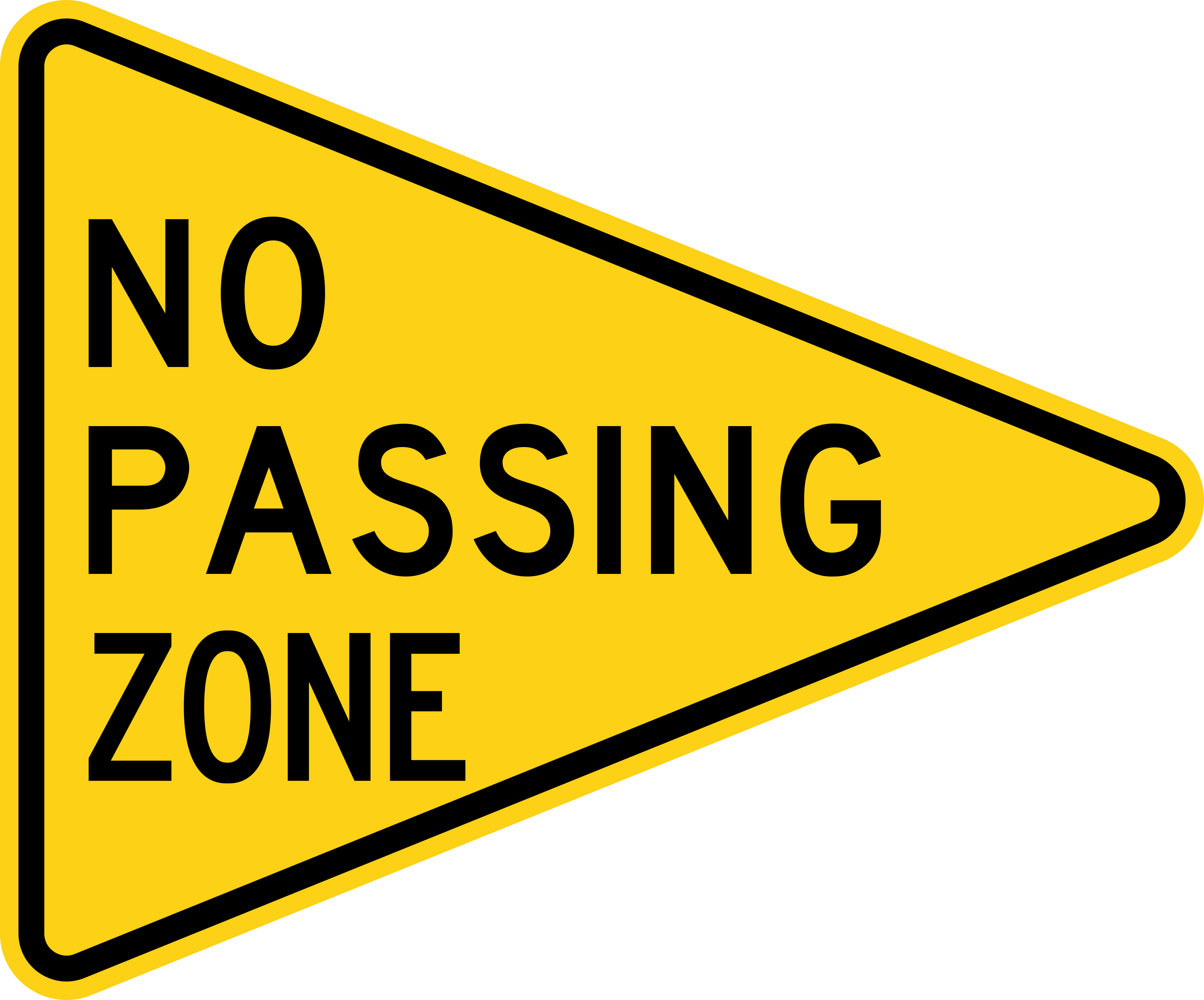
4. What driving restriction is indicated by the yellow pennant-shaped sign?
- The roadway is ending and every driver must turn around
- The right lane is reserved for passing slower traffic
- A work zone begins and speed fines are automatically doubled
- Passing is prohibited because the view ahead is not safe
Show answer
Passing is prohibited because the view ahead is not safe. The pennant identifies a no-passing condition. It warns that the driver should remain in lane rather than cross the center line where sight distance or another hazard makes overtaking unsafe. A passing lane would authorize a maneuver rather than forbid it. Work-zone penalties depend on a construction or maintenance zone with workers or equipment, and the sign does not announce a dead end. Use the sign as an advance decision point: hold position, watch the centerline, and wait for a lawful passing area.
Study this in the handbook: Stop, Yield and Regulatory Signs
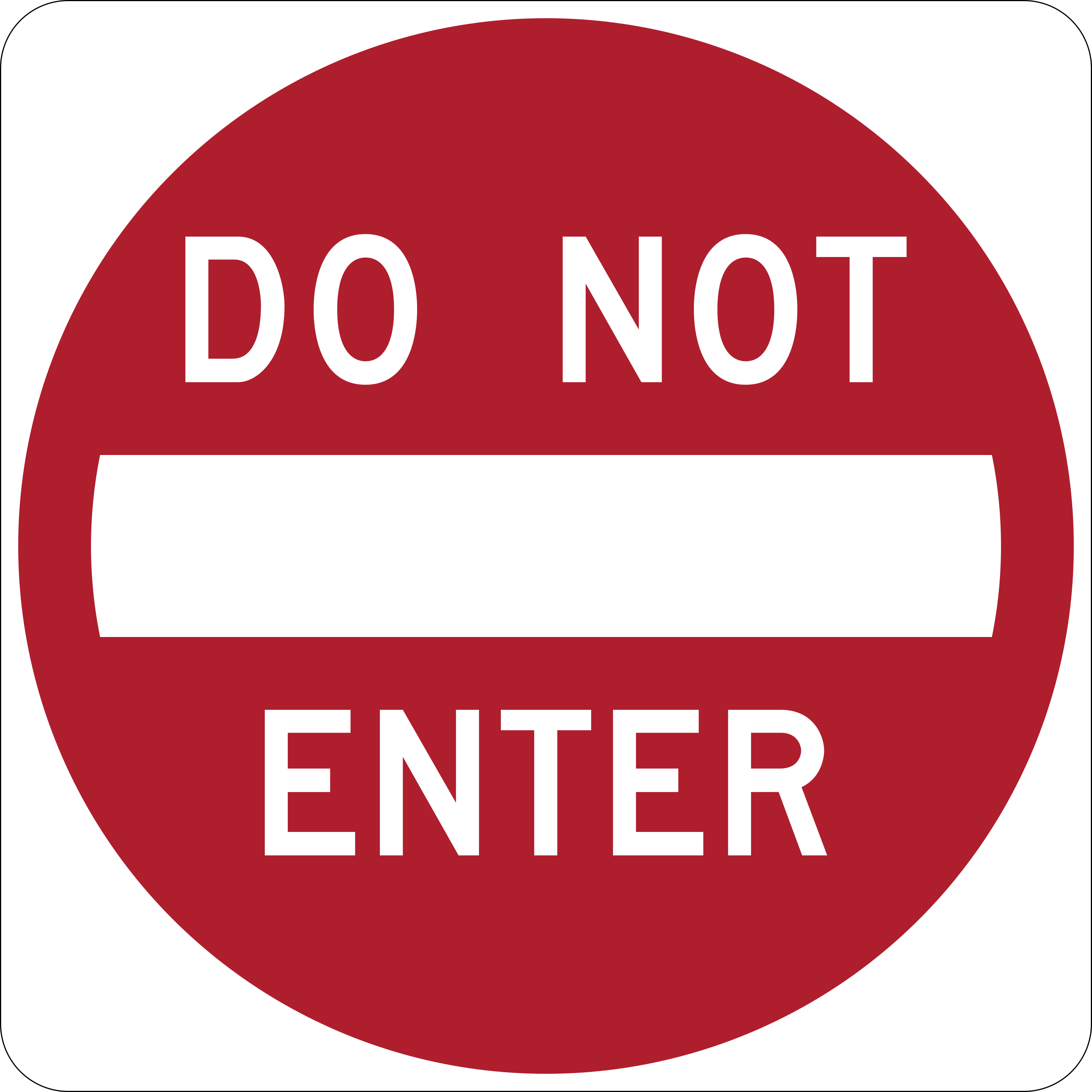
5. What does this red and white sign with a horizontal white bar tell a driver at the entrance to a roadway?
- Parking is allowed only for buses and taxis
- The roadway is open to traffic traveling in either direction
- Drivers must turn around only after reaching the next intersection
- Entry is prohibited from that approach
Show answer
Entry is prohibited from that approach. The Oklahoma manual pictures this DO NOT ENTER sign with the caption that the roadway ahead is for one-way traffic coming toward you, so do not drive into it. Entering from that approach would put you head on against oncoming vehicles. The sign has nothing to do with bus or taxi parking, does not suggest the road carries traffic both ways, and does not tell you to wait for the next intersection to turn. Find a lawful route instead of proceeding past it.
Study this in the handbook: Stop, Yield and Regulatory Signs
6. How close to a fire hydrant may an Oklahoma driver park?
- No closer than 15 feet
- No closer than 5 feet
- No closer than 10 feet
- No closer than 30 feet
Show answer
No closer than 15 feet. Oklahoma's list of places you may not park includes within 15 feet of a fire hydrant, on a crosswalk, within 20 feet of a crosswalk at an intersection, within 30 feet on the approach to a flashing beacon, stop sign or traffic signal at the side of the road, and within 50 feet of the nearest rail of a railroad crossing. Five and ten feet would put a parked car closer to the hydrant than Oklahoma allows, and thirty feet is the signal distance.
Study this in the handbook: Parking Rules
7. At a four-way stop, which vehicle has priority when it entered the intersection first?
- The vehicle that entered first
- The vehicle on the left in every case
- The vehicle with the larger engine
- The vehicle that arrives last
Show answer
The vehicle that entered first. At a four-way stop, the first vehicle to enter the intersection has the right-of-way. If arrival is simultaneous, the driver on the left yields to the driver on the right, so the timing rule comes first and the side-position rule resolves a tie. Engine size and later arrival do not create priority. Approach slowly, identify who is already moving into the intersection, and yield rather than forcing another driver to brake.
Study this in the handbook: Right of Way at Intersections
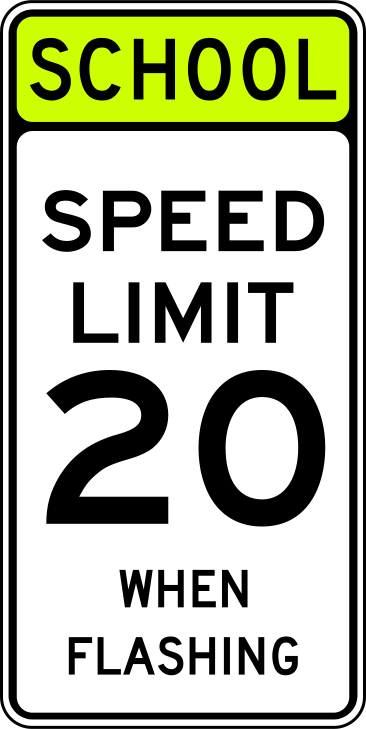
8. When the yellow light flashes at an Oklahoma School Zone sign, what must a driver do?
- Accelerate through the zone before the light stops flashing
- Maintain the regular highway speed until children appear
- Stop in the travel lane for the entire flashing period
- Reduce speed to the limit shown and watch carefully for children
Show answer
Reduce speed to the limit shown and watch carefully for children. A flashing yellow light at the School Zone sign activates the speed instruction shown for that zone. The driver must reduce speed to that displayed limit, watch carefully for children, and be ready to stop. Maintaining ordinary highway speed ignores the active restriction, while stopping in the lane for the whole interval is not the instruction. Accelerating to beat the signal creates the opposite of the cautious behavior required. The practical cue is the flashing yellow light beside the school-zone message.
Study this in the handbook: Stop, Yield and Regulatory Signs
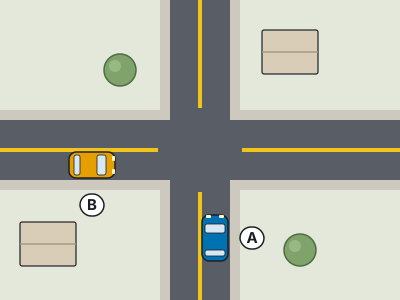
9. At an intersection without signs or signals, two vehicles arrive at the same time. Who yields?
- Both drivers should enter together
- The driver on the right yields to the driver on the left
- The vehicle traveling faster has priority
- The driver on the left yields to the driver on the right
Show answer
The driver on the left yields to the driver on the right. At an uncontrolled intersection, a simultaneous arrival is resolved by assigning the yield duty to the driver on the left. The vehicle approaching from the right may proceed first when the path is safe. Speed does not grant priority, and entering together puts both vehicles into the same conflict area. Slow before the intersection, check the other approach, and let the right-side vehicle clear before crossing. This rule applies to the tie when neither vehicle entered first.
Study this in the handbook: Right of Way at Intersections
10. What must a driver do before making a left turn on a flashing yellow arrow?
- Stop and wait until the arrow changes to a green circle
- Turn immediately because the arrow gives an exclusive right of way
- Reduce speed and yield to oncoming traffic and pedestrians
- Yield only to vehicles, because pedestrians must wait for the signal
Show answer
Reduce speed and yield to oncoming traffic and pedestrians. A flashing yellow arrow permits a left turn only after the driver reduces speed and yields to oncoming traffic and pedestrians. Those road users have priority while the arrow flashes. Turning immediately assumes the signal creates a protected movement, which it does not. A complete stop is not automatically required, and pedestrians remain part of the required yield. The cue is the flashing arrow rather than a steady green arrow: check the opposing lane and crosswalk, then turn when both are clear.
Study this in the handbook: Traffic Signals
11. After a first DUI conviction in Oklahoma, for how long is the license suspended when there is no earlier revocation within 10 years?
- One month
- 180 days
- 2 years
- 5 years
Show answer
180 days. Service Oklahoma suspends the license for 180 days on the first revocation. It becomes 1 year when there was a prior DUI or drug related revocation within 10 years, and 2 years when there were two or more. Thirty days is the first suspension for impaired driving at 0.05 to 0.08, not DUI, and 5 years is not listed. No additional suspension is added if the license was already revoked for the same incident under Implied Consent.
Study this in the handbook: Implied Consent and DUI Penalties
12. How do points come off an Oklahoma driving record over time?
- They never come off
- They all disappear after 6 months
- Two points are deducted for each 12 month period with no pointable convictions
- One point is deducted each time you renew
Show answer
Two points are deducted for each 12 month period with no pointable convictions. Oklahoma removes two points for every 12 month period with no convictions for pointable violations, and the total drops to zero after three consecutive years without traffic convictions. Points do come off, but not all at once after six months, and renewal does not remove any. Completing an approved Driver Compliance or Defensive Driving Course can remove another two points, a credit allowed once every 24 months.
Study this in the handbook: License Rules, Points and Penalties
13. What does the Oklahoma Driver Manual say about driving after using medical cannabis?
- It is legal with a medical card
- It is legal below 0.08
- It is legal after 2 hours
- It is illegal to drive with any detectable level of cannabis in your system
Show answer
It is illegal to drive with any detectable level of cannabis in your system. Although Oklahoma allows cannabis for some medical purposes, the manual says it impairs driving and that it is illegal for anyone to drive with any detectable level of cannabis in the body. A medical card does not create an exception, 0.08 is an alcohol concentration and does not apply to cannabis, and no waiting period makes driving lawful while cannabis is still detectable.
Study this in the handbook: Implied Consent and DUI Penalties
14. When a multi-lane road has a stationary vehicle with flashing lights, what is the first move required when safe?
- Stop beside the vehicle in the adjacent lane
- Change to a lane that is not next to the stopped vehicle
- Drive on the shoulder to get around it
- Keep the same speed and lane
Show answer
Change to a lane that is not next to the stopped vehicle. On a multi-lane road going in the driver's direction, Oklahoma requires moving to a lane that is not next to the stopped vehicle when it is safe to do so. If changing lanes is not safe, the driver must slow down and drive carefully. The shoulder is not a substitute lane, and holding speed beside the scene leaves responders exposed. See flashing lights, check mirrors and blind spots, then create lateral space or reduce speed.
Study this in the handbook: Emergency Vehicles and the Move Over Law
15. After stopping at a red light in Oklahoma, when may a driver turn right?
- Immediately, without checking traffic
- After a complete stop, when safe, unless a sign forbids the turn
- Only after another driver waves the vehicle through
- Never, even when the intersection is clear
Show answer
After a complete stop, when safe, unless a sign forbids the turn. A driver may turn right on red only after making a complete stop, and the turn must be safe and permitted by the signs. The driver must yield to pedestrians and vehicles using the intersection. Turning immediately skips the required stop, while another driver's wave cannot replace the traffic rules. The cue is stop, check, yield, then turn only when no sign prohibits the movement.
Study this in the handbook: Traffic Signals
16. What are Oklahoma's minimum liability insurance limits per accident?
- $10,000 per person, $20,000 per accident, $5,000 property
- $15,000 per person, $30,000 per accident, $10,000 property
- $25,000 per person, $50,000 for two or more people, $25,000 property
- $50,000 per person, $100,000 per accident, $50,000 property
Show answer
$25,000 per person, $50,000 for two or more people, $25,000 property. Oklahoma requires $25,000 for injury or death of one person, $50,000 for injury or death of two or more persons, and $25,000 for property damage, all per accident. The lower sets of numbers fall short of the state minimum, and 50/100/50 is higher than the law requires, though a driver may buy more. You must show proof of this insurance to an officer on request and to the other people involved in a collision.
Study this in the handbook: Insurance, Seat Belts and Child Restraints
17. What is the maximum penalty for a speeding conviction listed in the Oklahoma Driver Manual?
- A fine of up to $100 and no jail
- A fine of up to $654 and 30 days in jail
- A fine of up to $2,500 and one year in jail
- Loss of license for 6 months
Show answer
A fine of up to $654 and 30 days in jail. Under the Basic Speed Rule section, a speeding conviction can bring a fine of up to $654 and 30 days in jail, with fines doubled in school and construction zones when workers or equipment are present. A $100 cap with no jail understates it, $2,500 and a year describes a much more serious crime, and a single speeding conviction does not carry an automatic six month license loss. Speeding also adds points to the driving record.
Study this in the handbook: The Basic Speed Rule
18. What shape and colors identify Oklahoma warning signs?
- A yellow diamond with black letters or symbols
- A blue circle with white letters
- A red rectangle with green symbols
- A white octagon with orange letters
Show answer
A yellow diamond with black letters or symbols. Warning signs use a diamond shape with a yellow background and black letters or symbols. They alert the driver to hazards, changes in direction, or other roadway conditions ahead. A blue circle is associated with a different information purpose, while a red rectangle and white octagon do not describe the manual's warning-sign pattern. Learn the visual code before trying to read the individual symbol, because recognizing the sign at a distance gives extra time to scan, slow down, and prepare for the condition it announces.
Study this in the handbook: Warning Signs
19. What does a green guide sign generally provide?
- Travel information such as highways, distances, and exits
- A required speed for a work zone
- A warning that a train is approaching
- A command to yield to pedestrians
Show answer
Travel information such as highways, distances, and exits. Green, white, and brown guide signs provide travel information. They can identify highways, show distances, mark exits, and point toward parks or recreation areas. They are not the work-zone speed command, a railroad warning, or a pedestrian yield instruction. Drivers should use the information to plan a route while still obeying separate regulatory and warning signs. The most useful cue is the informational role: a guide sign helps you locate or reach a destination rather than telling you to perform an immediate safety maneuver. Route arrows and exit information are common examples.
Study this in the handbook: Work Zone, Guide and Service Signs
20. Why is the beginning of a rainstorm especially hazardous for traction?
- Rain immediately makes tires grip better than on dry pavement
- The first drops always remove every hazard from the pavement
- The first drops can mix with built-up grease and dirt into a slippery film
- The danger exists only after the roadway has completely dried
Show answer
The first drops can mix with built-up grease and dirt into a slippery film. After a dry period, the first drops loosen grease and dirt that have accumulated on the pavement. That material combines with water into a slippery film, so traction can fall before a driver expects it. The other choices reverse or postpone the hazard. Because the road may look merely damp, a driver should ease off the accelerator, avoid abrupt braking, and increase space behind the next vehicle. If the rain becomes heavy, slowing further or pulling off the road can be safer than trying to maintain normal speed.
Study this in the handbook: Braking, Skids and Wet Roads
QualitySpace is expanding to Oklahoma
We are a California-based independent insurance brokerage working on licensing in more states. We cannot help with Oklahoma insurance yet. Leave your email and we will let you know when we can.
Every question is written from the official Oklahoma Driver Manual. Need paper? Printable OK practice test with answer key.
Last verified 2026-10-05. How we check every question · Study all 218 as flashcards
Frequently asked questions
How many questions are on this Oklahoma practice test?
This fixed set has 20 questions. It is test 2 of 10 from the 218 question Oklahoma bank. The real OK exam asks 20 questions and you need 15 correct.
What is the passing score for the real Oklahoma test?
15 out of 20 questions correct to pass That figure comes from the official Oklahoma source cited on the DMV facts page.
How does this fixed test relate to the full Oklahoma bank?
Each numbered test is a fixed set of questions in a fixed order, so you can retake the same test later and compare. Every test mixes road signs and the other topics in about the same proportion as the full bank. Tests 1 to 10 together cover 200 of the 218 questions in the Oklahoma bank, each once. The full practice page mixes the whole bank at random.
Last verified 2026-10-05. See the Oklahoma DMV facts page for sourced state details.
Return to the full Oklahoma practice test · Study road signs