
Test 1 of 10 · 20 questions · Free 2026
IA Permit Practice Test 1
Jump to the test ↓A fixed 20 question set from the Iowa bank with answers and plain English explanations.
Question 1 of 20 · 0 right so far
All 20 questions in test 1
Every question below comes from the Iowa question bank on this page. Open a question to see the correct answer and the explanation. Nothing here is hidden behind a signup.
1. Why should loose objects be secured inside a vehicle?
- Loose objects become harmless once the vehicle exceeds 45 mph
- A 20-pound object can exert well over 1,000 pounds of force in a sudden stop at 60 mph
- Only objects heavier than 100 pounds can injure occupants
- Securing objects matters only when the vehicle is parked
Show answer
A 20-pound object can exert well over 1,000 pounds of force in a sudden stop at 60 mph. The manual warns that a loose object can become a serious projectile during a sudden stop. At 60 mph, a 20-pound object has the potential to exert well over 1,000 pounds of force. That makes the lighter-than-100-pound option unsafe, and speed does not make an unsecured object harmless. The concern applies while traveling, not only while parked. Secure cargo and remove items from the floor so they cannot strike someone or roll beneath the brake pedal and interfere with stopping.
Study this in the handbook: Vehicle Checks, Seat Belts and Child Restraints
2. Your vehicle stalls in floodwater on an Iowa road. What does the manual say to do?
- Stay inside and wait for help
- Restart the engine and drive on
- Abandon the vehicle and move to higher ground
- Open the windows and wait
Show answer
Abandon the vehicle and move to higher ground. Do not stay in a flooded vehicle. If your vehicle is stalled in floodwater, abandon it and move to higher ground. The manual warns that moving water is extremely powerful and that as little as 6 inches of it may sweep away a vehicle. If the car is swept into water and submerged, remain calm, wait for it to fill with water so the doors open, then hold your breath and swim to the surface. Restarting the engine and driving on is not the instruction; the manual says to abandon the vehicle.
Study this in the handbook: Night Driving, Bad Weather and Floods
3. What information does a white traffic sign generally provide in Iowa?
- General warnings about road hazards
- Enforceable laws and ordinances
- Directions to parks and historic sites
- Locations of traveler services
Show answer
Enforceable laws and ordinances. White is the standard color associated with regulatory signs in the Iowa manual. These signs communicate enforceable laws and ordinances, so they can govern speed, lane use, turns, parking, or another required action. Yellow is used for general warnings, brown points toward recreation and culture, and blue identifies traveler services. When a white sign appears, read its words or symbol as a rule that may require a specific response, not merely as background information.
Study this in the handbook: Sign Colors and Shapes
4. Under Iowa's Move Over or Slow Down Law, what must a driver do when approaching a stopped vehicle displaying flashing lights?
- Stop in the lane immediately beside the stopped vehicle
- Maintain speed because only emergency vehicles receive protection
- Change lanes when possible, or slow down and be prepared to stop if changing lanes is unsafe
- Pass on the shoulder to create more room
Show answer
Change lanes when possible, or slow down and be prepared to stop if changing lanes is unsafe. Iowa protects more than emergency vehicles under this rule, and it requires motorists to change lanes when approaching covered stopped vehicles with flashing lights. When a lane change is impossible, unlawful, or unsafe, the fallback is to slow down and be prepared to stop at a reasonable speed for conditions. Maintaining speed disregards the warning, stopping beside the vehicle can block traffic, and using the shoulder creates a separate hazard. Treat flashing lights as an early decision point: inspect the next lane, move over safely, or reduce speed and prepare to stop.
Study this in the handbook: Emergency Vehicles and the Move Over Law
5. What proof of insurance must an Iowa driver carry, and in what form?
- A paper card only
- An insurance card, printed or electronic, plus current proof of registration
- A copy of the full policy
- Nothing, the state checks electronically
Show answer
An insurance card, printed or electronic, plus current proof of registration. Every driver in Iowa must carry current proof of registration and an insurance card, printed or electronic, to verify proof of liability insurance. Failure to do so can result in fines and possible impoundment of the vehicle. A digital card on a phone satisfies the rule, and the full policy is not required. The state does not waive the carrying requirement for electronic verification.
Study this in the handbook: Who Needs a License and What to Carry
6. Compared with 30 mph, how much farther does a vehicle traveling 60 mph travel before stopping, according to the Iowa manual?
- The same distance
- Twice as far
- Ten times as far
- 3 times further
Show answer
3 times further. The Iowa manual says a vehicle traveling 60 mph will travel 3 times further than one at 30 mph before coming to a stop. Doubling speed does not simply double stopping distance. It is not the same distance, and ten times overstates it. The faster you go, the more distance you need to turn, slow, or stop, so speed should match road and weather conditions.
Study this in the handbook: Iowa Speed Limits
7. For driver licensing, Iowa treats you as a resident after you have lived in the state continuously for how long?
- 30 days
- 6 months
- 1 year
- 10 days
Show answer
30 days. You are considered an Iowa resident for licensing if you have lived in Iowa continuously for 30 days, among other triggers such as registering to vote, enrolling a child in public school, accepting a permanent job, or filing for a homestead or military tax exemption. Six months, one year, and ten days are not the Iowa figure. Visitors and students with a current home state license may drive without an Iowa license.
Study this in the handbook: Who Needs a License and What to Carry
8. Besides a BAC of .08 or higher, what substance condition can meet Iowa's OWI definition?
- Any amount of a controlled substance in the driver's system
- Only an open alcohol container
- Only a prescription label in the car
- Any amount of caffeine in the driver's system
Show answer
Any amount of a controlled substance in the driver's system. Iowa's OWI definition includes operating with any amount of a controlled substance in the driver's system, in addition to the .08 BAC standard. An open container is a separate alcohol rule, and a prescription label or caffeine level is not the condition stated here. The word any is important: the manual does not set a minimum quantity for the controlled substance in this definition. Avoid driving after using a substance that could impair you, and remember that the chemical category is separate from whether alcohol is present.
Study this in the handbook: Operating While Intoxicated (OWI)
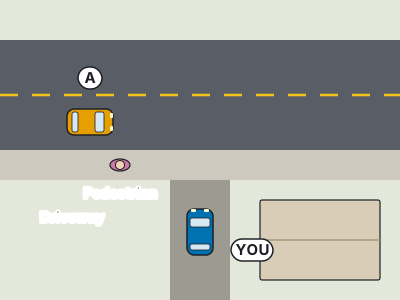
9. A driver entering a main road from a driveway must yield to whom?
- Only vehicles behind the driveway
- Only vehicles turning left
- Vehicles already on the main road
- No one if the driveway has no sign
Show answer
Vehicles already on the main road. A driver emerging from a driveway, alley, or roadside must yield to vehicles already using the main road. The rule protects traffic that is already established in the roadway, so the absence of a driveway stop sign does not erase the duty. Limiting the duty to left-turning vehicles is too narrow, and the direction-based choices ignore every vehicle already approaching on the main road. Before entering, scan both ways, wait for a safe gap, and remember that crossing a sidewalk also creates a pedestrian-yield obligation.
Study this in the handbook: Intersections and Right of Way
10. When entering a single-lane roundabout, to whom must a driver yield?
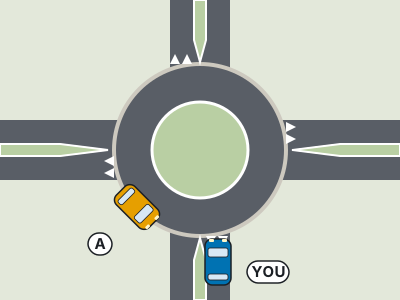
- Vehicles already in the roundabout
- Only vehicles waiting behind the entry line
- Vehicles approaching from the exit road
- No one, because entering traffic goes first
Show answer
Vehicles already in the roundabout. Entering traffic must yield to vehicles already circulating in the roundabout. The entry line is a place to yield, not a reason for vehicles behind you to take priority. Traffic on an exit road is not the primary conflict at entry, and the no one choice reverses the roundabout rule. Slow to the posted advisory speed, check the crosswalk, wait for a suitable gap, and merge counterclockwise. Once inside, keep moving unless conditions require otherwise and follow the lane markings to your exit.
Study this in the handbook: Roundabouts and Uncontrolled Intersections
11. What should a driver on the main road expect at a merging-traffic warning?

- Other vehicles blending into the driver's lane
- The driver's lane becoming a shoulder
- A mandatory stop before every merge
- Traffic moving only in the opposite direction
Show answer
Other vehicles blending into the driver's lane. The merge warning alerts a driver on the main road that other vehicles may blend into the lane. Check mirrors and blind spots, maintain a useful gap, and adjust speed smoothly so merging traffic can enter without conflict. The sign does not say the lane becomes a shoulder or require an automatic stop before the merge. Expect interaction with nearby vehicles and avoid racing another driver toward the joining point.
Study this in the handbook: Warning, Guide and Service Signs
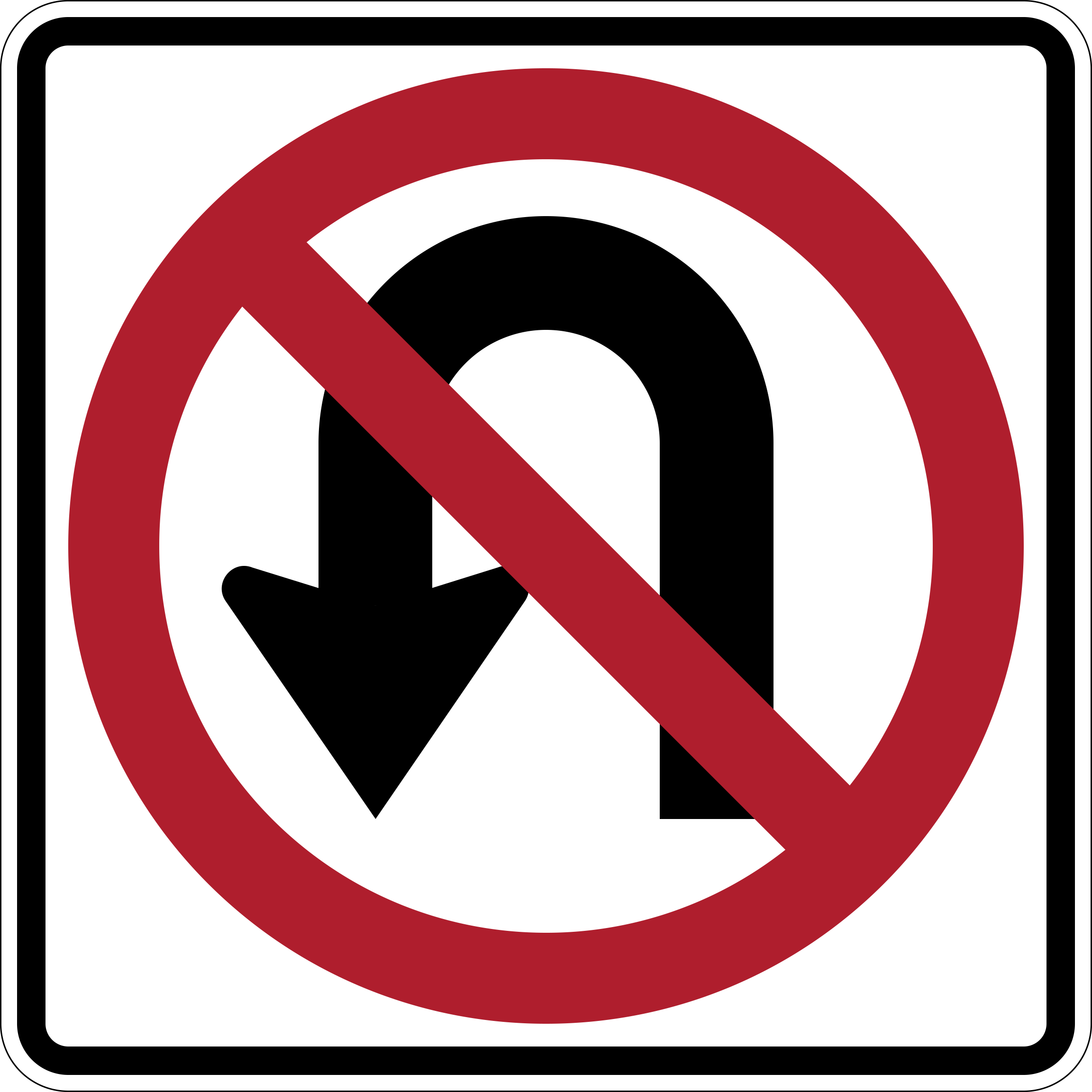
12. A red slash over a U-shaped arrow means the driver must not:
- Enter a one-way street
- Turn left at the next intersection
- Pass another vehicle
- Make a U-turn
Show answer
Make a U-turn. The crossed U-shaped arrow bars a U-turn at that location. A left-turn restriction would show a left-turn symbol, while a passing restriction concerns whether the roadway is safe for overtaking. The one-way choice describes traffic direction and is not what this symbol communicates. Read the red slash as a prohibition applied to the pictured movement, then continue in the permitted direction until a legal place allows you to turn around. A quick visual check of the arrow shape prevents confusing this sign with the separate no-left-turn symbol.
Study this in the handbook: Regulatory Signs
13. What kinds of information do Iowa traffic signs communicate?
- Only road construction schedules and detour dates
- Traffic laws, hazards, locations, directions, and services
- Only the names of nearby towns and counties
- Only emergency instructions from police officers
Show answer
Traffic laws, hazards, locations, directions, and services. Traffic signs give drivers several kinds of information, including laws, hazards, places, routes, directions, and services. The choice “Traffic laws, hazards, locations, directions, and services” covers that broad purpose, while the other choices incorrectly limit signs to construction dates, local names, or police instructions. Color and shape provide useful clues, but the individual symbol or wording supplies the particular message. Read the sign early, connect it to the road ahead, and adjust speed or position when its warning or rule requires it. This approach turns sign recognition into a driving decision instead of a visual detail ignored at speed.
Study this in the handbook: Sign Colors and Shapes
14. Before moving into another lane, which sequence best follows Iowa's lane-change guidance?
- Signal, check the blind spot, then look only at the rearview mirror
- Brake sharply in the current lane before steering over
- Move across two lanes quickly before another vehicle can enter
- Check traffic and space, signal, inspect mirrors and the blind spot, then move one lane
Show answer
Check traffic and space, signal, inspect mirrors and the blind spot, then move one lane. A safe lane change is a planned, single-lane movement. First confirm that the target lane has room and yield to traffic already there. Signal to communicate, use the rearview and side mirrors, and look over the shoulder toward the lane you intend to enter. The choice “Signal, check the blind spot, then look only at the rearview mirror” skips the opening check of traffic and space and ignores the side mirrors, while the choice “Move across two lanes quickly before another vehicle can enter” creates unnecessary risk by crossing two lanes at once. Keep the wheel straight during the shoulder check, then move over smoothly without unnecessary braking.
Study this in the handbook: Turns, Lane Changes, Passing and Tailgaters
15. How should a driver respond when a bicyclist may still be vulnerable in an intersection, even if the driver seems to have priority?
- Use defensive driving and be ready to yield to avoid a collision
- Continue without checking because priority removes all responsibility
- Sound the horn and force the bicyclist to stop
- Pass within the intersection before the bicyclist reaches the lane
Show answer
Use defensive driving and be ready to yield to avoid a collision. The manual emphasizes that bicyclists are vulnerable and that motorists should use defensive driving to avoid collisions. A driver should be ready to yield even at times when the bicyclist should yield, because having priority is not a license to strike someone. The horn, speed, and no-check choices treat a legal judgment as protection from physical harm. Scan for the bicyclist's path, reduce speed when needed, and leave enough room to prevent contact.
Study this in the handbook: Traffic Signals and Pedestrian Beacons
16. You plan to turn on an Iowa highway where the speed limit is 55 mph. How far before the turn must you signal?
- At least 100 feet
- At least 50 feet
- At least 500 feet
- At least 300 feet
Show answer
At least 300 feet. Iowa law requires a turn signal at least 100 feet before a turn when the speed limit is 45 mph or less, and at least 300 feet before the turn when the limit is faster than 45 mph. A 55 mph road is above 45, so 300 feet applies. One hundred feet is the slower road rule, 50 feet is too short at either speed, and 500 feet is not the legal distance.
Study this in the handbook: Turns, Lane Changes, Passing and Tailgaters
17. What kind of insurance evidence may an Iowa driver carry?
- A repair order from the last inspection
- A verbal promise from the vehicle owner
- A vehicle title showing the purchase date
- An insurance card in printed or electronic form
Show answer
An insurance card in printed or electronic form. Iowa accepts an insurance card as proof of liability insurance, and the card can be printed or electronic. The format changes how the evidence is stored, not the requirement to carry evidence. A verbal assurance cannot be checked like a card, while a title proves ownership rather than liability coverage. A repair order concerns maintenance and says nothing about insurance. The useful exam cue is to separate documents by purpose: the insurance card verifies coverage, while registration proof identifies the vehicle for state records.
Study this in the handbook: Who Needs a License and What to Carry
18. On a road with four or more lanes, when may a driver meeting a stopped school bus pass it?
- Only after passing the bus on its right shoulder
- Whenever the bus has amber lights flashing
- When traveling in the opposite two lanes or more
- Whenever no children are visible
Show answer
When traveling in the opposite two lanes or more. On a four-or-more-lane road, a driver meeting the bus in the opposite two lanes or more does not have to stop, even when the bus has flashing lights and its stop arm extended. That is the manual's only stated situation for passing a stopped bus with the arm out. Amber lights alone do not create a universal pass permission, and children being out of sight is irrelevant. The roadway layout, not a guess about visibility, controls this exception.
Study this in the handbook: Stopping for School Buses
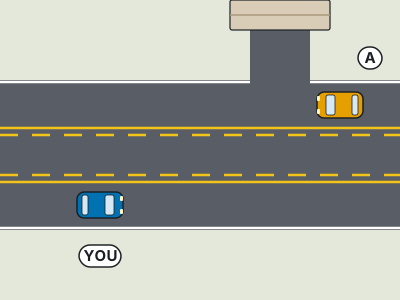
19. What is a shared left-turn lane designed for?
- Passing slower traffic in the center
- Left turns from either direction
- Driving straight through an intersection
- Parking while waiting for a turn
Show answer
Left turns from either direction. A shared left-turn lane serves vehicles turning left from either direction. Its alternating arrows and yellow boundaries communicate that purpose. It is not a center passing lane, a through lane, or a parking space. A driver may enter and stop there briefly before making a left turn, but should not use the lane to overtake traffic. Scan for opposing vehicles already using the same center space, signal clearly, and enter only when the turn can be completed without conflict.
Study this in the handbook: Pavement Markings and Lane Use
20. What is the safest general response to a yellow warning sign showing a road hazard?

- Move onto the shoulder immediately
- Maintain speed because warnings are advisory only
- Slow down and be prepared to stop if necessary
- Pass every vehicle before reaching the hazard
Show answer
Slow down and be prepared to stop if necessary. Iowa warning signs identify a special situation or hazard ahead. Their purpose is to prompt a slower, more observant approach and readiness to stop if the situation requires it. A warning is not permission to maintain speed, use the shoulder, or pass before reaching the hazard. Scan beyond the sign for the road shape, traffic, people, and any additional plaque or control device. Adjust early so the vehicle remains stable and you have room to respond.
Study this in the handbook: Warning, Guide and Service Signs
QualitySpace is expanding to Iowa
We are a California-based independent insurance brokerage working on licensing in more states. We cannot help with Iowa insurance yet. Leave your email and we will let you know when we can.
Every question is written from the official Iowa Driver's License Manual. Need paper? Printable IA practice test with answer key.
Last verified 2026-10-05. How we check every question · Study all 210 as flashcards
Frequently asked questions
How many questions are on this Iowa practice test?
This fixed set has 20 questions. It is test 1 of 10 from the 210 question Iowa bank.
How does this fixed test relate to the full Iowa bank?
Each numbered test is a fixed set of questions in a fixed order, so you can retake the same test later and compare. Every test mixes road signs and the other topics in about the same proportion as the full bank. Tests 1 to 10 together cover 200 of the 210 questions in the Iowa bank, each once. The full practice page mixes the whole bank at random.
Last verified 2026-10-05. See the Iowa DMV facts page for sourced state details.