
Test 16 of 25 · 20 questions · Free 2026
IA Permit Practice Test 16
Jump to the test ↓A fixed 20 question set from the Iowa bank with answers and plain English explanations.
Question 1 of 20 · 0 right so far
All 20 questions in test 16
Every question below comes from the Iowa question bank on this page. Open a question to see the correct answer and the explanation. Nothing here is hidden behind a signup.
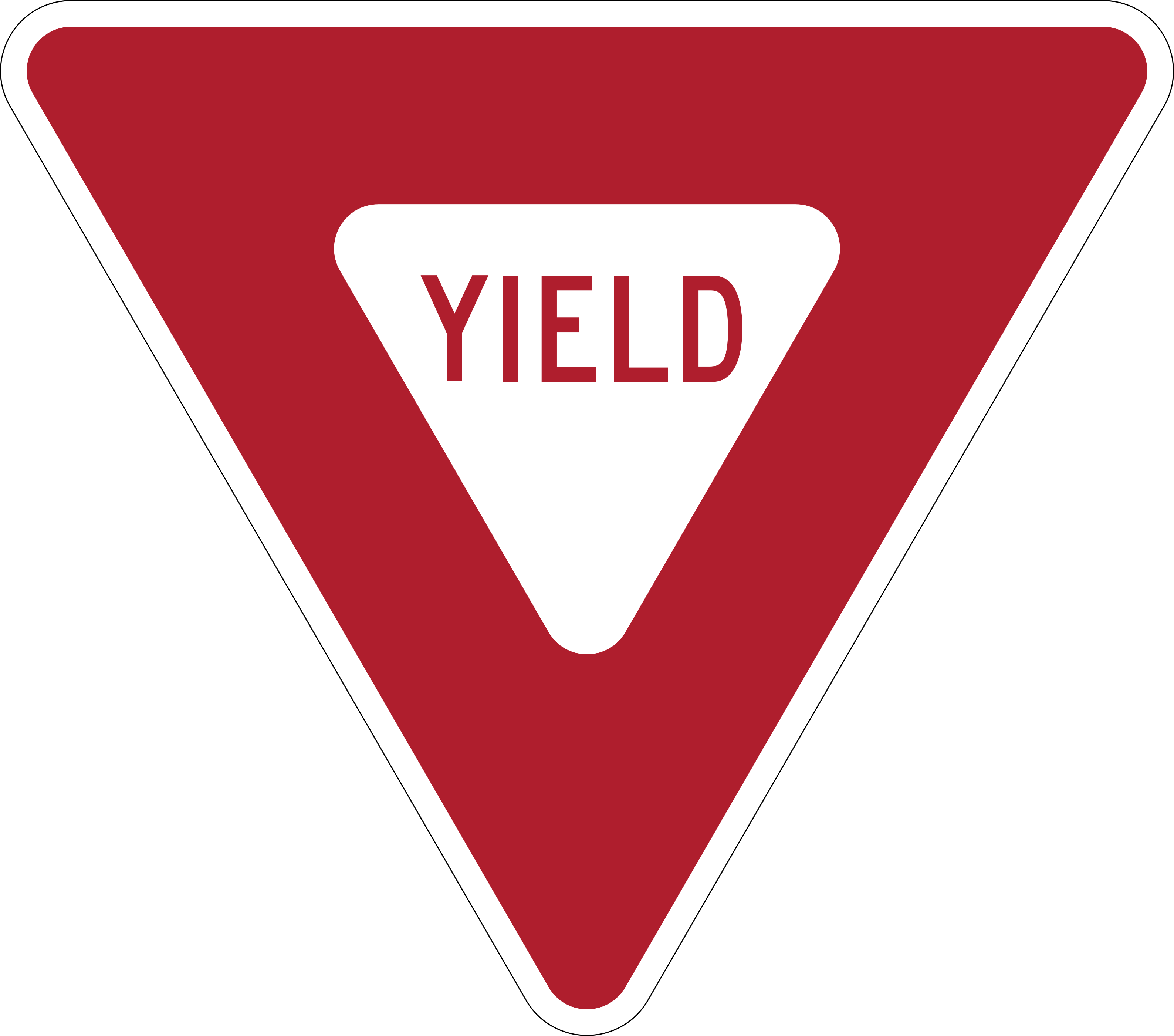
1. You approach an Iowa yield sign where traffic crosses your path. How should you enter?
- Slow down and give cross traffic the right of way
- Enter at full speed and expect others to brake
- Stop for a full minute even on an empty road
- Speed up so crossing drivers must wait for you
Show answer
Slow down and give cross traffic the right of way. A yield sign in Iowa tells you to slow down and yield the right of way to traffic in the intersection you are crossing or the roadway you are entering. You need not stop when no traffic requires it, yet you must stop if yielding demands it. Entering fast or speeding up claims space that belongs to cross traffic. Approach slowly enough to stop smoothly, scan both directions, and enter only when your move does not force others to brake.
Study this in the handbook: Regulatory Signs
2. Temperatures may fall below freezing on your winter drive. What does the manual say about washer fluid?
- Keep it full and use antifreeze wash
- Use plain water so the fluid does not thicken
- Let it run low to cut the weight of the vehicle
- Skip it, since wipers alone clear the windshield
Show answer
Keep it full and use antifreeze wash. Among the steps Iowa lists for seeing clearly while driving is to keep your windshield washer fluid full and to use antifreeze wash when the temperature could fall below freezing. Ordinary washer fluid or water can freeze, which would leave you unable to clean road spray from the glass. A full reservoir of the right fluid keeps the windshield usable in winter, along with clearing snow, ice, and frost from all windows.
Study this in the handbook: Vehicle Checks, Seat Belts and Child Restraints
3. A 17 year old holds an Iowa intermediate license and wants to take a phone call. When may that driver talk on the phone?
- Whenever the call uses a speaker or headset
- Only when stopped fully off the traveled roadway
- Whenever traffic is light on a rural road
- Whenever the driver keeps one hand on the wheel grip
Show answer
Only when stopped fully off the traveled roadway. Iowa's rule for young drivers covers anyone under 18 with an instruction permit, intermediate license, or special minor restricted license. These drivers are prohibited from making and receiving calls and talking on the phone while driving unless the vehicle is at a complete stop off the traveled portion of the roadway. A speaker or headset, light traffic, or driving one handed does not change that. Pull completely off the road before the call. The hands free law applies to every driver separately.
Study this in the handbook: Iowa's Hands-Free Law and Distractions
4. In Iowa, what unusual path do drivers follow in a diverging diamond interchange?
- They circle a center island against traffic flow
- They cross railroad tracks without any signals
- They travel briefly on the opposite side of the road
- They drive on the shoulder around a closed bridge
Show answer
They travel briefly on the opposite side of the road. A diverging diamond interchange in Iowa is used where two high volume roads meet. The design is unusual because it directs drivers on the opposite side of the road briefly before diverging back into the correct direction. That swap lets traffic spend less time at a traditional traffic light controlled intersection. Circling an island describes a roundabout instead. Follow signs and signals closely inside the crossover, since opposing lanes sit where habit says yours should be.
5. In Iowa, which items count as pedestrian conveyances?
- Cars, trucks, and buses on public roads
- Motorcycles, mopeds, and all terrain vehicles
- Wheelchairs, strollers, skateboards, and scooters
- Trains, trolleys, and streetcars on rails
Show answer
Wheelchairs, strollers, skateboards, and scooters. Pedestrian conveyances in Iowa are human powered devices by which a pedestrian may move other than by walking, or may move another person. The list includes wheelchairs, strollers, skateboards, scooters, and electric personal assistive mobility devices. Cars, motorcycles, and trains are motor or rail vehicles and sit outside that class. Drivers must yield to conveyance users just as they yield to people on foot. A person pushing a stroller or riding a scooter at a crossing deserves the same wait.
6. In Iowa, which instruction requires a driver to stop even without a sign or signal?
- A passenger asking the driver to stop very soon
- A construction work zone flagger instruction
- A radio traffic report naming a slow road
- A service sign pointing toward a rest area
Show answer
A construction work zone flagger instruction. Required stops in Iowa include stopping at the request of any law officer and when instructed by a construction work zone flagger. Flaggers use stop and slow paddles to control traffic through work areas, and drivers must follow their instructions. Passenger requests, radio reports, and service signs carry no such command. The required stop list also covers all stop signs, flashing red lights, and red traffic lights. Treat a flagger paddle like a signal placed exactly where the hazard sits.
Study this in the handbook: Following Distance and Stopping
7. In Iowa, why must a driver never remove the ignition key while driving?
- Removing the key turns off every exterior light
- The engine restarts only at a licensed station
- Removing the key can lock the steering wheel
- Passengers may touch the key without any risk
Show answer
Removing the key can lock the steering wheel. Many Iowa vehicles have steering lock systems meant to prevent theft. Never remove the key or allow passengers to touch the key while driving. If the key is removed, the steering wheel will lock. That may cause loss of control of the vehicle and could result in a crash. Keep hands and objects away from the key in motion, even on quiet roads. If the engine stalls for another reason, keep a strong grip on the wheel and pull off the roadway.
Study this in the handbook: Equipment Failures and Crashes
8. In Iowa, what limit does lane keeping assist have on worn or snowy roads?
- It steers better when lane lines disappear fully
- It will not work when lane lines are faint or covered
- It replaces the driver need to hold the lane
- It works only when snow covers every lane line
Show answer
It will not work when lane lines are faint or covered. Lane keeping assist in Iowa can help return you to your lane if you drift out, with a sound, flashing light, or vibration alert. This feature will not work when lane lines are faint or covered with snow or dirt. The driver should not depend on lane keeping assist and should always maintain control of the vehicle and remain within the driving lane. The feature is easily cancelled by nudging the wheel. Treat every assist as backup help, never as the driver.
9. Mud and snow cover the sensors on your front bumper. What problem can that create?
- The brakes lose force whenever the sensors are covered
- The sensors work better because the snow helps them
- Detection features may not work properly until the sensors are cleaned
- The headlights switch to high beams on their own
Show answer
Detection features may not work properly until the sensors are cleaned. Bicycle, pedestrian, and obstacle detection depends on sensors, often radar based, mounted in the front or rear of the vehicle. Iowa notes that sensors need to be kept clean in order for them to function properly. Mud, snow, or dirt over them can stop a feature from detecting what it should. Because you are never supposed to depend on these systems alone, clear the sensors and keep scanning the road yourself.
10. On a three lane Iowa road in one direction, where should through traffic normally stay?
- In the left lane at all times for through travel
- In whichever lane has the fewest painted lines
- On the shoulder when the right lane feels busy
- In the right or center lane except to pass
Show answer
In the right or center lane except to pass. On an Iowa road with two or more lanes in the same direction, the left lane is generally used for passing. On roads with three or more lanes, stay in the right or center lane except to pass. If there is a lot of entering traffic, the center lane often works best. Never drive on the shoulder and never pass on the shoulder. Moving right after passing keeps faster traffic flowing and reduces lane change friction for everyone.
Study this in the handbook: Pavement Markings and Lane Use
11. An Iowa regulatory sign shows a bicycle under a red slash. What does that slash mean?
- Bicycles cannot use that place or movement
- Bicycles must use that place at all times
- Drivers must yield to bicycles twice there
- The route is reserved for bicycles only ahead
Show answer
Bicycles cannot use that place or movement. Some Iowa regulatory signs have a red circle with a red slash over a symbol. These indicate you cannot do something, such as no left turn, no right turn, or no U turn. The symbol under the slash names the banned action or user. A slashed bicycle therefore bans bicycles there rather than reserving space or ordering double yields. Read symbol plus slash together before acting, since color alone only signals prohibition.
Study this in the handbook: Regulatory Signs
12. In Iowa, why do seat belts matter even for short trips around town?
- Town trips always involve higher speeds than highways
- Seat belts are only required on trips over 25 miles
- Over half of traffic deaths happen within 25 miles of home
- Most town crashes happen above 60 miles per hour
Show answer
Over half of traffic deaths happen within 25 miles of home. Seat belts are not only for long trips in Iowa. Over half of all traffic deaths happen within 25 miles of home. Many occur on roads with speed limits of less than 45 mph. Familiar streets invite the false comfort that a short drive needs no belt. Iowa requires front seat passengers to wear seat belts, and passengers in back seats under age 18 as well. Buckle before the vehicle moves on every trip, no matter how short the drive feels.
Study this in the handbook: Vehicle Checks, Seat Belts and Child Restraints
13. You are about to turn left at an intersection and a motorcycle is approaching. What should you confirm before you turn?
- That its turn signal is off, then go ahead
- That it is smaller, so it will stop for you
- That the rider has slowed by watching its headlight
- That you have seen it and know its speed
Show answer
That you have seen it and know its speed. Iowa says intersections are the most likely places for car and motorcycle collisions to occur. Before you start to turn or enter an intersection, make sure you actually see the motorcycle and know its speed. A motorcycle is narrow and easy to miss, and its rider may be unable to stop quickly. Respect its space and position in traffic, and wait until you are sure of what the rider is doing before moving into its path.
Study this in the handbook: Trucks, Motorcycles, Bicyclists and Pedestrians
14. A cyclist rides in the lane ahead of you on an Iowa street that has a sidewalk nearby. What attitude does the manual expect?
- Honk until the cyclist moves to the sidewalk
- Treat the lane as yours and pass without changing lanes
- Respect the cyclist's right to be on the road
- Follow closely so the cyclist knows you are behind
Show answer
Respect the cyclist's right to be on the road. Iowa tells drivers to watch for bikes and reminds them that people riding bicycles have the right to be on the road. They are often prohibited from riding on sidewalks, so drivers should respect their right to be there. That means giving them room, being patient, and passing only when you can completely change lanes, leaving the cyclist the entire lane as you would with any other vehicle.
Study this in the handbook: Trucks, Motorcycles, Bicyclists and Pedestrians
15. Both headlights die on a dark Iowa road while you drive. What should you try first?
- Try the headlight switch a few times promptly
- Keep driving dark until the next town arrives
- Turn off every other light to save the battery
- Stop in the travel lane and exit at once there
Show answer
Try the headlight switch a few times promptly. If your Iowa headlights suddenly go out, try the headlight switch a few times, then try turning on your high beams. Turn on emergency flashers, turn signals, or fog lights if headlights do not return. Pull off the road as soon as possible. Iowa requires both headlights from sunset to sunrise or in visibility of 500 feet or less, so a dark vehicle must leave travel quickly and visibly rather than continuing blind among traffic.
Study this in the handbook: Equipment Failures and Crashes
16. You have been awake 18 hours straight before an Iowa drive. How does that impairment compare?
- Like a 0.02 BAC, the underage offense level
- Like a 0.08 BAC, the legally drunk level in Iowa
- Like normal alertness after a full night of rest
- Like drinking one cup of coffee before driving
Show answer
Like a 0.08 BAC, the legally drunk level in Iowa. Being awake for 18 hours straight in Iowa is as impairing as a blood alcohol concentration of 0.08 percent, which is legally drunk and leaves you at equal risk for a crash. Drowsy drivers show slow reactions, lane drifting, tailgating, and rumble strip hits. Take a break, pull over safely, or switch drivers when those signs appear. Yawning, wandering thoughts, and trouble remembering recent miles also warn that sleep debt has already reached dangerous levels.
Study this in the handbook: Operating While Intoxicated (OWI)
17. You approach an Iowa pedestrian hybrid beacon with every light dark. How may you proceed?
- Stop fully and wait for the beacon to light
- Proceed at full speed without any caution
- Wait for a pedestrian to activate the beacon
- Proceed with caution past the dark beacon
Show answer
Proceed with caution past the dark beacon. These beacons stay dark until a pedestrian activates them at the crossing. A fully dark beacon lets traffic proceed, still with caution at the crosswalk. Once activated, the bottom yellow flashes for slowing, then turns solid for preparing to stop, then two red lights command a stop. Caution in the dark state still means scanning the crosswalk area for people who may activate the beacon or cross lawfully. Dark never means stop and wait.
Study this in the handbook: Traffic Signals and Pedestrian Beacons
18. In an Iowa work zone, what clothing helps drivers spot a flagger?
- A dark winter coat with a reflective hat band
- A plain white uniform shirt with a blue cap
- A brown work jacket with no bright coloring
- Fluorescent yellow green or orange work clothing
Show answer
Fluorescent yellow green or orange work clothing. Iowa flaggers should wear fluorescent yellow green or orange vests, shirts, or jackets so drivers can spot them early. That bright clothing separates the person giving commands from cones, signs, and machinery. Dark coats, plain white uniforms, and dull brown jackets do not serve that purpose. In a work zone, look first for the bright figure holding a paddle, then follow the paddle. Early recognition gives you time to slow before reaching the stop point.
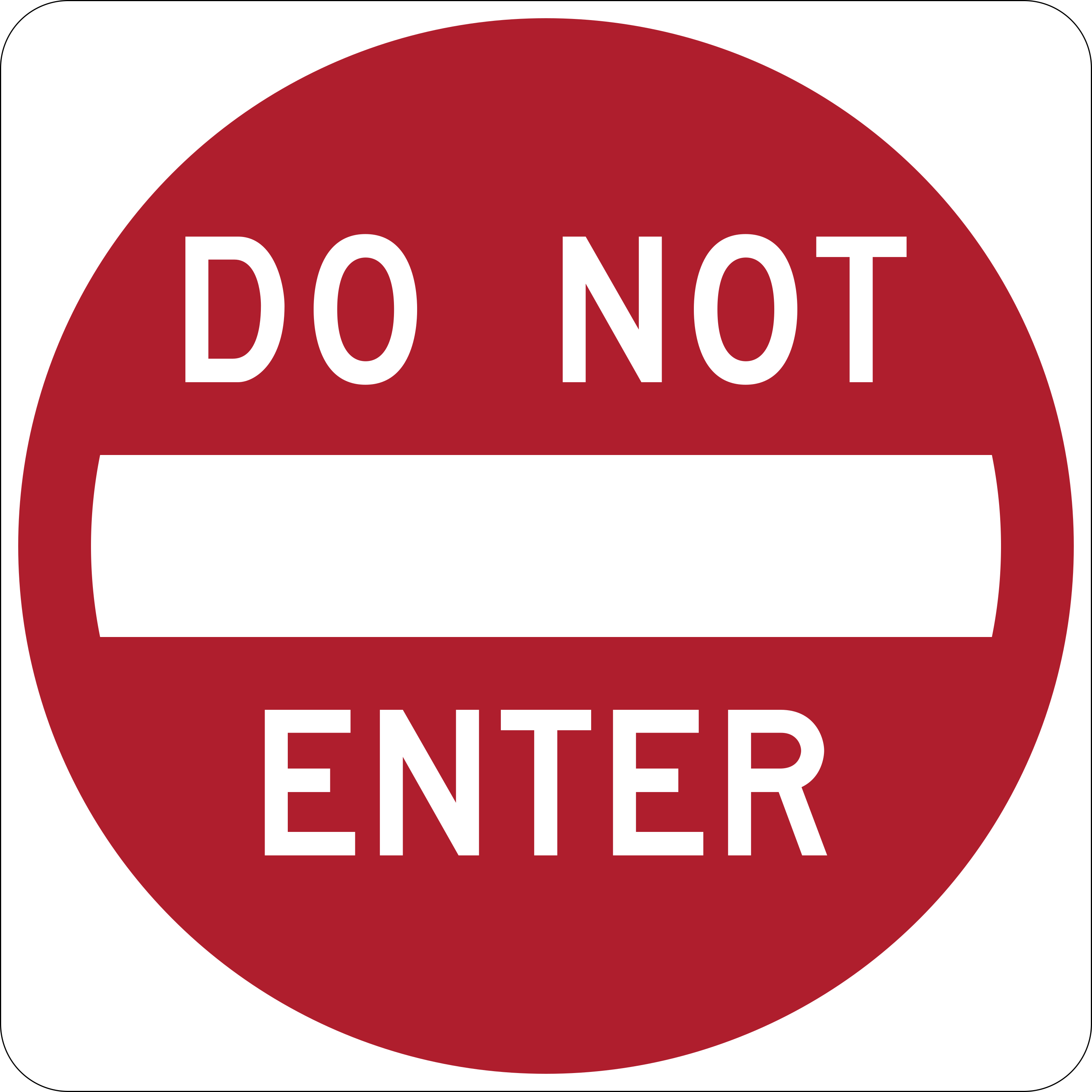
19. You face an Iowa exit ramp marked do not enter. What does that sign forbid there?
- Entering that roadway opening in your direction
- Exiting a parking lot at that same opening
- Stopping before a stop line at that opening
- Turning right after a stop at that opening
Show answer
Entering that roadway opening in your direction. Do not enter signs in Iowa appear at roadway openings you are not to enter. You will see them at exit ramps, in crossovers on divided roadways, and at numerous locations on one way roads. Entering there puts you against traffic that expects the opening to flow one way. Wrong way signs then warn drivers who already made that error. Treat every do not enter face as a wall for your direction, even when the pavement looks empty.
Study this in the handbook: Regulatory Signs
20. In Iowa, how is a reversible lane usually marked on the pavement?
- With a single solid white line at the curb
- With green paint across the whole lane width
- With white triangles pointing at the driver
- With double dashed yellow lines on the road
Show answer
With double dashed yellow lines on the road. Reversible lanes in Iowa are usually marked by double dashed yellow lines. These lanes carry traffic in one direction at certain times and the opposite direction at other times. Before driving in one, check signs by the road or overhead and any special lights. Green paint belongs to bicycle areas, and white triangles form yield lines. Because the direction changes by time of day, the marking alone never proves the lane is yours right now.
Study this in the handbook: Pavement Markings and Lane Use
Every question is written from the official Iowa Driver's License Manual. Need paper? Printable IA practice test with answer key.
Last verified 2026-10-05. How we check every question · Study all 500 as flashcards
Frequently asked questions
How many questions are on this Iowa practice test?
This fixed set has 20 questions. It is test 16 of 25 from the 500 question Iowa bank.
How does this fixed test relate to the full Iowa bank?
Each numbered test is a fixed set of questions in a fixed order, so you can retake the same test later and compare. Every test mixes road signs and the other topics in about the same proportion as the full bank. Tests 1 to 25 together cover every question in the Iowa bank once. The full practice page mixes the whole bank at random.
Last verified 2026-10-05. See the Iowa DMV facts page for sourced state details.