
Test 19 of 25 · 20 questions · Free 2026
IA Permit Practice Test 19
Jump to the test ↓A fixed 20 question set from the Iowa bank with answers and plain English explanations.
Question 1 of 20 · 0 right so far
All 20 questions in test 19
Every question below comes from the Iowa question bank on this page. Open a question to see the correct answer and the explanation. Nothing here is hidden behind a signup.
1. You drive 40 mph on an Iowa road in normal conditions. What following distance is recommended?
- A four to five second following distance at 40 mph
- A one to two second following distance at 40 mph
- A ten to twelve second gap at that travel speed
- The same gap used at walking speed in parking lots
Show answer
A four to five second following distance at 40 mph. At Iowa speeds of 40 mph, a four to five second following distance is recommended. Beginning drivers need at least three seconds in normal conditions, and slippery roads or blocked views call for six or more seconds. When road conditions are slippery, following distance must grow beyond dry figures. The three to four second rule overall remains the safest and easiest judging method. Counting seconds from a landmark keeps the gap honest as speed changes.
Study this in the handbook: Following Distance and Stopping
2. You approach an Iowa school bus from behind on a four lane road as its lights flash. What applies?
- The same stopping rules as on two lane roads
- You may pass because four lanes remove the duty
- You may pass if you use the far left lane only
- You must stop only when children are visible
Show answer
The same stopping rules as on two lane roads. When approaching an Iowa school bus from the rear on a road with four or more lanes, the rules are the same as for two or three lane roads. Do not pass when red or amber lights flash, stop no closer than 15 feet behind the bus when it stops with the arm extended, and remain stopped until the arm retracts and the bus moves. Only meeting drivers in opposite lanes on four plus lane roads may pass a stopped bus with arm out.
Study this in the handbook: Stopping for School Buses
3. Yellow lines run down the center of an Iowa road. What traffic do those lines separate?
- Traffic traveling in the same direction there
- Parked traffic from moving traffic at curbs
- Traffic traveling in opposite directions there
- Bicycle traffic from car traffic at road edges
Show answer
Traffic traveling in opposite directions there. Yellow lines in Iowa separate traffic traveling in different directions, while white lines separate traffic traveling in the same direction. A solid yellow beside a dashed yellow bans passing on the solid side and allows it on the dashed side when safe. Double solid yellow bans passing both ways. Color tells you whether the vehicle beside the line approaches you or travels with you, which should shape every passing and turning decision.
Study this in the handbook: Turns, Lane Changes, Passing and Tailgaters
4. A solid green bicycle box waits at an Iowa signal. What riding help does it give?
- A parking place for bicycles at the signal
- A safe way for bicyclists to turn at the signal
- A lane where cars wait ahead of other cars
- A painted box where pedestrians must stand
Show answer
A safe way for bicyclists to turn at the signal. Bicycle boxes in Iowa are pavement markings installed to allow bicyclists a safe way to turn at a signalized intersection. They are solid green with an image of a bicyclist, located adjacent to the crosswalk and covering the entire width of the travel lane. Motorists should not stop on green bicycle pavement generally and must look for bicyclists before crossing green paint. The box puts cyclists where drivers can see them ahead of the queue.
Study this in the handbook: Pavement Markings and Lane Use
5. You sit at a red light in the left lane of an Iowa one way street facing another one way street leftward. May you turn left on red?
- Yes, after stopping, turn left onto that one way street
- Yes, turn left on red onto any street at all
- No, left turns on red are never allowed in Iowa
- No, only right turns on red are allowed in Iowa
Show answer
Yes, after stopping, turn left onto that one way street. In Iowa you may make a left turn at a red light if you are turning from the left lane of a one way street onto another one way street, after stopping and yielding. Right turns on red follow the broader rule unless a sign bans them. Left on red onto a two way street or from a two way street is not allowed. Check street direction signs carefully, since the exception depends entirely on both streets running one way.
Study this in the handbook: Turns, Lane Changes, Passing and Tailgaters
6. You reach an Iowa intersection with a red octagon sign and a marked stop line. What must you do first?

- Slow down and roll through if no officer watches
- Yield only to cars and ignore the crosswalk area
- Stop past the line where the view looks widest
- Stop at the line and wait until the crossing clears
Show answer
Stop at the line and wait until the crossing clears. A red octagon at an Iowa intersection orders a full stop before proceeding. Stop at the stop line if one is present, wait until crossing vehicles and the crosswalk are clear, and only then move. Rolling through slowly or stopping past the line both break that order. After the first stop, you may pull forward to the sign or intersection edge if needed for a better view, then proceed when safe. The two stage stop protects walkers first.
Study this in the handbook: Regulatory Signs
7. You turn onto an Iowa street and see a black and white arrow sign pointing right. Which way may you drive?
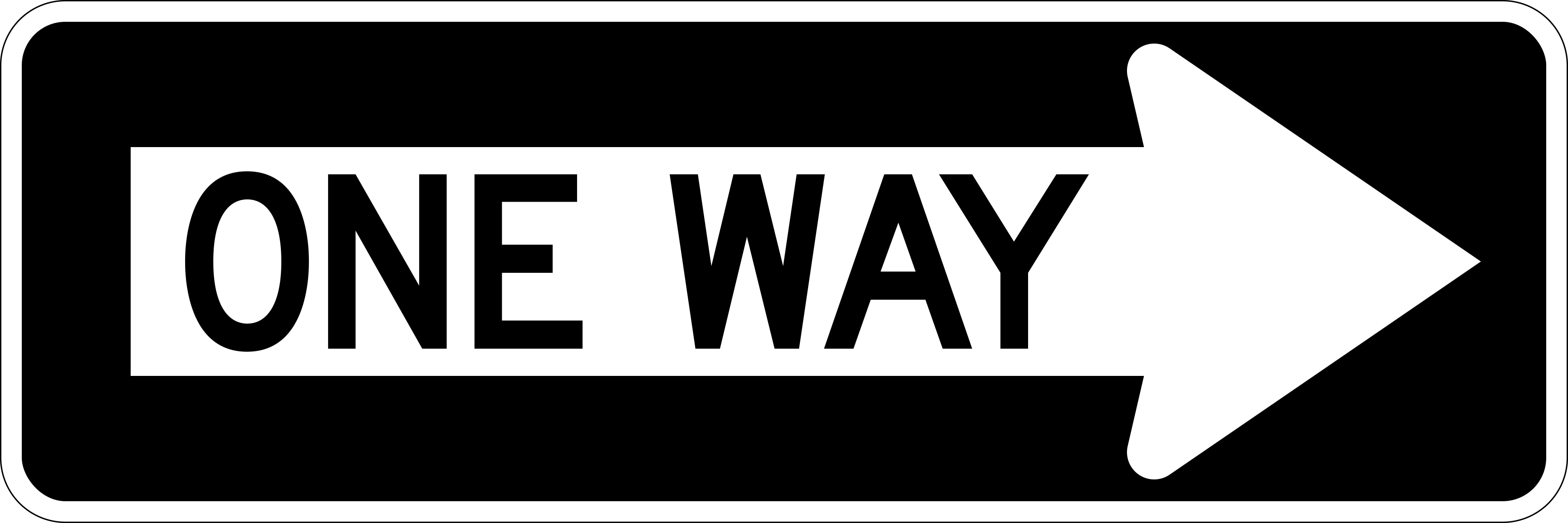
- Either way, since the street looks empty now
- Only to the right, following the arrow direction
- To the left if you stay near the curb edge
- Backward slowly until the next side street
Show answer
Only to the right, following the arrow direction. A one way sign in Iowa means traffic moves only in the direction of the arrow. An empty street, a curb side path, or a short reverse does not change that direction. Do not enter signs guard openings you must not use, such as exit ramps and crossovers on divided roadways. If the arrow points away from your intended route, continue to the next lawful turn instead of forcing the street. Wrong way signs warn drivers who already entered opposing lanes.
Study this in the handbook: Regulatory Signs
8. Your car offers automatic parallel parking. Who is still responsible for braking while it guides the car in?
- The car, once you take your hands off the wheel
- You, the driver, who must also watch the surroundings
- The system, as long as the parking spot was found
- Nobody, because the system handles the whole move on its own
Show answer
You, the driver, who must also watch the surroundings. Automatic parallel parking helps guide the car into a space. When the system finds a suitable spot, it will prompt you to do things such as pulling in front of the space, shifting into reverse, and taking your hands off the steering wheel. Iowa states that you are still responsible for braking and monitoring the environment. After the car is parked you may need small adjustments to place it well.
9. A brown Iowa sign points toward a state park entrance. What class of place does brown mark?
- Regulatory duties drivers must obey at once
- Recreation and cultural points of interest
- Emergency services such as hospitals nearby
- Road work zones with temporary lane control
Show answer
Recreation and cultural points of interest. Brown signs in Iowa mark recreation and cultural points of interest. They provide direction to historical sites, parks, or recreational areas. Blue signs direct travelers to services such as rest areas, hospitals, lodging, fuel, and restaurants. White signs carry regulatory law, and orange warns of road work. A park entrance under brown signing fits the recreation class exactly. Color reading helps drivers sort optional stops from legal duties at a glance.
Study this in the handbook: Sign Colors and Shapes
10. In Iowa, what should a driver do with cut corners and wide swings on turns?
- Cut corners only when no officer is watching nearby
- Swing wide on every left turn to see traffic better
- Use the oncoming lane briefly to smooth each turn
- Avoid both corner cutting and wide swinging turns
Show answer
Avoid both corner cutting and wide swinging turns. Do not cut corners and do not swing wide on your turns in Iowa. These actions increase your chances of being in a crash. Plan turns ahead of time, decide where you want to be when you finish, and give yourself a chance to slow down and watch for pedestrians and other vehicles. Last minute sharp turns are dangerous and should be avoided. Turn from the closest lane to the closest lane beyond, then change lanes afterward if needed.
Study this in the handbook: Turns, Lane Changes, Passing and Tailgaters
11. In Iowa, why should motorists stay ready to yield to bicyclists even when the bicyclist should yield?
- Bicycles always have the right of way by law
- Bicycle riders are very vulnerable in a crash
- Motorists may never pass a bicycle in Iowa
- Bicycles travel faster than cars in most lanes
Show answer
Bicycle riders are very vulnerable in a crash. Motorists should realize bicycle riders are very vulnerable in crashes in Iowa. While bicyclists and motorists share the rights and responsibilities of the road, the driver of the heavier vehicle should use good defensive driving to avoid collisions. Be ready to yield the right of way even at times the bicyclist should yield to you, because the rider has no defense against a vehicle. That does not give bicycles blanket priority or ban passing. A full lane change remains the lawful way past.
Study this in the handbook: Traffic Signals and Pedestrian Beacons
12. How close to a railroad crossing is parking prohibited in Iowa?
- Within 20 feet
- Within 5 feet
- Within 10 feet
- Within 50 feet
Show answer
Within 50 feet. Iowa prohibits parking closer than 50 feet from a railroad crossing. The shorter distances in the choices are easy to confuse with other parking restrictions in the same section, including the five-foot fire-hydrant rule and the ten-foot stop-sign rule. Twenty feet is also used for a fire-station entrance, not the crossing. Separate the locations before recalling the number: railroad crossing means 50 feet. The same list also bans parking on any bridge outside city limits and in highway tunnels.
Study this in the handbook: Railroad Crossings and Rural Roads
13. Floodwater sweeps your Iowa car under until it submerges. When will the doors open more easily?
- At once, before any water enters the cabin
- Only after rescuers pry the doors open from outside
- Never, so windows must be broken while sinking
- After the vehicle fills with water inside fully
Show answer
After the vehicle fills with water inside fully. If your Iowa car is swept into water and submerged, remain calm. Wait for the vehicle to fill with water. Once the vehicle is full, the doors are easier to open. Hold your breath and swim to the surface. Pressure difference seals doors while the cabin stays air filled, then equalizes as water fills inside. If the vehicle merely stalls in floodwater without submerging, abandon it for higher ground instead of waiting inside rising water.
Study this in the handbook: Night Driving, Bad Weather and Floods
14. Your engine stalls at speed on an Iowa road. What happens to steering and brake effort?
- Steering gets hard and brakes need a hard push
- Steering locks fully and brakes stop working
- Steering gets lighter and brakes need a light touch
- Nothing changes, so keep driving to the next town
Show answer
Steering gets hard and brakes need a hard push. If your Iowa engine stalls while driving, keep a strong grip on the steering wheel. The wheel will be difficult to turn, but you can turn it. Pull off the roadway. The brakes will still work, but you will have to push very hard on the brake pedal. Removing the key would lock steering entirely, so leave the key alone. Hard manual control is still control, and using it promptly gets the powerless vehicle out of traffic.
Study this in the handbook: Equipment Failures and Crashes
15. A steady yellow X appears over the reversible Iowa lane you occupy. What should you do?
- Stay in the lane until it turns fully green
- Use the lane only for passing slower traffic
- Stop in the lane and wait for the X to change
- Move out of that lane as soon as safely possible
Show answer
Move out of that lane as soon as safely possible. A steady yellow X over an Iowa reversible lane means the use of the lane is changing and you should move out of it as soon as it is safe to do so. A flashing yellow X means the lane is only for turning, a green arrow means you can use the lane, and a red X means you may not. Reversible lanes are usually marked by double dashed yellow lines. Move early and smoothly rather than waiting for the red X.
Study this in the handbook: Pavement Markings and Lane Use
16. Your dashboard warns that you are entering a curve too fast. What does the manual expect of you?
- Wait for the warning to sound before slowing for any curve
- Keep a safe speed yourself and not depend on the warning
- Ignore it, since the posted speed always allows the curve
- Brake as hard as possible and stop on the curve
Show answer
Keep a safe speed yourself and not depend on the warning. A curve speed warning uses the vehicle's speed and GPS location to warn you when you approach a curve or exit too quickly. Iowa says you should not become dependent on it. You are expected to maintain a safe speed while driving and approaching curves or exits, judging the road, the weather, and your own vehicle. The warning is a backup, and a driver who already slowed down before the curve never needs it.
17. A child on a bicycle rolls toward your lane of travel from the curb. What can you do to help prevent a collision?
- Flash your high beams and speed past quickly
- Wave the child across while you keep moving
- Keep quiet so you do not startle the rider
- Sound your horn to get the child's attention
Show answer
Sound your horn to get the child's attention. Iowa says the horn can be used to get another road user's attention and prevent a crash. One of the listed times is when a pedestrian or bicyclist appears to be moving into your lane of travel. A short horn tap tells the person you are there, which can stop them before they reach your path. Slow down and be ready to brake as well, since a horn tap does not prove the person has noticed.
Study this in the handbook: Night Driving, Bad Weather and Floods
18. A five sided Iowa sign stands near a school. What area does its pentagon shape mark?
- Railroad crossings and track areas nearby
- School areas and school crossings nearby
- Work areas and maintenance zones nearby
- Parking areas and bus loading zones nearby
Show answer
School areas and school crossings nearby. A pentagon in Iowa marks school areas and school crossings. Advance school crossing warnings add that you are nearing a school area with a crossing, so watch for children and the marked crossing. Fluorescent yellow green also highlights pedestrian, bicycle, and school warnings. Circles warn of railroad crossings ahead, and orange marks work. Five sides near children should slow you before any crossing comes into view.
Study this in the handbook: Sign Colors and Shapes
19. In Iowa, when must a driver stop before crossing a sidewalk?
- When exiting a private roadway, driveway, or alleyway
- Only when a pedestrian is already on the sidewalk
- Only when a stop sign faces the private drive
- Only when turning left from a public street
Show answer
When exiting a private roadway, driveway, or alleyway. You must always stop before crossing a sidewalk when exiting a private roadway, driveway, alleyway, or similar exit in Iowa. The same required stop list covers entering a public road from a private drive, including parking lots, businesses, schools, and gas stations. Waiting only for a visible pedestrian or a facing stop sign skips the built in pause that reveals people on the sidewalk. Stop first, scan both ways along the walk, then cross slowly. Children and device users can arrive quickly from behind hedges or parked cars.
Study this in the handbook: Following Distance and Stopping
20. During an Iowa lane change, what speed habit does the manual teach?
- Slow down sharply in the middle of every change
- Speed up fast enough to pass two cars at once
- Keep speed steady unless joining a slower lane
- Stop briefly to check the target lane is empty
Show answer
Keep speed steady unless joining a slower lane. When you make a lane change in Iowa, do it carefully but without slowing down unless you are moving into a slower lane of traffic. Only change lanes one lane at a time. Before changing, check traffic around you, confirm space to safely enter, and yield to vehicles already in that lane. While changing, constantly check traffic so you will see anyone coming up unexpectedly. A sudden stop or sharp slowdown mid change leaves following drivers no room to react.
Study this in the handbook: Turns, Lane Changes, Passing and Tailgaters
Every question is written from the official Iowa Driver's License Manual. Need paper? Printable IA practice test with answer key.
Last verified 2026-10-05. How we check every question · Study all 500 as flashcards
Frequently asked questions
How many questions are on this Iowa practice test?
This fixed set has 20 questions. It is test 19 of 25 from the 500 question Iowa bank.
How does this fixed test relate to the full Iowa bank?
Each numbered test is a fixed set of questions in a fixed order, so you can retake the same test later and compare. Every test mixes road signs and the other topics in about the same proportion as the full bank. Tests 1 to 25 together cover every question in the Iowa bank once. The full practice page mixes the whole bank at random.
Last verified 2026-10-05. See the Iowa DMV facts page for sourced state details.