
Test 25 of 25 · 20 questions · Free 2026
IA Permit Practice Test 25
Jump to the test ↓A fixed 20 question set from the Iowa bank with answers and plain English explanations.
Question 1 of 20 · 0 right so far
All 20 questions in test 25
Every question below comes from the Iowa question bank on this page. Open a question to see the correct answer and the explanation. Nothing here is hidden behind a signup.
1. Pedestrians activate an Iowa hybrid beacon and its two top lights turn solid red. What must drivers do?
- Proceed slowly because the beacon has no green
- Stop only after the red lights begin flashing
- Stop for pedestrians at that solid red stage
- Treat solid red as a yield without stopping
Show answer
Stop for pedestrians at that solid red stage. At an Iowa pedestrian hybrid beacon, after the bottom yellow flashes and then turns solid, the top two red lights become solid and motorists must stop for pedestrians. After a short time the red lights flash, and drivers must stop if they have not already, then proceed cautiously if the crosswalk is clear. When all lights are dark, drivers may proceed with caution. Each stage escalates the duty, so solid red always means a full stop.
Study this in the handbook: Traffic Signals and Pedestrian Beacons
2. You near the crest of a hill on a rural Iowa road. What should you do before you reach it?
- Speed up to climb the hill smoothly and pass any slow car
- Stay in the center so you can see more of the road
- Slow down, move to the right side, and watch for oncoming vehicles
- Flash your lights and keep going at the same speed
Show answer
Slow down, move to the right side, and watch for oncoming vehicles. Iowa notes that hills and curves on rural roads are often steeper and sharper than those on highways. Before reaching the crest of a hill or before entering a curve, slow down, move to the right side of the road, and watch for oncoming vehicles. You cannot see what is on the other side of the crest, so reducing speed and keeping right give you room and time to react if another vehicle appears.
3. In Iowa, what may a driver legally do for a person or animal trapped in a hot car?
- Take the vehicle to a cooler parking place
- Break a vehicle window to give medical attention
- Wait inside the vehicle until help arrives nearby
- Open every door and leave the scene quietly
Show answer
Break a vehicle window to give medical attention. In Iowa it is legal to break a vehicle window in order to provide medical attention to a person or animal trapped inside a hot vehicle. Inside temperatures can pass 160 degrees in under ten minutes, and even a mild day can push a parked interior to 100 degrees in minutes. Call 911 and seek medical attention immediately for heat stroke symptoms. Never leave children, elderly or dependent persons, or pets alone in an enclosed vehicle while you run an errand.
4. In Iowa, what may an automatic headlight system fail to do in a daytime snowstorm?
- It always turns lights on brighter than any manual use
- It turns off the windshield wipers in bright snow
- It may need the driver to switch lights on manually
- It locks high beams on until the storm fully ends
Show answer
It may need the driver to switch lights on manually. Many Iowa vehicles have headlights that turn on automatically, but in some conditions such as daytime snowstorms, ambient light is bright enough that automatic headlights must be turned on manually. Besides helping you see, headlights help other drivers see you in fog, heavy rain, or snow. Iowa requires both headlights from sunset to sunrise or when visibility is 500 feet or less. Turning wipers on is a good cue to turn headlights on too. Do not trust the sensor alone in bright storms.
Study this in the handbook: Night Driving, Bad Weather and Floods
5. On a reversible lane, what does a green arrow above the lane permit?
- Using the lane beneath the arrow
- Entering the lane only to park
- Driving against the indicated direction
- Treating the lane as closed until a red X appears
Show answer
Using the lane beneath the arrow. A green arrow over a reversible lane authorizes traffic to use the lane beneath it. The parking option invents a purpose that the signal does not grant, while driving against the indicated direction defeats the lane control. Waiting for a red X before entering also reverses the signal's meaning. Check the overhead display before moving into a lane that changes direction at different times. Remember the paired cue: green arrow means use, red X means stay out, and a flashing yellow X limits the lane to turning.
Study this in the handbook: Pavement Markings and Lane Use
6. In Iowa, how should a driver warn traffic behind about an unexpected slowdown?
- Turn on the high beams toward following traffic
- Wave one arm out the window while slowing down
- Turn off all lights so brake lights stand out
- Tap the brake pedal three or four times quickly
Show answer
Tap the brake pedal three or four times quickly. If you are going to stop or slow down where another driver does not expect it in Iowa, or if the vehicle behind follows too closely, tap your brake pedal three or four times quickly. That flashing lets those behind know you are about to slow down. Safe following distance using the three to four second rule gives you time to use such warnings without panic. If tailgated, also move slightly right, signal early, and encourage the driver behind to pass when safe.
Study this in the handbook: Following Distance and Stopping
7. As a pedestrian in an Iowa roundabout, how should you cross the entry legs?
- Cross to the raised splitter island, then finish
- Walk across the circulating lanes to the center island
- Cross behind trucks using the truck apron lane
- Run diagonally across both entry lanes at once
Show answer
Cross to the raised splitter island, then finish. Pedestrians at an Iowa roundabout should look left at the crosswalk, cross to the raised splitter island, look right, and finish crossing to the opposite sidewalk. Never walk across the circulating lanes to the center island. Truck aprons are built for the rear wheels of long vehicles such as semis and fire trucks, not for walking. Approaching vehicles must yield to pedestrians in the crosswalk and to traffic in the roundabout. The island pause splits one hard crossing into two simpler checks.
Study this in the handbook: Roundabouts and Uncontrolled Intersections
8. You read a white Iowa traffic sign with black lettering. What kind of information is it?
- Regulatory information about enforceable laws
- General warning information about road hazards
- Direction information about towns and distances
- Service information about fuel and rest areas
Show answer
Regulatory information about enforceable laws. White signs in Iowa are regulatory and provide information regarding enforceable laws and ordinances. Red means stop, yield, or do what the sign shows. Yellow carries general warnings, green gives direction and distance, blue directs travelers to services, and brown points to recreation and cultural sites. Orange warns of road work, while fluorescent pink covers incident management. Matching color to message class gives a fast first read before any words register.
Study this in the handbook: Sign Colors and Shapes
9. An Iowa hill warning appears before a downgrade. What should you check before descending?
- Your fuel level before the long climb upward
- Your mirrors for trucks climbing behind you
- Your tires for snow chains in summer weather
- Your brakes before going down the hill ahead
Show answer
Your brakes before going down the hill ahead. A hill warning in Iowa tells all vehicles the road ahead goes down a hill, and you should check your brakes before going down. A downgrade turns speed control over to brakes for a long stretch, so weak brakes must be known before the descent starts. Begin slowing early and keep speed matched to conditions. Fuel, mirrors, and tire chains do not answer the specific brake risk a grade creates for heavy or fast vehicles.
Study this in the handbook: Warning, Guide and Service Signs
10. You meet a stopped Iowa school bus from the front on a five lane road as its arm extends. What may you do?
- Stop in front of the bus until the arm retracts
- Pass in the opposite lanes without stopping there
- Slow to 20 mph and stop regardless of lanes
- Turn around to avoid passing the stopped bus
Show answer
Pass in the opposite lanes without stopping there. On an Iowa road with four or more lanes, meeting a stopped school bus in one of the opposite two lanes or more does not require stopping, even with lights flashing and the stop arm out. This is the only time a driver may pass a school bus stopped with its arm extended. Approaching from the rear on the same road follows the two lane rules fully, including the 15 foot stop. Lane count and direction together decide the duty.
Study this in the handbook: Stopping for School Buses
11. You are driving in Iowa and remember a text you must send. What must happen before you write it?
- Slow below 25 mph and type with one hand free
- Stop at a red light and type until the light turns green
- Dictate the text by hand typing with voice off
- Stop fully off the traveled part of the road first
Show answer
Stop fully off the traveled part of the road first. Before writing, sending, or reading a text message, email, or social media post in Iowa, the vehicle must be brought to a complete stop off the traveled portion of the roadway. The hands free law also bans holding a phone, manual scrolling or typing, entering a GPS address while driving, streaming video, and viewing texts or social media. Red lights and slow speeds do not create typing windows. Safety alerts and official duty users hold narrow exceptions.
Study this in the handbook: Iowa's Hands-Free Law and Distractions
12. In Iowa, how should a pregnant driver wear the lap belt?
- Loosely across the stomach above the abdomen area
- Only across one hip with slack in the belt
- Snugly across the hips, low under the abdomen
- Under both arms so it misses the abdomen
Show answer
Snugly across the hips, low under the abdomen. Wear your lap belt snugly across your hips in Iowa. If you are pregnant, you can safely wear the belt across the pelvis, as low under your abdomen as possible. A belt riding on the stomach, hanging loose on one hip, or routed under the arms cannot hold the pelvis during a crash. Seat belts are the single most effective way to prevent death and injury in a crash. Buckle before the vehicle ever moves, and check every passenger the same way.
Study this in the handbook: Vehicle Checks, Seat Belts and Child Restraints
13. In Iowa, what must a motorist avoid doing on green bicycle pavement?
- Stopping on the green pavement area
- Looking for bicyclists before crossing it
- Crossing it carefully for a turning move
- Checking beside and behind before crossing
Show answer
Stopping on the green pavement area. Motorists should not stop on green pavement in Iowa. Bicycle lanes may be filled with green paint, and motorists should pay close attention and look for bicyclists before crossing that paint. Motorists may only drive in bicycle lanes when making turning movements, looking carefully beside and behind the vehicle and crossing with care. Stopping on the green area blocks the path cyclists expect to stay open. If you must wait, wait before the green section instead.
Study this in the handbook: Pavement Markings and Lane Use
14. When backing in Iowa, which way should the driver turn the steering wheel?
- Opposite the way the car should travel backward
- In the direction the car should travel backward
- Toward the curb no matter which way the car goes
- Straight ahead until the car stops by itself
Show answer
In the direction the car should travel backward. When backing in Iowa, turn your wheel in the direction you want the car to travel. Look in the direction the car is moving through the rear side windows, and check all areas behind the vehicle and in blind spots before and while backing up. Release the brake, then use the accelerator gently and only when necessary to control speed. Keep it slow, since control is harder in reverse. Small early wheel movements prevent large late corrections near obstacles.
Study this in the handbook: Turns, Lane Changes, Passing and Tailgaters
15. In Iowa, how do roundabouts keep traffic moving compared with stop controlled crossings?
- Traffic stops fully at signs inside every circle
- Traffic keeps moving slowly with fewer backups
- Signals time each entry like a city intersection
- Drivers race through at normal highway speeds
Show answer
Traffic keeps moving slowly with fewer backups. Iowa roundabouts direct traffic counterclockwise around a center island and have no stop signs or traffic signals. Yield signs, directional signs, and pavement markings guide traffic through. Traffic generally continues to move, but at a slower speed that reduces traffic backup compared with traditional stop or signal controlled intersections. Approach slowly to the posted advisory speed and yield to anyone in the crosswalk, then yield to vehicles in the roundabout at the yield line. Slower steady flow replaces stop and start queues.
Study this in the handbook: Roundabouts and Uncontrolled Intersections
16. At an Iowa all way stop, which driver goes first when arrivals are not simultaneous?
- The driver on the widest road at the intersection
- The driver traveling fastest toward the intersection stop
- The driver who honks first at the intersection
- The driver who reached the intersection first overall
Show answer
The driver who reached the intersection first overall. At an Iowa all way stop, the driver reaching the intersection first gets to go first after coming to a complete stop. For vehicles arriving at the same time, the vehicle to the right gets to go first. Road width, approach speed, and honking do not change that order. Left turning drivers must still yield to oncoming cars going straight, and right turns on red require yielding after the stop. Clear arrival order prevents two drivers from claiming the same space.
Study this in the handbook: Intersections and Right of Way
17. In Iowa, which drowsy driving signs should tell a driver to take a break?
- Drifting from the lane or hitting a rumble strip
- Feeling alert after coffee and loud music playing
- Remembering every mile and holding the lane well
- Needing no yawns and keeping eyes moving steadily
Show answer
Drifting from the lane or hitting a rumble strip. Drowsy driving in Iowa is just as dangerous as drunk driving, with slow reaction times, swerving, and veering off the road. Take a break, pull over to a safe spot, or switch drivers if you notice drifting from your lane, tailgating, or hitting a shoulder rumble strip. Daydreaming, trouble remembering recent miles, repeated yawning, and restless irritability also warn you. Being awake 18 hours impairs like a 0.08 blood alcohol level. Stop before fatigue makes the decision for you.
Study this in the handbook: Operating While Intoxicated (OWI)
18. At night in Iowa, how should a driver adjust speed and following distance for darkness?
- Raise speed to spend less time driving in darkness
- Keep dry daylight gaps because headlights equal sun
- Lower speed and increase following distance in darkness
- Follow closer so lead tail lights guide the way
Show answer
Lower speed and increase following distance in darkness. Keep Iowa night driving adjustments in mind whenever you drive in the dark. To compensate for reduced visibility, lower your speed and increase your following distance. Glare from oncoming headlights makes it difficult to see, and looking toward the right side of the road plus adjusting the rearview mirror can help reduce glare. Headlights should be turned on before the sun goes down. If blinded, slow down and watch the white stripe at the right edge of the pavement until vision returns.
19. Parking sensors stay quiet as you back toward a low object lying flat on the ground. What should you assume?
- The path is clear, since the sensors would have beeped
- The sensors may not detect it, so check mirrors and look behind you
- The object is too small to matter to the car
- The rear camera alone will catch it for you
Show answer
The sensors may not detect it, so check mirrors and look behind you. Parking sensors give audible warnings about objects in front of or behind the vehicle, and the beeps speed up as you get closer. Iowa says not to rely solely on them. They may not detect objects that are flat on the ground, below the bumper, too close to the vehicle, or too far from it. Stay aware through mirrors, head checks, and rear cameras, including people or objects that may enter your path while you park.
20. Rain makes an Iowa road slick at the posted speed limit. What does that limit still mean?
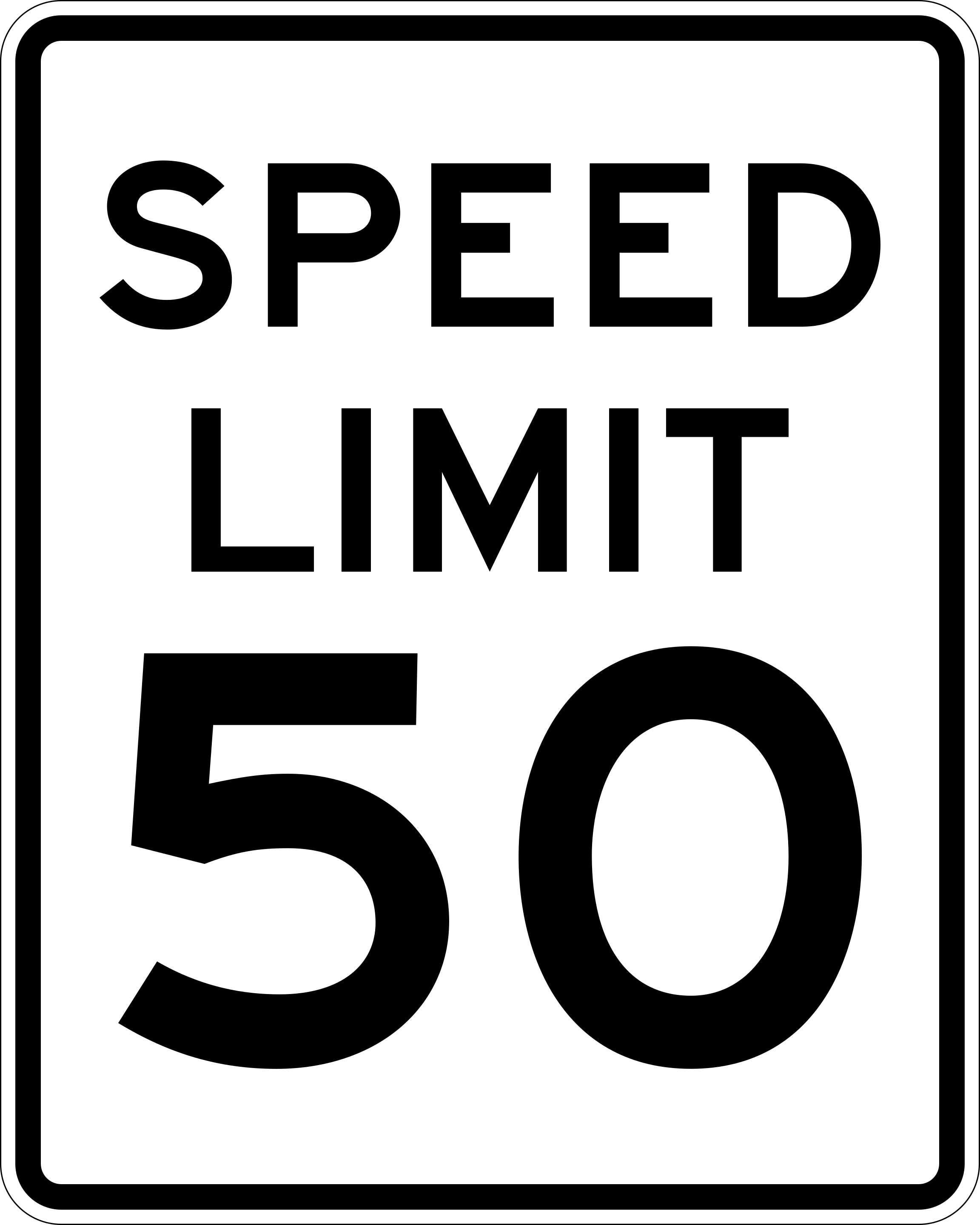
- A safe speed promise for every road condition
- A maximum for ideal conditions, so slow down now
- A minimum speed drivers must hold in the rain
- A target speed police expect in all weather
Show answer
A maximum for ideal conditions, so slow down now. Speed limit signs in Iowa indicate the maximum or minimum safe speed allowed, and maximum limits are for ideal driving conditions. Sometimes you must reduce speed when the roadway is slippery during rain or snow or when seeing clearly is difficult in fog. On high speed roads with minimum limits, a driver who cannot safely hold the minimum should use another route. Treat every posted maximum as a ceiling under perfect conditions, never as a promise for wet pavement.
Study this in the handbook: Regulatory Signs
Every question is written from the official Iowa Driver's License Manual. Need paper? Printable IA practice test with answer key.
Last verified 2026-10-05. How we check every question · Study all 500 as flashcards
Frequently asked questions
How many questions are on this Iowa practice test?
This fixed set has 20 questions. It is test 25 of 25 from the 500 question Iowa bank.
How does this fixed test relate to the full Iowa bank?
Each numbered test is a fixed set of questions in a fixed order, so you can retake the same test later and compare. Every test mixes road signs and the other topics in about the same proportion as the full bank. Tests 1 to 25 together cover every question in the Iowa bank once. The full practice page mixes the whole bank at random.
Last verified 2026-10-05. See the Iowa DMV facts page for sourced state details.