
Test 23 of 25 · 20 questions · Free 2026
IA Permit Practice Test 23
Jump to the test ↓A fixed 20 question set from the Iowa bank with answers and plain English explanations.
Question 1 of 20 · 0 right so far
All 20 questions in test 23
Every question below comes from the Iowa question bank on this page. Open a question to see the correct answer and the explanation. Nothing here is hidden behind a signup.
1. In Iowa, how many vehicles should a driver pass at one time as a rule?
- Only one vehicle at a time when passing
- Two vehicles whenever the road looks straight
- As many as fit before the next hill crest
- One vehicle plus its trailer counts as none
Show answer
Only one vehicle at a time when passing. As a rule in Iowa, only pass one vehicle at a time. Only pass another vehicle when signs or road markings permit passing and you have determined there is enough room to pass safely, and only pass when necessary. Avoid passing where a vehicle may enter the roadway ahead, such as intersections and driveways. Passing several vehicles stretches the time spent beside traffic and in the opposing lane. Return after seeing the front of the single passed car in your mirror.
Study this in the handbook: Turns, Lane Changes, Passing and Tailgaters
2. Near a large truck in Iowa, why must a driver leave room for wide right turns?
- Trucks turn right from the far right lane only
- Cars beside a truck are visible in every mirror
- Trucks swing left first and cannot see cars beside them
- Cutting between truck and curb shortens the turn safely
Show answer
Trucks swing left first and cannot see cars beside them. Truck drivers in Iowa sometimes need to swing widely to the left in order to safely negotiate a right turn. They cannot see cars directly behind or beside them. Cutting in between the truck and the curb increases the possibility of a crash. Pay attention to truck signals and give them lots of room to maneuver. Trucks and buses also take much longer to stop than cars, so avoid pulling out in front of them and creating an emergency braking situation.
Study this in the handbook: Trucks, Motorcycles, Bicyclists and Pedestrians
3. In Iowa, where do windshield glare blind spots most often appear for drivers?
- Inside the trunk lid behind the rear seat area
- On the floor mats below the driver foot pedals
- Behind the fuel door on the rear quarter panel
- On the front windshield from sun or headlight glare
Show answer
On the front windshield from sun or headlight glare. Blind spots in Iowa can come from vehicle equipment and the driving environment, including trees, sun, hedges, hills, and walls. Blind spots can be increased by weather and daylight. The sun can create blind spots with reflections off window surfaces, and the front windshield is the most common place for glaring reflections and blind spots. Sunglasses or use of visors help shield eyes from reflections that make it hard to see. Slow down when glare erases part of the road picture.
Study this in the handbook: Vehicle Checks, Seat Belts and Child Restraints
4. An Iowa sign shows a red slash over a U shaped arrow. At that spot, what is banned?
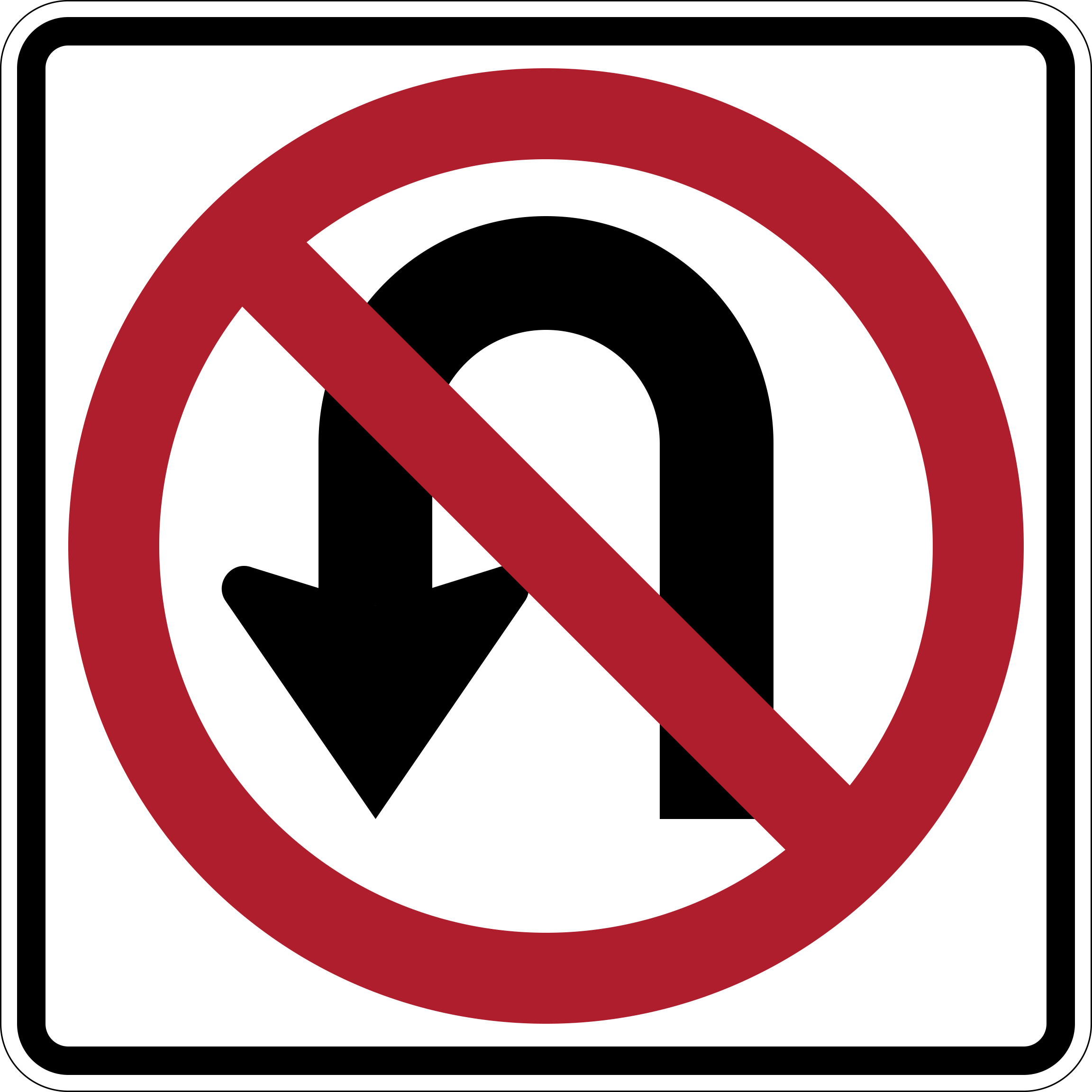
- Making a right turn on red light
- Driving straight through the intersection
- Parking within sight of the posted sign
- Making a U turn at that location
Show answer
Making a U turn at that location. Some Iowa regulatory signs carry a red circle with a red slash over a symbol. Those signs indicate you cannot do something, such as no left turn, no right turn, or no U turn. A slash over a U shaped arrow bans the U turn at that location. Straight driving and lawful right turns follow other signs and signals. Read the symbol under the slash before deciding, since the same red slash changes meaning with the picture it crosses.
Study this in the handbook: Regulatory Signs
5. In Iowa, where should a driver park first when a designated parking area exists?
- On the roadway shoulder beside the designated area
- Across the entrance to the designated parking area
- In the designated area whenever that is possible
- On the sidewalk in front of the designated area
Show answer
In the designated area whenever that is possible. When parking in Iowa, park in a designated area if possible. If you must park on a roadway, park as far away from traffic as possible and within 18 inches of a curb if present. Leave enough space beside travel lanes so passing traffic runs unimpeded. Drivers are responsible for making sure parked vehicles do not become hazards after they leave. Blocking an entrance or using a sidewalk defeats the purpose of the designated space and creates new conflicts.
Study this in the handbook: Railroad Crossings and Rural Roads
6. In Iowa, what does the entrance area of an interstate on ramp give the driver?
- A place to stop and wait for a police escort
- A lane for passing slow trucks before the merge
- A shoulder for parking until traffic fully clears
- Time to scan and judge space and needed speed
Show answer
Time to scan and judge space and needed speed. Iowa on ramps contain three segments. The entrance area gives you time to scan the roadway and evaluate how much space you have to enter and what speed is needed. The acceleration and merge area then brings the vehicle up to traffic speed for a safe merge. The travel portion is where highway traffic should adjust to allow entry. Stopping to wait, passing on the ramp, or parking on the shoulder all waste the scanning and speeding room the design provides.
7. You back out of an Iowa driveway onto a main road as cars approach. Who must yield?
- Main road cars must yield to driveway traffic
- The larger vehicle must yield to the smaller one
- You must yield to vehicles already on the main road
- Whoever honks first keeps the right of way there
Show answer
You must yield to vehicles already on the main road. Drivers entering an Iowa road from a driveway, alley, or roadside must yield to vehicles already on the main road. Drivers crossing a sidewalk while entering or exiting a driveway, alley, or parking lot must also yield to pedestrians, and driving on a sidewalk is illegal except to cross it. Stop before crossing the sidewalk when exiting a private drive. Size, speed of arrival, and honking do not transfer the yield duty away from the entering driver.
Study this in the handbook: Intersections and Right of Way
8. You approach a yellow diamond warning on a fast Iowa road. What should you expect and do?
- A service stop ahead, so maintain highway speed
- A special hazard ahead, so slow and prepare to stop
- A direction change requiring a full stop at once
- A railroad crossing requiring a stop on the tracks
Show answer
A special hazard ahead, so slow and prepare to stop. Iowa warning signs are yellow with black lettering or symbols and most are diamond shaped. They warn you to slow down and be prepared to stop if necessary because a special situation or hazard is ahead. Specific diamonds then name the hazard, such as deer, curves, slippery pavement, or merging traffic. Blue service signs and red stop duties carry different messages. Slowing early at the first diamond buys time to identify which hazard the symbol describes.
Study this in the handbook: Warning, Guide and Service Signs
9. Which method does Iowa call the safest and easiest way to judge following space?
- Counting car lengths at every posted speed
- Watching brake lights of the third car ahead of you
- Estimating feet per mile per hour of speed
- Using the three to four second following rule
Show answer
Using the three to four second following rule. The safest and easiest way to judge a safe Iowa following distance is the three to four second rule. Watch the vehicle ahead pass a landmark and count slowly; your front bumper should not pass that landmark before three seconds under normal conditions. Beginning drivers need at least three seconds, 40 mph traffic needs four to five, and slippery roads need six or more. Time gaps scale automatically with speed, unlike fixed car length guesses.
Study this in the handbook: Turns, Lane Changes, Passing and Tailgaters
10. On one Iowa trip you need law duties, hazard alerts, and town directions from the roadside. Which roadside system supplies all three?
- Pavement arrows covering laws, hazards, and directions
- Mile markers covering laws, hazards, and directions
- Traffic signs covering laws, hazards, and directions
- Hazard lights covering laws, hazards, and directions
Show answer
Traffic signs covering laws, hazards, and directions. Iowa traffic signs advise of traffic laws, hazards, location, directions, and where services are located. Their shape and color give clues to the type of information before words can be read. Regulatory white signs state enforceable laws, yellow diamonds warn of hazards, and green signs give direction and distance. Pavement arrows, mile markers, and hazard lights each cover only a narrow slice of that work. Reading sign class first speeds every later decision on the trip.
Study this in the handbook: Sign Colors and Shapes
11. Two adults ride in the front seats of an Iowa car while a third adult rides in back. Who must belt?
- Only the driver must wear a seat belt in front
- Both front seat adults must wear seat belts there
- No adults must belt on trips within city limits
- All adults must belt in every seat by that rule alone
Show answer
Both front seat adults must wear seat belts there. Iowa adults 18 and older must wear a seat belt while riding in the front seats of a vehicle. Iowa also requires all front seat passengers to wear belts, and back seat passengers under age 18 must be belted or restrained. Not wearing a seat belt is a primary offense, meaning an officer can stop a vehicle for that violation alone. Belts remain the single most effective way to prevent death and injury in a crash, including within 25 miles of home.
Study this in the handbook: Vehicle Checks, Seat Belts and Child Restraints
12. You follow a solid yellow line on your side of an Iowa two way road. What does it forbid?
- Driving beside the line at the posted limit
- Turning left across the line into a driveway
- Following traffic while staying in your lane
- Passing from the side with the solid yellow line
Show answer
Passing from the side with the solid yellow line. A solid yellow line on an Iowa two way road means passing is not allowed on the side with that solid line. Where a dashed line sits beside the solid, the dashed side may pass when safe. Yellow lines separate traffic moving in opposite directions, while white lines separate same direction traffic. Turning into a driveway across the line with proper yielding differs from passing. The line controls overtaking, not ordinary travel in your lane.
Study this in the handbook: Pavement Markings and Lane Use
13. In Iowa, what secondary crash risk grows while an interstate lane stays blocked?
- Risk falls about 2.8 percent for each blocked minute
- Risk rises about 2.8 percent for each blocked minute
- Risk stays flat no matter how long lanes stay shut
- Risk rises only after a full hour of blockage passes
Show answer
Risk rises about 2.8 percent for each blocked minute. Under Iowa Steer It Clear It, if you are in a crash with no injuries, move your vehicle out of driving lanes if it is operable and can be safely moved. For every minute a lane of traffic on the interstate is blocked, the risk of a secondary crash increases by roughly 2.8 percent. Queues form, drivers brake late, and rubbernecking spreads the danger backward. Moving a drivable car to a safe place after a minor crash protects people still approaching at highway speed.
Study this in the handbook: Emergency Vehicles and the Move Over Law
14. In Iowa, where is the only safe and legal place for anyone to cross railroad tracks?
- At a designated railroad crossing point
- Anywhere the road looks quiet and empty
- Beside a crossing where the ground is flat
- Across farm fields where no fence stands
Show answer
At a designated railroad crossing point. The only safe and legal place for anyone to cross railroad tracks in Iowa is at designated crossings. Trains may run on any track at any time and can be closer and faster than they appear. A quiet stretch, flat ground beside a crossing, or an open field gives no warning devices and no protected sight lines. Designated crossings provide signs, markings, and a place built for looking both ways. Never create your own crossing point on foot or in a vehicle.
Study this in the handbook: Railroad Crossings and Rural Roads
15. On an Iowa two way road, a solid yellow line sits on your side with a dashed line beyond it. May you pass?
- Yes, passing is open on the solid yellow line side
- Yes, if you pass only half the car length
- No, passing is banned on the solid line side
- No, passing is banned on both sides equally
Show answer
No, passing is banned on the solid line side. On Iowa two way roads, a solid yellow line beside a dashed yellow line splits passing permission. Passing is not allowed on the side with the solid yellow line. Vehicles on the side with the dashed line may pass when safe to do so. Double solid yellow lines ban passing both ways, while broken white lines separate same direction traffic where passing uses lane changes. Read the line on your side before every pass, not the far side paint.
Study this in the handbook: Pavement Markings and Lane Use
16. Another Iowa driver rages, swerving and shouting toward your car. What response is safest?
- Slow down or pull over to avoid that driver
- Match their speed and gestures to hold ground
- Follow them closely to record their plate number
- Block their lane so they must calm behind you
Show answer
Slow down or pull over to avoid that driver. If another Iowa driver shows signs of aggressive driving, slow down or pull over to avoid them. Avoiding aggressive and inattentive tendencies yourself puts you in a stronger position to handle other people choices. If a driver is so dangerous that you worry, try to leave the roadway by turning right or taking the next exit when safe. Distance ends road rage encounters more reliably than gestures, speed contests, or lane blocking ever can.
Study this in the handbook: Turns, Lane Changes, Passing and Tailgaters
17. You back out of a parking space in a car with a rear camera. What should you keep doing?
- Keep checking mirrors and over your shoulders
- Watch the camera screen alone, since it shows the whole area behind
- Skip the head check once the screen shows a clear path behind you
- Turn the screen off so it does not distract you while backing up
Show answer
Keep checking mirrors and over your shoulders. A rear camera shows a wide view behind the car when you shift into reverse, and some cameras show a wider view than others. Iowa still says not to become dependent on it. Keep checking the side mirrors, the rear-view mirror, and over your shoulders with head checks, plus any other cameras the car has. Using every view together catches people or objects that the camera angle may miss while you back.
18. Why does the manual tell you to keep the windshield clean inside and out?
- A clean windshield lets the airbags work better
- Dirt on the glass blocks the radio and phone signals
- Bright sun or headlights on a dirty windshield make it hard to see
- A clean windshield keeps the wipers from wearing
Show answer
Bright sun or headlights on a dirty windshield make it hard to see. Iowa lists steps to make sure you can see clearly while driving, including keeping the windshield clean. Bright sun or oncoming headlights shining on a dirty windshield create glare and make it hard to see the road. A clean surface on both sides of the glass cuts that glare, so you can spot hazards sooner. The same section advises replacing damaged windows and clearing snow, ice, or frost from all of them.
Study this in the handbook: Vehicle Checks, Seat Belts and Child Restraints
19. When your Iowa vehicle breaks down, how should you warn other drivers?
- Flash the headlights twice and then go dark
- Turn on the emergency hazard lights promptly
- Leave all lights off to save the battery charge
- Turn on only the left turn signal for an hour
Show answer
Turn on the emergency hazard lights promptly. If your vehicle breaks down on an Iowa road, make sure other drivers can see it. Turn on your emergency hazard lights to show you are having trouble. If possible, safely move the vehicle off the road and away from traffic, and try to stop where other drivers have a clear view. Do not stop just over a hill or just around a curve. If stalled in a traveled lane, exit quickly with passengers and stand in a safe area away from moving vehicles, then notify authorities.
Study this in the handbook: Night Driving, Bad Weather and Floods
20. When backing in Iowa, how should the driver position the body for the best view?
- Turn around and look over the right shoulder
- Face forward and trust only the inside mirror
- Twist only the head while the hips stay forward
- Look only through the left side mirror glass
Show answer
Turn around and look over the right shoulder. Backing up in Iowa requires you to turn your head to see beyond the head restraint. Do not depend on mirrors or backup cameras alone, since they do not provide a full view and can mislead depth perception. Shift your hips and turn around to get a good view behind the vehicle. Drape your right arm over the back of the seat, grasp the top of the wheel with your left hand, and look over your right shoulder through the rear window. Keep speed slow throughout.
Study this in the handbook: Turns, Lane Changes, Passing and Tailgaters
Every question is written from the official Iowa Driver's License Manual. Need paper? Printable IA practice test with answer key.
Last verified 2026-10-05. How we check every question · Study all 500 as flashcards
Frequently asked questions
How many questions are on this Iowa practice test?
This fixed set has 20 questions. It is test 23 of 25 from the 500 question Iowa bank.
How does this fixed test relate to the full Iowa bank?
Each numbered test is a fixed set of questions in a fixed order, so you can retake the same test later and compare. Every test mixes road signs and the other topics in about the same proportion as the full bank. Tests 1 to 25 together cover every question in the Iowa bank once. The full practice page mixes the whole bank at random.
Last verified 2026-10-05. See the Iowa DMV facts page for sourced state details.