
Key points
Failure to yield the right of way is the number 1 cause of traffic fatalities in Iowa.
Source: Handbook p. 18
“FAILURE TO YIELD THE RIGHT-OF-WAY IS THE #1 CAUSE OF TRAFFIC-RELATED FATALITIES IN IOWA.”
Iowa Driver's Manual, Handbook p. 18The law says who must yield; it does not give anyone the right of way.
Source: Handbook p. 18
“The law says who must yield the right-of-way; it does not give anyone the right-ofway.”
Iowa Driver's Manual, Handbook p. 18Drivers turning left must yield to oncoming cars going straight.
Source: Handbook p. 19
“Drivers turning left must yield to oncoming cars that are going straight ahead.”
Iowa Driver's Manual, Handbook p. 19At an all way stop the first to arrive goes first; if you arrive together, the vehicle on the right goes first.
Source: Handbook p. 19
“At an all-way stop, the driver reaching the intersection first gets to go first (after coming to a complete stop). For vehicles arriving at the same time, the vehicle to the right gets to go first.”
Iowa Driver's Manual, Handbook p. 19Right on red is allowed unless a sign prohibits it, but you must yield.
Source: Handbook p. 19
“You must yield when you want to make a right turn after stopping at a red light. Right turns on red are permitted unless there is a sign prohibiting them.”
Iowa Driver's Manual, Handbook p. 19Drivers entering from a driveway or alley must yield to vehicles on the main road.
Source: Handbook p. 19
“Drivers entering a road from a driveway, alley, or roadside must yield to vehicles already on the main road.”
Iowa Driver's Manual, Handbook p. 19Yield or stop for pedestrians in marked or unmarked crosswalks.
Source: Handbook p. 19
“You must yield or stop for pedestrians in marked or unmarked crosswalks.”
Iowa Driver's Manual, Handbook p. 19Before an intersection, look left, right and left again for vehicles and pedestrians.
Source: Handbook p. 50
“Look left, right, and left again for approaching vehicles and pedestrians.”
Iowa Driver's Manual, Handbook p. 50
Numbers to know
| Number | What it means | Manual |
|---|---|---|
| 1 | rank of failure to yield among causes of traffic deaths | Handbook p. 18 |
Recognize these signs

Stop 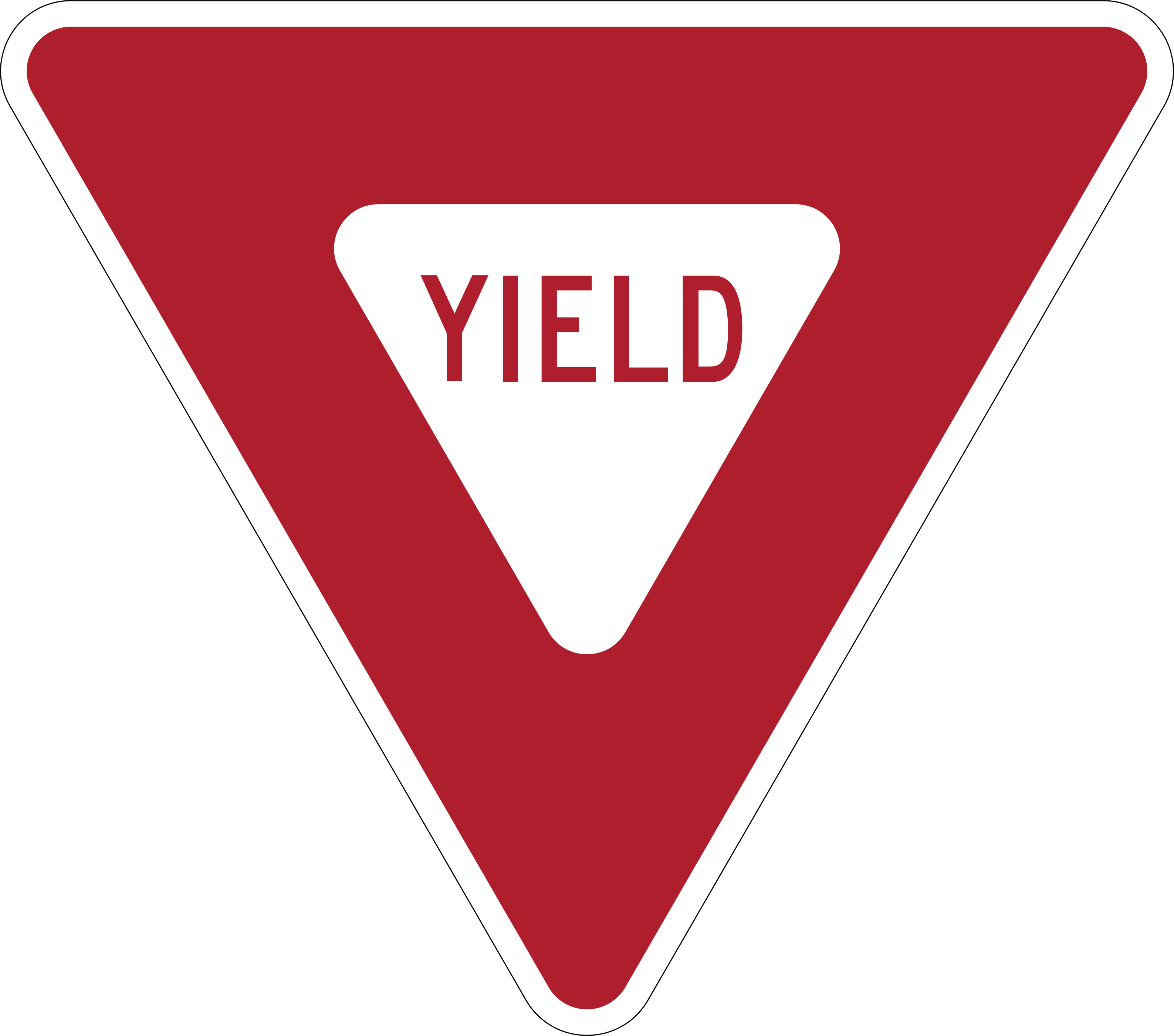
Yield
3 questions from the Iowa practice test
1. What does the Iowa manual identify as the number one cause of traffic-related fatalities in the state?
- Driving above the posted speed limit
- Failure to yield the right-of-way
- Driving while impaired by alcohol or drugs
- Using a handheld phone while driving
Show answer
Failure to yield the right-of-way. The manual names failure to yield the right-of-way as Iowa's number one cause of traffic-related fatalities. Speeding, impairment, and phone use can each create serious danger, but none is the statistic identified in this passage. The practical response is to watch for conflicts before they develop, especially at intersections where another driver, pedestrian, or bicyclist may be vulnerable. When a vehicle appears ready to enter your path, ease off and leave room rather than insisting on priority. A right-of-way rule organizes traffic, but it never makes a collision acceptable.
2. When turning left at an intersection, which traffic must the turning driver yield to?
- No traffic if the turn signal is on
- Cars parked on the left shoulder
- Only vehicles behind the turner
- Oncoming cars going straight
Show answer
Oncoming cars going straight. A left-turning driver must yield to oncoming cars that are proceeding straight ahead. Activating a turn signal communicates intent, but it does not remove the opposing driver's priority or make the path clear. Parked vehicles and traffic behind the turner are not the specific conflict named in this intersection rule. Before crossing the opposing lane, check for approaching vehicles, judge their distance and speed, and wait until the movement can be completed safely. The simple cue is left turn across traffic means oncoming straight traffic goes first.
3. At an Iowa all-way stop, two vehicles arrive at the same time. Which vehicle proceeds first?
- The vehicle on the right
- The vehicle on the left
- The larger vehicle
- The vehicle that flashes headlights
Show answer
The vehicle on the right. When vehicles arrive at an all-way stop at the same time, the vehicle on the right goes first after both drivers have come to a complete stop. The vehicle on the left must yield, and size or a headlight flash does not decide the order. If one vehicle arrived first, that earlier arrival controls instead, so confirm the timing before using the side-based tie rule. The key sequence is full stop first, then right goes first only when arrival is simultaneous.
Practice this topic
Lock it in with right of way questions from the free Iowa practice test. Every answer comes with a plain English explanation.
Source: the Iowa Driver's Manual, Chapter 2: Intersections. This lesson is a plain English summary, not the law itself; where it differs, the manual and the statute govern. Last checked 2026-09-27.