
Key points
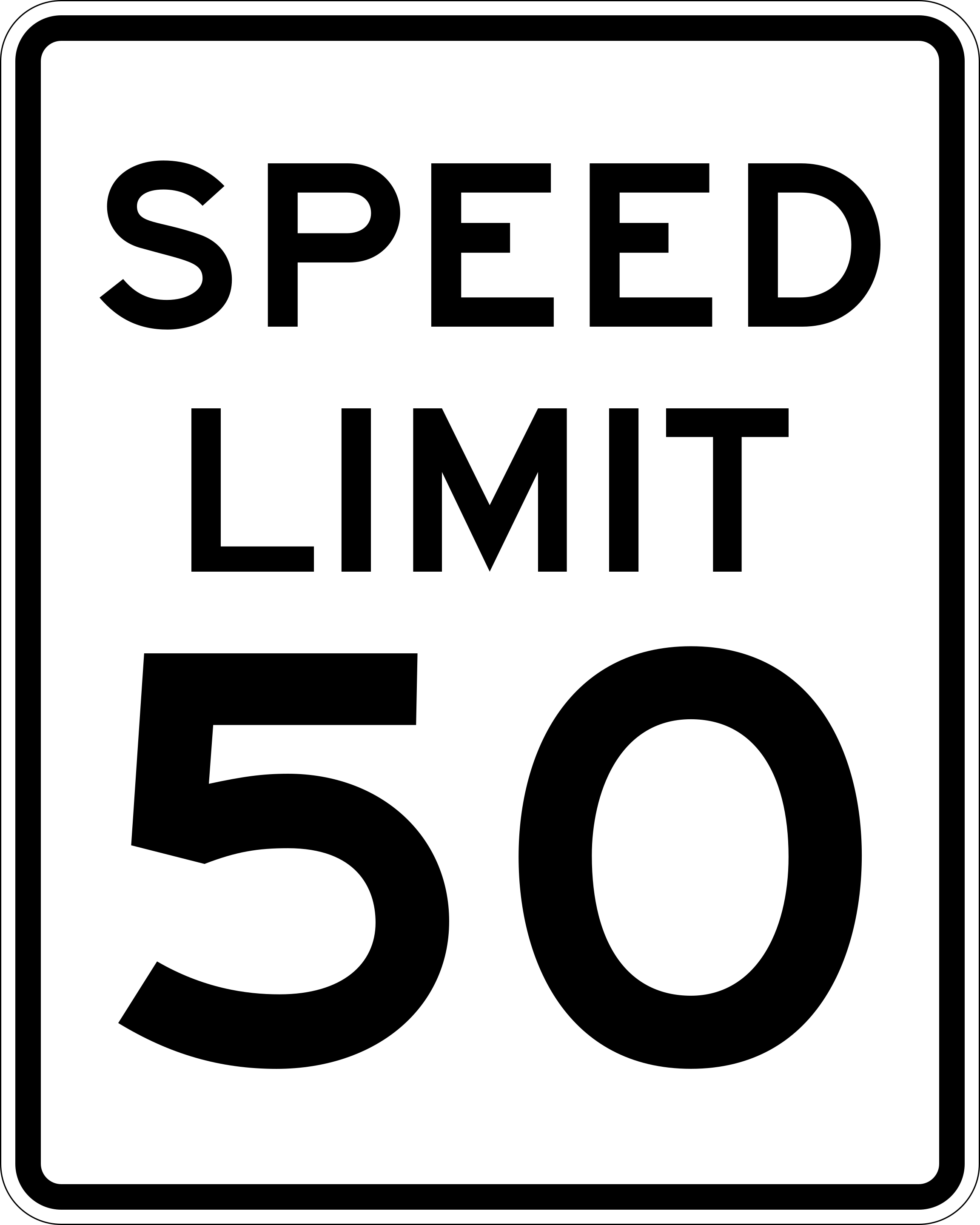
The posted limit is the maximum under ideal conditions; adjust for road conditions and weather.
Source: Handbook p. 42
“The posted speed limit is the MAXIMUM speed you can legally drive under ideal driving conditions. Your speed should depend on the posted speed limit, road conditions, and weather.”
Iowa Driver's Manual, Handbook p. 4220 mph in any business district.
Source: Handbook p. 42
“20 mph in any business district”
Iowa Driver's Manual, Handbook p. 4225 mph in a residential or school district.
Source: Handbook p. 42
“25 mph in a residential district or school district”
Iowa Driver's Manual, Handbook p. 4245 mph in any suburban district and for any vehicle pulling another vehicle.
Source: Handbook p. 42
“45 mph in any suburban district • 45 mph for any vehicle pulling another vehicle”
Iowa Driver's Manual, Handbook p. 4250 mph on unsurfaced secondary roads from sunset to sunrise, and for trucks on secondary roads at any time.
Source: Handbook p. 42
“50 mph on unsurfaced secondary roads from sunset until sunrise, and for all trucks on secondary roads at any time of day”
Iowa Driver's Manual, Handbook p. 4260 mph on primary roads, urban interstates and secondary roads in daylight; 70 mph on rural interstates.
Source: Handbook p. 42
“60 mph on all primary roads, urban interstate highways, and secondary roads, including unpaved roads from sunrise to sunset • 70 mph on rural interstate highways”
Iowa Driver's Manual, Handbook p. 42The interstate minimum speed is 40 mph.
Source: Handbook p. 42
“On the interstate system there is a minimum speed of 40 mph.”
Iowa Driver's Manual, Handbook p. 42At 60 mph a vehicle travels 3 times farther than at 30 mph before stopping.
Source: Handbook p. 42
“a vehicle traveling 60 mph will travel 3 times further than a vehicle traveling 30 mph before coming to a stop.”
Iowa Driver's Manual, Handbook p. 42
Numbers to know
| Number | What it means | Manual |
|---|---|---|
| 20 mph | business district | Handbook p. 42 |
| 25 mph | residential or school district | Handbook p. 42 |
| 45 mph | suburban district or when towing | Handbook p. 42 |
| 50 mph | unsurfaced secondary roads at night and trucks on secondary roads | Handbook p. 42 |
| 60 mph | primary roads, urban interstates and daytime secondary roads | Handbook p. 42 |
| 70 mph | rural interstates | Handbook p. 42 |
| 40 mph | interstate minimum | Handbook p. 42 |
| 3 / 60 mph / 30 mph | stopping distance comparison | Handbook p. 42 |
Recognize these signs
Speed limit 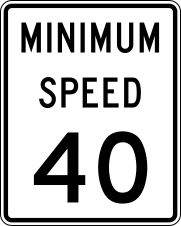
Minimum speed
3 questions from the Iowa practice test
1. When no sign changes the rule, what is Iowa's general speed limit in a residential district?
- 20 mph
- 25 mph
- 45 mph
- 50 mph
Show answer
25 mph. A residential district has a general unposted limit of 25 mph, and a school district uses that same figure. The 20 mph option belongs to a business district, while 45 mph describes a suburban district and 50 mph applies to an unsurfaced secondary road under stated conditions. Treat the listed number as a ceiling, not a target: the manual says a lower limit may be set, and weather or road conditions can require less speed. A useful cue is to pair neighborhood streets with 25 before checking for a posted sign.
2. What general speed limit applies in an Iowa suburban district when no limit is posted?
- 20 mph
- 25 mph
- 45 mph
- 60 mph
Show answer
45 mph. Iowa lists 45 mph as the general limit for an unposted suburban district. The nearby figures are tied to different settings: 20 mph is for a business district, 25 mph covers a residential or school district, and 60 mph is associated with primary roads, urban interstates, and secondary roads during the stated daylight period. The word suburban is the key classification here. Even at 45 mph, the driver must reduce speed when traffic, visibility, weather, or pavement conditions make the posted or general maximum unsafe.
3. What is Iowa's general unposted limit on a rural interstate highway?
- 55 mph
- 70 mph
- 65 mph
- 60 mph
Show answer
70 mph. The manual gives rural interstate highways a general unposted limit of 70 mph. The 60 mph choice belongs to primary roads, urban interstates, and secondary roads during the listed period, while 55 and 65 mph are not the general rural interstate figure in this section. This number is still a maximum for ideal conditions. A driver must consider the road, weather, traffic, and visibility before choosing a safe speed, and a lower limit can be posted for particular conditions. Identify rural interstate first, then recall its higher figure.
Practice this topic
Lock it in with speed limits questions from the free Iowa practice test. Every answer comes with a plain English explanation.
Source: the Iowa Driver's Manual, Chapter 4: Appropriate Speed. This lesson is a plain English summary, not the law itself; where it differs, the manual and the statute govern. Last checked 2026-09-27.