
Key points
Roundabouts move traffic counterclockwise around a center island with no stop signs or signals.
Source: Handbook p. 54
“Roundabouts are intersections that direct traffic in a counterclockwise direction around a center island. They have no stop signs or traffic signals.”
Iowa Driver's Manual, Handbook p. 54Approaching, slow down and yield to anyone in the crosswalk.
Source: Handbook p. 54
“Approach: Slow down to the posted advisory speed and yield to anyone in the crosswalk.”
Iowa Driver's Manual, Handbook p. 54At the yield line, yield to vehicles in the roundabout, then merge into a gap.
Source: Handbook p. 54
“As you approach the yield line markings, yield to vehicles in the roundabout. Wait for a gap in traffic, then merge into traffic in the roundabout in a counterclockwise direction.”
Iowa Driver's Manual, Handbook p. 54Do not change lanes in a roundabout or drive beside trucks and buses.
Source: Handbook p. 54
“Do not change lanes in the roundabout. • Do not pass or drive beside trucks or buses.”
Iowa Driver's Manual, Handbook p. 54At uncontrolled intersections, every driver must slow down and approach carefully.
Source: Handbook p. 19
“At an intersection where there is no stop sign or traffic signal, it’s the responsibility of all drivers to slow down and approach carefully.”
Iowa Driver's Manual, Handbook p. 19Uncontrolled intersections are more common on gravel roads; slow down and be prepared to stop for oncoming traffic.
Source: Handbook p. 55
“Uncontrolled intersections are more common on gravel roads. They are not controlled by yield or stop signs. All drivers should use caution, slow down, and be prepared to stop for oncoming traffic.”
Iowa Driver's Manual, Handbook p. 55You cannot rely on dust clouds to tell you if crossing vehicles are coming.
Source: Handbook p. 55
“you can’t always rely on dust clouds to determine if crossing vehicles are approaching.”
Iowa Driver's Manual, Handbook p. 55
Recognize these signs

Roundabout 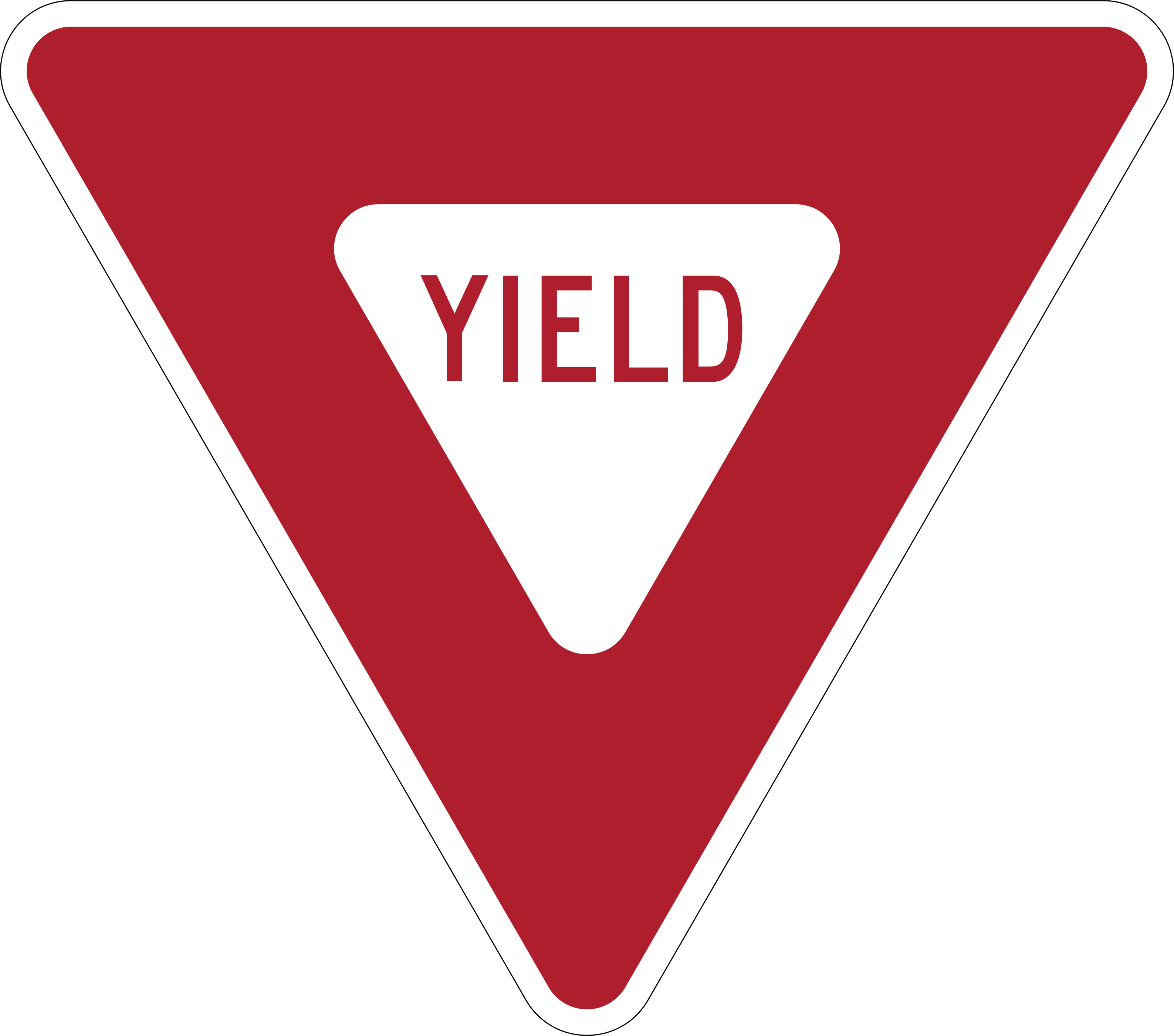
Yield
3 questions from the Iowa practice test
1. When entering a single-lane roundabout, to whom must a driver yield?
- Vehicles already in the roundabout
- Only vehicles waiting behind the entry line
- Vehicles approaching from the exit road
- No one, because entering traffic goes first
Show answer
Vehicles already in the roundabout. Entering traffic must yield to vehicles already circulating in the roundabout. The entry line is a place to yield, not a reason for vehicles behind you to take priority. Traffic on an exit road is not the primary conflict at entry, and the no one choice reverses the roundabout rule. Slow to the posted advisory speed, check the crosswalk, wait for a suitable gap, and merge counterclockwise. Once inside, keep moving unless conditions require otherwise and follow the lane markings to your exit.
2. What extra care does Iowa advise at an uncontrolled intersection?
- Yield only when a signal appears
- Accelerate through without looking
- Use extra caution
- Stop in the center of the crossing
Show answer
Use extra caution. Iowa advises extra caution at an uncontrolled intersection, where no stop sign or traffic signal regulates the crossing. Drivers should slow down, approach carefully, and apply the same right-of-way rules used at controlled intersections. Accelerating, waiting for a signal that is not present, or stopping in the center creates unnecessary risk. Reduce speed before the crossing, scan both directions, and be ready to yield or stop for traffic and pedestrians.
3. At an uncontrolled intersection on a rural gravel road, what should drivers be prepared to do?
- Use the shoulder as the normal through lane
- Follow a dust cloud without reducing speed
- Assume the crossing is clear after one glance
- Stop for oncoming traffic
Show answer
Stop for oncoming traffic. Rural gravel intersections may have no yield or stop signs, and dust can hide a crossing vehicle. Drivers should slow down and be prepared to stop for oncoming traffic. Following a dust cloud at speed reduces the time available to react, while a single glance cannot prove that the crossing is clear. The shoulder is softer and less stable, not a substitute lane. Approach with reduced speed, look beyond the dust, and keep enough control to stop before entering the other road.
Practice this topic
Lock it in with right of way questions from the free Iowa practice test. Every answer comes with a plain English explanation.
Source: the Iowa Driver's Manual, Chapter 5: Roundabouts and Rural Roads. This lesson is a plain English summary, not the law itself; where it differs, the manual and the statute govern. Last checked 2026-09-27.