
Test 11 of 25 · 20 questions · Free 2026
IA Permit Practice Test 11
Jump to the test ↓A fixed 20 question set from the Iowa bank with answers and plain English explanations.
Question 1 of 20 · 0 right so far
All 20 questions in test 11
Every question below comes from the Iowa question bank on this page. Open a question to see the correct answer and the explanation. Nothing here is hidden behind a signup.
1. An approaching car has its turn signal on, and you want to pull out in front of it. What does the Iowa manual tell you to do?
- Pull out right away, because the signal shows it will turn
- Flash your headlights so the driver knows you are going
- Pull out as soon as the car begins to slow down
- Wait until the other driver actually starts to turn
Show answer
Wait until the other driver actually starts to turn. Iowa calls this the false turn signal. A blinking signal does not prove the driver will turn where you expect: the driver may plan to turn past you or may have left the signal on after an earlier turn. Motorcycle signals often do not cancel by themselves, so the risk is greater with them. Slowing alone is not proof of a turn either. Wait until the other vehicle begins its turn, then go if it is safe. Never assume another driver will share space with you.
Study this in the handbook: Intersections and Right of Way
2. Lights flash and gates drop at an actively protected Iowa crossing. What must drivers do?
- Cross quickly before the approaching train arrives there
- Obey the signals and never go around the gate
- Go around the gate if no train is visible
- Stop on the tracks to watch for the train
Show answer
Obey the signals and never go around the gate. Actively protected Iowa railroad crossings have lights and gates. If lights flash or gates are down, a train is approaching, so always obey these warning signals. Do not cross when lights flash or try to go around the gate. Trains cannot stop quickly and may be closer and faster than they appear. Before crossing anywhere, be sure you can clear the tracks fully. If your vehicle stalls on tracks, get everyone out and move away at once.
Study this in the handbook: Railroad Crossings and Rural Roads
3. You want to turn left in Iowa but a sign slashes a left arrow. What does that sign forbid?
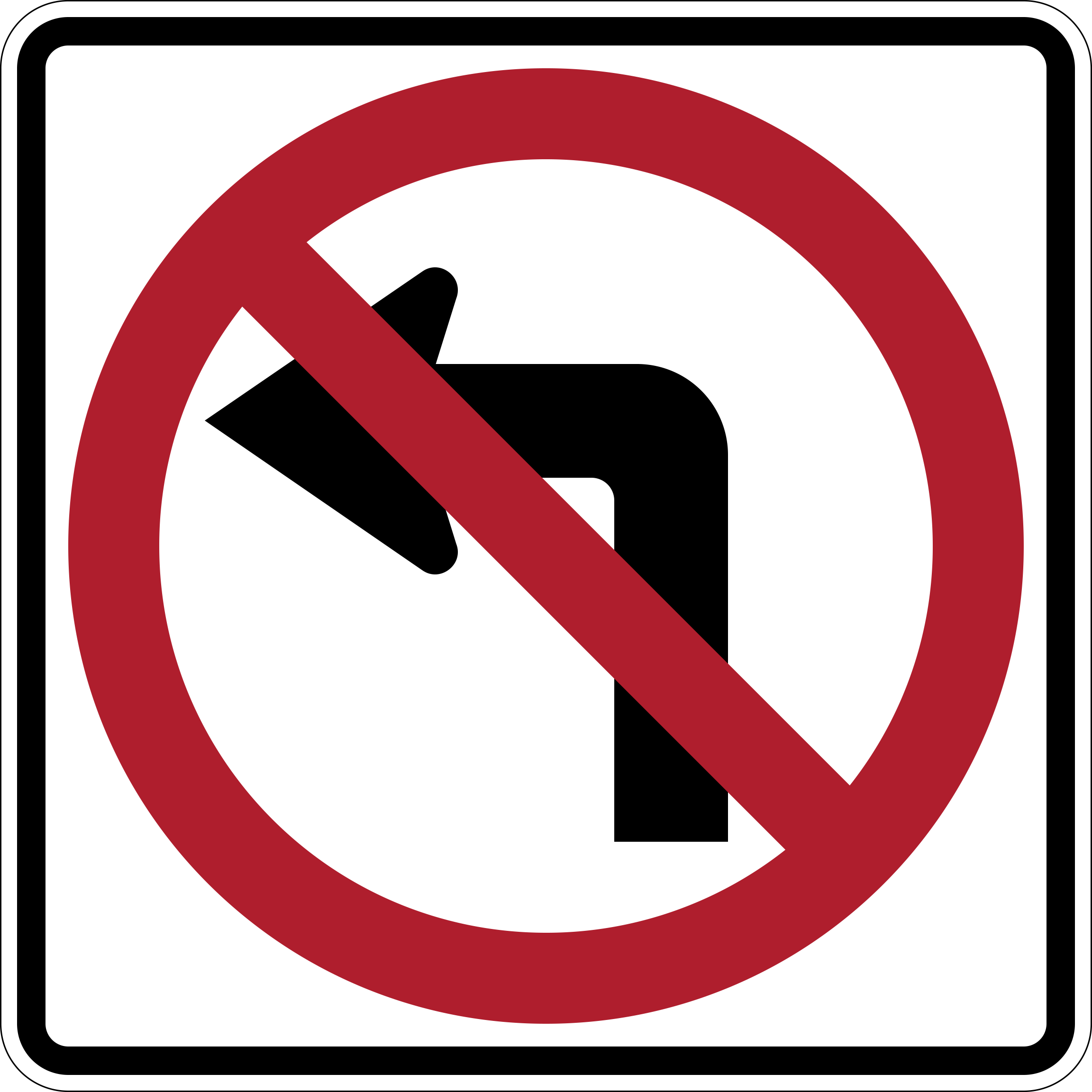
- Turning left where that sign is posted
- Turning right at the same intersection
- Going straight past the posted sign
- Turning left at every Iowa intersection
Show answer
Turning left where that sign is posted. A red circle with a red slash over a left turn arrow in Iowa means no left turn at that spot. The slash family also covers no right turn and no U turn symbols elsewhere, so the picture under the slash decides the ban. Going straight and turning right remain governed by signals, lanes, and other signs. Do not swing wide or cut across other lanes to evade the ban. Continue to a lawful turning place instead.
Study this in the handbook: Regulatory Signs
4. An Iowa lane sign bends an arrow right around an island. What path must you take?
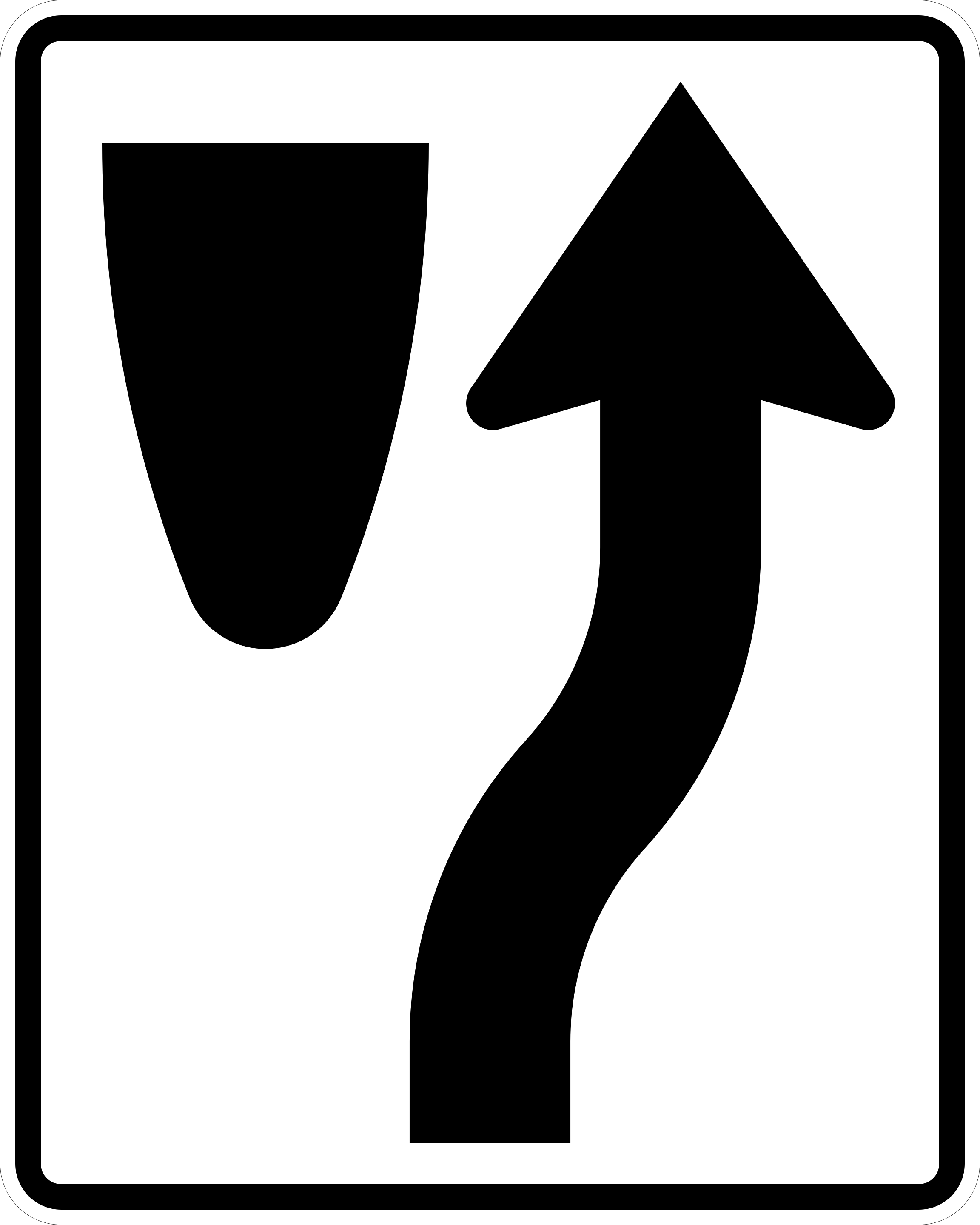
- Pass to the left of the island or barrier
- Drive straight over the island center area
- Pass to the right of the island or barrier
- Stop and wait for the island lane to clear
Show answer
Pass to the right of the island or barrier. Lane control signs in Iowa mark where you can go and where you can turn, often using an arrow symbol. A divided highway sign with an arrow bending right directs traffic around an island or barrier on the right side. These signs sit along the road or hang over it, and white arrows may also be painted on the pavement. Passing left or driving over the island ignores the channel built to separate opposing flows. Follow the arrow early so the lane change stays smooth.
Study this in the handbook: Regulatory Signs
5. Someone on a low-speed micromobility device crosses at an intersection as you wait to turn. Who gets the right of way?
- You do, since the device is not a registered vehicle
- That person, as you would give it to someone on foot
- Whoever reaches the crosswalk first at the greatest speed
- The person only when a police officer is directing traffic
Show answer
That person, as you would give it to someone on foot. Iowa tells drivers to scan the street for wheels and feet, and to yield to pedestrians. Pay attention to the pedestrian signal and give the right-of-way to people walking, biking, skating, or on a wheelchair or low-speed micromobility device. Before turning at intersections and driveways, look for these road users, and wait until they have finished crossing instead of trying to squeeze through ahead of them.
Study this in the handbook: Trucks, Motorcycles, Bicyclists and Pedestrians
6. In Iowa, where are lane control signs placed for drivers?
- Along the road or hanging over the road
- Only on the dashboard of the vehicle
- Only at the entrance to a public parking lot
- Only on posts behind a stop line
Show answer
Along the road or hanging over the road. Lane control signs appear along the road or hanging over the road in Iowa. They mark where you can go and where you can turn, often with an arrow symbol. White arrows may also be painted on the pavement to support the same message. A driver who only checks the pavement can miss an overhead instruction that applies to a single lane. Scan both the roadside and the space above your lane well before the turn or merge point.
Study this in the handbook: Regulatory Signs
7. In an Iowa work zone, how will a flagger usually control traffic?
- With a whistle and hand signals only
- With cones placed across the open lane
- With stop and slow paddles at the work area
- With a blue sign listing a phone number
Show answer
With stop and slow paddles at the work area. Flaggers in Iowa work zones help control traffic with stop and slow paddles, and drivers must follow their instructions. They normally use stop and slow signs, though red flags may appear on occasion. Cones and barricades guide the path, but the paddle gives the direct command to stop or proceed. A blue phone sign belongs at railroad crossings instead. When a flagger is present, treat the paddle with the same force as a traffic signal.
8. On Iowa gravel roads, why can dust clouds mislead a driver at an uncontrolled intersection?
- Crossing vehicles may approach without a visible dust cloud
- Dust clouds always show every vehicle miles ahead
- Intersections on gravel always have stop signs posted
- Dust only forms behind vehicles that have stopped
Show answer
Crossing vehicles may approach without a visible dust cloud. Uncontrolled intersections are more common on Iowa gravel roads and are not controlled by yield or stop signs. All drivers should use caution, slow down, and be prepared to stop for oncoming traffic. Remember, you cannot always rely on dust clouds to determine if crossing vehicles are approaching. Wind, damp gravel, or a slow vehicle may leave little dust to see. At an uncontrolled intersection the vehicle on the left should yield, and never assume the intersection is clear or that the other vehicle will stop.
Study this in the handbook: Roundabouts and Uncontrolled Intersections
9. In Iowa, what shape are most work zone signs, and what should drivers expect from that?
- Round, with a few triangular signs
- Diamond shaped, with a few rectangular signs
- Pentagon shaped, with a few round signs
- Octagon shaped, with a few square signs
Show answer
Diamond shaped, with a few rectangular signs. Most signs in Iowa work areas are diamond shaped, although a few signs are rectangular. Orange remains the basic color for these signs and warning devices. Round, pentagon, and octagon shapes point to rail crossings, school areas, and stop duties instead, so they should not be expected as the work zone pattern. When orange diamonds appear, expect lane changes, workers, and changing speed limits. Slow early and watch for flaggers who may override the signs.
10. In Iowa, where should a driver turn from and into when no signs or markings control the turn?
- From the far lane to the far lane beyond the turn
- From any lane to whichever lane looks widest
- From the closest lane to the closest lane beyond the turn
- From the center lane to the shoulder lane every time
Show answer
From the closest lane to the closest lane beyond the turn. Where no signs or lane markings control turning in Iowa, turn from the lane closest to the direction you want to go. Turn into the lane closest to the one you came from. Go from one lane to the other as directly as possible without crossing lane lines or interfering with traffic. Once the turn is complete, you can change to another lane if needed. Wide sweeping turns from far lanes raise the chance of a crash with vehicles beside you.
Study this in the handbook: Pavement Markings and Lane Use
11. You meet another vehicle on a narrow gravel road with no lane markings. What should you do?
- Slow down and move as far to the right as is safe
- Hold your speed and stay in the middle of the road
- Speed up to pass the other vehicle quickly
- Move to the left edge to give them the right side
Show answer
Slow down and move as far to the right as is safe. Rural gravel roads are narrower than paved roads and have no lane markings. When you meet an oncoming vehicle, Iowa says to slow down and proceed with caution, moving as far to the right as is safe. Multiple vehicles also create dust clouds that reduce visibility, which is one more reason to reduce speed. Staying to the right and moving slowly leaves room for both vehicles to pass without losing control.
12. An Iowa ambulance approaches from behind with lights and sirens on an undivided street. What should you do?
- Stop at once wherever your car sits in the lane
- Pull to the left edge to leave the right lane open
- Speed up to stay ahead until the next intersection
- Pull to the right edge of the road as far as possible
Show answer
Pull to the right edge of the road as far as possible. Yield the right of way in Iowa to a police vehicle, fire engine, ambulance, or other emergency vehicle using a siren or air horn and red or blue flashing lights. Pull over to the right edge of the road, or as near to the right as possible, when an emergency vehicle approaches from any direction. If you are in an intersection, drive through before pulling over. Stay at least 500 feet behind once it passes. Median divided roads treat opposite side vehicles differently.
Study this in the handbook: Intersections and Right of Way
13. A five year old rides in an Iowa car on a short trip. How must that child be secured?
- By a seat belt alone in the front seat there
- In an adult lap without any restraint system
- In a child restraint seat or booster, not a belt alone
- By holding the child while another person drives
Show answer
In a child restraint seat or booster, not a belt alone. An Iowa child under six years old must be secured in a child restraint system, meaning a safety seat or booster seat, not a seat belt alone. A child under one year and under 20 pounds must ride in a rear facing restraint. Children from six up to 18 must use a restraint system or seat belt in all seating positions. Children under 18 cannot ride in the rear of a moving pickup truck. Short trips near home still carry the highest crash exposure.
Study this in the handbook: Vehicle Checks, Seat Belts and Child Restraints
14. A tornado catches you driving in Iowa with no sturdy building reachable. What is the advised shelter?
- Park under a highway bridge and stay belted inside
- Drive faster to outrun the tornado path ahead
- Stop on the road center and stand beside the car
- Pull over, duck below windows, belt on, cover head
Show answer
Pull over, duck below windows, belt on, cover head. If you are driving during an Iowa tornado and cannot reach shelter, pull over, duck down below the windows in the vehicle, keep your seat belt fastened, and cover your head with your hands or an object such as a blanket or cushion. The best action is finding a sturdy building. As an alternative, if you can safely exit, take cover in a low lying ditch or ravine while covering your head. Stay away from bridges and overpasses during tornados.
Study this in the handbook: Night Driving, Bad Weather and Floods
15. You meet slow farm equipment filling an Iowa rural lane. How should you approach and pass it?
- Close fast and pass before its wide turn starts
- Identify it early, slow down, and pass with caution
- Pass on the shoulder around the widest equipment
- Assume its turn signal shows its true direction
Show answer
Identify it early, slow down, and pass with caution. It is common to encounter slow moving and large vehicles such as farm equipment, ATVs and UTVs, bicycles, horse drawn vehicles, and road maintenance equipment on Iowa rural roads. Identify these vehicles early and slow down when approaching. Farm equipment may make wide turns at unmarked entrances, may be wider than the road, and its operator may not see you while its turn signal is hard to detect. Early slowing turns a surprise overtake into a planned pass with full clearance.
16. At an uncontrolled Iowa gravel intersection, which vehicle should yield to the other?
- The vehicle on the left should yield first
- The vehicle on the right should yield first
- The faster vehicle should yield to the slower
- The vehicle without dust behind it yields first
Show answer
The vehicle on the left should yield first. At an uncontrolled Iowa intersection on gravel, the vehicle on the left should yield. Never assume the intersection is clear or that the other vehicle will stop. Uncontrolled intersections have no stop or yield signs, so all drivers should slow down, use caution, and be prepared to stop for oncoming traffic. Dust clouds cannot reliably show whether crossing vehicles are approaching. The left yield rule gives both drivers the same expectation when neither has a sign.
Study this in the handbook: Roundabouts and Uncontrolled Intersections
17. At Iowa railroad crossings on rural roads, what warning gear is usually missing?
- Crossbucks and yield signs at every rural crossing
- Advance warning signs on every paved approach road
- Police officers stationed at each rural track
- Flashing lights, bells, gates, and pavement markings
Show answer
Flashing lights, bells, gates, and pavement markings. At Iowa rural road railroad crossings, always slow down, look both ways, and be prepared to stop for a train before crossing. Unlike most crossings on major roads, rural crossings typically have no red flashing lights, warning bells, crossing gates, or pavement markings. That missing gear puts the whole burden on the driver scan. Multiple vehicles can also raise dust that cuts visibility near gravel crossings. Expect a train on any track at any time, even in quiet countryside.
18. During an Iowa lane change, why should a driver check the far lane too?
- Far lane drivers always yield to lane changers
- The far lane shows the next speed limit sign
- Mirrors cannot show any part of the far lane
- A far lane driver may aim for the same lane
Show answer
A far lane driver may aim for the same lane. When changing lanes in Iowa, check the far lane if there is one, because someone in that lane may be planning to move into the same lane you want to enter. Two drivers converging on one gap from opposite sides create a classic sideswipe setup. Check mirrors, blind spots over your shoulder, and other road users before moving. Keep the steering wheel straight while turning your head, since people tend to turn their arms with their head. Signal first so both nearby drivers can react.
Study this in the handbook: Turns, Lane Changes, Passing and Tailgaters
19. In Iowa, where should the head restraint sit behind the driver head?
- At the base of the driver neck
- At the center of the driver head
- Above the top of the driver head
- Behind the driver shoulders only
Show answer
At the center of the driver head. The head restraint should be at the center of the driver head in Iowa. That position supports the head itself if the vehicle is struck from behind or stops suddenly. A restraint at the neck base or behind the shoulders supports the wrong body part, and one above the head cannot catch the head at all. Adjust the restraint whenever you adjust the seat, since seat movement changes the alignment. Shorter drivers may need a cushion or pedal extenders to sit safely.
Study this in the handbook: Vehicle Checks, Seat Belts and Child Restraints
20. In Iowa, what traffic pattern makes roadways safest in moving traffic?
- All vehicles travel the same speed within the limit
- Half the vehicles travel well above the limit
- Each driver picks a personal speed by vehicle size class
- Faster vehicles weave to keep their own pace going
Show answer
All vehicles travel the same speed within the limit. Vehicles moving faster or slower than the flow of traffic in Iowa result in more lane changes, passing, and following too closely. That pattern increases the chance of collisions. The safest roadways are when all vehicles travel the same speed but do not exceed the speed limit. Always be ready to change your speed to match traffic. Spotting slow vehicles early gives time to change lanes or slow down safely, while slowing suddenly can cause a crash behind you.
Study this in the handbook: Turns, Lane Changes, Passing and Tailgaters
Every question is written from the official Iowa Driver's License Manual. Need paper? Printable IA practice test with answer key.
Last verified 2026-10-05. How we check every question · Study all 500 as flashcards
Frequently asked questions
How many questions are on this Iowa practice test?
This fixed set has 20 questions. It is test 11 of 25 from the 500 question Iowa bank.
How does this fixed test relate to the full Iowa bank?
Each numbered test is a fixed set of questions in a fixed order, so you can retake the same test later and compare. Every test mixes road signs and the other topics in about the same proportion as the full bank. Tests 1 to 25 together cover every question in the Iowa bank once. The full practice page mixes the whole bank at random.
Last verified 2026-10-05. See the Iowa DMV facts page for sourced state details.