
Test 20 of 25 · 20 questions · Free 2026
IA Permit Practice Test 20
Jump to the test ↓A fixed 20 question set from the Iowa bank with answers and plain English explanations.
Question 1 of 20 · 0 right so far
All 20 questions in test 20
Every question below comes from the Iowa question bank on this page. Open a question to see the correct answer and the explanation. Nothing here is hidden behind a signup.
1. In Iowa, what should a driver do when an animal darts out with no time to stop?
- Avoid swerving or veering into a worse crash
- Swerve hard toward the ditch on either side
- Veer into the oncoming lane to miss the animal
- Close the eyes and brace without steering at all
Show answer
Avoid swerving or veering into a worse crash. Be on the lookout for animals in Iowa, especially at sunrise and sunset. If an animal is encountered and there is not time to stop, do not swerve or veer, since that will likely result in a more severe crash. Deer travel in groups, so always look for more animals if one is seen. One of the leading causes of crashes on Iowa roadways is wildlife, typically deer. If you hit an animal, follow standard crash steps and report as required.
Study this in the handbook: Trucks, Motorcycles, Bicyclists and Pedestrians
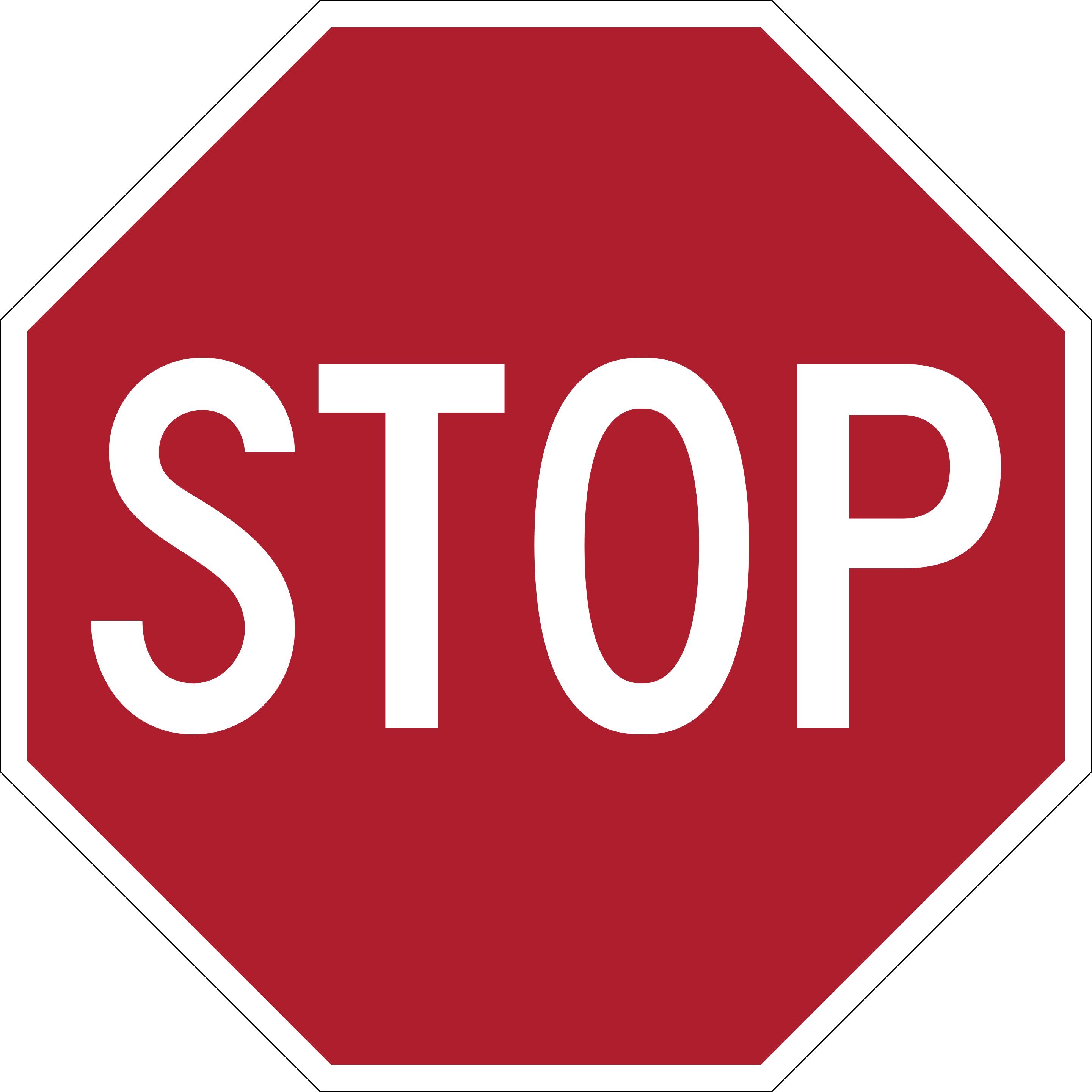
2. What action does an Iowa stop sign require before proceeding?
- Stop only when a police officer is present
- Slow down and continue if the driver sees no traffic
- Come to a full stop, wait for crossing traffic and the crosswalk to clear, then proceed safely
- Yield without stopping whenever the crosswalk is empty
Show answer
Come to a full stop, wait for crossing traffic and the crosswalk to clear, then proceed safely. A stop sign requires a full stop and waiting until crossing vehicles and the crosswalk are clear before proceeding. If a stop line is present, stop there first. Merely slowing down is not enough, and the duty does not depend on a police officer being nearby. An empty crosswalk does not turn the sign into a yield sign because crossing traffic must also be considered. Use the stop line as the first visual cue, then check the entire crossing area before moving.
Study this in the handbook: Regulatory Signs
3. In Iowa, why should a driver be sure of clearing the tracks fully before crossing?
- Trains stop faster than cars at crossings
- Gates always leave a full car length of room
- Tracks widen sharply at every road crossing
- Trains are wider than the tracks they use
Show answer
Trains are wider than the tracks they use. Trains are wider than the tracks in Iowa, so clearing the rails by inches is not enough. Before crossing, be sure you can completely clear the tracks, with room for the full train width plus your vehicle length. Gates do not promise spare room, and trains cannot stop quickly when a vehicle hangs over the rail. Look beyond the crossing for traffic that might force you to stop on the far side. If the exit path is blocked, wait before entering.
Study this in the handbook: Railroad Crossings and Rural Roads
4. With ABS in Iowa, how should a driver brake in a quick stop?
- Pump the pedal quickly on and off
- Press lightly and release at each pulse
- Lift off fully when the firm pedal pushes back
- Press the pedal hard and keep pressing down
Show answer
Press the pedal hard and keep pressing down. If your vehicle has ABS and you need to stop quickly in Iowa, press on the brake pedal as hard as you can and keep pressing. You might feel the pedal pushing back when the ABS is working. Do not let up on the pedal, because ABS only works with the pedal pushed down. Pumping or feathering the pedal defeats the system. Read the vehicle owner manual for how to use the ABS on your vehicle, and practice the hard steady press so it feels familiar.
Study this in the handbook: Following Distance and Stopping
5. Fluorescent pink signs appear after an Iowa crash scene. What work do they guide?
- School crossings with children present nearby
- Detours guiding traffic around a stadium event
- Incident work like crash cleanup and debris removal
- Toll lanes collecting payment from drivers
Show answer
Incident work like crash cleanup and debris removal. Fluorescent pink in Iowa marks warning and guide signs for incident management such as crash cleanup, debris removal, and traffic control around incidents. It is distinct from orange road work signs that cover planned construction and maintenance. Fluorescent yellow green covers pedestrian, bicycle, and school warnings instead. Pink tells you the disruption is unplanned and conditions may change quickly. Slow down and watch for responders working outside vehicles near live lanes.
Study this in the handbook: Sign Colors and Shapes
6. A forward collision warning sounds as you close in on a stopped car. What does that warning do?
- Brakes hard to stop the car before it reaches the vehicle
- Steers the car into the next lane to avoid the vehicle
- Tells you the following distance is safe at any speed
- Alerts you so you can brake or steer, but it will not brake for you
Show answer
Alerts you so you can brake or steer, but it will not brake for you. Forward collision warning scans traffic ahead and alerts you to an impending collision with a slower moving or stationary vehicle or object so that you can brake or swerve in time. Iowa points out that the warning alone will not automatically brake for the driver. It is intended to notify you when you get dangerously close, so keep a safe following distance, check traffic regularly, and be ready to act on your own.
7. You must identify a stop sign in fog by shape alone in Iowa. Which shape is it?
- An eight sided octagon reserved for stops
- A five sided pentagon reserved for stops
- A three sided triangle reserved for stops
- A four sided diamond reserved for stops
Show answer
An eight sided octagon reserved for stops. Iowa reserves the octagon shape for a stop sign only. Come to a full stop at an intersection controlled by this sign, wait for crossing vehicles and the crosswalk to clear, then proceed. A pentagon marks school crossings, a triangle yields, and a diamond warns. Shape reading works in fog, snow, or from behind the sign, which is why the stop shape is never reused. If the outline has eight sides, prepare to stop fully.
Study this in the handbook: Sign Colors and Shapes
8. During an Iowa traffic stop, where should the driver keep hands for the officer?
- Hidden below the window line out of sight
- Visible, with the steering wheel recommended for hands
- Holding a phone to record the stop at once
- Reaching into storage areas before being asked
Show answer
Visible, with the steering wheel recommended for hands. If a law enforcement vehicle signals you to stop in Iowa, pull over to a clear area when safe. Do not stop in the travel lane, and on busy streets it may be safest to use a parking lot or less busy side street. Turn off your vehicle, keep your hands visible with the steering wheel recommended, remain calm, and follow the officer instructions. Visible hands and calm movements help the officer see that the stop is under control from the first moment.
9. In wet Iowa weather, how should a driver keep windows from fogging over?
- Turn the defroster off to save engine power
- Open every window fully in heavy rain showers
- Turn the defroster on to clear the windows
- Wipe the glass by hand while the car is moving
Show answer
Turn the defroster on to clear the windows. In wet Iowa weather, turn the defroster on to keep windows from fogging over. Turn on wipers as soon as the windshield becomes wet and turn on low beam headlights so others can see you. Drive slower than normal and increase following distance to five or six seconds. Be more cautious and slow down on curves and when approaching intersections. Do not use cruise control in wet or slippery conditions, since you need direct control when grip changes.
Study this in the handbook: Night Driving, Bad Weather and Floods
10. No sign or signal controls a quiet Iowa intersection. What is every driver basic duty there?
- Slow down and approach the crossing carefully
- Proceed at full speed because no control exists
- Stop only after entering the crossing area
- Let the fastest driver claim the crossing first
Show answer
Slow down and approach the crossing carefully. At an Iowa intersection with no stop sign or traffic signal, every driver must slow down and approach carefully. All controlled intersection right of way rules also apply at uncontrolled intersections, with extra caution. On rural gravel, the vehicle on the left should yield, and drivers should be prepared to stop for oncoming traffic. Dust, corn, and soft shoulders further limit views and control. Careful approach speed buys the time that missing signs would otherwise provide.
Study this in the handbook: Intersections and Right of Way
11. Dust clouds cut visibility on a rural Iowa road to near zero. Which lights help others see you?
- High beam headlights to cut through the dust cloud
- Low beam headlights to make the vehicle visible
- No lights, because dust glows in daylight alone
- Only hazard lights while the vehicle keeps moving
Show answer
Low beam headlights to make the vehicle visible. Use low beam headlights in Iowa to make your vehicle more visible during extremely dusty conditions on rural roads. Dust on gravel roads also means you cannot always rely on dust clouds to warn of crossing vehicles at uncontrolled intersections. Slow down, increase spacing, and move as far right as safely possible when meeting oncoming vehicles through dust. Low beams mark your position without the back glare high beams throw off particles. Visibility aids matter most where lanes are unmarked.
Study this in the handbook: Roundabouts and Uncontrolled Intersections
12. A front tire blows on an Iowa highway and the car jerks hard. Toward which side does it pull?
- Gently toward the side opposite the flat tire
- Straight ahead with no pull in either direction
- Toward whichever side the wind blows strongest
- Violently toward the side with the flat tire
Show answer
Violently toward the side with the flat tire. A front tire blowout in Iowa will jerk the car violently toward the side with the flat. Be careful not to overcorrect when steering after a front tire blowout. Hold the steering wheel tightly, keep the vehicle going straight, slow gradually with light brakes, and move to the right shoulder as soon as possible. Do not stop on the road if you can avoid it. Knowing the pull direction helps you brace toward the correct correction instantly.
Study this in the handbook: Equipment Failures and Crashes
13. A flashing yellow Iowa signal guards a busy crossing. How must you proceed through it?
- As a full stop like a flashing red signal
- With caution, yielding to vehicles and pedestrians
- At full speed because yellow cancels yielding
- Only after every other vehicle has passed first
Show answer
With caution, yielding to vehicles and pedestrians. A flashing yellow signal in Iowa means proceed with caution. Yield to vehicles and pedestrians and proceed when it is safe. It differs from flashing red, which is treated the same as a stop sign. Rectangular rapid flashing beacons at crosswalks also flash amber, and motorists must stop for anyone within the crosswalk there. Read the device type carefully, since yellow flashes carry different duties at signals versus pedestrian beacons.
Study this in the handbook: Warning, Guide and Service Signs
14. At an Iowa intersection, what scan order does the manual teach before proceeding?
- Look right, then left, then straight ahead only
- Look only left because traffic comes from there
- Look down at the stop line, then proceed forward
- Look left, then right, then left again carefully
Show answer
Look left, then right, then left again carefully. Before proceeding at an Iowa intersection, scan to ensure the path is clear through the intersection. Look left, right, and left again for approaching vehicles and pedestrians. Never assume another driver will share space with you or give you space. Identify the type of intersection and any signs, signals, and pavement markings before you enter. The second left look matters because the closest traffic can change while you check the right. Motorcycles deserve the same fresh look before you move.
Study this in the handbook: Intersections and Right of Way
15. In Iowa, how should a driver set the inside rearview mirror before driving?
- So it shows mainly the back seat headrests
- So it points down at the rear bumper area
- So it frames the entire rear window view
- So it shows the left rear tire and curb
Show answer
So it frames the entire rear window view. Sit up straight in the driver seat and adjust the inside mirror so it frames the entire rear window in Iowa. That mirror is the main mirror for viewing what is behind the vehicle. Aiming at headrests, the bumper, or a rear tire throws away the traffic picture you need for lane changes and stops. Set the seat first, then frame the window without moving your head. Recheck after any other driver uses the vehicle.
Study this in the handbook: Vehicle Checks, Seat Belts and Child Restraints
16. You wait to turn left across oncoming traffic in a car with left turn crash avoidance. Who decides when the gap is safe?
- The car does, since it stops the turn if the gap is small
- The driver behind you, who can see the whole intersection
- You do, by scanning oncoming traffic yourself
- Oncoming drivers, who must slow when they see you turn
Show answer
You do, by scanning oncoming traffic yourself. Left turn crash avoidance watches oncoming traffic when you begin a left turn at low speed. It can warn you and apply the brakes if you are turning into the path of another vehicle. Iowa says not to depend on it. The driver should scan and monitor the environment ahead for hazards and decide when it is safe to turn in front of other traffic, treating the system only as a final safety net.
17. At an Iowa reduced conflict intersection, you on the side road want to go left across a four lane highway. How do you proceed?
- Cross both directions at once from the side road
- Turn right, merge left, then U turn at the opening
- Turn left directly across all four lanes at once
- Wait in the highway median facing left traffic
Show answer
Turn right, merge left, then U turn at the opening. This Iowa design sends side road drivers who want to turn left or cross the four lane highway first to the right onto the highway, merge into the left lane, and then make a U turn at a designated median opening. The design reduces conflict points where vehicles can crash. Drivers only need to watch one direction of highway traffic at a time instead of waiting for a gap in both directions. Follow the posted route even though it feels indirect.
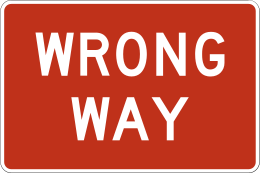
18. You realize an Iowa sign says you entered a lane of oncoming traffic. What should you do?
- Keep driving slowly until the lane ends ahead
- Move to the left shoulder and continue forward
- Leave the traveled lane, stop, and turn around safely
- Wait in the lane for oncoming cars to pass by
Show answer
Leave the traveled lane, stop, and turn around safely. A wrong way sign in Iowa means you made a wrong turn and entered a lane of oncoming traffic. Remove your vehicle from the traveled portion of the road and get stopped and turned around as quickly and safely as possible. Do not enter signs mark openings to avoid, including exit ramps and one way road entries. Staying in the lane, even stopped or on its shoulder, keeps you in the conflict zone. Leave first, then reorient.
Study this in the handbook: Regulatory Signs
19. Approaching Iowa railroad tracks, what should a driver do with windows and music?
- Put windows down and turn off the music playing
- Put windows up and raise the music volume level
- Keep windows as they are and keep audio playing
- Open only the rear window on the driver side
Show answer
Put windows down and turn off the music playing. As you approach Iowa railroad tracks, eliminate distractions, put your windows down, and turn off your music. Advance warning signs and pavement markings indicate tracks cross the road ahead, yet many crossings lack lights or gates, so hearing matters. Trains may be closer and faster than they appear. Open windows let in horn and rail sounds that a sealed cabin blocks. Pair listening with looking both ways, and never stop your vehicle on the tracks themselves.
Study this in the handbook: Railroad Crossings and Rural Roads
20. White lines divide lanes on an Iowa highway. What traffic do those white lines separate?
- Traffic moving in the same direction as you
- Traffic moving in the opposite direction from you
- Traffic crossing your path at intersections
- Traffic parked along the highway shoulder edge
Show answer
Traffic moving in the same direction as you. White lines in Iowa separate traffic moving in the same direction. Yellow lines separate traffic moving in opposite directions. Broken white lines within a double yellow center pattern also separate same direction lanes in complex layouts. Bicycle lanes use solid white lines with bicycle markings, and shared lane markings warn of bicyclists without reserving the lane. Knowing which color faces opposing traffic prevents a driver from treating a center yellow like a lane divider for passing.
Study this in the handbook: Pavement Markings and Lane Use
Every question is written from the official Iowa Driver's License Manual. Need paper? Printable IA practice test with answer key.
Last verified 2026-10-05. How we check every question · Study all 500 as flashcards
Frequently asked questions
How many questions are on this Iowa practice test?
This fixed set has 20 questions. It is test 20 of 25 from the 500 question Iowa bank.
How does this fixed test relate to the full Iowa bank?
Each numbered test is a fixed set of questions in a fixed order, so you can retake the same test later and compare. Every test mixes road signs and the other topics in about the same proportion as the full bank. Tests 1 to 25 together cover every question in the Iowa bank once. The full practice page mixes the whole bank at random.
Last verified 2026-10-05. See the Iowa DMV facts page for sourced state details.