
Test 17 of 25 · 20 questions · Free 2026
IA Permit Practice Test 17
Jump to the test ↓A fixed 20 question set from the Iowa bank with answers and plain English explanations.
Question 1 of 20 · 0 right so far
All 20 questions in test 17
Every question below comes from the Iowa question bank on this page. Open a question to see the correct answer and the explanation. Nothing here is hidden behind a signup.
1. In Iowa, how should a driver set the left side mirror for the best lane view?
- Lean to the center console and center the car side
- Sit straight and fill half the mirror with the car
- Aim the mirror down until the rear tire fills it
- Lean toward the left window and barely show the car side
Show answer
Lean toward the left window and barely show the car side. For the left mirror in Iowa, lean your head toward the left side window and set the mirror so you can barely see the side of the car. When you sit up straight again, the car should no longer be visible in that mirror. That method widens the view into the adjacent lane where passing vehicles travel. Centering your own car body wastes glass on metal you already know is there. Pair the mirror view with a shoulder check before moving left.
Study this in the handbook: Vehicle Checks, Seat Belts and Child Restraints
2. In Iowa, where should a driver avoid passing even when markings allow it?
- On any straight road with a dashed center line marking
- Where a vehicle may enter ahead, like driveways
- Beside any vehicle traveling below the limit
- Near any farm field with an open gate in view
Show answer
Where a vehicle may enter ahead, like driveways. Avoid passing in places where a vehicle may enter the roadway ahead of you in Iowa, such as intersections and driveways. A car pulling out mid pass can close the gap you counted on. Check the passing lane ahead for plenty of space, check mirrors and blind spots, signal intent, and accelerate as needed. While passing, monitor space in front of and behind your vehicle and check the rearview mirror. Passing on a clear straight with a dashed line remains lawful when those checks pass.
Study this in the handbook: Turns, Lane Changes, Passing and Tailgaters
3. An ambulance runs lights on the far side of a median divided Iowa highway toward you. Must you stop?
- Yes, every driver must stop for every ambulance
- Yes, stop even with a wide median between you
- No, median separated opposite traffic need not stop
- Only if the ambulance crosses the median first
Show answer
No, median separated opposite traffic need not stop. In Iowa, if you are on a street or highway separated by a median and the emergency vehicle is on the other side, you do not have to stop. Otherwise, pull to the right edge when a police vehicle, fire engine, ambulance, or other emergency vehicle approaches using sirens or flashing lights. If inside an intersection, drive through before pulling over. The median physically separates the emergency path from yours, removing the conflict the pull over duty solves.
Study this in the handbook: Intersections and Right of Way
4. Driving in Iowa fog, how should speed relate to what the driver can see?
- Keep posted speed because fog lights extend sight
- Speed up to leave the fog bank behind sooner
- Follow the car ahead closely at its chosen speed
- Slow until speed matches the ability to see ahead
Show answer
Slow until speed matches the ability to see ahead. In Iowa fog, use low beam lights or fog lights if your vehicle has them. Do not use high beams, since they reflect off fog and cause glare and reduced visibility. Slow down until your speed matches your ability to see. If needed, get off the road and find a safe place to park. Increase following distance in wet weather generally, and remember a visible road end is the true speed limit in fog, no matter what the sign says.
Study this in the handbook: Night Driving, Bad Weather and Floods
5. You face an Iowa T intersection ahead warning. What does the road do at that point?
- Your road continues straight across a crossroad ahead
- Your road ends, so prepare to turn right or left
- Your road merges into a divided highway ahead
- Your road narrows to one lane over a bridge
Show answer
Your road ends, so prepare to turn right or left. A T intersection ahead warning in Iowa tells you the road you are on does not go straight ahead. Prepare to turn right or left. Slow early, signal in time, and yield as the intersecting road rules require. A crossroad warning differs because your road continues while another road crosses it. Confusing the two can leave a driver braking far too late at a road end. The T shape on the sign mirrors the choice ahead.
Study this in the handbook: Warning, Guide and Service Signs
6. You see round advance warning signs and rail markings on an Iowa road. What lies ahead?

- A roundabout crossing the road ahead
- A school crossing zone starting ahead
- Railroad tracks crossing the road ahead
- A divided highway beginning on the road just ahead
Show answer
Railroad tracks crossing the road ahead. Advance warning signs and pavement markings in Iowa indicate railroad tracks cross the road ahead. As you approach, eliminate distractions, put windows down, and turn off music so train sounds carry. Crossbucks mark the crossing itself, and a number plate below shows how many track sets you must cross. Never stop on the tracks, and be sure you can clear them fully because trains are wider than the rails. Expect a train at any time.
Study this in the handbook: Railroad Crossings and Rural Roads
7. You enter an Iowa no passing stretch. On which side is the pennant sign placed?
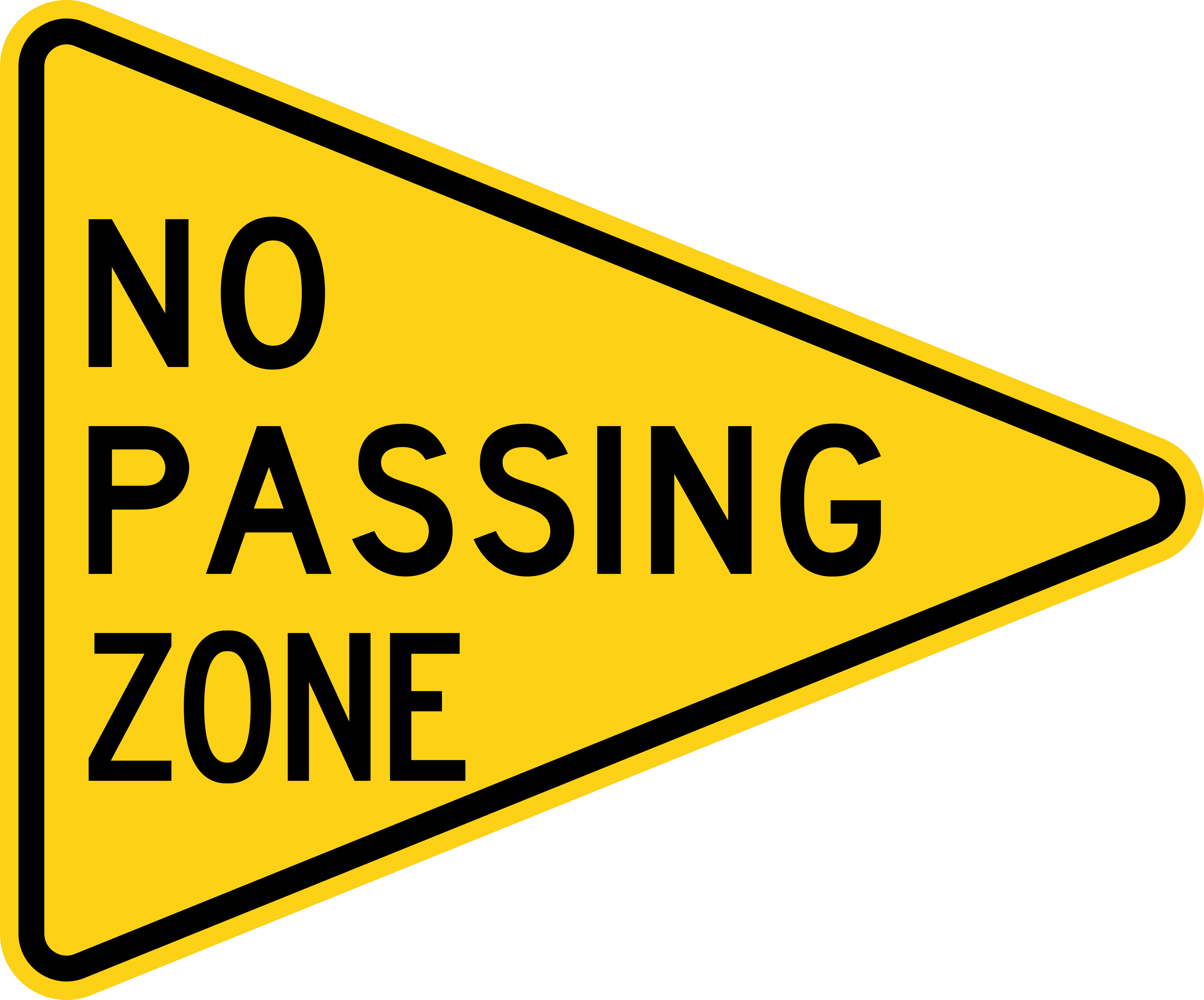
- On the left side of the road at the start
- On the right side at the end of the stretch
- On an overhead gantry beyond the stretch end
- On the pavement in the center of your lane
Show answer
On the left side of the road at the start. A pennant shaped no passing sign in Iowa sits on the left side of the road and warns of a no passing zone. Passing areas are based on how far you can see ahead, and the sign marks where the restricted stretch begins. Pavement markings carry the same message, with passing banned beside a solid yellow line. Left placement puts the pennant across the passing lane where the driver attempting to pass will look. Honor it until markings allow passing again.
Study this in the handbook: Sign Colors and Shapes
8. In Iowa, what do special arrow markings painted in a lane show a driver?
- How far the next town is from that lane
- Where a school bus will stop in that lane
- Which movements are allowed or required in that lane
- What color the next traffic sign will be
Show answer
Which movements are allowed or required in that lane. Special arrow markings in an Iowa lane show the movements that are allowed or required when driving in that lane. A driver in a turn only arrow lane must follow that direction instead of going straight. Distance to towns belongs on guide signs, and bus stops use their own signs and lights. Read the pavement arrow together with any overhead lane control sign before you commit. Changing lanes late across solid markings creates conflict at the intersection.
Study this in the handbook: Pavement Markings and Lane Use
9. On a narrow Iowa rural bridge, what should a driver be prepared to do?
- Speed up to claim the bridge before others arrive
- Stop for oncoming traffic at the narrow bridge
- Pass a slow vehicle in the middle of the bridge
- Drive on the bridge shoulder around waiting traffic
Show answer
Stop for oncoming traffic at the narrow bridge. Drivers should use caution when approaching narrow bridges in Iowa. Many bridges on rural gravel roads are narrower than the roadway and can only accommodate one vehicle at a time. Be prepared to stop for oncoming traffic. Racing to claim the bridge, passing mid span, or edging around waiting traffic all assume width that is not there. Before steep hills and curves, slow down, move to the right side, and watch for oncoming vehicles as well, since hills and curves run steeper and sharper on rural roads.
10. If the parking brake step is needed for Iowa brake failure, how should it be used?
- Yank it fully on at highway speed at once
- Hold it fully locked until the car stops dead
- Use it instead of steering toward a safe place
- Engage it slowly and release it if skidding starts
Show answer
Engage it slowly and release it if skidding starts. If your brakes stop working in Iowa and pumping the pedal does not restore pressure, use the parking brake. Engage the parking brake slowly so you do not lock the rear wheels and cause a skid. Be ready to release the brake if the vehicle starts to skid. If that does not work, shift to lower gears and look for a safe place to slow to a stop. Make sure the car ends off the roadway, and do not drive without brakes afterward.
Study this in the handbook: Equipment Failures and Crashes
11. A steady green arrow points left at an Iowa signal while cars sit in the intersection. What may you do?
- Turn left in the arrow direction while yielding inside
- Go straight because green always allows straight
- Turn left without yielding to anyone inside
- Turn right against the arrow if lanes look empty
Show answer
Turn left in the arrow direction while yielding inside. A steady green arrow in Iowa lets drivers proceed with the left or right turn shown. Oncoming traffic must stop, and drivers must not go straight, driving only in the direction of the arrow. Yield the right of way to other vehicles and pedestrians already in the intersection. Flashing yellow arrows instead require yielding to oncoming traffic before turning. Red arrows require a stop. Arrow direction plus color together define the lawful move.
Study this in the handbook: Warning, Guide and Service Signs
12. A person steps toward an unmarked Iowa crosswalk as you approach. What is your duty?
- Yield only after the person reaches the middle
- Continue because unmarked crosswalks carry no duty
- Honk so the person waits for your car to pass
- Yield to anyone in or about to enter the crosswalk
Show answer
Yield to anyone in or about to enter the crosswalk. Iowa drivers must yield to anyone in or about to enter a crosswalk. Not all crosswalks are marked, so be alert for pedestrians at intersections without defined crosswalks. When required to stop, stop before the stop line or a crosswalk if there is one. Pedestrians include users of human powered devices like wheelchairs and scooters. Never pass a vehicle stopped for a pedestrian, because your view of the person may be blocked by that vehicle.
Study this in the handbook: Pavement Markings and Lane Use
13. You plan to turn right at a driveway or intersection. Whom should you check for coming up from behind?
- Bicyclists coming from behind on your right
- Only large trucks, since they are slow to see
- Parked cars that might pull out ahead of you
- Nobody, since traffic behind must yield to you
Show answer
Bicyclists coming from behind on your right. In the section on sharing the road with bicyclists and pedestrians, Iowa tells drivers to check their blind spots. Watch for bicyclists coming from behind, especially before turning right. A rider on your right may be moving faster than you expect and may end up in the exact space you plan to cross. A quick look over your shoulder and in the mirror before the turn lets you yield instead of cutting a rider off.
Study this in the handbook: Trucks, Motorcycles, Bicyclists and Pedestrians
14. What does Iowa's Hill warning sign tell a driver to do?
- Shift into neutral
- Check your brakes before going down the hill
- Turn off the engine to save fuel
- Increase speed to climb
Show answer
Check your brakes before going down the hill. The Hill sign warns all vehicles that the road ahead goes down a hill, and the manual says you should check your brakes before going down it. The warning applies to all vehicles, not just trucks. Shifting into neutral or turning off the engine is not the advice the manual gives, and the sign is about a descent, not a climb.
Study this in the handbook: Warning, Guide and Service Signs
15. You must turn across an Iowa bicycle lane at a corner. What must you check before crossing it?
- Assume the bike lane is empty at every corner turn
- Check only the traffic signal color before crossing
- Honk once and cross without a fresh visual check
- Look beside and behind carefully for bicyclists there
Show answer
Look beside and behind carefully for bicyclists there. Iowa motorists may only drive in bicycle lanes when making turning movements and must look carefully beside and behind their vehicle for bicyclists and cross with care. Bicycle lanes may be green, and motorists should not stop on green pavement. Before turning right, watch for bicyclists coming from behind. When passing a bicyclist on the road, change lanes fully and return only when the rider appears in your rearview mirror. The shoulder check is the turn safety step.
Study this in the handbook: Pavement Markings and Lane Use
16. You back up and trust automatic reverse braking to stop the car for you. What does Iowa advise?
- Do not depend on it, and keep checking mirrors and over your shoulder
- Relying on it is fine when the rear camera is working
- Check only the camera screen while the brakes are armed
- Back faster, because the car will stop if needed
Show answer
Do not depend on it, and keep checking mirrors and over your shoulder. Automatic reverse braking can apply the brakes if an obstacle is detected while you back up. You may first hear beeps or see visual indicators, and if you do not react, the brakes are applied immediately to help avoid a crash. Iowa still says not to depend on it. Continue to check your mirrors, check over your shoulder with head checks, and use the rear camera if the car has one.
17. You want to run a quick errand on a mild Iowa afternoon. What must you not do with a young child or a pet?
- Bring them along into the store with you
- Keep the car running with the air conditioner on
- Park in the shade and carry water for them
- Leave them alone in the closed, parked vehicle
Show answer
Leave them alone in the closed, parked vehicle. Iowa states plainly that children, elderly persons, dependent persons, and pets must never be left alone in an enclosed vehicle. Depending on the temperature and humidity, the inside of a vehicle can climb above 160 degrees in under ten minutes, and even on a mild 78 degree day it can reach 100 degrees. Long exposure to extreme heat can lead to heat stroke or death, so a quick errand is still too long to leave them behind.
18. When passing another vehicle in Iowa, how should a driver handle that driver blind spot?
- Get through the blind spot as quickly as possible
- Stay in the blind spot until the pass feels calm
- Match speed inside the blind spot for a full mile
- Wait in the blind spot for the driver to wave
Show answer
Get through the blind spot as quickly as possible. Do not drive in another driver blind spot in Iowa. Either speed up or slow down so the other driver can see your vehicle. When passing another vehicle, get through the other driver blind spot as quickly as you can. Never stay alongside a large vehicle such as a truck or bus, since those vehicles have large blind spots and it is hard for them to see you. Your own blind spots also grow with weather and daylight, so check over your shoulder before moving.
Study this in the handbook: Vehicle Checks, Seat Belts and Child Restraints
19. In Iowa, what is safer than a three point turn in most cases?
- Turning across a driveway without signaling
- Proceeding to the nearest intersection to turn
- Backing across two lanes to face the other way
- Swinging wide into the oncoming lane to turn
Show answer
Proceeding to the nearest intersection to turn. Three point turns are generally not a safe maneuver in Iowa and can increase your risk and exposure to collisions. It is better to proceed to the nearest intersection. Backing across lanes, swinging into oncoming traffic, or turning across a driveway without signaling all keep the vehicle exposed in travel lanes. Last minute sharp turns are dangerous and should be avoided as well. Decide where you want to be when the turn finishes before you start moving.
Study this in the handbook: Turns, Lane Changes, Passing and Tailgaters
20. In Iowa, why should a driver avoid signaling a turn too early?
- Early signals burn out the bulbs within weeks
- Other drivers must ignore any early signal use
- Another driver may pull into the path too soon
- Police treat every early signal as a violation
Show answer
Another driver may pull into the path too soon. Be careful that you do not signal too early in Iowa. If there are streets, driveways, or entrances between you and where you want to turn, wait until you have passed them to signal. If another vehicle is about to enter the street between you and your turn, wait until you have passed it. Signaling earlier can make that driver think you plan to turn at their opening, and they might pull into your path. Ensure the signal is off after the turn ends.
Study this in the handbook: Turns, Lane Changes, Passing and Tailgaters
Every question is written from the official Iowa Driver's License Manual. Need paper? Printable IA practice test with answer key.
Last verified 2026-10-05. How we check every question · Study all 500 as flashcards
Frequently asked questions
How many questions are on this Iowa practice test?
This fixed set has 20 questions. It is test 17 of 25 from the 500 question Iowa bank.
How does this fixed test relate to the full Iowa bank?
Each numbered test is a fixed set of questions in a fixed order, so you can retake the same test later and compare. Every test mixes road signs and the other topics in about the same proportion as the full bank. Tests 1 to 25 together cover every question in the Iowa bank once. The full practice page mixes the whole bank at random.
Last verified 2026-10-05. See the Iowa DMV facts page for sourced state details.