
Test 14 of 25 · 20 questions · Free 2026
IA Permit Practice Test 14
Jump to the test ↓A fixed 20 question set from the Iowa bank with answers and plain English explanations.
Question 1 of 20 · 0 right so far
All 20 questions in test 14
Every question below comes from the Iowa question bank on this page. Open a question to see the correct answer and the explanation. Nothing here is hidden behind a signup.
1. Your Iowa car keeps speeding after you lift off the gas pedal. What is the first fix to try?
- Turn off the engine at speed in traffic flow
- Press the brake only and hold speed down
- Shift into park while the car still moves
- Shift to neutral quickly while watching the road
Show answer
Shift to neutral quickly while watching the road. If your Iowa motor does not slow down or speeds up when you release the accelerator, keep eyes on the road and quickly shift to neutral. Pull off the road when safe, then turn off the engine after stopping. Neutral disconnects engine power from the wheels without killing steering assist mid traffic. Brakes then control a coasting car instead of fighting full engine drive. Turning the key early would risk steering lock and loss of assist.
Study this in the handbook: Equipment Failures and Crashes
2. You plan to park on an Iowa street with no other traffic visible. Must you signal that move?
- Yes, signal before parking like other direction changes
- No, parking moves never require any signal use
- No, signals are only for turns at intersections
- Yes, but only after the vehicle has stopped fully
Show answer
Yes, signal before parking like other direction changes. Iowa drivers should use turn signals before changing lanes, turning right or left, merging into traffic, or parking. Signal every time you change direction, even when you do not see anyone else around, because vehicles, pedestrians, or cyclists may sit in your blind spot. Signal prior to slowing down as a rule of thumb, and avoid signaling so early that another driver misreads your turning point. Ensure the signal turns off after the move ends.
Study this in the handbook: Turns, Lane Changes, Passing and Tailgaters
3. You struggle to see at night and other drivers keep flashing their headlights at you. What should you do?
- Switch to the high beams on every road
- Drive only on streets that have street lights
- Wipe the windshield and go on, since nothing is wrong
- Have a mechanic check your headlights
Show answer
Have a mechanic check your headlights. Iowa warns that a misaligned headlight can shine where it does not help you and may blind other drivers. If you are having trouble seeing at night, or other drivers are flashing their headlights at you constantly, have a mechanic check the headlights. Keeping the headlight lenses clean also matters, since dirt on them cuts the effectiveness of the light. Good lighting helps you see and be seen.
Study this in the handbook: Vehicle Checks, Seat Belts and Child Restraints
4. A car ahead signals a turn toward your Iowa side road, so you start to pull out. What is wrong?
- Nothing, signals always prove the intended turn
- You waited too long, so pull out more quickly
- The signaling driver must brake for your entry
- That driver may turn beyond you or forgot the signal
Show answer
That driver may turn beyond you or forgot the signal. Do not turn or pull out in Iowa just because an approaching vehicle has a turn signal on. The driver may plan to turn beyond you or may have forgotten to cancel the signal from a prior turn. Motorcycle signals often do not cancel by themselves, adding risk. Wait until the other driver starts to turn, then proceed if safe. At intersections generally, look left, right, and left again and never assume another driver will share space with you.
Study this in the handbook: Intersections and Right of Way
5. At an Iowa railroad crossing, what should a driver do before crossing when several tracks are present?
- Cross quickly before a second train can arrive
- Follow the vehicle ahead without a fresh look
- Make sure the view down the tracks is clear both ways
- Stop on the far track to check for other trains
Show answer
Make sure the view down the tracks is clear both ways. Several tracks can mean several trains in Iowa. Before crossing, make sure you can clearly see down the tracks in both directions, because a first train can hide a second one close behind it. Following the car ahead without your own look removes that protection, and stopping on a far track to check is dangerous. Trains may run on any track at any time and may be closer or faster than they appear. Wait until the whole crossing view is open.
Study this in the handbook: Railroad Crossings and Rural Roads
6. Near an Iowa snowplow, which side must a driver never pass on?
- The lane side away from the plow blade path
- The side with the clearest view of the road
- The shoulder side where plowed snow is pushed
- The side facing oncoming traffic at any speed
Show answer
The shoulder side where plowed snow is pushed. Never pass on the shoulder side of an Iowa snowplow, because plows move snow to the shoulders. Snowplows typically operate at 25 to 35 mph, and many drivers fail to realize this and hit them from behind. Give plows room to work, since they have large blind spots and may kick up a cloud of snow that hides both vehicles. Allow plenty of room when passing, because blades may stick out further than the width of the plow vehicle. Stay back and be patient.
Study this in the handbook: Night Driving, Bad Weather and Floods
7. On an Iowa rural road, why should a driver slow down near a soft shoulder?
- Soft shoulders are paved firmer than the road center
- Shoulders pull every vehicle toward the road center
- Ditches beside soft shoulders are always shallow pads
- Loose shoulder material can pull the car toward the ditch
Show answer
Loose shoulder material can pull the car toward the ditch. Shoulders on Iowa rural roads are typically soft and less compact than the center of the roadway. Loose gravel and debris make vehicles harder to control and will pull your vehicle toward the ditch. Always slow down when encountering another vehicle or anytime you drive near or on the shoulder of a gravel road. The center of the road offers the firmest surface, yet oncoming traffic must share it. Ease right only as far as needed, at a speed the loose edge can support.
Study this in the handbook: Roundabouts and Uncontrolled Intersections
8. For defensive driving in Iowa, how far ahead should a driver scan conditions?
- About 2 to 3 seconds ahead of the vehicle
- About 60 to 90 seconds ahead of the vehicle
- About 20 to 30 seconds ahead of the vehicle
- Only as far as the next painted stop line
Show answer
About 20 to 30 seconds ahead of the vehicle. Defensive driving in Iowa means checking mirrors frequently and scanning conditions 20 to 30 seconds ahead of you. Keep your eyes moving and watch pedestrians, bicyclists, and animals along the road. That long scan reveals queues, turning cars, and work zones while you still have room to adjust speed or lane position. A two second view only supports following distance, and staring a minute ahead misses near hazards. If another driver shows aggression, slow down or pull over to avoid them.
Study this in the handbook: Turns, Lane Changes, Passing and Tailgaters
9. Your Iowa lane will soon merge into one lane at a lane ends warning. What must you do?

- Force the other lane to yield at all times
- Yield when merging into the remaining lane
- Stop fully before the two lanes become one
- Pass as many cars as possible before the end
Show answer
Yield when merging into the remaining lane. A lane ends warning in Iowa means two lanes of traffic will soon become one lane. Traffic must yield when merging. Begin checking mirrors and blind spots early, signal, and blend at traffic speed into a real gap. Stopping on the highway or racing to beat the lane end both create conflict at the narrow point. Work zone channelizing devices may also guide the merge, and their path overrides faded permanent markings inside the zone.
Study this in the handbook: Warning, Guide and Service Signs
10. On a wet Iowa road you need to change a dashboard setting. What should you do before looking down?
- Slow to a stop in your lane so the glance is safe
- Make sure the road ahead is clear, then look away only a second or two
- Look down at once, since the road is already wet
- Take both hands off the wheel to adjust it quickly
Show answer
Make sure the road ahead is clear, then look away only a second or two. When driving in wet or slippery weather, Iowa says that if you must make an adjustment, first make sure the road ahead is clear. Only then look down at the dashboard, and look away for only a second or two. Wet roads already reduce vision and traction, so a long glance at the controls can leave you with no time to react. Making changes before you start the trip, or when stopped safely, avoids the problem.
Study this in the handbook: Night Driving, Bad Weather and Floods
11. In Iowa, when should a driver use the horn at a blind alley exit?
- When coming to a place where the view ahead is blocked
- At every alley exit whether the view is open or not
- Only after another vehicle has entered the alley
- Only when a police officer waves the driver forward
Show answer
When coming to a place where the view ahead is blocked. In Iowa, use your horn when you are coming to a place where you cannot see what is ahead, such as exiting a narrow alley. The horn can also warn a pedestrian or bicyclist moving into your lane, a driver turning into your lane while you pass, or a driver who may have trouble seeing you. Another car in danger of hitting you and loss of control toward someone also call for the horn. Used as a warning, the horn can prevent a crash before brakes are needed.
Study this in the handbook: Night Driving, Bad Weather and Floods
12. If stranded in Iowa snow, where is the safest place to wait for help?
- Inside the vehicle with the seat belt fastened
- Walking along the road to find a farm house
- Standing behind the vehicle in the travel lane
- Lying under the vehicle away from the wind
Show answer
Inside the vehicle with the seat belt fastened. If you become stranded in Iowa snow, the safest location is to remain inside your vehicle with your seat belt on. Your vehicle is the shelter you may need to survive and allows rescue personnel to find you. If possible, pull onto the shoulder and remain inside to avoid being hit by other vehicles. Call 911 for emergency assistance, and use exit numbers, mileposts, crossroads, or landmarks to guide crews to your location. Walking the road in a storm exposes you to traffic that cannot stop.
Study this in the handbook: Night Driving, Bad Weather and Floods
13. Orange signs and devices line an Iowa road ahead. What should you expect there?
- A school area with children crossing the road
- A recreation area with parks and historic sites
- A service area with fuel, food, and lodging
- Road work with changing limits and workers nearby
Show answer
Road work with changing limits and workers nearby. Orange in Iowa is the basic color of work area signs and warning devices for road work, temporary traffic control, and maintenance warnings. Be sure to watch for changing speed limits and workers on the road. Most work signs are diamond shaped, with a few rectangular. Arrow boards show lane or shoulder closures, flaggers control traffic with paddles, and cones or drums guide the path. Slow to traffic conditions and give the zone your full attention.
Study this in the handbook: Sign Colors and Shapes
14. You are on a fast Iowa road and see a signal ahead warning. What should you expect?
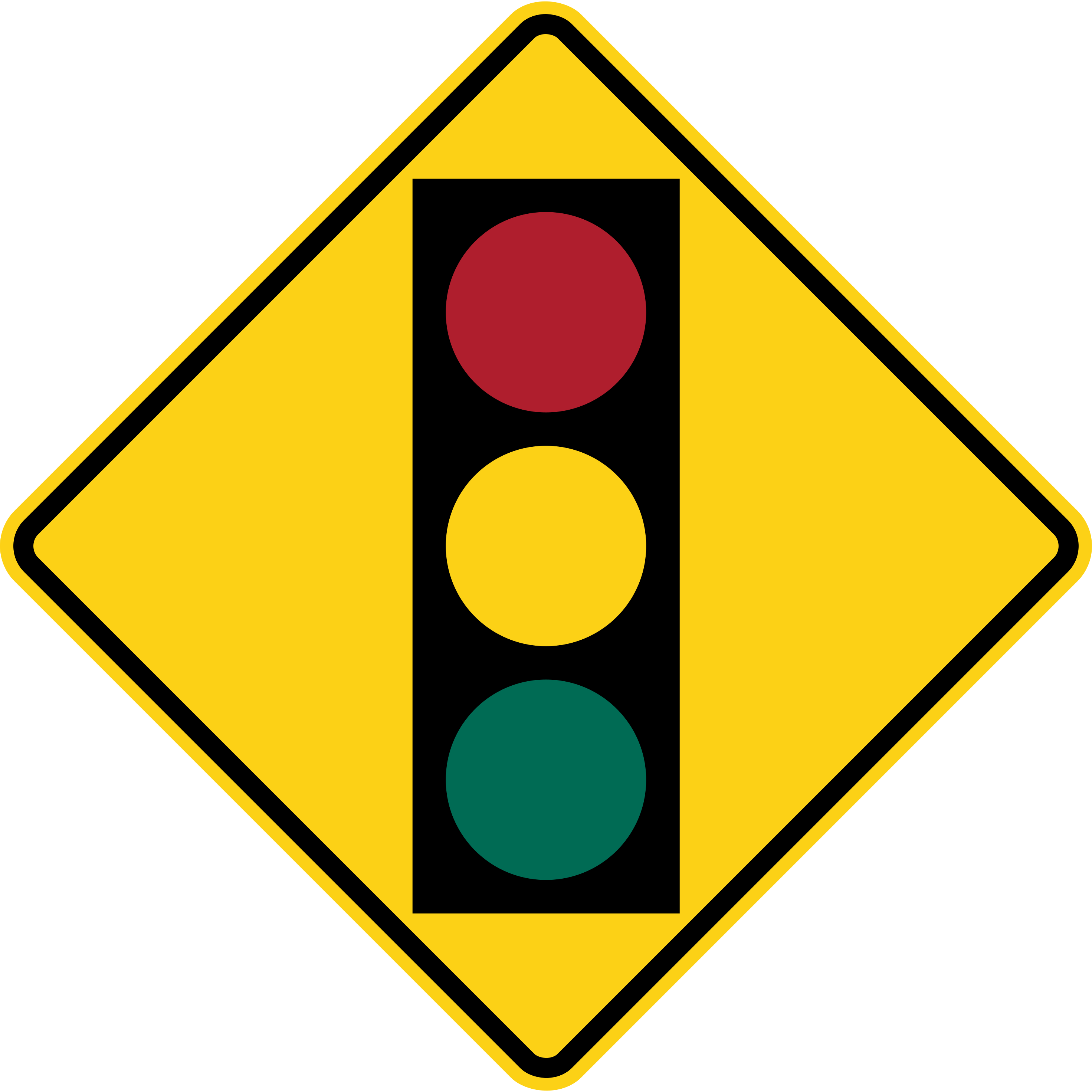
- A railroad gate lowering at a rural crossing
- A school bus stop around the next curve
- An intersection with a stop light coming ahead
- A flagger holding a paddle in a work zone
Show answer
An intersection with a stop light coming ahead. Signal ahead signs in Iowa are used on roads with higher speeds. They tell you to be ready for an intersection and a stop light. That readiness means lifting off the gas and scanning for signal color and queue length early. Railroad gates, school bus stops, and work zone flaggers use different warnings and demand different responses. A high speed approach leaves little room for late discovery, so treat the warning as the start of your stop preparation.
Study this in the handbook: Warning, Guide and Service Signs
15. Your car stalls in a traveled lane on an Iowa road and cannot be moved. What should you and your passengers do?
- Stay buckled inside with the doors shut until help arrives
- Exit quickly and stand in a safe area, away from moving vehicles when possible
- Stand behind the car so other drivers can see you
- Wave down the nearest driver and ask them to push it
Show answer
Exit quickly and stand in a safe area, away from moving vehicles when possible. Iowa warns that many collisions happen because a driver did not see a stalled vehicle in time. If you cannot get off the road and are stalled in a traveled lane, you and your passengers should exit the vehicle quickly and stand in a safe area, away from the shoulder when possible and far from moving vehicles. Turn on the hazard lights and notify authorities that someone has broken down. Staying inside a car in a live lane is the more dangerous choice.
Study this in the handbook: Night Driving, Bad Weather and Floods
16. Your GPS needs a new Iowa destination while you are driving. What does hands free law say?
- You may type it slowly at rural highway speeds
- You cannot enter an address to GPS while driving
- You may type it while stopped at any red light
- You may type it if a passenger reads it aloud
Show answer
You cannot enter an address to GPS while driving. Under Iowa hands free law, you cannot enter an address into GPS while driving. The same law bans holding the phone, manual scrolling or typing, streaming video even with voice commands, and viewing texts or social media. Enter the destination before moving or stop fully off the traveled portion of the road to change it. Voice activation may be used for calls, yet address entry by hand must wait for a lawful stop. Planning the route before departure removes the temptation.
Study this in the handbook: Iowa's Hands-Free Law and Distractions
17. You follow an Iowa ambulance running lights and sirens to a call. What gap must you keep?
- Stay at least 50 feet behind that ambulance
- Stay at least 500 feet behind that ambulance
- Follow closely to use its cleared path ahead
- Stay beside it in the next lane at same speed
Show answer
Stay at least 500 feet behind that ambulance. Stay at least 500 feet behind any Iowa emergency vehicle using lights and sirens. Yield the right of way to police vehicles, fire engines, ambulances, and other emergency vehicles using a siren or air horn and red or blue flashing lights by pulling to the right edge of the road. If you are inside an intersection, drive through before pulling over. The 500 foot cushion protects crews who may brake, turn, or open doors without normal traffic warnings.
Study this in the handbook: Intersections and Right of Way
18. In Iowa, when should a driver use a turn signal with nobody visible nearby?
- Only when another vehicle is seen in a side mirror
- Only when a pedestrian stands at the corner
- Only when traffic behind is following closely
- Every time the driver changes direction at all
Show answer
Every time the driver changes direction at all. Signal every time you change direction in Iowa. Signal even when you do not see anyone else around, because there may be vehicles, pedestrians, or cyclists in your blind spot. It is easy to miss someone who needs to know what you are doing. Signals communicate intentions and give others time to react before lane changes, turns, merges, and parking moves. As a rule of thumb, signal prior to slowing down, and check that the signal cancels after the move.
Study this in the handbook: Turns, Lane Changes, Passing and Tailgaters
19. In Iowa, what tells you a person at the curb may be visually impaired?
- A harnessed service animal or a white or red tipped cane
- A blue service sign pointing to a hospital
- A fluorescent pink sign for incident work
- A brown sign pointing to a recreation area
Show answer
A harnessed service animal or a white or red tipped cane. If a person is being led by a harnessed service animal or walks with a cane that is white or white with a red tip, the person is likely visually impaired in Iowa. Use extra caution to prevent injury to that person. Drivers must also stop when a visually impaired person with a cane or guide dog is walking in front of the vehicle or close enough to be in danger. Service and recreation signs give travel information and do not identify a person waiting to cross.
Study this in the handbook: Traffic Signals and Pedestrian Beacons
20. You drive inside a multi lane Iowa roundabout and your exit is next. Which move is prohibited inside?
- Signaling right before your exit from the circle
- Changing lanes inside the roundabout circle
- Yielding to traffic already inside the circle
- Choosing your lane before the yield line entry
Show answer
Changing lanes inside the roundabout circle. In a multi lane Iowa roundabout, do not change lanes in the roundabout. Do not pass or drive beside trucks or buses, since they may straddle lanes or may not see you. Choose the correct lane before the yield line using lane control signs and markings, yield to all traffic already circulating, and after passing the street before your exit, signal right and exit. Staying in one lane keeps exit paths predictable for everyone.
Study this in the handbook: Roundabouts and Uncontrolled Intersections
Every question is written from the official Iowa Driver's License Manual. Need paper? Printable IA practice test with answer key.
Last verified 2026-10-05. How we check every question · Study all 500 as flashcards
Frequently asked questions
How many questions are on this Iowa practice test?
This fixed set has 20 questions. It is test 14 of 25 from the 500 question Iowa bank.
How does this fixed test relate to the full Iowa bank?
Each numbered test is a fixed set of questions in a fixed order, so you can retake the same test later and compare. Every test mixes road signs and the other topics in about the same proportion as the full bank. Tests 1 to 25 together cover every question in the Iowa bank once. The full practice page mixes the whole bank at random.
Last verified 2026-10-05. See the Iowa DMV facts page for sourced state details.