
Test 16 of 25 · 20 questions · Free 2026
FL Permit Practice Test 16
Jump to the test ↓A fixed 20 question set from the Florida bank with answers and plain English explanations. The real FL exam is 50 questions, 80 percent to pass; take the full length version on the main practice page.
Question 1 of 20 · 0 right so far
All 20 questions in test 16
Every question below comes from the Florida question bank on this page. Open a question to see the correct answer and the explanation. Nothing here is hidden behind a signup.
1. How many points does a Florida driver get for going 16 mph or more over the speed limit?
- 2 points
- 3 points
- 4 points
- 6 points
Show answer
4 points. Florida's point table gives 3 points for speeding 15 mph or less over the limit and 4 points for 16 mph or more over. Two points is not in the table for speeding. Six points is for unlawful speed that results in a crash. Points add up: 12 points in 12 months brings a 30 day suspension, and a driver under 18 is restricted to business purposes only at 6 points in 12 months.
2. What does Florida prohibit when a fire truck is responding to an emergency?
- Following the fire truck too closely
- Watching for hazards ahead
- Allowing it to use the left lane
- Giving it room to maneuver
Show answer
Following the fire truck too closely. Florida prohibits following a fire truck too closely while it responds to an emergency, with the handbook specifying a 500 foot minimum distance. The space protects the emergency vehicle’s maneuvering room and gives the following driver a better view of hazards. The other choices describe safe ways to coexist with an emergency response, not prohibited conduct. When the truck is active, increase space rather than drafting behind it. Let it move through the roadway without adding pressure or blocking its route to the emergency.
3. What must you do at an intersection marked with stop lines?
- Stop, then yield to intersection traffic, pedestrians, and bicyclists
- Roll through if clear
- Stop only for cars
- Yield only to the left
Show answer
Stop, then yield to intersection traffic, pedestrians, and bicyclists. Stop lines mark a two-part duty: come to a complete stop, then yield the right-of-way to traffic already in the intersection and to pedestrians and bicyclists before moving forward when clear. The stop alone is not enough; the yield after it protects everyone already committed to the crossing. Rolling stops skip the required full stop, car-only stops abandon pedestrians and cyclists, and left-only yields ignore the rest of the intersection. Stop fully, scan all users, then go when the road is truly clear.
4. How should a car sit relative to the curb when parking on a public road?
- At an angle to the curb
- Parallel to the curb
- Perpendicular to traffic
- Across the sidewalk
Show answer
Parallel to the curb. Curbside parking means parallel parking: the vehicle sits parallel to the curb, in the direction of traffic, with the right wheels within 12 inches of the curb or road edge. Angled or perpendicular parking belongs only in marked lots, never at an open curb, and blocking the sidewalk endangers pedestrians and bicyclists. The parallel position keeps the car fully out of the travel lane while preserving the predictable curb line other drivers expect. Set the brake, secure the gear, and check traffic before opening the door.
5. How should your speed relate to the flow of traffic?
- Faster than surrounding traffic
- With the flow of traffic, within the limit
- At exactly half the limit
- At whatever speed feels smooth
Show answer
With the flow of traffic, within the limit. Florida pairs two duties for harmonious traffic: drive with the flow of traffic, but stay within the speed limit. Matching the flow prevents the speed differences that cause conflicts and dangerous passing, while the limit caps the flow at a lawful maximum. Driving faster than everyone else breaks the limit, and crawling at half the limit blocks traffic and violates the slow-driving rule. Smooth feel is no measure at all. The compliant driver blends with lawful traffic and keeps right when slower than the rest.
6. What requires a stop at a railroad-highway crossing?
- Only when the gate is down
- Only at night
- Only for freight trains
- Flashing devices, lowered gate, flagger, or visible train
Show answer
Flashing devices, lowered gate, flagger, or visible train. Four triggers each independently demand a stop at a railroad-highway crossing: flashing warning devices, a lowered crossing gate, a human flagger warning of a train, or an approaching train clearly visible. The rule binds drivers, bicyclists, and pedestrians alike, at every hour and for every train type. Waiting for the gate alone ignores the earlier electronic and human warnings, and darkness or freight schedules change nothing. Stop at the line, look both ways, and cross only when every trigger clears.
7. What is the penalty for leaving a fatal crash scene?
- A small fine only
- A warning ticket
- First-degree felony with 4-year minimum prison
- Community service only
Show answer
First-degree felony with 4-year minimum prison. Deadly hit and run draws the harshest traffic punishment: leaving a crash that results in death is a first-degree felony carrying a minimum four-year prison term. Small fines, warnings, and service-only outcomes belong to lesser violations, not fatal flight. Serious bodily injury and plain injury step down to second- and third-degree felonies, and every tier adds at least three years without a license. Staying, calling, and rendering aid is both the law and the only survivable choice.
8. What increases hydroplaning risk?
- Low pressure, bad tread, and speeding
- New tires and slow speed
- Dry pavement
- Cold weather alone
Show answer
Low pressure, bad tread, and speeding. Three choices invite hydroplaning: tires with low air pressure, tires with bad tread, and speeding. Soft and bald tires cannot channel water out from under the contact patch, and speed multiplies the water they must shed per second. New rubber at lawful speed resists the film, dry pavement cannot form it, and cold alone without water changes nothing. Check pressures monthly, replace worn tread, and shed speed when water stands on the road.
9. What should drivers do when directed through a Florida construction or maintenance work area?
- Ignore temporary directions if no workers are visible
- Drive around every channeling device
- Accelerate to minimize time in the work area
- Reduce speed and use caution as directed by signs, flaggers, or officers
Show answer
Reduce speed and use caution as directed by signs, flaggers, or officers. Work-zone traffic-control devices guide drivers safely through construction and maintenance areas. The handbook says to be prepared to reduce speed and use caution when a sign, flagger, or law enforcement officer directs it. Ignoring a direction is illegal and dangerous even when workers are not immediately visible. Channeling devices such as cones and barricades mark the path, so drivers should follow the indicated route rather than bypass it.
10. What lights go with windshield wipers in rain?
- Turn on your headlights too
- Turn off all lights
- Flash high beams only
- Use parking lights only
Show answer
Turn on your headlights too. Wipers mean lights: when you turn on the windshield wipers, also turn on the headlights. Rain that needs wiping also dims the daylight and sprays the air, making unlit cars vanish into the gray. Lights-off, flash-only, and parking-only responses each leave the car half-visible to others. The rule protects both directions of seeing: your road ahead and everyone else's view of you. Make wipers-and-headlights a single habit.
11. What should a driver check before opening a door after parking on a public road?
- The radio volume
- Only the fuel gauge
- Traffic around the vehicle
- The nearest traffic signal
Show answer
Traffic around the vehicle. Florida tells drivers to check traffic around the vehicle before getting out so they do not open a door into a bicyclist or another vehicle. The rule applies after parking on a public road and protects people using the roadway beside the parked vehicle. The fuel gauge, radio, and traffic signal do not show whether the immediate door area is clear. Look in mirrors and toward the roadway, wait for approaching traffic to pass, and open the door only when doing so will not create a conflict.
12. Your car goes into a canal. About how long will it float on the surface?
- About 5 to 10 minutes
- About 2 to 3 minutes
- Until help arrives, if the windows stay shut
- About 30 to 60 seconds
Show answer
About 30 to 60 seconds. The Florida handbook warns that a vehicle in a pond, river or other body of water will float on the surface for only 30 to 60 seconds. That is why the steps are to unbuckle, roll the window down before the car sinks, or kick out a side window, and to get out before calling 911. Expecting several minutes, or waiting with the windows shut for rescue, wastes the short time you have. Calling for help comes only after you are out of the vehicle.
13. What is the fine for a first offense of exceeding the Florida speed limit by more than 50 MPH?
- $1,000
- $500
- $2,500
- $250
Show answer
$1,000. Florida sets a flat, heavy fine for extreme speeding: exceeding the limit by more than 50 MPH costs $1,000 for the first offense and $2,500 for the second. So $2,500 is the repeat fine, not the first. Amounts of $250 or $500 understate the penalty for driving that far over the limit. Separately, speeding fines are doubled in a school zone or construction zone, and a driver can also be required to complete a driving course.
14. What do double yellow lines with a broken line on your side permit?
- Passing only after a police officer signals
- Passing when it is safe to do so
- Crossing whenever the roadway looks empty
- Passing only vehicles traveling in the opposite direction
Show answer
Passing when it is safe to do so. When the double yellow marking is broken on your side and solid on the other side, Florida permits passing in your lane when it is safe to do so. The permission belongs to the side with the broken line, not to every driver approaching the marking. Waiting for an officer is unnecessary, and an empty-looking road alone does not establish safety. Check sight distance, opposing traffic, and other hazards before crossing. The broken line beside your lane is the visual cue that a passing maneuver may be available.
15. What restriction is identified by the pennant-shaped warning sign?
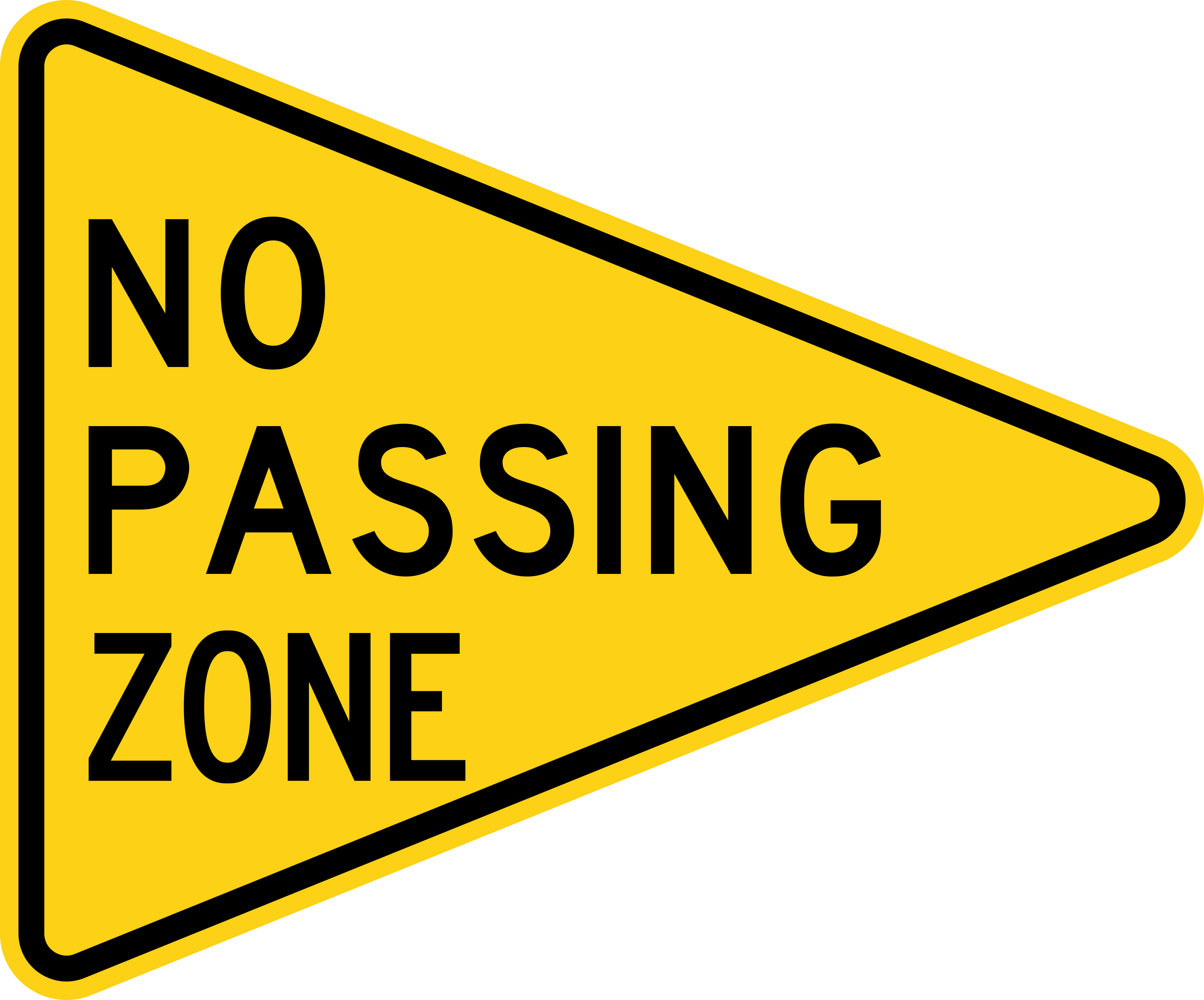
- Passing becomes mandatory before the next intersection
- The zone marks a picnic area beside the roadway
- The sign announces the end of every passing restriction
- Passing is not permitted in the upcoming no-passing zone
Show answer
Passing is not permitted in the upcoming no-passing zone. The pennant shape is used for a no-passing warning. It tells the driver not to pass another vehicle in the identified zone, so the driver should remain patient and keep a safe following distance. The mandatory-passing choice reverses a prohibition. A picnic area is unrelated, and an end-of-restriction message would not tell drivers that passing is unavailable ahead. Use the shape as the cue: a sideways pennant at the roadside means the roadway is entering a place where passing is forbidden.
16. Can a single drink affect driving?
- Driving improves slightly
- Only heavy drinking matters
- Even one drink can affect driving
- Two drinks are always safe
Show answer
Even one drink can affect driving. There is no safe minimum for the road: even one drink of alcohol can affect your driving. A single drink begins the judgment erosion that makes the second seem reasonable and the third invisible. Improvement claims invert the pharmacology, heavy-only thresholds ignore first-drink effects, and two-drink guarantees contradict the handbook outright. The designated-driver rule follows directly: the sober driver drinks nothing, because one drink is one too many behind the wheel.
17. What must mark a chain, rope, or cable tow?
- No marking needed
- A red flag only
- A white flag at least 12 inches square
- A blue light
Show answer
A white flag at least 12 inches square. Flexible tow links must show themselves: a drawbar connection of chain, rope, or cable needs a white flag at least twelve inches square attached to it. No-marking, red-only, and blue-light readings miss the specification that warns followers of the nearly invisible link. Rigid towbars escape the flag but must still stay under fifteen feet unless hauling poles, pipes, or machinery that cannot come apart. Flag the flex, measure the bar.
18. What must a never-licensed applicant complete first?
- Complete a TLSAE course before applying
- Nothing is required
- Pass the road test first
- Pay double fees
Show answer
Complete a TLSAE course before applying. First licenses require first schooling: anyone who has never held a license anywhere must complete a Traffic Law and Substance Abuse Education course before applying in Florida. Nothing-required, test-first, and double-fee readings skip the classroom gate that teaches law and impairment basics. Some county school boards' driver education courses may substitute. The TLSAE certificate opens the door to the knowledge exam, the learner's stage, and everything after.
19. What does a Side Road sign warn?
- A road crosses ahead
- A side road joins from the shown direction
- The road ends
- A bridge is ahead
Show answer
A side road joins from the shown direction. Side Road signs preview a joining lane: another road enters the highway from the direction shown, so watch for traffic merging from that side. Full crossings, dead ends, and bridges each have their own symbols and meanings. The joining traffic must yield to the highway, but expecting it keeps you ready for the merger who misjudges. Cover the brake, check the shown side, and hold your lane steady past the junction.
20. At what blood alcohol level is a Florida driver's license administratively suspended under the DUI rule?
- .02 or above
- .08 or above
- .15 or above
- .05 or above
Show answer
.08 or above. Florida's DUI section states that an administrative suspension follows when a driver's breath or blood alcohol level is .08 or above, or when the driver refuses the test. The .02 threshold belongs to the under-21 zero-tolerance rule, while .15 is an enhancement threshold for certain conviction penalties. A .05 reading is neither of those handbook figures for this question. Keep administrative suspension, zero tolerance, and enhanced sentencing separate because they use different triggers and apply in different circumstances.
QualitySpace is expanding to Florida
We are a California-based independent insurance brokerage working on licensing in more states. We cannot help with Florida insurance yet. Leave your email and we will let you know when we can.
Every question is written from the official Official Florida Driver License Handbook. Need paper? Printable FL practice test with answer key.
Last verified 2026-09-07. How we check every question · Study all 500 as flashcards
Frequently asked questions
How many questions are on this Florida practice test?
This fixed set has 20 questions. It is test 16 of 25 from the 500 question Florida bank. The real FL exam asks 50 questions and you need 40 correct.
What is the passing score for the real Florida test?
40 out of 50 (80 percent) That figure comes from the official Florida source cited on the DMV facts page.
How does this fixed test relate to the full Florida bank?
Each numbered test is a fixed set of 20 questions in a fixed order, so you can retake the same test later and compare. Every test mixes road signs and the other topics in about the same proportion as the full bank. Tests 1 to 25 together cover every question in the Florida bank once. The full practice page mixes the whole bank at random.
Last verified 2026-09-07. See the Florida DMV facts page for sourced state details.