
Key points
Keep a minimum following distance of four seconds in favorable weather and traffic, and more in bad conditions.
Source: Handbook p. 61
“Keep a minimum following distance of four seconds during favorable weather and traffic conditions. (Increase following distance during unfavorable weather or traffic conditions.)”
Official Florida Driver License Handbook, Handbook p. 61At 50 MPH, you travel a minimum of 268 feet before stopping, nearly the length of a football field.
Source: Handbook p. 60
“At 50 MPH, you will travel a minimum of 268 feet...nearly the length of a football field.”
Official Florida Driver License Handbook, Handbook p. 60Doubling your speed makes braking distance and impact 4 times greater.
Source: Handbook p. 60
“Doubling the speed means the braking distance and impact are 4 times greater.”
Official Florida Driver License Handbook, Handbook p. 60A truck or vehicle towing another may not follow within 300 feet of another truck or towed vehicle.
Source: Handbook p. 62
“A truck or any vehicle towing another vehicle must not follow within 300 feet of another truck or another vehicle in tow.”
Official Florida Driver License Handbook, Handbook p. 62Do not follow a fire truck responding to an emergency closer than 500 feet.
Source: Handbook p. 62
“It's against the law to follow a fire truck responding to an emergency closer than 500 feet.”
Official Florida Driver License Handbook, Handbook p. 62Unless posted, the limit is 30 mph in municipal, business or residential areas and 55 mph on other streets and highways.
Source: Handbook p. 68
“Municipal, Business, or Residential Area: 30 MPH* ◆ Streets and Highways: 55 MPH* *Maximum speed except where otherwise posted.”
Official Florida Driver License Handbook, Handbook p. 68You are not allowed to drive even up to 10 MPH over the limit. You may get a speeding citation.
Source: Handbook p. 68
“You are not allowed to drive up to 10 MPH over the speed limit and may receive a citation for speeding.”
Official Florida Driver License Handbook, Handbook p. 68Where the posted limit is 70 MPH, the minimum speed is 50 MPH.
Source: Handbook p. 68
“On highways, when the posted speed limit is 70 MPH, the minimum speed limit is 50 MPH.”
Official Florida Driver License Handbook, Handbook p. 68You must not drive so slowly that you block or delay normal traffic.
Source: Handbook p. 68
“You must not drive so slowly that you block or delay traffic moving at normal, safe speeds.”
Official Florida Driver License Handbook, Handbook p. 68
Numbers to know
| Number | What it means | Manual |
|---|---|---|
| 4 seconds | minimum following distance | Handbook p. 61 |
| 50 MPH | speed used for the stopping distance example | Handbook p. 60 |
| 268 feet | total stopping distance at 50 MPH | Handbook p. 60 |
| 4 times | effect of doubling speed | Handbook p. 60 |
| 300 feet | truck following distance | Handbook p. 62 |
| 500 feet | minimum distance behind a responding fire truck | Handbook p. 62 |
| 30 MPH | municipal, business and residential limit | Handbook p. 68 |
| 55 MPH | streets and highways limit | Handbook p. 68 |
| 10 MPH | there is no allowance to drive this much over | Handbook p. 68 |
| 70 MPH | posted limit with a minimum | Handbook p. 68 |
| 50 MPH | minimum speed on a 70 MPH highway | Handbook p. 68 |
Recognize these signs
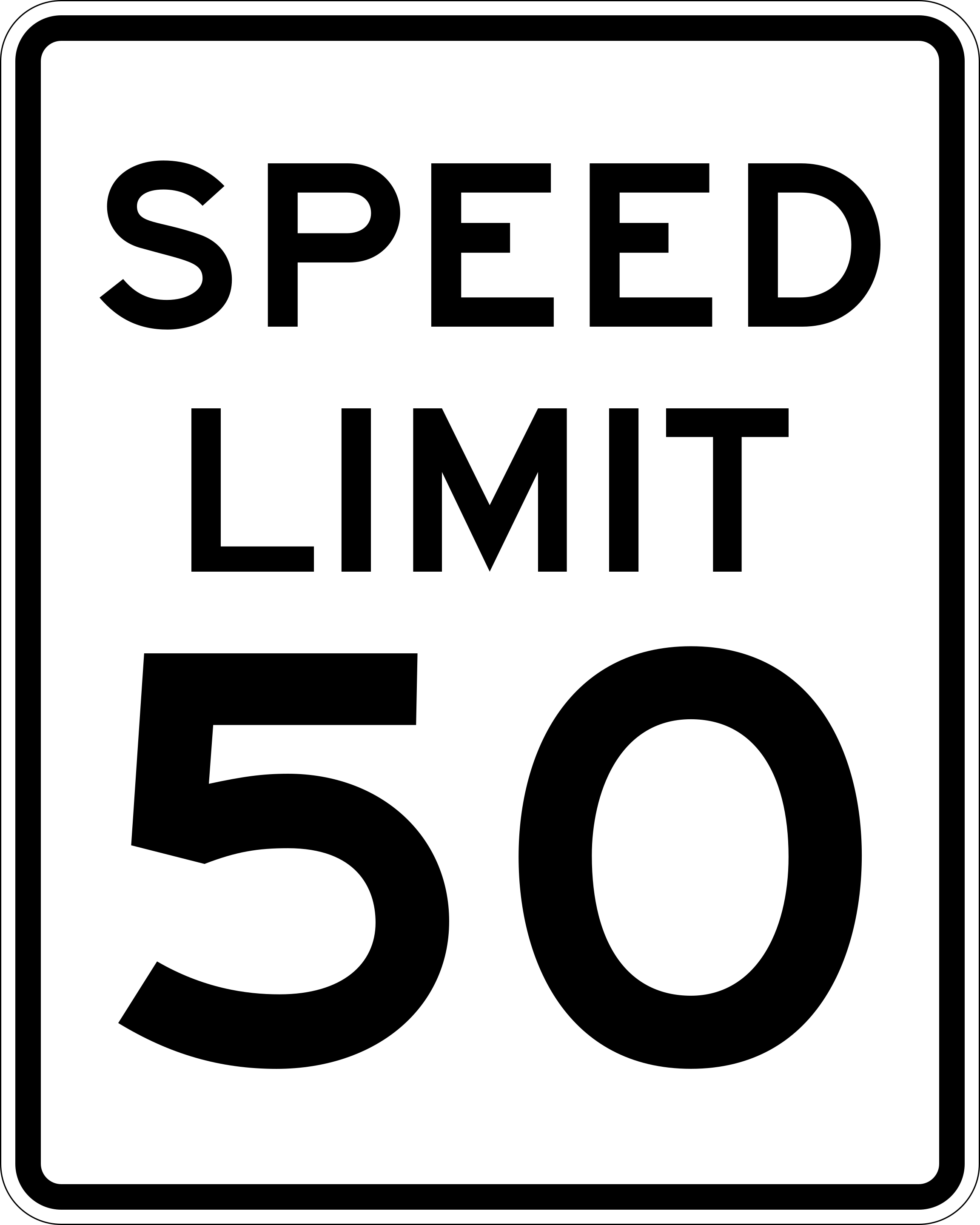
Speed limit
3 questions from the Florida practice test
1. On a Florida highway where the posted speed limit is 70 MPH, what is the minimum speed limit?
- 50 MPH
- 40 MPH
- 55 MPH
- 60 MPH
Show answer
50 MPH. On a Florida highway with a posted maximum of 70 MPH, the minimum speed limit is 50 MPH. The rule addresses unusually slow travel on that type of highway, so a driver should not treat the 70 MPH sign as permission to crawl below the stated minimum when conditions are favorable. Forty MPH is not the handbook figure, and 55 and 60 MPH are also different numbers. In poor weather, heavy traffic, or another unsafe condition, reduce speed as needed, but remember the handbook’s paired figures: 70 MPH maximum and 50 MPH minimum.
2. Can driving too slowly violate Florida law?
- Yes, if it blocks or delays traffic moving at normal, safe speeds
- Yes, but only in a school zone
- No, unless the vehicle is on a limited access highway
- No, slow driving is always legal
Show answer
Yes, if it blocks or delays traffic moving at normal, safe speeds. Florida treats unreasonable slow driving as a traffic problem when it blocks or delays traffic moving at normal, safe speeds. The rule does not make every low speed illegal, because weather, roadway design, traffic, and vehicle control still matter. The no-slow-driving option ignores the handbook's warning, while the school-zone and limited-access choices add restrictions that the rule does not contain. If traveling below the flow, keep right so others may pass safely, and never use a guessed minimum speed as permission to obstruct traffic.
3. Can a Florida driver receive a speeding citation for traveling only 3 mph above the posted limit?
- Yes, any amount over the limit may result in a citation
- No, enforcement begins at 5 mph over
- No, a 10 mph cushion is allowed
- Yes, but only on limited access highways
Show answer
Yes, any amount over the limit may result in a citation. Florida treats the posted limit as the maximum speed, not as a starting point for a built-in cushion. The handbook says speeding is against the law, calls the speeding buffer a myth, and warns that a driver is not allowed to drive up to 10 MPH over the limit and may receive a citation for speeding. The 5 mph and 10 mph options invent allowances that Florida does not grant, while the limited access highway option wrongly narrows the rule to one road type. A useful test-day cue is to read any number above the sign as exceeding the legal maximum, then slow back to the posted speed.
Practice this topic
Lock it in with speed limits questions from the free Florida practice test. Every answer comes with a plain English explanation.
Source: the Official Florida Driver License Handbook, Driving Safety. This lesson is a plain English summary, not the law itself; where it differs, the manual and the statute govern. Last checked 2026-09-27.