
Test 13 of 25 · 20 questions · Free 2026
MO Permit Practice Test 13
Jump to the test ↓A fixed 20 question set from the Missouri bank with answers and plain English explanations. The real MO exam is 25 questions, 80 percent to pass; take the full length version on the main practice page.
Question 1 of 20 · 0 right so far
All 20 questions in test 13
Every question below comes from the Missouri question bank on this page. Open a question to see the correct answer and the explanation. Nothing here is hidden behind a signup.
1. You want to make a U-turn on a two-lane Missouri road just below the top of a hill. Why should you not do it there?
- Drivers coming over the hill may not see you
- U-turns are legal only on four-lane roads
- The car could roll backward on the slope
- Hills always have a posted no U-turn sign
Show answer
Drivers coming over the hill may not see you. Missouri says U-turns should not be made on any curve or near the crest of a hill when your vehicle may not be seen by other drivers. A car turning across the road just below a crest can appear suddenly to a driver coming over the top. Make U-turns only where it is safe and legal, with a clear view in both directions.
Study this in the handbook: Passing, turning and signaling
2. Your destination is on the left, but this sign is posted at the Missouri intersection ahead. What should you do?
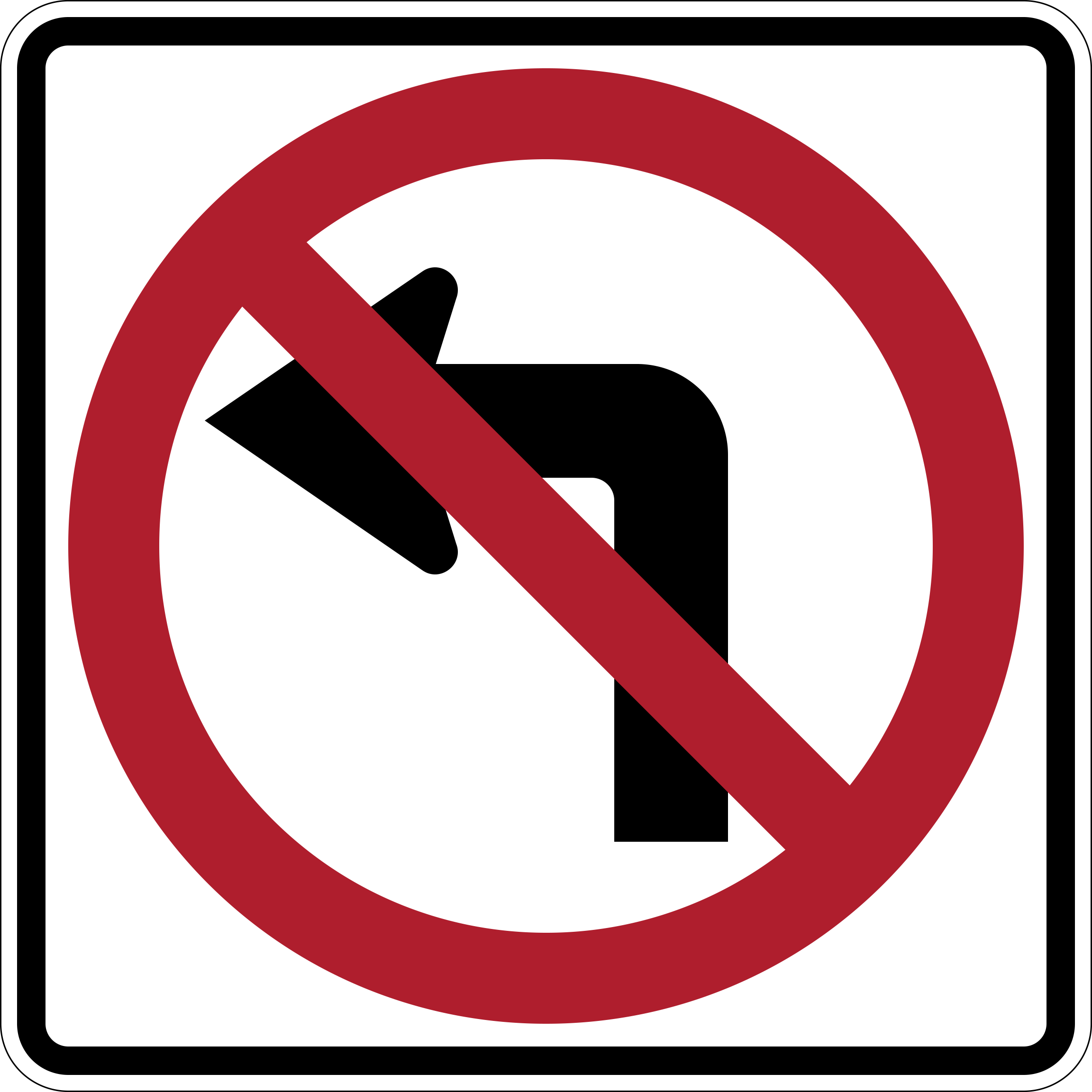
- Turn left if no oncoming cars are near
- Go straight and find another legal route
- Turn left from the right-hand lane instead
- Turn left only after the light turns red
Show answer
Go straight and find another legal route. A red circle with a slash over a left-turn arrow is a Missouri regulatory sign that prohibits left turns at that spot. Regulatory signs state rules you must follow, not suggestions. Continue straight or turn right, then use a legal route to reach your destination. Light traffic, lane choice, or signal color does not create an exception to a posted turn prohibition.
Study this in the handbook: Road signs by shape and color
3. You drive past the street you wanted to turn onto in Missouri. What does the guide say to do?
- Keep going and turn around where it is safe
- Back up in your lane to reach the street
- Stop in the lane and wait for a gap to reverse
- Back up on the shoulder with your flashers on
Show answer
Keep going and turn around where it is safe. Missouri says never to back a vehicle in any travel lane. Drivers behind you do not expect a car to be backing toward them and may not notice until it is too late. If you miss a turn or an exit, do not back up; continue to a place where you can safely turn around. Stopping in a travel lane to wait for a gap is also something the guide tells drivers to avoid.
Study this in the handbook: Pavement markings and lane use
4. A loaded truck is slowly climbing a long, steep hill ahead of you on a Missouri highway. What is the safest plan, according to the guide?
- Honk so the truck driver speeds up the climb
- Slow down suddenly to open up a large gap
- Spot it early and change lanes or slow safely
- Stay close behind it so the driver can see you
Show answer
Spot it early and change lanes or slow safely. The guide says that when you spot slow vehicles early, you have time to change lanes or slow down safely. Large trucks and small, underpowered vehicles can lose speed on long or steep hills, and they take longer to get up to speed when they enter traffic. Slowing suddenly can cause a traffic crash, so a smooth change of lane or speed is the better choice. Honking or crowding the truck does nothing to fix the problem.
Study this in the handbook: Passing, turning and signaling
5. How is a shared center left-turn lane marked on a Missouri road?
- Two solid white lines on each side
- A single dashed white line down the middle
- Double solid yellow lines with no breaks
- Solid and dashed yellow lines on each side
Show answer
Solid and dashed yellow lines on each side. A shared center lane lets vehicles from both directions make left turns, and U-turns where they are permitted. Missouri says these lanes are marked on each side by a solid yellow line and a dashed yellow line, and the pavement shows left-turn arrows that alternate between the two directions. Turn from this lane as soon as your path is clear rather than waiting in it longer than necessary.
Study this in the handbook: Pavement markings and lane use
6. You are in the middle of a Missouri intersection when you hear a siren and see flashing red lights behind you. What should you do?
- Clear the intersection, then pull to the right
- Stop right where you are in the intersection
- Back up out of the intersection to clear a path
- Turn left across traffic to get out of the way
Show answer
Clear the intersection, then pull to the right. Missouri drivers must yield to emergency vehicles using a siren or air horn and red or blue flashing lights by pulling to the right edge of the road. If you are already inside an intersection, finish crossing it first and then pull over. Stopping in the middle blocks the space the emergency vehicle may need, and backing up or cutting across traffic creates new hazards. Once stopped, stay put until the vehicle passes.
Study this in the handbook: Right of way at intersections and roundabouts
7. On a Missouri multilane road, car after car passes you on the right while you stay in the left lane. What does this tell you?
- The other drivers are all breaking the speed limit
- The right lane must be the faster lane on this road
- You are likely slower than the traffic around you
- You should speed up until nobody passes you
Show answer
You are likely slower than the traffic around you. Missouri's guide says that if many vehicles are passing you in the right lane of a multilane roadway, you are probably going slower than the rest of the traffic. Unless you will be turning left soon, move into the right lane when the way is clear. The left-most lane is meant for passing, and staying in it forces others to pass on the right, where they are harder to see. Speeding up to block them is not the fix.
Study this in the handbook: Passing, turning and signaling
8. You are turning right on a green light in Missouri when a person with a white cane starts to cross the street you are entering. What must you do?
- Slow down and steer around the person carefully
- Come to a complete stop and let the person cross
- Honk so the person knows you are turning
- Keep going, since your light is green
Show answer
Come to a complete stop and let the person cross. Missouri requires drivers to always yield to persons who are blind. When a pedestrian crossing a street or highway is guided by a dog or carries a white cane, or a white cane with a red tip, vehicles must come to a complete stop. Your green light does not change that duty. Do not try to steer around the person or hurry them along; simply stop and wait until they have finished crossing.
Study this in the handbook: Pedestrians, cyclists, motorcycles and trucks
9. You are in a left-turn lane at a Missouri intersection facing a steady red arrow, and oncoming traffic is light. May you turn?
- No, wait for a green or flashing yellow arrow
- Yes, after a full stop, like a right on red
- Yes, if no oncoming car is in sight
- Yes, once the cross street has a red light
Show answer
No, wait for a green or flashing yellow arrow. A steady red arrow tells Missouri drivers to stop at the stop line, crosswalk, or before the intersection, and to wait for the signal to turn green or show a flashing yellow arrow before proceeding. Light traffic does not change that. Turning right on red after a full stop is allowed, but a red arrow for your turn holds you until the signal changes, and you may also need to yield to pedestrians.
Study this in the handbook: Traffic lights, arrows and officers
10. Two cars bump at low speed on a Missouri interstate. Nobody is hurt, and both cars still drive. What should the drivers do first?
- Move the cars off the roadway
- Leave them in the lane until police arrive
- Stand in the lane to wave traffic around
- Drive away, since no one was hurt
Show answer
Move the cars off the roadway. Missouri's Move It law requires vehicles involved in minor, non-injury crashes to move off the road, onto the shoulder or another nearby location. MoDOT notes that each minute a lane stays blocked backs up traffic for four minutes, and secondary crashes account for 18 percent of Missouri fatalities. Moving the cars is not leaving the scene; stay until a law enforcement officer says you may go.
11. You are turning right into a driveway in Missouri, and a bicyclist is riding in the bike lane beside you. What should you do?
- Turn first, since cars have priority
- Speed up to get ahead of the rider
- Honk and turn across the bike lane
- Let the cyclist pass, then cross the lane
Show answer
Let the cyclist pass, then cross the lane. Missouri lets drivers cross a bicycle lane when turning or when entering or leaving the roadway, but drivers must yield to bicyclists in the bicycle lane. With a rider beside you, slow down, let the cyclist go by, and then make your turn across the lane. Speeding up to get ahead or turning across the rider puts your car directly in the bicycle's path.
Study this in the handbook: Pedestrians, cyclists, motorcycles and trucks
12. You want to change lanes on a Missouri road. Which line to your left shows that the next lane carries traffic moving your way?
- A yellow line
- A white line
- A double yellow line
- A yellow line with breaks
Show answer
A white line. Missouri marks lanes by color. White lines separate traffic moving in the same direction, so a white line on your left means the lane beyond it carries traffic going your way. Yellow lines separate traffic moving in opposite directions, and two solid yellow lines mark the center of four-lane roads. Check the color before any lane change so you do not drift into oncoming traffic.
Study this in the handbook: Pavement markings and lane use
13. Before leaving a car parked on a Missouri hill, which steps does the guide list for the motor, gear, brake, and keys?
- Turn off the motor, leave it in gear, set the brake, take the keys
- Leave the motor idling in neutral and set the parking brake
- Turn off the motor, shift to neutral, and leave keys in the ignition
- Set the brake only, since the curb holds the wheels in place
Show answer
Turn off the motor, leave it in gear, set the brake, take the keys. Missouri's checklist for parking on a hill starts with turning the wheels in the proper direction. Then turn off the motor while leaving the vehicle in the proper gear, set the emergency or parking brake, and remove the keys from the ignition. Check your mirror for traffic before stepping out, and lock the car and pocket the keys. Neutral lets a car roll, and keys left inside invite theft.
14. A yellow diamond sign in Missouri shows a straight black line with a shorter line joining it from the right. What should you expect?
- Your road ends and you must turn right
- The right lane is closed for road work
- Another road enters from the right side
- A sharp right turn is coming up
Show answer
Another road enters from the right side. Missouri's Side Road Ahead sign warns that another road enters your road from the direction shown on the sign. Vehicles may pull out from that side, so slow down and watch for them. It is different from a T Intersection Ahead sign, which means your road does not continue and you must turn right or left. Road work is marked with orange signs, and sharp turns have their own turn sign.
Study this in the handbook: Road signs by shape and color
15. You see a row of yellow signs with black chevron shapes along a curve on a Missouri road. Why are they there?
- To mark where passing is allowed on the curve
- To point the way to a rest area just ahead
- To add extra emphasis to slow for the curve
- To show that the shoulder is safe to drive on
Show answer
To add extra emphasis to slow for the curve. Chevron signs may be used at curves and turns in Missouri to add extra emphasis to slow down. They are warning signs, like the curve and turn signs, telling you the bend ahead calls for less speed. They do not mark a passing zone, point to services, or invite you onto the shoulder. Reduce speed before you enter the curve, and never take it faster in rain, snow, or ice than the advisory speed shown.
Study this in the handbook: Road signs by shape and color
16. A driver has had a few drinks, and a ball rolls into the road ahead of the car. How does alcohol affect the driver's response?
- It sharpens focus, so the driver brakes sooner
- It affects judgment only and leaves reflexes alone
- It has no effect until the driver is clearly drunk
- It slows reflexes and delays the driver's reaction
Show answer
It slows reflexes and delays the driver's reaction. Alcohol slows reflexes and decreases reaction time, which makes it unsafe for a driver to react quickly to a variety of situations, such as something entering the road. The guide also says alcohol can cause drowsiness, decreased concentration, and decreased attention, and that it can limit the ability to make rational decisions. Even one drink is likely to affect your ability to drive safely.
Study this in the handbook: Alcohol limits and DWI penalties
17. How does the Missouri guide say to turn the steering wheel when going around a corner?
- With the palm of one hand pushing the wheel around
- Let the wheel slide through loose fingers
- Hand over hand, with both hands on the wheel
- With one hand at the bottom of the wheel
Show answer
Hand over hand, with both hands on the wheel. For corners, Missouri recommends turning the steering wheel with the hand-over-hand technique. The guide warns against turning the wheel with just the palm of one hand, because you could lose control. When you finish the turn, straighten the wheel by hand rather than letting it spin back on its own. Steady use of both hands keeps you in control through the whole turn.
Study this in the handbook: Seat belts, child seats and following distance
18. How should you set your seat distance, according to the Missouri guide?
- As far back as possible so your arms are fully straight
- As close as possible so your chest nearly touches the wheel
- Wherever it feels relaxed, as long as you can see over the dash
- Close enough to reach the pedals, with elbows in front of you
Show answer
Close enough to reach the pedals, with elbows in front of you. Good posture helps you stay alert and in full control. Missouri says to move your seat close enough that you can easily reach the pedals but far enough away that your elbows are in front of you when you hold the wheel. Sit with your back straight, upright, and relaxed against the seat, keep both feet within reach of the floor controls, and keep both hands on the steering wheel.
Study this in the handbook: Seat belts, child seats and following distance
19. A motorcycle is riding near the left side of its lane on a Missouri road, leaving room on the right. May you pull alongside it in the same lane?
- Yes, if there is room for both
- Yes, if you stay behind its front wheel
- Yes, during heavy traffic only
- No, the motorcyclist needs the whole lane
Show answer
No, the motorcyclist needs the whole lane. Missouri says you should not share a lane with a motorcycle, because the motorcyclist needs the entire lane for safety. Riders change speed and lane position to avoid manhole covers, diagonal railroad tracks, debris, or strong winds, and may need that empty space at any moment. When passing, give the motorcycle a full lane width rather than squeezing past. Treat the motorcycle's lane as fully occupied.
Study this in the handbook: Pedestrians, cyclists, motorcycles and trucks
20. You have been driving on a divided Missouri highway and see this sign. What change should you prepare for?
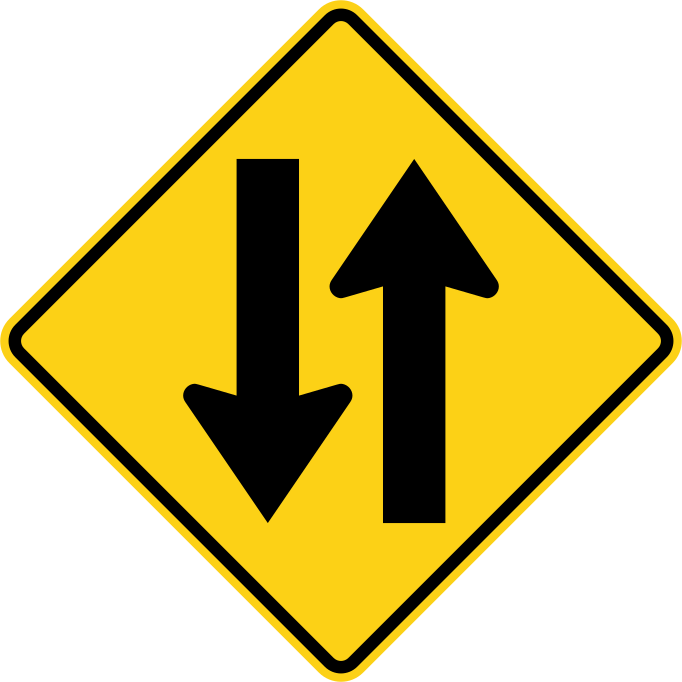
- A second lane added in your direction
- Oncoming traffic with no median between
- A one-way road beginning ahead
- A roundabout at the next crossroad
Show answer
Oncoming traffic with no median between. This sign marks the end of a divided roadway in Missouri: two-way traffic will no longer be divided by a median or barrier. Oncoming vehicles will be just across the center line, so keep right and watch the markings before any pass. Its opposite, the Begin Divided Roadway sign, means a median or barrier is about to separate the two directions of traffic.
Study this in the handbook: Road signs by shape and color
Every question is written from the official Missouri Driver Guide. Need paper? Printable MO practice test with answer key.
Last verified 2026-10-05. How we check every question · Study all 500 as flashcards
Frequently asked questions
How many questions are on this Missouri practice test?
This fixed set has 20 questions. It is test 13 of 25 from the 500 question Missouri bank. The real MO exam asks 25 questions and you need 20 correct.
What is the passing score for the real Missouri test?
80% to pass That figure comes from the official Missouri source cited on the DMV facts page.
How does this fixed test relate to the full Missouri bank?
Each numbered test is a fixed set of questions in a fixed order, so you can retake the same test later and compare. Every test mixes road signs and the other topics in about the same proportion as the full bank. Tests 1 to 25 together cover every question in the Missouri bank once. The full practice page mixes the whole bank at random.
Last verified 2026-10-05. See the Missouri DMV facts page for sourced state details.
Return to the full Missouri practice test · Study road signs