
Key points
Broken lines may be crossed when you pass.
Source: Handbook p. 42
“Broken Lines may be crossed in a passing maneuver.”
Missouri Driver Guide, Handbook p. 42If the line on your left is yellow, traffic on the other side is moving in the opposite direction.
Source: Handbook p. 42
“If the line on the left of you is yellow, the traffic on the other side of the line is moving in the opposite direction.”
Missouri Driver Guide, Handbook p. 42If the line on your left is white, traffic on the other side is going your direction.
Source: Handbook p. 42
“When the line on the left of you is white, the traffic is moving in the same direction.”
Missouri Driver Guide, Handbook p. 42On a road with 4 lanes, the center marking is two solid yellow lines.
Source: Handbook p. 42
“The center marking for roads with four lanes consists of two solid yellow lines.”
Missouri Driver Guide, Handbook p. 42When you see a solid yellow line on your side of the center line, do not try to pass.
Source: Handbook p. 42
“When you see a solid yellow line on your side of the center line, do not try to pass.”
Missouri Driver Guide, Handbook p. 42Even with no marking, never pass on a two lane road if you cannot see that the road is clear for the whole pass.
Source: Handbook p. 42
“On any two-lane road, never pass if you cannot see the road is clear for the distance you need to make a pass, even if there is no marking on the roadway.”
Missouri Driver Guide, Handbook p. 42When a sign or signal requires a stop, stop before the stop line or, if there is one, the crosswalk.
Source: Handbook p. 42
“you must stop before your vehicle reaches the stop line or, if there is one, the crosswalk.”
Missouri Driver Guide, Handbook p. 42Shared center lanes are marked on each side by solid and dashed yellow lines; turn from the lane as soon as your path is clear.
Source: Handbook p. 43
“These lanes are marked on each side by a solid yellow and dashed yellow lines. Turn from this lane as soon as your path is clear.”
Missouri Driver Guide, Handbook p. 43On a road with 3 or more lanes in your direction, stay in the right lane except to pass.
Source: Handbook p. 43
“On a road with three or more lanes traveling in the same direction, stay in the right lane except to pass.”
Missouri Driver Guide, Handbook p. 43If you miss your turn or exit, do not back up; go on to where you can safely turn around.
Source: Handbook p. 43
“If you miss your turn or exit, do not back up. Go on to where you can safely turn around.”
Missouri Driver Guide, Handbook p. 43
Numbers to know
| Number | What it means | Manual |
|---|---|---|
| 4 lanes | roads whose center is marked with two solid yellow lines | Handbook p. 42 |
| 3 lanes | lanes in one direction where you stay right except to pass | Handbook p. 43 |
Recognize these signs
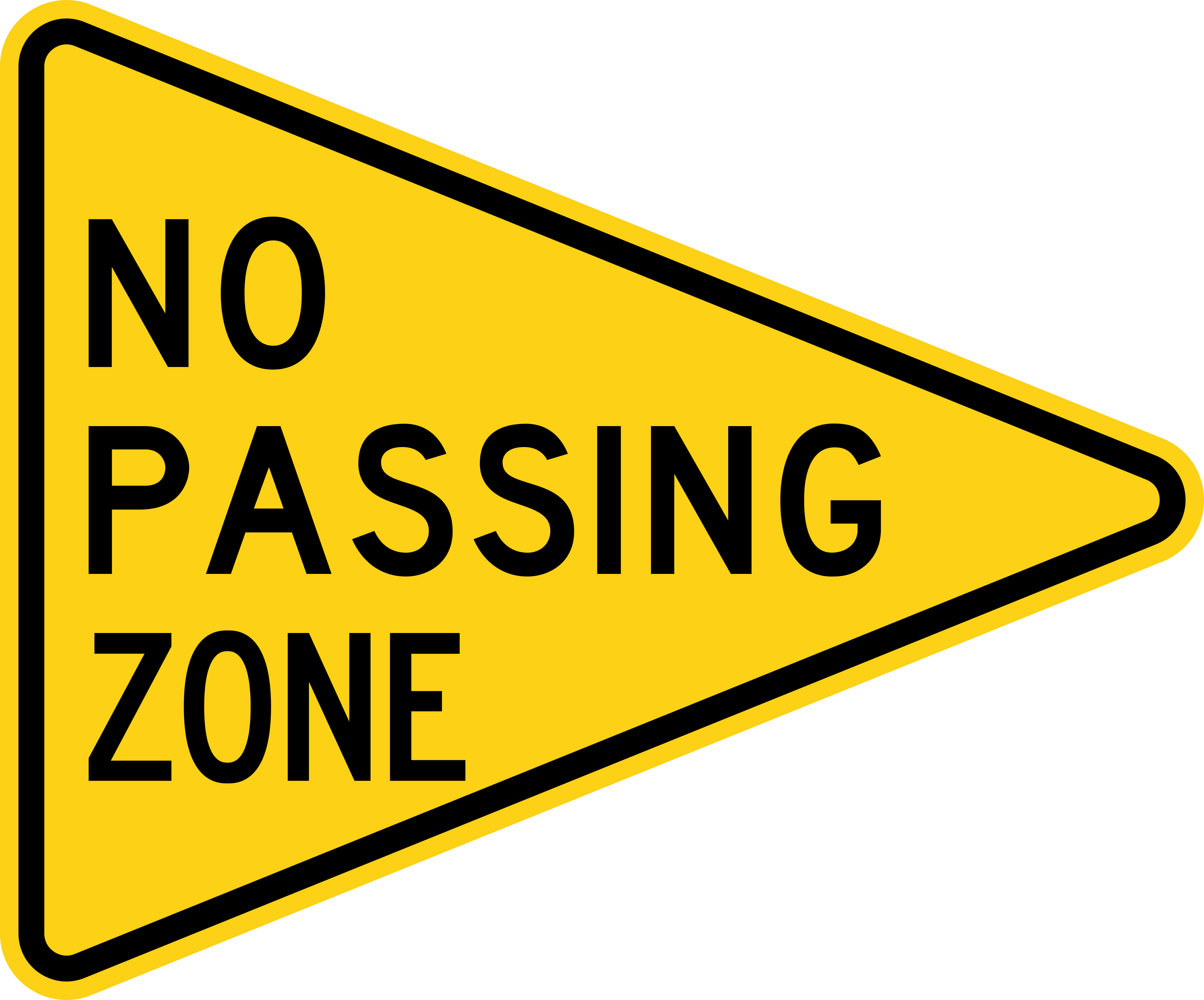
No passing zone
3 questions from the Missouri practice test
1. What do the two solid yellow center lines on a Missouri four lane road tell you about passing?
- You may cross them to pass slower traffic when clear
- They mark the edge of the roadway
- They separate lanes moving in the same direction
- You should never cross them to pass
Show answer
You should never cross them to pass. The Missouri guide says the center marking for roads with four lanes consists of two solid yellow lines, and those yellow lines tell you the traffic on the other side is moving in the opposite direction. It then says you should never cross the two solid yellow lines to pass. A clear view does not create an exception. The guide notes that a solid white line marks the right edge of many roads, and white lines, not yellow, separate lanes moving in the same direction.
2. You see a solid yellow line on your side of the center line. What action is prohibited?
- Crossing that line to pass another vehicle
- Slowing down before a curve
- Stopping when directed by a traffic officer
- Continuing straight in your lane
Show answer
Crossing that line to pass another vehicle. A solid yellow line on the driver's side of the center line marks a no-passing condition. The instruction is not to cross it to pass, even when the driver feels the road ahead is open. Continuing straight, reducing speed for a bend, or obeying an officer can all be appropriate and do not inherently cross the line. Let the marking control the passing decision, then wait for a legal passing section with adequate visibility and no conflicting sign or hazard.
3. What traffic direction is indicated by a white line on the left?
- Traffic traveling in opposite directions
- Traffic traveling in the same direction
- A travel lane from a railroad track
- Only lanes reserved for buses
Show answer
Traffic traveling in the same direction. White pavement markings separate traffic moving in the same direction. This differs from yellow markings, which separate opposing directions. The color helps a driver interpret lane placement before changing lanes or preparing for a turn. White lines do not automatically mean every lane change is safe, and a solid white edge line may mark the road's right edge. Check the marking type, mirrors, blind spot, and surrounding traffic before crossing a white lane line.
Practice this topic
Lock it in with signals and markings questions from the free Missouri practice test. Every answer comes with a plain English explanation.
Source: the Missouri Driver Guide, Chapter 7: Pavement Markings, Traffic Signs, and Signals. This lesson is a plain English summary, not the law itself; where it differs, the manual and the statute govern. Last checked 2026-09-27.