
Key points
An octagon means stop, a triangle means yield, and a pennant marks a no passing zone.
Source: Handbook p. 45
“Octagon = Stop Round = Railroad Triangle = Yield Crossbuck = Railroad Vertical Rectangle = Regulatory Pennant = No Passing Zone”
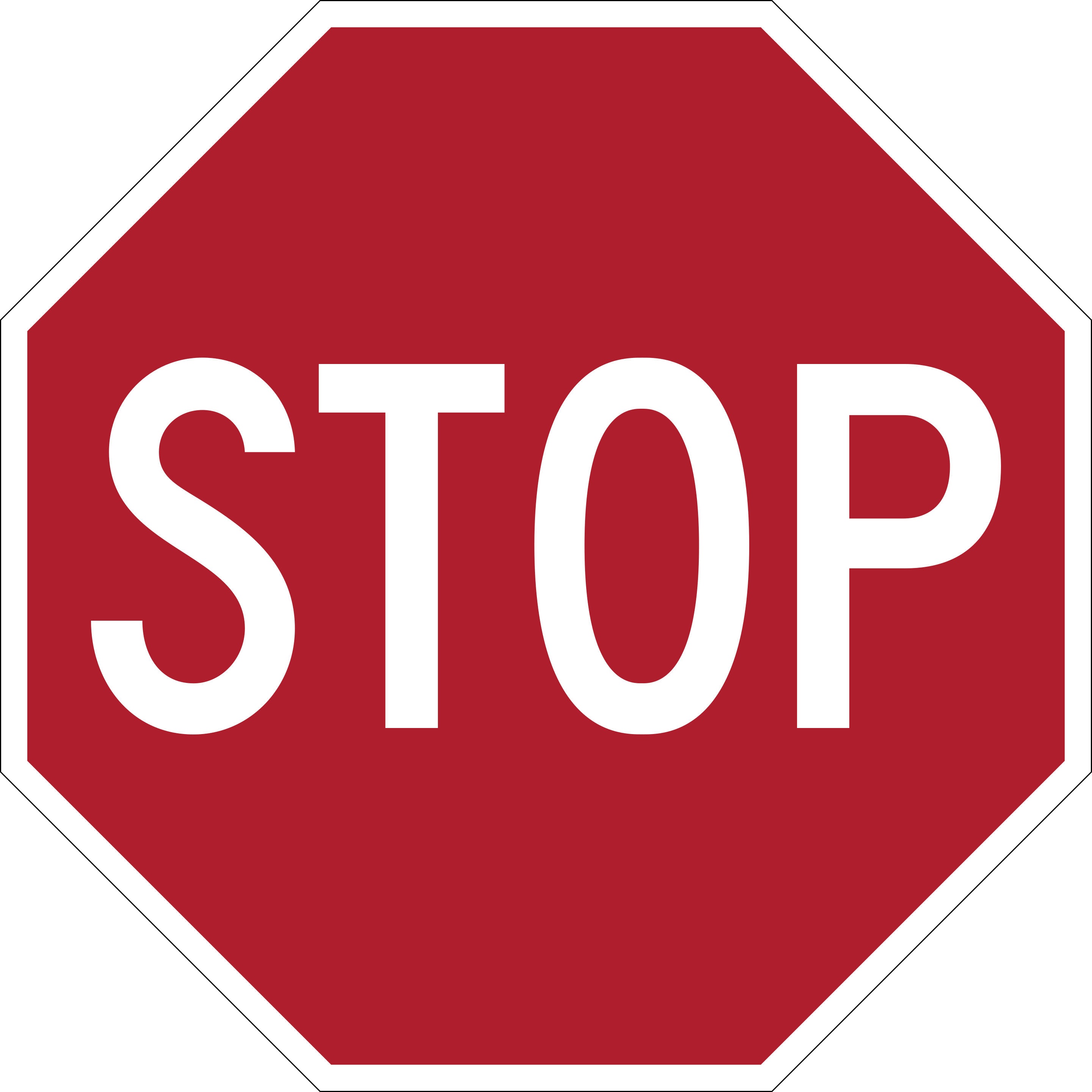
Missouri Driver Guide, Handbook p. 45A stop sign is red with white letters and eight sides, and you must come to a full stop.
Source: Handbook p. 49
“A stop sign is red with white letters and has eight sides. When you see a stop sign, you must come to a full stop.”
Missouri Driver Guide, Handbook p. 49A yield sign means slow down and yield to traffic in the intersection or road you are entering.
Source: Handbook p. 49
“It means you must slow down and yield the right-of-way to traffic in the intersection you are crossing or roadway you are entering.”
Missouri Driver Guide, Handbook p. 49If a Wrong Way sign faces you, pull off the road as quickly and safely as possible, turn around and go back.
Source: Handbook p. 49
“You made a wrong turn and have entered a lane of oncoming traffic. As quickly and safely as possible, pull off the road, turn around and go back.”
Missouri Driver Guide, Handbook p. 49Warning signs are yellow with black lettering and usually diamond shaped.
Source: Handbook p. 46
“These signs are yellow with black lettering or symbols and usually diamond shaped.”
Missouri Driver Guide, Handbook p. 46A turn sign warns of a turn with a recommended maximum speed of 30 mph or less.
Source: Handbook p. 47
“A turn sign is used to warn of a sharp turn or turn where the recommended maximum speed is 30 mph or less.”
Missouri Driver Guide, Handbook p. 47A reflective orange triangle on the back of a vehicle means it travels less than 25 mph.
Source: Handbook p. 47
“A reflective orange triangle on the rear of a vehicle means it is traveling less than 25 mph.”
Missouri Driver Guide, Handbook p. 47A red circle with a red slash over a symbol means you cannot do that action.
Source: Handbook p. 48
“Some regulatory signs have a red circle with a red slash over a symbol. These indicate you cannot do something”
Missouri Driver Guide, Handbook p. 48Work zone signs are fluorescent orange.
Source: Handbook p. 51
“Work zone signs are fluorescent orange and indicate some type of work is being performed on or alongside the roadway.”
Missouri Driver Guide, Handbook p. 51Blue signs show the location of services such as rest areas and hospitals.
Source: Handbook p. 54
“These signs are square or rectangular, and are blue with white letters or symbols. They show the location of various services, such as rest areas and hospitals.”
Missouri Driver Guide, Handbook p. 54
Numbers to know
| Number | What it means | Manual |
|---|---|---|
| 8 sides | shape of a stop sign | Handbook p. 49 |
| 30 mph | recommended maximum speed marked by a turn sign | Handbook p. 47 |
| 25 mph | speed a vehicle with an orange slow moving triangle travels below | Handbook p. 47 |
Recognize these signs
Stop 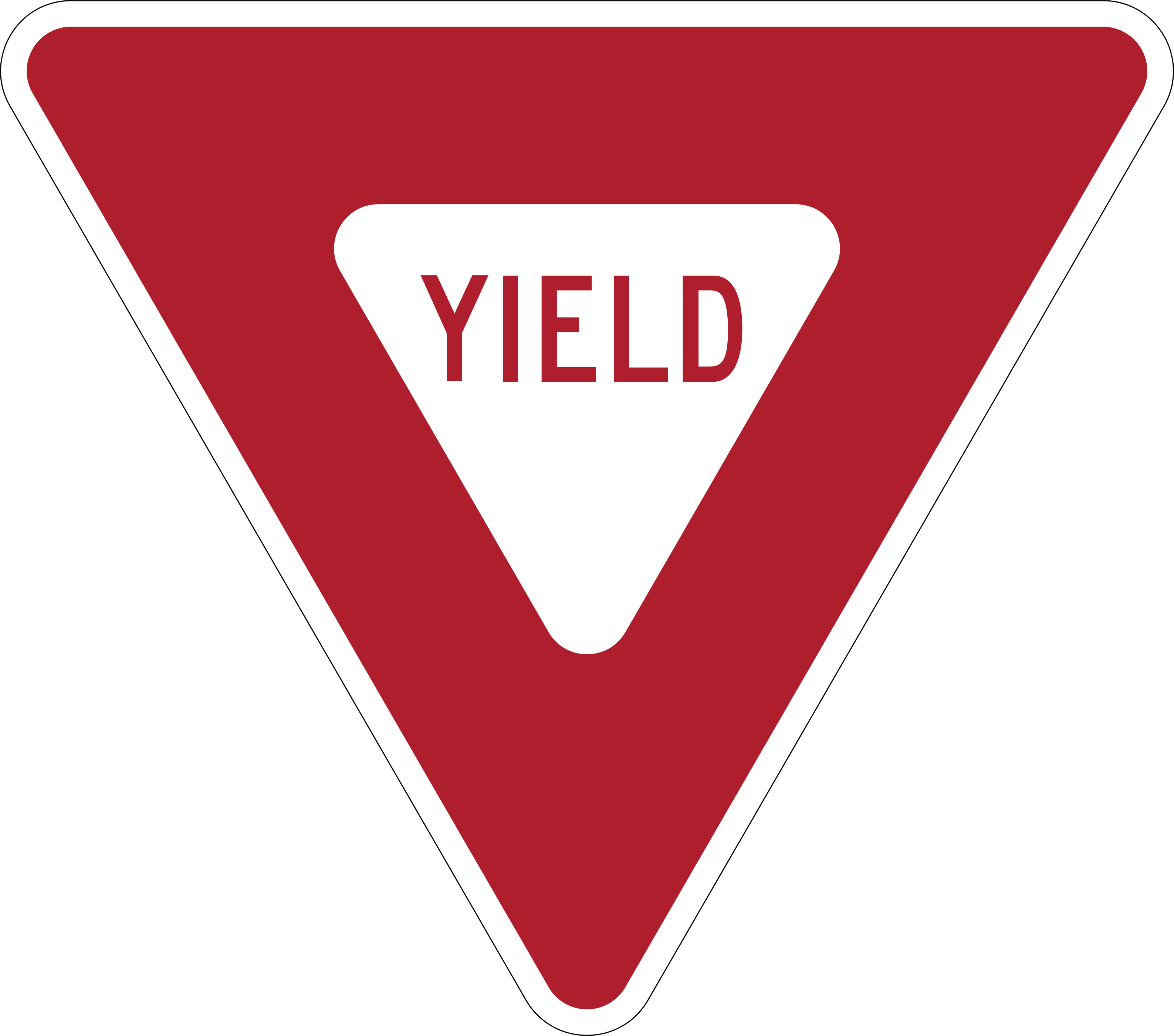
Yield 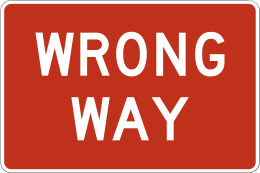
Wrong way 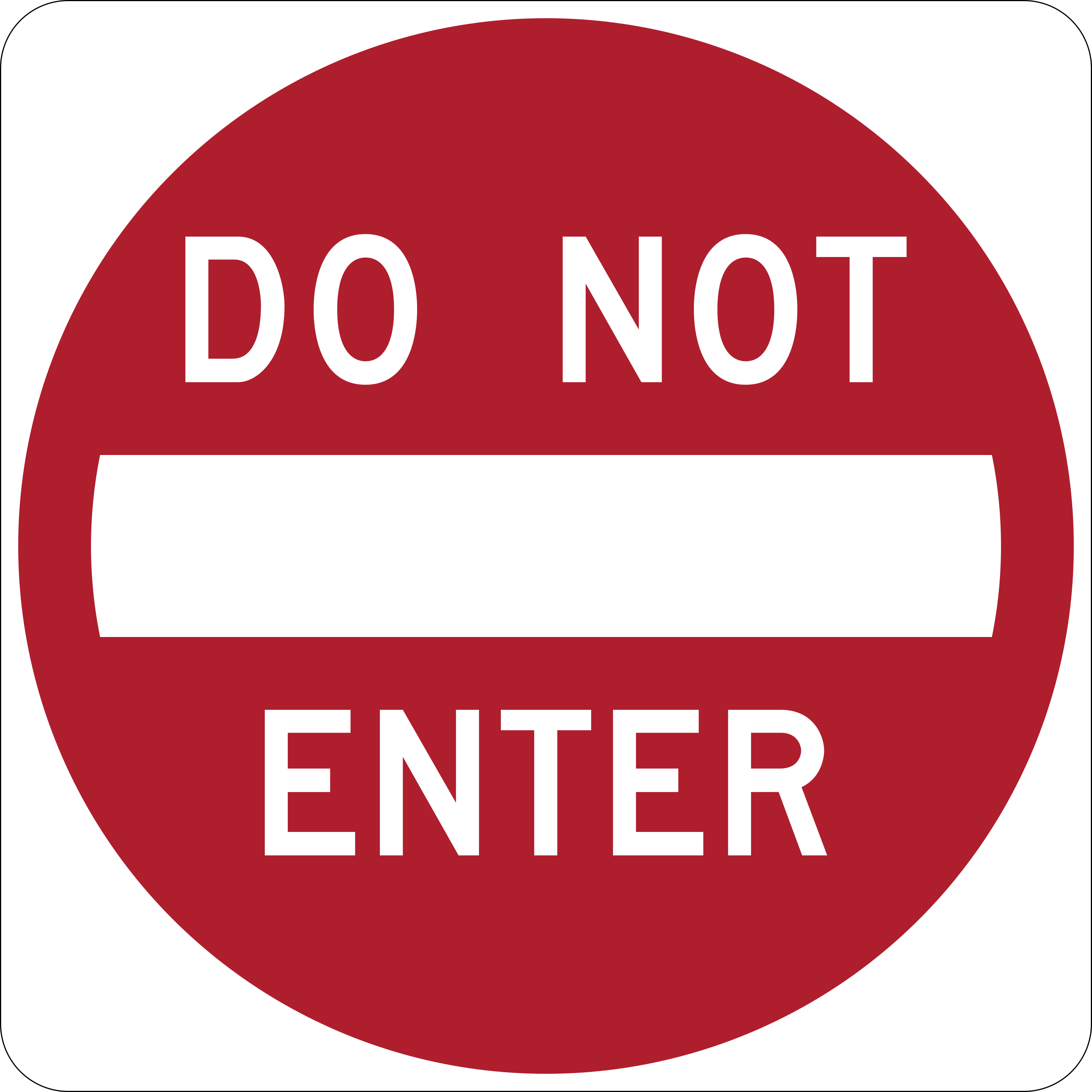
Do not enter 
Stop ahead 
Merge 
Slippery when wet 
Slow moving vehicle 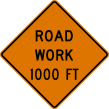
Road work ahead
3 questions from the Missouri practice test
1. At the red octagonal sign shown, what action is required before entering the intersection?
- Slow down and continue if the lane appears clear
- Come to a full stop, check crossing traffic and pedestrians, then proceed when safe
- Stop only when another vehicle is approaching
- Yield without stopping if no pedestrian is visible
Show answer
Come to a full stop, check crossing traffic and pedestrians, then proceed when safe. A stop sign requires a full stop, not merely a reduction in speed. After stopping, the driver waits for crossing vehicles and pedestrians to clear and proceeds only when the movement is safe. The line, crosswalk, or edge of the intersection determines where the stop occurs. The distractors that allow a rolling approach or a stop only when traffic is visible remove the legal duty created by the sign. Use the octagon as an immediate visual cue, then scan both directions before moving through the intersection.
2. What does the red and white triangular sign shown require?
- A complete stop every time, even with no conflicting traffic
- Slow down and yield to traffic in the intersection or roadway being entered
- Entry is prohibited in both directions
- The lane is reserved for buses
Show answer
Slow down and yield to traffic in the intersection or roadway being entered. The yield sign calls for a slower approach and a right-of-way check. Traffic already in the intersection or on the roadway being entered has priority, so the driver must yield and stop if conditions require it. A full stop is not automatic in every clear approach, which separates this sign from a stop sign. The no-entry option describes a different regulatory sign, and a bus restriction has no connection to the triangle. Look left, right, and toward pedestrians before joining the crossing roadway, and be ready to stop if a conflict develops.
3. A driver facing the red and white DO NOT ENTER sign should understand that:
- The roadway opening must not be entered
- The road becomes two-way ahead
- Parking is prohibited only during business hours
- A railroad crossing is immediately ahead
Show answer
The roadway opening must not be entered. DO NOT ENTER is a regulatory sign. The Missouri guide says that when you see this sign at a roadway opening, you must not enter that road. It is not a parking message, a warning that the road becomes two way, or a railroad notice. The sign sits next to the ONE WAY and WRONG WAY signs in the guide because it guards roads and ramps where traffic is allowed in one direction only, so entering would put you against oncoming traffic. Read the words on the red sign as a direct instruction to stay out.
Practice this topic
Lock it in with road signs questions from the free Missouri practice test. Every answer comes with a plain English explanation.
Source: the Missouri Driver Guide, Chapter 7: Pavement Markings, Traffic Signs, and Signals. This lesson is a plain English summary, not the law itself; where it differs, the manual and the statute govern. Last checked 2026-09-27.