
Test 6 of 10 · 20 questions · Free 2026
LA Permit Practice Test 6
Jump to the test ↓A fixed 20 question set from the Louisiana bank with answers and plain English explanations. The real LA exam is 40 questions, 80 percent to pass; take the full length version on the main practice page.
Question 1 of 20 · 0 right so far
All 20 questions in test 6
Every question below comes from the Louisiana question bank on this page. Open a question to see the correct answer and the explanation. Nothing here is hidden behind a signup.
1. What BAC does the guide list for operation of a commercial motor vehicle in Louisiana?
- 0.04%
- 0.02%
- 0.08%
- 0.15%
Show answer
0.04%. The guide lists 0.04% as the legal BAC limit for operating a commercial motor vehicle. The 0.02% value is the listed threshold for drivers age 20 and younger, and 0.08% is the listed adult threshold for drivers 21 or older. The 0.15% choice is a higher test result associated with a longer suspension in an administrative case, not the commercial limit. When a question identifies the vehicle as commercial, use the vehicle category first rather than applying the ordinary adult-driver number.
Study this in the handbook: Alcohol and Louisiana's BAC limits
2. What color is used for temporary traffic control signs in Louisiana’s guide?
- Brown
- Blue
- Orange
- Green
Show answer
Orange. Orange identifies temporary traffic control signs and signals a construction or maintenance setting. Blue points toward services, brown relates to recreation or cultural destinations, and green is used for guide and information signs. Confusing these colors can make a driver miss a changing lane pattern or worker warning. When orange appears ahead, reduce speed, expect unusual roadway conditions, and be ready to follow cones, barricades, or a flag person.
Study this in the handbook: Sign shapes and colors
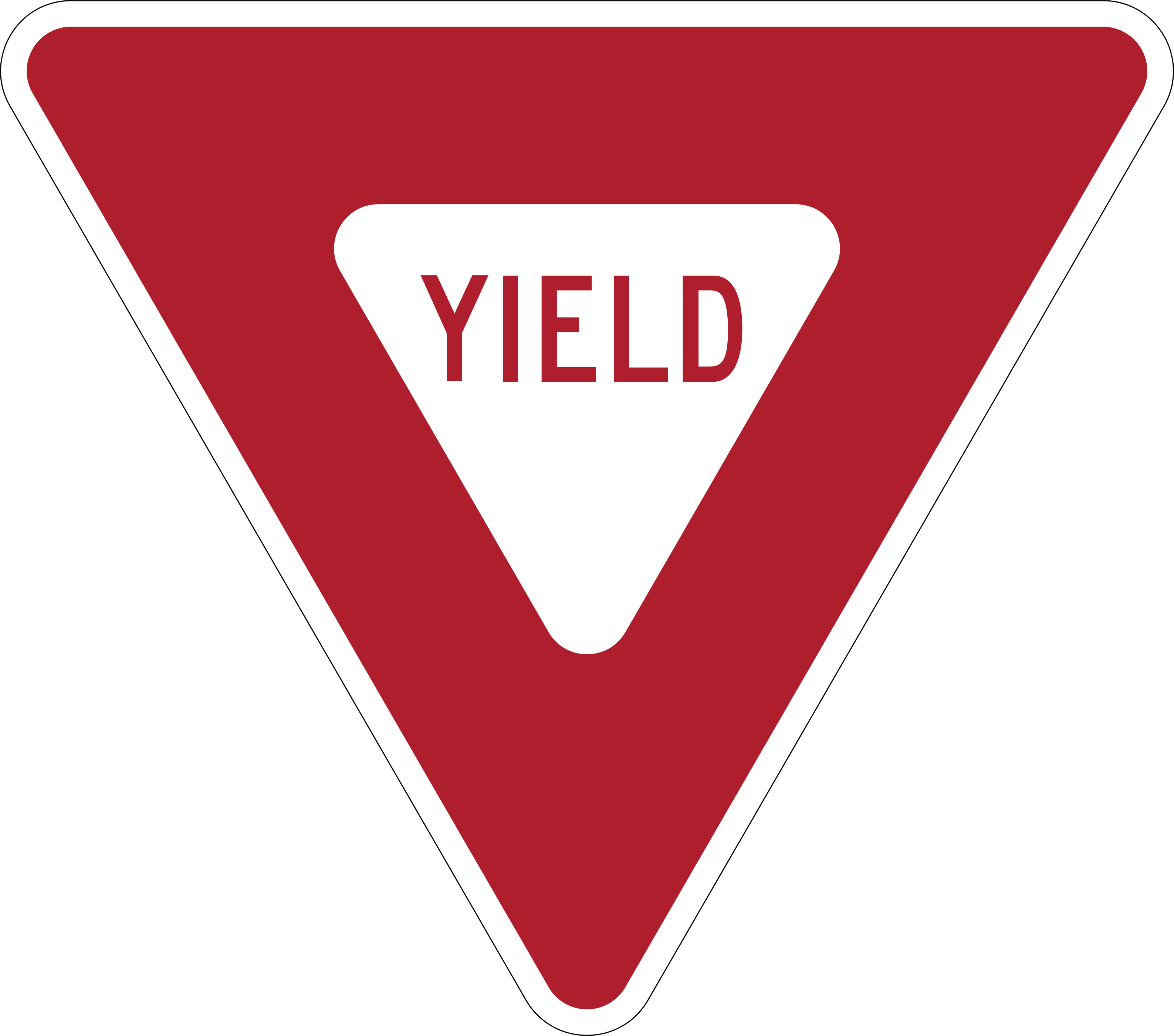
3. What does a downward-pointing red and white triangle require?
- Enter only after sounding the horn twice
- Stop permanently until the signal turns green
- Continue without checking because the triangle gives priority
- Slow down and allow right-of-way traffic to cross before entering
Show answer
Slow down and allow right-of-way traffic to cross before entering. A yield sign tells the driver to slow down and let traffic with the right-of-way cross before entering. A complete stop may become necessary if traffic requires it, but the sign does not impose a permanent stop or a signal cycle. The priority belongs to the traffic already entitled to proceed, not to the vehicle facing the triangle. Approach with a clear view, reduce speed early, and be ready to stop at the line or before the conflict point.
Study this in the handbook: Sign shapes and colors
4. What do red raised pavement markings or reflectors indicate?
- Passing is permitted if the roadway is dry
- The lane is reserved for buses traveling in either direction
- Travel is against the direction of traffic and the roadway must not be entered
- A parking area begins at the next intersection
Show answer
Travel is against the direction of traffic and the roadway must not be entered. Red raised markings or reflectors warn that a driver is facing the wrong direction of travel. The guide says this roadway must not be entered. They do not authorize passing, identify a bus lane, or mark parking. If red reflectors appear to face you, stop looking for a way forward, check the surroundings carefully, and correct the direction only when you can do so without entering opposing traffic or creating another hazard.
Study this in the handbook: Center lines, lane lines and crosswalks
5. During what hours is an intermediate licensee generally prohibited from driving in Louisiana?
- 11:00 p.m. to 5:00 a.m.
- 9:00 p.m. to 6:00 a.m.
- 10:00 p.m. to 4:00 a.m.
- Midnight to 7:00 a.m.
Show answer
11:00 p.m. to 5:00 a.m.. An intermediate licensee generally may not drive from 11:00 p.m. through 5:00 a.m. The manual allows an exception when the driver is accompanied by a licensed adult at least 21 or a sibling at least 18. The separate passenger restriction begins at 6:00 p.m., which can make that time appear in another rule, but it does not change the driving curfew. Before a late trip, identify whether the issue is the curfew or passenger limit and confirm that the listed adult or sibling exception applies.
Study this in the handbook: The graduated licensing program
6. How much more likely per mile are teen drivers ages 16 to 19 to crash than older drivers, according to the Louisiana guide?
- Twice as likely
- Four times more likely
- About the same
- Ten times more likely
Show answer
Four times more likely. Per mile driven, teenage drivers ages 16 to 19 are four times more likely to crash than older drivers, according to the Louisiana guide. It ties these high crash rates, especially for 16 year olds, to driver inexperience and immaturity, and it presents graduated licensing as a way to limit early driving to lower risk situations such as daylight and fewer teen passengers. Twice as likely understates the figure, about the same ignores it, and ten times overstates it.
Study this in the handbook: The graduated licensing program
7. When may a driver travel at the maximum speed shown on a Louisiana speed limit sign?
- Whenever the driver is late
- Only in ideal driving conditions
- Only when following another vehicle
- Regardless of rain or fog
Show answer
Only in ideal driving conditions. A posted maximum speed is intended for ideal driving conditions. Rain, fog, slippery pavement, snow, ice, or poor visibility can require a lower speed even when the sign has not changed. Being late or following another vehicle does not create permission to use the maximum. The key cue is maximum, not target speed: evaluate weather, traction, and visibility first, then reduce speed whenever those conditions make the posted number unsafe.
Study this in the handbook: Speed laws
8. What must other drivers do when encountering a funeral procession?
- Pass the procession on the shoulder
- Enter the line whenever a gap appears
- Use the horn to make the procession stop
- Yield the right-of-way to the vehicles in the procession
Show answer
Yield the right-of-way to the vehicles in the procession. Louisiana requires all motor-vehicle operators to yield the right-of-way to vehicles participating in a funeral procession. Entering a gap, forcing the line to stop, or passing on the shoulder disrupts the procession and creates unpredictable movements. Slow down, remain patient, and wait until the procession has passed before proceeding. The guide also notes that procession vehicles use headlights and emergency lights, which can help identify the group. Treat the line as a continuous movement rather than as separate vehicles that can be cut between.
Study this in the handbook: Right of way and other laws you should know
9. How many people die each day waiting for an organ, according to the Louisiana guide?
- 1
- 100
- 18, with a name added to the national list every 13 minutes
- None since 2010
Show answer
18, with a name added to the national list every 13 minutes. Nearly 117,000 patients are waiting for a life saving transplant, over 1,800 of them in Louisiana, every day 18 people die waiting for an organ, and every 13 minutes another name is added to the national waiting list. When you apply for a permit, license, or state ID card you are asked whether you wish to register as a donor, and the designation is marked on the front of the card with a red heart. The guide urges donors to tell their family about the decision.
10. When confronted by an aggressive driver, which action is recommended?
- Use the horn repeatedly to make the driver stop
- Hold position and prevent the driver from passing
- Return gestures so the driver knows you are not intimidated
- Avoid eye contact, steer clear, and give the driver plenty of room
Show answer
Avoid eye contact, steer clear, and give the driver plenty of room. The safe response to an aggressive driver is to avoid eye contact, steer clear, and provide plenty of room. The guide also advises staying calm, refusing to return gestures, and making every attempt to get out of the way without escalating the situation. Holding your position in the lane, trading gestures, or using the horn to punish the other driver can turn a traffic problem into road rage. Whenever possible, put as much distance as you can between your vehicle and the aggressive driver.
Study this in the handbook: Defensive driving, fatigue and aggressive drivers
11. What does Louisiana's open container law prohibit?
- Only drinking while the car is moving
- Only open containers in the trunk
- Nothing if the driver is sober
- Both possessing an open alcoholic beverage container and drinking alcohol in a vehicle
Show answer
Both possessing an open alcoholic beverage container and drinking alcohol in a vehicle. Louisiana's open container law prohibits both the possession of any open alcoholic beverage container and the consumption of any alcoholic beverage in a vehicle. The guide adds that even if you are not drinking, having it in the vehicle puts you, the driver, at risk for fines and penalties. So a sober driver is not exempt, and the rule is not limited to a moving car. The trunk choice reverses where the concern lies.
Study this in the handbook: Alcohol and Louisiana's BAC limits
12. A yellow signal is steady as you approach the stop bar. What does it warn you to do?
- Accelerate because the intersection is closing
- Prepare for the signal to change to red and stop if possible
- Stop only after entering the crosswalk
- Treat the light as a flashing green indication
Show answer
Prepare for the signal to change to red and stop if possible. Steady yellow is a transition warning, not an invitation to speed up. The driver should slow and make a complete stop before the stop bar when that can be done safely. If the vehicle is already in the intersection when yellow appears, continuing safely through is permitted. Accelerating to beat red risks entering after the signal changes, while stopping after the crosswalk places the vehicle too far forward. As the light changes from green to yellow, check your distance and stopping ability, then choose a controlled response.
Study this in the handbook: Traffic lights and arrows
13. Why is speed difficult to judge while cornering?
- Cornering force stays the same at every speed
- Cornering force depends on speed squared
- A curve removes the need to watch for roadside obstacles
- Advisory signs guarantee the same safe speed in every condition
Show answer
Cornering force depends on speed squared. Cornering force rises with the square of speed, so a small increase can produce a much larger demand on the tires. Doubling speed generates four times the cornering force, which helps explain why a bend can become unsafe quickly. The force does not stay constant, and a curve still requires attention to traffic, visibility, and roadside hazards. Advisory signs cannot guarantee one safe speed in rain, darkness, or poor traction. Slow before the bend, keep a steady path, and avoid entering faster than the available grip allows.
14. Which condition requires a Louisiana driver to stop at a railroad crossing?
- A lowered crossing gate
- A clear track with no warning device active
- A green traffic light on a nearby street
- A vehicle parked more than 100 feet away
Show answer
A lowered crossing gate. A lowered crossing gate is one of the conditions that requires a stop at a Louisiana railroad crossing. The guide also identifies a flashing signal with an approaching train and several train-warning conditions. A clear track does not cancel an active gate, and a nearby green light or a distant parked vehicle does not determine whether the rail crossing is safe. Stop before the gate, remain stopped until it is raised, and never drive around it. The key cue is the crossing control itself: an active gate means stop and wait.
Study this in the handbook: Railroad crossings
15. How far ahead must a Louisiana driver be able to see at 60 mph to be driving safely for visibility?
- At least 400 feet, and 150 feet at 30 mph
- At least 100 feet
- At least one mile
- At least 50 feet
Show answer
At least 400 feet, and 150 feet at 30 mph. At 60 mph, if you cannot see at least 400 feet ahead you are driving too fast for your visibility, and at 30 mph you need to see at least 150 feet. At 30 mph it takes about 2 to 3 seconds or 123 feet to react and stop, and total stopping distance at 50 mph is a minimum of 268 feet. Slow down whenever fog, rain or darkness shortens your view.
Study this in the handbook: Scanning ahead, stopping distance and following distance
16. What does a yellow diamond-shaped sign generally communicate?
- A service location such as fuel or lodging
- A binding speed limit that applies until the next town
- A warning about a possible hazard or changing roadway condition
- A parking rule that applies only during business hours
Show answer
A warning about a possible hazard or changing roadway condition. Yellow diamond signs are warning signs. They alert drivers to possible danger, a special situation, or a roadway condition ahead, allowing time to slow and prepare to stop if needed. A speed limit is a regulatory instruction, service locations use information signs, and parking rules are also regulatory. Use the diamond as an early cue to scan farther ahead, identify the specific symbol or wording, and adjust speed before reaching the hazard. The sign warns about what is coming; it does not itself set a speed limit.
Study this in the handbook: Sign shapes and colors
17. When darkness or bad weather makes it difficult to see ahead, what should a driver do about following distance?
- Increase it
- Reduce it to keep other drivers from merging
- Keep it fixed at one car length
- Eliminate it by driving on the shoulder
Show answer
Increase it. Low visibility is one of the guide's situations requiring more space ahead. Darkness or bad weather can hide hazards and leave less time to recognize a stopped or slowing vehicle, so increasing the following distance helps restore reaction time. Reducing the gap to block merging traffic creates the opposite of the needed protection. A fixed car length is unreliable because stopping distance changes with speed and surface conditions. Slow as needed, keep lights appropriate, and use the extra space to see farther and respond smoothly.
Study this in the handbook: Scanning ahead, stopping distance and following distance
18. What penalties does Louisiana list for vehicular homicide?
- A fine up to $1,000 or six months
- A fine up to $2,000 or five years
- A fine of $2,000 to $15,000 and five to 30 years in prison, with at least three years served without parole
- Loss of license only
Show answer
A fine of $2,000 to $15,000 and five to 30 years in prison, with at least three years served without parole. Louisiana Revised Statute 14:32.1 punishes vehicular homicide with a fine of not less than $2,000 nor more than $15,000 and imprisonment for five to 30 years. At least three years must be served without benefit of probation, parole, or suspension, and that rises to five years if the driver's BAC was 0.15 percent or more or the driver has a prior DWI conviction. A fine up to $1,000 or six months is the vehicular negligent injuring penalty. A fine up to $2,000 or five years is not the vehicular homicide penalty, and license loss alone ignores the prison term.
19. If a steady yellow traffic light appears before a driver reaches the stop bar, what is the expected response?
- Accelerate to beat the red signal
- Slow and stop completely if stopping can be done before the bar
- Continue as though the light were steady green
- Reverse away from the intersection immediately
Show answer
Slow and stop completely if stopping can be done before the bar. A steady yellow light warns that the signal is about to turn red. The driver should slow and make a complete stop before the stop bar when that can be done safely. Accelerating to beat red turns a warning into a risky maneuver, and treating yellow as green ignores the pending change. A driver already inside the intersection may continue safely through, but reversing is not the prescribed response. Check your stopping distance, brake smoothly, and use the stop bar as the point before which the vehicle should halt.
Study this in the handbook: Traffic lights and arrows
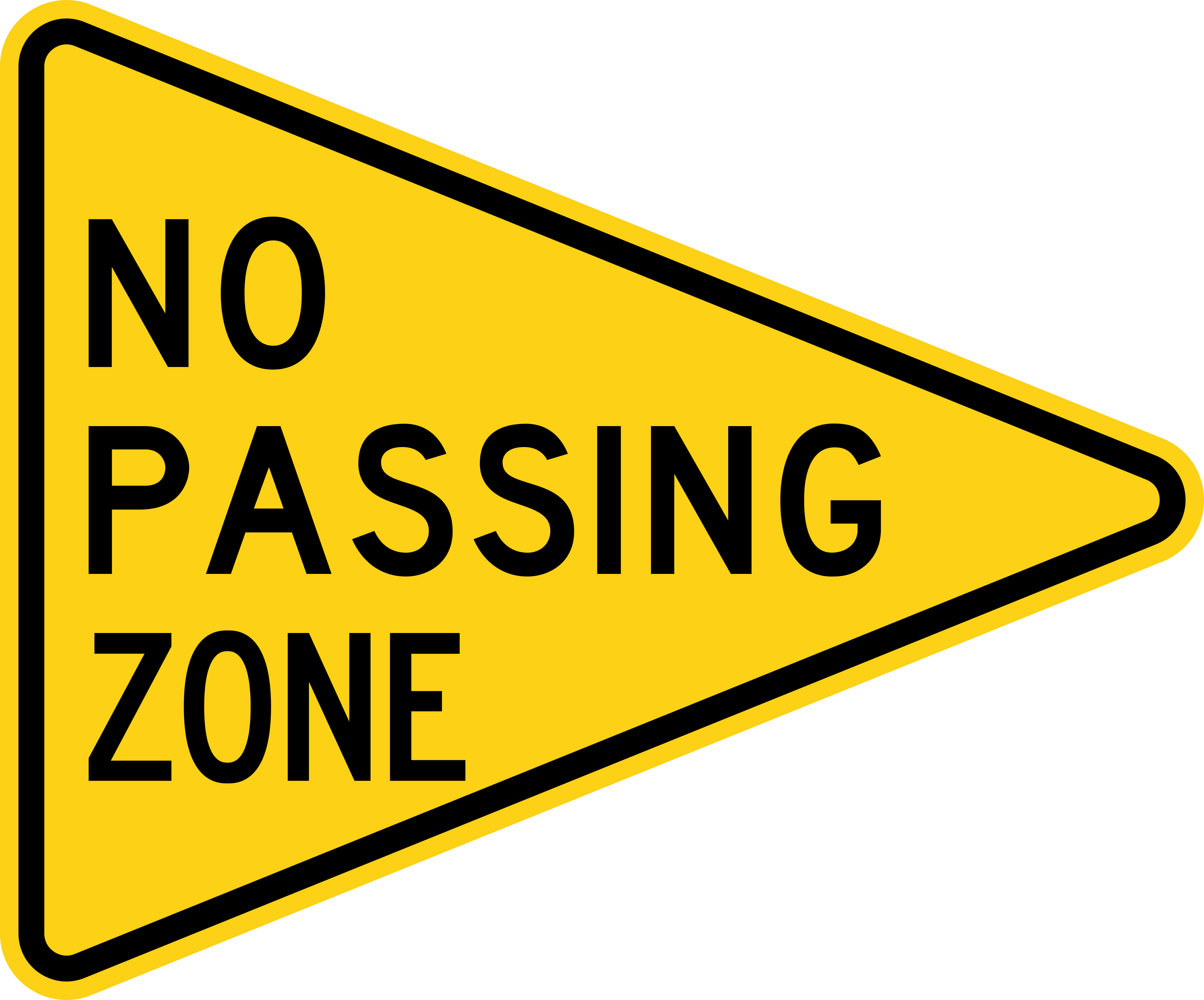
20. What restriction does the pennant-shaped sign mark?
- A shoulder lane reserved for bicycles
- Passing is required before the next intersection
- The end of every speed restriction
- A no-passing zone begins or is ahead
Show answer
A no-passing zone begins or is ahead. The sideways triangle, or pennant, is used to indicate a no-passing zone. Treat it as a warning that sight distance or roadway conditions make overtaking unsafe or prohibited, and wait until passing is legal and visible. The choice requiring a pass reverses the instruction. Do not use the shoulder as an alternative passing path. Stay behind the vehicle ahead, watch centerline markings, and reassess only after the restriction ends.
Study this in the handbook: Sign shapes and colors
QualitySpace is expanding to Louisiana
We are a California-based independent insurance brokerage working on licensing in more states. We cannot help with Louisiana insurance yet. Leave your email and we will let you know when we can.
Every question is written from the official Louisiana Class D and E Driver's Guide. Need paper? Printable LA practice test with answer key.
Last verified 2026-10-05. How we check every question · Study all 218 as flashcards
Frequently asked questions
How many questions are on this Louisiana practice test?
This fixed set has 20 questions. It is test 6 of 10 from the 218 question Louisiana bank. The real LA exam asks 40 questions and you need 32 correct.
What is the passing score for the real Louisiana test?
80% minimum score is required That figure comes from the official Louisiana source cited on the DMV facts page.
How does this fixed test relate to the full Louisiana bank?
Each numbered test is a fixed set of questions in a fixed order, so you can retake the same test later and compare. Every test mixes road signs and the other topics in about the same proportion as the full bank. Tests 1 to 10 together cover 200 of the 218 questions in the Louisiana bank, each once. The full practice page mixes the whole bank at random.
Last verified 2026-10-05. See the Louisiana DMV facts page for sourced state details.
Return to the full Louisiana practice test · Study road signs