
Test 19 of 25 · 20 questions · Free 2026
LA Permit Practice Test 19
Jump to the test ↓A fixed 20 question set from the Louisiana bank with answers and plain English explanations. The real LA exam is 40 questions, 80 percent to pass; take the full length version on the main practice page.
Question 1 of 20 · 0 right so far
All 20 questions in test 19
Every question below comes from the Louisiana question bank on this page. Open a question to see the correct answer and the explanation. Nothing here is hidden behind a signup.
1. On a two-lane road, you see a yellow sign shaped like a triangle with its point facing sideways. What should you not start doing?
- Turning left into driveways
- Driving faster than 45 mph
- Using your high beams
- Passing other vehicles
Show answer
Passing other vehicles. Sign shapes carry meaning before you can read the words. Louisiana's guide says the triangle-shaped sign with its point sideways is used to indicate no-passing zones. When you see this pennant on a two-lane road, do not start a pass. It does not ban left turns, set a speed limit or control headlight use. Stay in your lane until the no-passing zone ends, which is marked by a Pass With Care sign.
Study this in the handbook: Sign shapes and colors
2. It is late at night with no other traffic in sight, and a red arrow faces your left-turn lane. What should you do?
- Turn left after a complete stop
- Turn once the cross street's light is red
- Turn after waiting one full minute
- Wait until the green arrow comes back
Show answer
Wait until the green arrow comes back. Under a red arrow you must stop, and you may not go in the arrow's direction until the green arrow returns. Louisiana's guide makes no exception for empty roads or late hours. That is the key difference from a steady red ball, which can allow a right turn after stopping where no sign prohibits it. Seeing cross traffic get a red, or waiting what feels like a long time, does not release the arrow.
Study this in the handbook: Traffic lights and arrows
3. What is Louisiana's rule on wearing headphones while driving?
- Headphones in both ears are prohibited; one ear alone is allowed
- Headphones are allowed in both ears at low volume
- Any headphone use is prohibited
- Only hearing aids are prohibited
Show answer
Headphones in both ears are prohibited; one ear alone is allowed. Wearing headphones, a headset, or any listening device other than a hearing aid in both ears is prohibited in Louisiana. Wearing a headphone in one ear alone is allowed. Low volume does not make two-ear use legal. A total ban is stricter than the law, since one ear is allowed. Hearing aids are the listed exception, not a prohibited device. Keeping one ear free lets you hear sirens, horns and trains.
Study this in the handbook: Bicycles, motorcycles and big trucks
4. You are in the left lane of a four lane street. The car beside you in the right lane stops at a crosswalk with no signal. What should you do?
- Slow down and be ready to stop
- Keep going at the same speed in your lane
- Move into the right lane and go around it
- Honk to warn anyone who may be crossing
Show answer
Slow down and be ready to stop. The guide says not to pass a vehicle stopped at a crosswalk. A car stopped there may be waiting for a pedestrian you cannot see, so approach with caution and be prepared to stop for anyone walking in a marked or unmarked crosswalk. Coming too close to a pedestrian can also block the next driver's view. Continuing at speed or swinging around the stopped car puts you in the path of someone crossing in front of it.
Study this in the handbook: Lane changes, passing and wet roads
5. On a two-lane road, a DO NOT PASS sign stands before a hill crest. The road ahead looks empty as far as you can see. May you pass?
- Yes, if no oncoming car is visible
- Yes, if you finish before the hilltop
- No, the zone covers hazards you cannot see
- Only if the car ahead is under the limit
Show answer
No, the zone covers hazards you cannot see. A Do Not Pass sign shows where you cannot pass another vehicle. Louisiana's guide explains that passing areas are based on how far you can see ahead, and they account for unseen hazards such as hills, curves, intersections, driveways and places where a vehicle or pedestrian may enter the road. An empty view before a hill crest does not show what is over the top. The sign applies whether or not you see traffic, so stay in your lane until the zone ends.
Study this in the handbook: Warning, regulatory, guide and work zone signs
6. You reach this sign at a railroad crossing with no gates or lights, and a train is coming. What must you do?
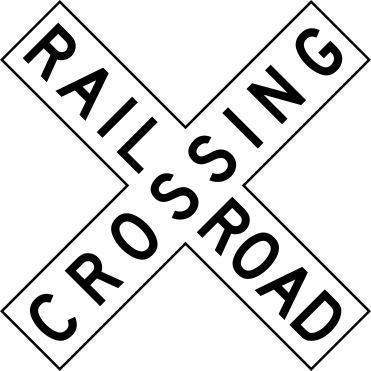
- Cross quickly if you can beat the train
- Slow down only if the train sounds its horn
- Yield to the train and stop if needed
- Stop only when a flag person is present
Show answer
Yield to the train and stop if needed. The white crossbuck is required at all public railroad crossings. Louisiana's guide says it means you must yield the right of way to a train, and it treats the crossbuck as a regulatory sign with the same meaning as a yield sign. At a crossing with no gates or lights, the crossbuck is the control, so slow down, look for trains and stop if one is approaching. Trying to beat the train, or waiting to hear a horn, ignores that duty.
7. A driver uses a hands-free phone so both hands stay on the wheel. What risk remains?
- None, since hands-free calls are safe
- Only a brief visual glance while dialing
- Only the loss of one hand for steering
- Mental distraction from the conversation
Show answer
Mental distraction from the conversation. Cognitive distraction is real. A hands-free device may keep your hands on the wheel but not necessarily your mind on your driving. The guide notes that it is not just where your hands are but where your head is, and that laws banning only handheld use likely will not reduce crashes much, because the mental distraction of the conversation remains. If a call must be made, pull over to a safe location or have a passenger make it.
8. At night an oncoming driver will not dim the high beams, and the glare is blinding you. What should you do?
- Look to the right edge of the road and slow down
- Stare at the oncoming lights to judge them
- Flash your high beams until they dim
- Speed up to get past the glare sooner
Show answer
Look to the right edge of the road and slow down. Glare from oncoming headlights can cut your vision to near zero. If a driver refuses to dim, look toward the right edge of the road and use it as a guide, and slow down until the car has passed. Looking straight into the lights makes the blindness worse, and speeding up means you travel farther while you cannot see. Use your own low beams when approaching other cars so you do not blind them.
Study this in the handbook: Night driving, pedestrians and phones
9. Two solid white lines run side by side between two lanes going the same direction. What does this marking mean?
- You may cross them to pass slower traffic
- Crossing them is prohibited
- You may cross them with great care
- They mark a lane reserved for buses
Show answer
Crossing them is prohibited. White lines separate lanes of traffic moving in the same direction. Double solid white lines between two such lanes mean crossing is prohibited, and Louisiana's guide notes they are most commonly seen on interstates. A single solid white line may be crossed with great care, but the double line removes that option. Plan lane changes and exits before you reach the double lines, and wait for a dashed section if you need to move over.
Study this in the handbook: Center lines, lane lines and crosswalks
10. A school bus stops with red lights flashing on the other side of a four lane road that has no median or barrier. What must you do?
- Stop, because the road is not separated by a barrier
- Keep going, since four lanes count as a divided road
- Slow down and pass in the lane farthest from the bus
- Stop only if children are crossing toward your side
Show answer
Stop, because the road is not separated by a barrier. Lane count does not divide a road. When a four lane roadway has no barrier, drivers going the other way must stop for a school bus with red lights flashing. You are excused only when a ditch, grassy median, concrete barrier or other obstacle keeps traffic from driving across, or on a four or five lane road split by a dedicated two way left turn lane. Using the far lane does not meet the rule, and you do not wait to see whether children head your way.
Study this in the handbook: School buses, turns and signals
11. A highway is split into two roadways by a grass median. Where may you drive across the median?
- Anywhere the grass is flat and dry
- At any gap wide enough for a U-turn
- Anywhere no traffic is coming either way
- Only at an approved crossover
Show answer
Only at an approved crossover. On a highway divided into two roadways by a median or barrier, you must not drive across it except at an approved crossover. Flat ground, a wide gap or an empty road does not count as an approved crossing point. If you need to change direction, continue to the next approved crossover or exit. The same section says you may not cross the painted continuous centerline of a multiple lane highway except to make a turn.
Study this in the handbook: Speed laws
12. You are parking and walking away from your car in Louisiana. What must you do before leaving it?
- Stop the motor, remove the key and set the brake
- Turn on the flashers and leave the key inside
- Leave the motor idling with the doors locked
- Shift into neutral and leave the parking brake off
Show answer
Stop the motor, remove the key and set the brake. A vehicle left unattended must be secured. Stop the motor, take the key out, lock the ignition and set the brake. A running engine or a key left in the car invites theft and rolling, and flashers do not secure anything. Neutral lets the car move if it is bumped. Getting out on the street side is also risky, so look carefully for passing vehicles, especially bicycles, before you open the door.
Study this in the handbook: Parking rules and painted curbs
13. What does Louisiana law say about using a wireless phone while driving?
- It is allowed for drivers 18 and older
- It is banned unless the device is hands free
- It is allowed while stopped at a red light
- It is banned only inside school zones
Show answer
It is banned unless the device is hands free. Louisiana law prohibits anyone from using any type of wireless communication device while operating a motor vehicle unless it is hands free. It also bans writing, sending or reading a text message and using social networking sites while driving, regardless of age. A red light stop is still operating the vehicle. Even with hands free use, the guide says a phone can still take your mind off driving, so keep calls short or let voice mail answer.
Study this in the handbook: Night driving, pedestrians and phones
14. When making a left turn, what mistake does the Louisiana guide tell you to avoid?
- Turning wide into the far lane of the new road
- Cutting the corner so you end up in front of traffic
- Braking before you begin to make the turn
- Keeping your wheels straight while you wait
Show answer
Cutting the corner so you end up in front of traffic. The guide's left turn steps are to prepare early, signal and move into the proper lane at least 100 feet ahead, keep your wheels straight while waiting, brake before you begin the turn and use the proper lanes. It also warns against cutting the corner so sharply that your car ends up in front of someone approaching from the left. Braking first and keeping straight wheels are steps the guide recommends, not mistakes.
Study this in the handbook: School buses, turns and signals
15. Your friend has had four normal drinks at dinner. Using the guide's rule of thumb, how long should she wait before driving?
- About one hour
- About two hours
- Four hours or more
- Until she feels sober
Show answer
Four hours or more. The body takes about an hour to get rid of one normal drink from the circulatory system. Four normal drinks therefore call for waiting four hours or more before driving. Feeling sober is not a reliable test, because alcohol reduces the ability to judge one's own condition, and coffee, exercise or a cold shower do not speed the process. If the wait is not possible, someone who has not been drinking should drive.
Study this in the handbook: Alcohol and Louisiana's BAC limits
16. A slow tractor ahead of you on a rural highway swings toward the left side of the road. What might the operator be about to do?
- Turn left into a field
- Turn right after swinging wide
- Let you pass on the right
- Park on the left shoulder
Show answer
Turn right after swinging wide. Farm machinery usually has no turn signals, and it can be wide enough to take up more than one lane. To make a right turn, the operator may pull wide to the left first and then turn right. These machines usually travel at less than 25 mph. Pass with caution only when it is safe, and remember that the operator cannot hear vehicles approaching from behind.
Study this in the handbook: Interstate and rural road driving
17. A school crossing guard signals you to stop, but your traffic light is green. What must you do?
- Go, because the green light controls the intersection
- Stop and follow the crossing guard's direction
- Honk so the guard sees that your light is green
- Slow down, but go on if no child is in your lane
Show answer
Stop and follow the crossing guard's direction. Traffic control is not limited to lights and signs. Louisiana's guide says law enforcement officers, highway personnel and school crossing guards can also direct traffic, and you must obey their directions. When a crossing guard signals you to stop, that instruction comes first, even while your signal shows green. A green light only lets you go when the way is clear, and a guard stopping traffic means it is not clear. Honking at the guard or easing past ignores a direction you are required to follow. Wait until the guard signals you to move.
Study this in the handbook: Sign shapes and colors
18. Your car is sinking in water and you must break glass to escape. Which glass should you try to break?
- The front windshield, since it is largest
- The rear window behind the back seat
- Any glass, since all car glass shatters
- A side window, not the windshield
Show answer
A side window, not the windshield. If you cannot simply roll a window down, the guide says to kick out a side window. Do not try to break or kick out the windshield, because windshields are now made of glass that does not shatter. Keep your shoes on in case you need to kick, and take off heavy clothing that could make you sink. A vehicle floats only briefly, so act right away rather than waiting for help to arrive.
Study this in the handbook: Stuck pedals, fires, floods and crashes
19. The light turns yellow while you are still well back from the intersection and can stop easily. What should you do?
- Slow down and stop before the stop bar
- Speed up to clear it before it turns red
- Keep your speed; yellow means proceed
- Stop past the stop bar, in the crosswalk
Show answer
Slow down and stop before the stop bar. A steady yellow light warns that the signal is about to turn red. Louisiana's guide says to slow down and come to a complete stop if you can do so before the stop bar. When you are still well back from the intersection, you can stop easily, so that is what the rule expects. Speeding up to beat the red is the wrong reaction, and stopping inside the crosswalk blocks people on foot. Continuing is for drivers already in the intersection when the yellow appears.
Study this in the handbook: Traffic lights and arrows
20. You come up behind a horse-drawn buggy moving at walking pace on a rural Louisiana road, and the road ahead is clear. What should you avoid as you go around it?
- Reducing your speed as you approach
- Watching for a left turn into a field
- Sounding the horn or revving the engine
- Leaving extra space when you pull back in
Show answer
Sounding the horn or revving the engine. Horses can panic at sudden noise. Louisiana's guide says to pass an animal drawn vehicle with caution and without using the horn or revving the engine, because a frightened horse can cause a crash. Slowing as you approach is sensible, since these vehicles usually travel only 5 to 8 miles per hour. The guide also tells you to expect left turns into fields and driveways, and a driver pulling a large load may not see you behind, so watching for a turn and leaving room are good habits.
Study this in the handbook: Interstate and rural road driving
Every question is written from the official Louisiana Class D and E Driver's Guide. Need paper? Printable LA practice test with answer key.
Last verified 2026-10-05. How we check every question · Study all 500 as flashcards
Frequently asked questions
How many questions are on this Louisiana practice test?
This fixed set has 20 questions. It is test 19 of 25 from the 500 question Louisiana bank. The real LA exam asks 40 questions and you need 32 correct.
What is the passing score for the real Louisiana test?
80% minimum score is required That figure comes from the official Louisiana source cited on the DMV facts page.
How does this fixed test relate to the full Louisiana bank?
Each numbered test is a fixed set of questions in a fixed order, so you can retake the same test later and compare. Every test mixes road signs and the other topics in about the same proportion as the full bank. Tests 1 to 25 together cover every question in the Louisiana bank once. The full practice page mixes the whole bank at random.
Last verified 2026-10-05. See the Louisiana DMV facts page for sourced state details.
Return to the full Louisiana practice test · Study road signs