
Test 23 of 25 · 20 questions · Free 2026
LA Permit Practice Test 23
Jump to the test ↓A fixed 20 question set from the Louisiana bank with answers and plain English explanations. The real LA exam is 40 questions, 80 percent to pass; take the full length version on the main practice page.
Question 1 of 20 · 0 right so far
All 20 questions in test 23
Every question below comes from the Louisiana question bank on this page. Open a question to see the correct answer and the explanation. Nothing here is hidden behind a signup.
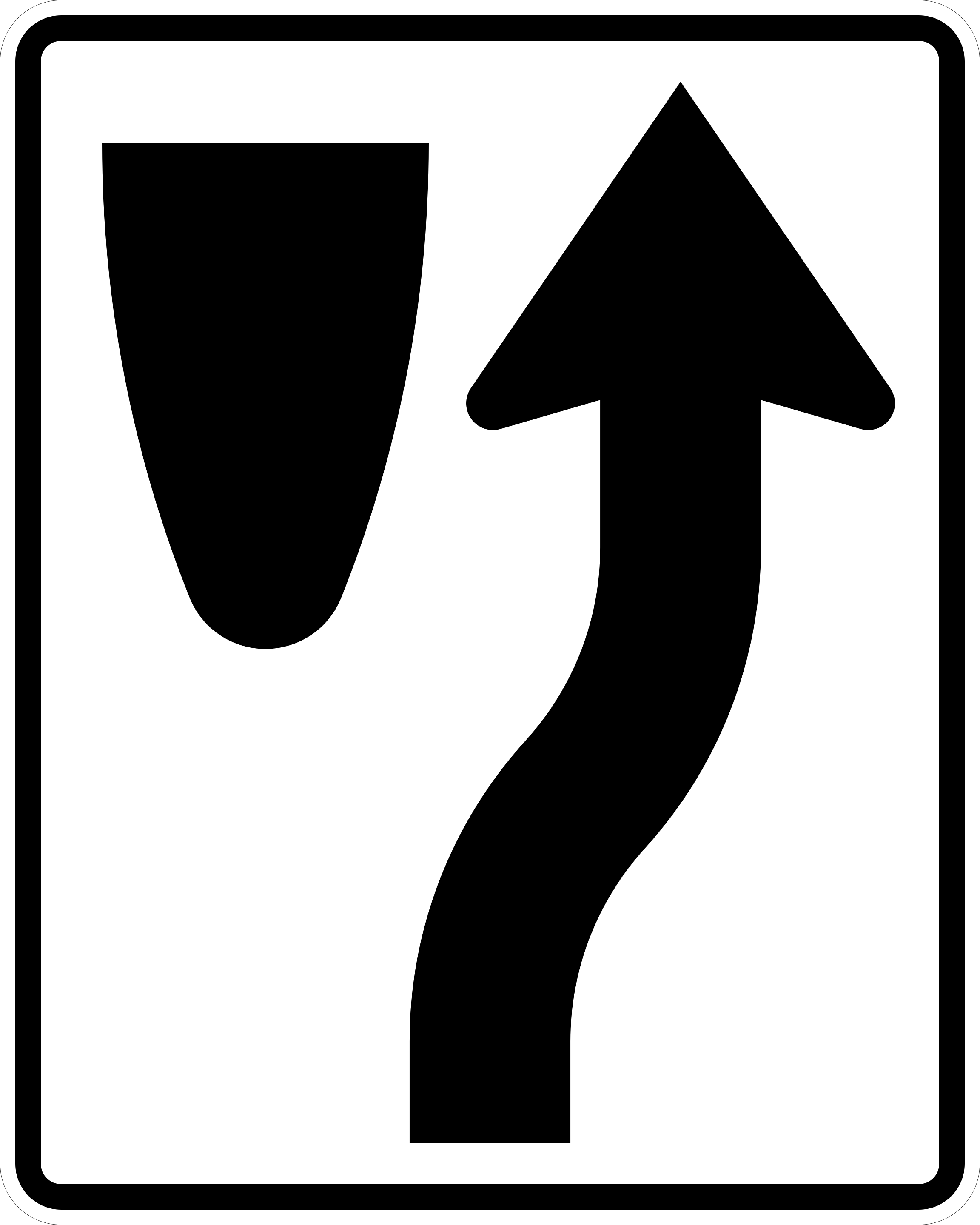
1. A raised median begins just ahead, and this sign is posted at its tip. What does it tell you to do?
- Pass the median on either side
- Merge to the left of the median
- Stop before reaching the median
- Stay to the right of the median
Show answer
Stay to the right of the median. Keep Right signs tell traffic to stay to the right of a roadway feature or obstruction, such as a median, island or lane divider. Louisiana's guide lists them among regulatory signs, so the instruction must be obeyed. Going to the left of a median would put you on the side meant for traffic moving the other way, and the sign does not require a stop. Stay to the right of the feature and continue at a safe speed.
Study this in the handbook: Warning, regulatory, guide and work zone signs
2. A driver behind you keeps honking, tailgating and swerving toward your lane on purpose. What should you do?
- Avoid eye contact and give the driver room
- Tap your brakes to warn the driver off
- Speed up and hold your position in the lane
- Pull over and talk it out at the roadside
Show answer
Avoid eye contact and give the driver room. With an aggressive driver, the goal is to get out of the way without making things worse. Avoid eye contact, steer clear and give the driver plenty of room. Do not challenge the driver by speeding up or trying to hold your position, and do not tap the brakes or use the horn to punish them. Never stop to settle it at the side of the road. Put as much distance as you can between yourself and that driver.
Study this in the handbook: Defensive driving, fatigue and aggressive drivers
3. You are walking and are halfway across the street when the DON'T WALK signal starts flashing. What should you do?
- Keep going to the nearest sidewalk or island
- Go back to the curb you started from
- Stop where you are until the WALK signal returns
- Wait in the crosswalk for cars to stop
Show answer
Keep going to the nearest sidewalk or island. A flashing DON'T WALK signal means people at the curb may not start crossing, but anyone already in the street may continue to the nearest sidewalk, traffic island or safety zone. Since you have already started, keep moving to safety. Turning back or stopping in the roadway leaves you in traffic longer. Drivers still need to watch for pedestrians finishing their crossing, because pedestrians in a crosswalk have the right of way.
Study this in the handbook: Lane changes, passing and wet roads
4. On your way home after a storm, water covers a low stretch of road ahead. A pickup truck just made it through. What should you do?
- Follow the truck's path at a slow speed
- Turn around and take another route
- Drive through quickly so you do not stall
- Cross if you can still see the center line
Show answer
Turn around and take another route. When you see a flooded roadway ahead, the guide tells you to turn around and find another way to your destination. Another vehicle getting through proves nothing about your car or about the road under the water, which may be washed out. About six inches of water reaches the bottom of most passenger cars and can cause loss of control or stalling, and two feet of rushing water can carry most vehicles away. If no other route exists, go to higher ground and wait.
Study this in the handbook: Stuck pedals, fires, floods and crashes
5. An angry driver keeps following you after you tried to get away. What should you do?
- Drive to a police station or busy public place
- Pull onto the shoulder and confront them
- Drive home quickly and lock the doors
- Slow down suddenly to make them back off
Show answer
Drive to a police station or busy public place. If an aggressive driver keeps after you, do not stop to settle it at the side of the road. Drive to a police station or a public place where witnesses are around, because most people do not want to cause trouble when others can see them. Above all, do not drive home if someone is following you. Braking suddenly is itself an action linked to road rage. Contact law enforcement as soon as you can.
Study this in the handbook: Defensive driving, fatigue and aggressive drivers
6. You pass a Flagger Ahead sign in a work zone, but no flag person is in sight yet. What should you do?
- Resume normal speed until you see one
- Keep slowing and be ready to stop
- Change lanes to avoid the flag person
- Stop at the sign and wait there
Show answer
Keep slowing and be ready to stop. The Flagger Ahead sign means a flag person is ahead to control traffic, and Louisiana's guide says to slow down and be prepared to stop. The flag person may be past a curve or behind equipment, so not seeing one yet is no reason to speed back up. Changing lanes to get around the flag person defeats the purpose, and stopping at the sign itself is not required. Keep your speed down until the flag person directs you.
Study this in the handbook: Warning, regulatory, guide and work zone signs
7. A passenger says the belt is not needed because the car has front and side air bags. What is true?
- Air bags replace belts in newer cars
- Belts are needed only in the back seat
- The belt is primary; air bags only add to it
- Belts are needed only on the highway
Show answer
The belt is primary; air bags only add to it. Air bags are a supplementary restraint system. Your safety belt is your primary restraint, and you get the best protection from the air bags only when the belt is worn properly. Air bags reduce head and upper body injuries from hitting the interior, but they do not replace belts, and they do not go off when you are rear ended. Louisiana law requires belts in both front and back seats on every kind of road.
8. Fog limits how far you can see on a two lane road. How far ahead must you be able to see before you try to pass?
- At least 500 feet
- At least 100 feet
- At least two miles
- At least a quarter mile
Show answer
At least a quarter mile. Before you pass, the guide says to look carefully behind you, since someone may be passing you, and to make sure you can see at least a quarter mile ahead. If fog or anything else blocks that view, stay in your lane. The best conditions for passing are a clear day on a long, flat, open stretch of road. A gap of 100 or 500 feet of visible road is much less than a quarter mile, so a short clear patch in fog is not enough room to pass.
Study this in the handbook: School buses, turns and signals
9. How far behind the vehicle ahead should you be when you begin to pull out to pass?
- Right on its rear bumper
- Half a second behind it
- At least two seconds behind it
- At least eight seconds behind it
Show answer
At least two seconds behind it. Begin a pass from at least two seconds behind the vehicle you are passing, so you do not strike its rear corner as you move over. Pulling up close first is a mistake, because your view ahead is blocked, especially behind a truck or bus. After you signal, steer smoothly into the passing lane, keep checking the road ahead and your mirrors, and do not drift toward the other vehicle. A gap of half a second is much too close.
10. Snow is falling and the posted limit is 55 mph. What speed should you drive?
- Exactly 55 mph, since the sign allows it
- Any speed up to 65 mph on an interstate
- A lower speed that fits the snowy road
- 55 mph, as long as your low beams are on
Show answer
A lower speed that fits the snowy road. Speed limits are posted for ideal conditions. When the road is wet or icy, when you cannot see well, or when traffic is heavy, you must slow down so you can stop and steer as needed. The guide uses snow as its example: 55 mph in a snow storm is not acceptable even if the sign allows 55. You may be cited for going too fast for conditions. Headlights help others see you but do not make the posted speed safe.
Study this in the handbook: Speed laws
11. What does a yellow center line tell you about the traffic on the other side of it?
- It moves in the same direction
- It is turning left only
- It is moving more slowly than you are
- It moves in the opposite direction
Show answer
It moves in the opposite direction. Line color tells you which way traffic flows. Louisiana's guide says yellow center lines separate traffic moving in opposite directions, while white lines separate lanes of traffic moving in the same direction. So traffic on the far side of a yellow center line is coming toward you. The pattern of the yellow line, whether broken, solid or double, then tells you if you may cross it to pass or only to make a turn.
Study this in the handbook: Traffic lights and arrows
12. A man crosses in the middle of the block, away from any crosswalk, right in front of your car. What must you do?
- Keep going, since he is not in a crosswalk
- Stop for him even though jaywalking is illegal
- Sound your horn and keep the same speed
- Stop only if the person is a child or an older adult
Show answer
Stop for him even though jaywalking is illegal. The guide says you must yield to pedestrians at all times. Even when someone is crossing outside a crosswalk where they should not be, which is illegal jaywalking, you must stop for them. The pedestrian breaking a rule does not give you the right to keep going. Honking can startle people and does not replace stopping. The guide also says many pedestrians do not use safe crossing practices, so slow down whenever people are walking near the road.
Study this in the handbook: Lane changes, passing and wet roads
13. What does the guide say about wearing sunglasses or colored glasses while driving at night?
- Wear them to cut glare from high beams
- They are fine if the lenses are light
- Avoid them; they slow how fast your eyes adjust
- Wear them only on dark rural roads
Show answer
Avoid them; they slow how fast your eyes adjust. The guide says not to wear sunglasses or colored glasses when driving at night or on dark days. Colored lenses make your eyes adjust even more slowly and can reduce your vision, which is the opposite of what you need when headlights already limit how far you can see. To handle glare instead, avoid looking directly into oncoming headlights, and keep your windshield clean, which makes a big difference to visibility.
14. You are stopped behind a school bus. Its red lights turn off, but the bus has not started moving. What should you do?
- Pass the bus now that the lights are off
- Go once the stop arm folds back in
- Wait for the bus to move, then scan
- Honk so the driver knows you are there
Show answer
Wait for the bus to move, then scan. After stopping for a school bus, the guide says to wait for the bus to move and to scan before you start driving again. The law requires this whether you are meeting the bus or traveling behind it. The lights going off is not the signal to go; wait until the bus actually moves and check around you before driving. Honking does not change when you may go.
Study this in the handbook: School buses, turns and signals
15. You are on high beams on a dark highway and an oncoming car is now 400 feet away. What does the law require?
- Keep high beams on until the car is 200 feet away
- Switch to low beams, since it is within 500 feet
- Turn off your headlights and use parking lights
- Flash your high beams once and keep them on
Show answer
Switch to low beams, since it is within 500 feet. Louisiana law requires low beams when you are within 500 feet of an oncoming vehicle. At 400 feet you are already inside that distance, so you must dim now. The 200 foot figure is for following another vehicle from behind, not for oncoming traffic. Parking lights alone are never enough at night, because headlights must be on between sunset and sunrise. Dimming early keeps you from blinding the other driver.
Study this in the handbook: Night driving, pedestrians and phones
16. Your car breaks down and you get it safely off the road, out of traffic. What does the guide suggest while you wait for help?
- Wait inside with the doors locked
- Stand behind the car to wave at traffic
- Walk along the interstate for help
- Flag down passing drivers for a ride
Show answer
Wait inside with the doors locked. Once your car is safely out of traffic, the guide says to wait inside with the doors locked and use your cell phone to call for help. If someone stops to help, open the window slightly and ask that person to call for assistance. Do not try to flag down other vehicles, do not stand behind or next to your car, and avoid walking on an interstate, especially in bad weather, unless help is reachable safely on foot.
Study this in the handbook: Stuck pedals, fires, floods and crashes
17. Backing slowly out of an angle parking space, at what point should you stop and look again?
- When you can see past the tops of the cars beside you
- When your rear bumper reaches the travel lane
- After you are fully out of the space
- When the car beside you starts to move
Show answer
When you can see past the tops of the cars beside you. At first the cars beside you block your view of oncoming traffic, so move back slowly. Once you can see past the tops of the cars parked next to you, stop and look again, back and to each side, for other drivers. Before backing out at all, walk around to make sure nothing is blocking the space, and be sure the lane you are backing into is clear.
Study this in the handbook: Parking rules and painted curbs
18. How are crosswalk lines normally painted?
- Two solid yellow lines across the lanes
- One broken white line across the lanes
- A single solid yellow line along the curb
- Two solid white lines across the lanes
Show answer
Two solid white lines across the lanes. Crosswalk lines are normally two solid white lines painted across the traffic lanes, and Louisiana's guide notes that diagonal or longitudinal lines are sometimes added for better visibility. Yellow lines separate traffic moving in opposite directions, so they are not used for crosswalks. When people are in a marked crosswalk they have the right of way, and you must stop for them, so watch for these white lines as you approach intersections and crossings in the middle of a block.
Study this in the handbook: Center lines, lane lines and crosswalks
19. You are driving slowly in heavy fog and worry that faster vehicles behind you may not see you. What does the guide suggest?
- Tap your brakes so they notice your car
- Switch on your high beams to be seen
- Speed up to match the traffic behind
- Stop in your lane until they pass
Show answer
Tap your brakes so they notice your car. Fog and heavy downpours call for slower speeds and low beam headlights. The guide warns that vehicles coming up behind you may be driving too fast and suggests tapping your brakes so those drivers become aware of your vehicle. Be ready for an emergency stop yourself, since red tail lights ahead may belong to a vehicle that is stopped or barely moving. High beams reflect back in fog and make it harder to see.
Study this in the handbook: Interstate and rural road driving
20. A black and white sign reads SPEED LIMIT 45 on a clear, dry day. Traffic around you is going 50. How fast may you legally drive?
- Up to 50, to keep up with traffic
- Up to 45, the maximum posted
- Up to 50, since 5 over is allowed
- Any speed the dry road allows
Show answer
Up to 45, the maximum posted. Speed limit signs are black and white regulatory signs that show the maximum legal speed allowed, or on some roads the minimum speed required. A posted 45 means 45 is the most you may drive, even on a clear, dry day. Louisiana's guide says the maximum should be driven only in ideal conditions, and you must slow further when weather or traffic require it. Keeping up with faster traffic, or adding a few miles per hour, is not allowed by the sign.
Study this in the handbook: Warning, regulatory, guide and work zone signs
Every question is written from the official Louisiana Class D and E Driver's Guide. Need paper? Printable LA practice test with answer key.
Last verified 2026-10-05. How we check every question · Study all 500 as flashcards
Frequently asked questions
How many questions are on this Louisiana practice test?
This fixed set has 20 questions. It is test 23 of 25 from the 500 question Louisiana bank. The real LA exam asks 40 questions and you need 32 correct.
What is the passing score for the real Louisiana test?
80% minimum score is required That figure comes from the official Louisiana source cited on the DMV facts page.
How does this fixed test relate to the full Louisiana bank?
Each numbered test is a fixed set of questions in a fixed order, so you can retake the same test later and compare. Every test mixes road signs and the other topics in about the same proportion as the full bank. Tests 1 to 25 together cover every question in the Louisiana bank once. The full practice page mixes the whole bank at random.
Last verified 2026-10-05. See the Louisiana DMV facts page for sourced state details.
Return to the full Louisiana practice test · Study road signs