
Key points
A frontal impact at 35 mph is one third more violent than one at 30 mph.
Source: Handbook p. 86
“A frontal impact at 35 mph, for example, is one-third more violent than one at 30 mph.”
Louisiana Class D and E Driver's Guide, Handbook p. 86Speed limits are posted for ideal conditions.
Source: Handbook p. 86
“Remember that speed limits are posted for ideal conditions”
Louisiana Class D and E Driver's Guide, Handbook p. 86The General Speed Law: you must not drive faster than is reasonable.
Source: Handbook p. 87
“The General Speed Law is that you must not drive at a speed greater than is reasonable.”
Louisiana Class D and E Driver's Guide, Handbook p. 87Do not drive faster than the posted maximum or slower than the posted minimum.
Source: Handbook p. 87
“You must not drive faster than the posted maximum limit. You must not drive slower than the posted minimum limit.”
Louisiana Class D and E Driver's Guide, Handbook p. 87Slow down on streets near schools and playgrounds and at school crossing signs when children are present.
Source: Handbook p. 87
“On streets near schools and playgrounds and at locations marked with a "school crossing" sign when children are present.”
Louisiana Class D and E Driver's Guide, Handbook p. 87Racing or any speed contest on a public road is unlawful.
Source: Handbook p. 87
“It is unlawful to participate in any race, speed contest or speed exhibition of any public street or road in this state.”
Louisiana Class D and E Driver's Guide, Handbook p. 87The interstate maximum is 70 mph unless otherwise posted.
Source: Handbook p. 100
“Remember that the maximum speed allowed is 70 miles per hour unless otherwise posted.”
Louisiana Class D and E Driver's Guide, Handbook p. 100
Numbers to know
| Number | What it means | Manual |
|---|---|---|
| 35 mph vs 30 mph | a crash at 35 mph is one third more violent | Handbook p. 86 |
| 70 mph | interstate maximum unless otherwise posted | Handbook p. 100 |
Recognize these signs
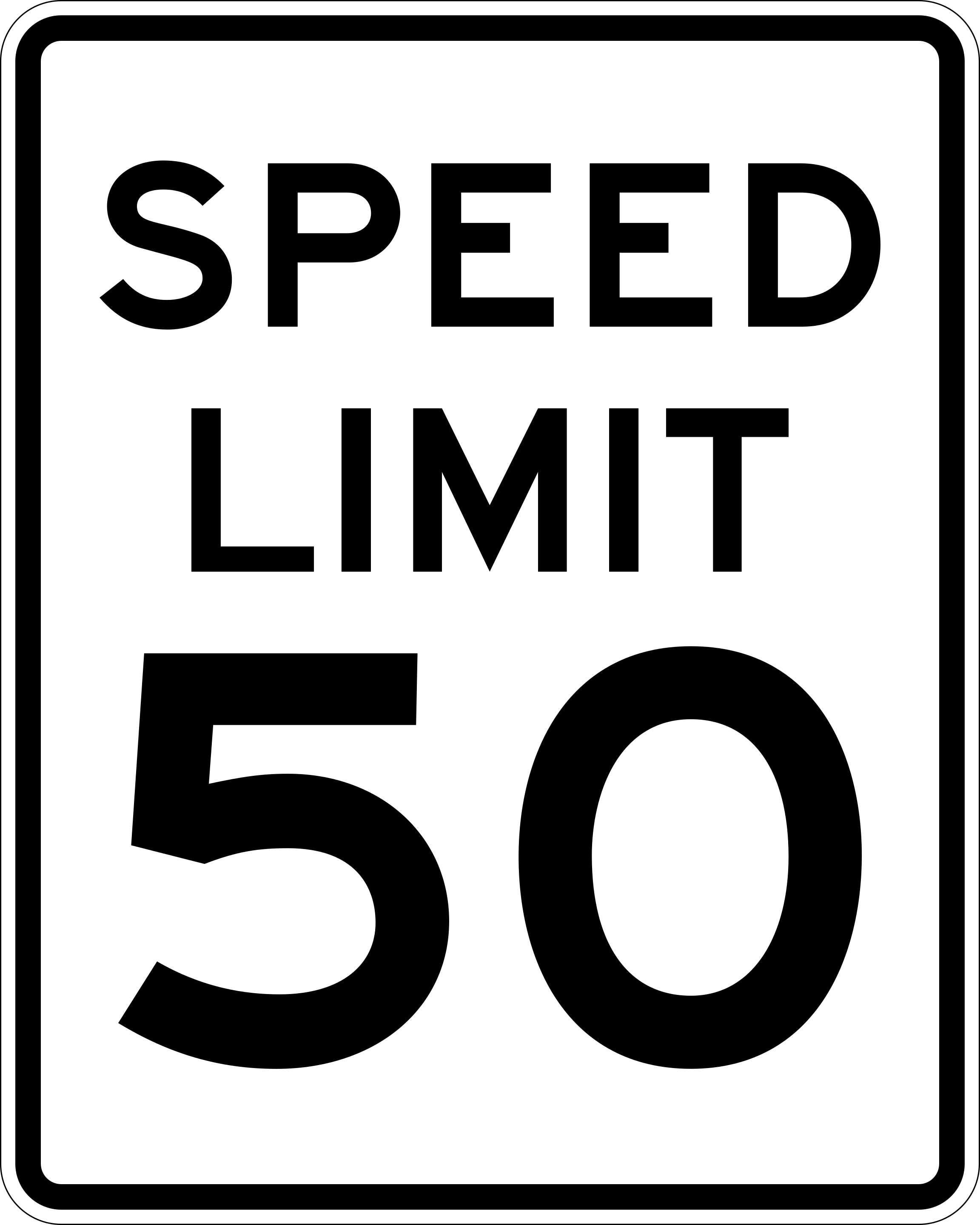
Speed limit
3 questions from the Louisiana practice test
1. What is a driver required to do when a high-speed road has a posted minimum speed?
- Ignore the minimum when traffic is light
- Stay below the minimum to conserve fuel
- Use the shoulder whenever traveling at the minimum
- Travel at least the posted minimum unless conditions require otherwise
Show answer
Travel at least the posted minimum unless conditions require otherwise. Some high-speed roads post a minimum speed, and drivers are legally required to travel at least that fast so they do not become a hazard to other drivers. Light traffic does not erase the sign, and using the shoulder is not the stated solution. Conservation of fuel is not a reason to obstruct normal traffic. The cue is the word minimum: it marks the slowest lawful pace for ordinary conditions, subject to any need to slow for safety.
2. When does a school speed limit sign marked 'flashing' require the reduced speed?
- Only after sunset
- Whenever the school building is occupied
- Only when the sign is flashing
- Only when a crossing guard is present
Show answer
Only when the sign is flashing. A school speed limit when flashing sign indicates that the reduced school-zone speed is required only while the sign is flashing. When the lights are off, the driver follows the roadway's regular speed limit unless another sign says otherwise. Occupancy, darkness, and the presence of a crossing guard are not the conditions stated by this sign. The strongest cue is literal: flashing activates the reduced limit, so check the beacon before applying that lower number.
3. Under Louisiana R.S. 32:61, what maximum applies on an interstate or controlled-access highway unless a different speed zone has been established?
- 70 mph
- 45 mph
- 35 mph
- 55 mph
Show answer
70 mph. Louisiana's statutory maximum is 70 mph on interstate and controlled-access highways, subject to established speed zones. The ordinary highway baseline is 55 mph, while a multilane divided highway with partial or no access control has a 65 mph maximum. The road classification matters: 70 mph is not the default for every road in the state. Follow the applicable signs and reduce speed whenever traffic, weather, or visibility makes the maximum unsafe.
Practice this topic
Lock it in with speed limits questions from the free Louisiana practice test. Every answer comes with a plain English explanation.
Source: the Louisiana Class D and E Driver's Guide, Chapter 6: Traffic Laws and Regulations. This lesson is a plain English summary, not the law itself; where it differs, the manual and the statute govern. Last checked 2026-09-27.