
Key points
You must obey directions from police, highway workers and school crossing guards.
Source: Handbook p. 22
“Traffic control also can be provided by law enforcement, highway personnel or school crossing guards. You must obey directions from these persons.”
Louisiana Class D and E Driver's Guide, Handbook p. 22The octagon is used only for stop signs. Come to a complete stop.
Source: Handbook p. 23
“The octagon shape sign is used exclusively for stop signs. Slow down and come to a complete stop.”
Louisiana Class D and E Driver's Guide, Handbook p. 23The diamond is for warnings. An orange diamond marks a construction zone.
Source: Handbook p. 23
“The diamond shaped sign is used for warning and approaching hazard signs. A diamond shaped sign that is orange in color is used in construction zones.”
Louisiana Class D and E Driver's Guide, Handbook p. 23The downward pointing triangle is used only for yield signs.
Source: Handbook p. 23
“The triangle shaped sign with the point down is used exclusively for yield signs.”
Louisiana Class D and E Driver's Guide, Handbook p. 23The sideways pointing triangle marks no passing zones.
Source: Handbook p. 23
“The triangle shaped sign with the point sideways is used to indicate no passing zones.”
Louisiana Class D and E Driver's Guide, Handbook p. 23The white crossbuck at a railroad crossing has the same meaning as a yield sign.
Source: Handbook p. 23
“The white cross buck is a regulatory sign has the same meaning as a yield sign.”
Louisiana Class D and E Driver's Guide, Handbook p. 23Red means stop or do not, and is used for stop, yield, do not enter and wrong way signs.
Source: Handbook p. 24
“Red Used for Stop and Yield signs, DO NOT ENTER and WRONG WAY signs Means "Stop" or "Do Not" anytime you see this color”
Louisiana Class D and E Driver's Guide, Handbook p. 24Fluorescent yellow green is the background for pedestrian, bicycle and school warning signs.
Source: Handbook p. 24
“Florescent Yellow-Green used as background color for pedestrian, bicycle and school warning signs.”
Louisiana Class D and E Driver's Guide, Handbook p. 24
Recognize these signs
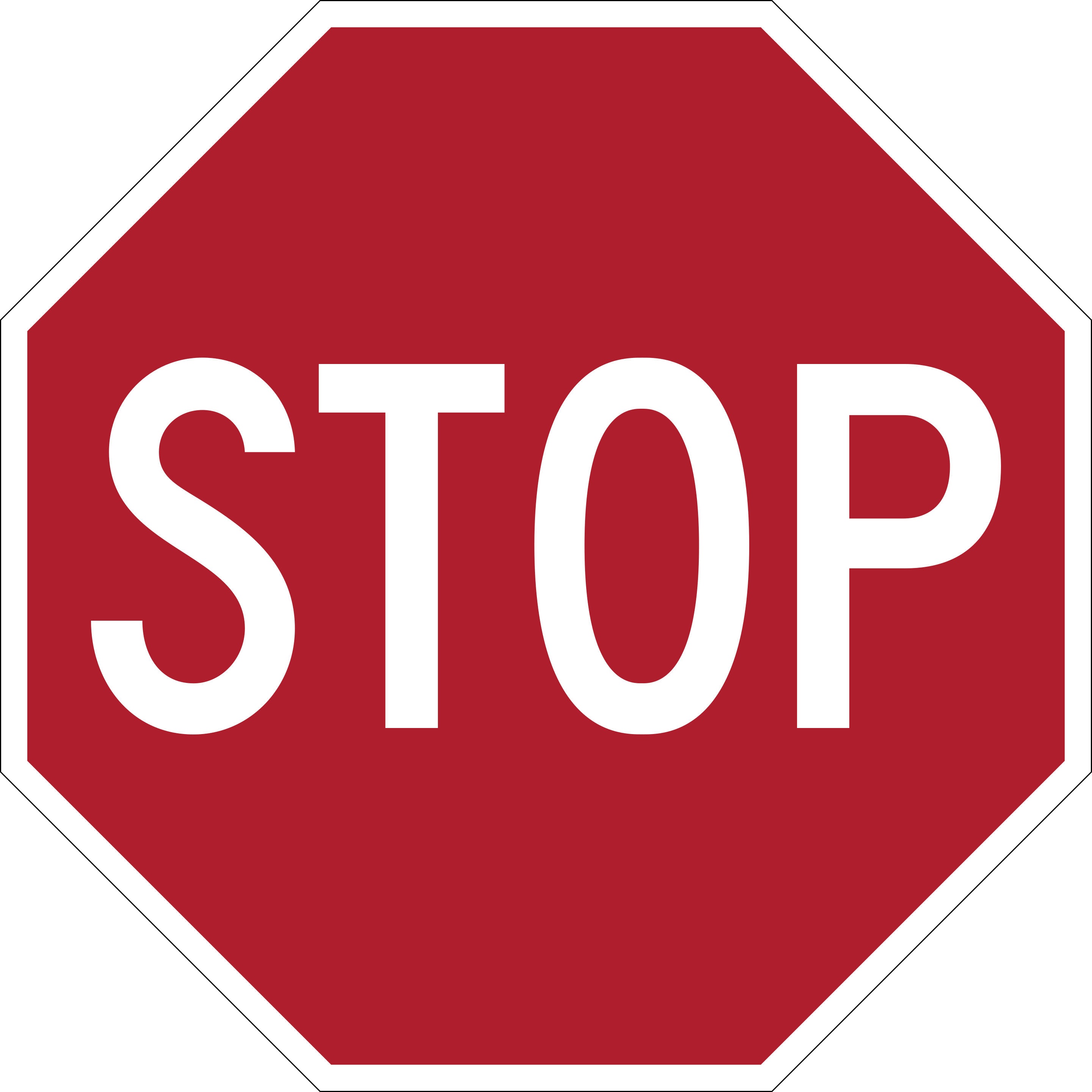
Stop 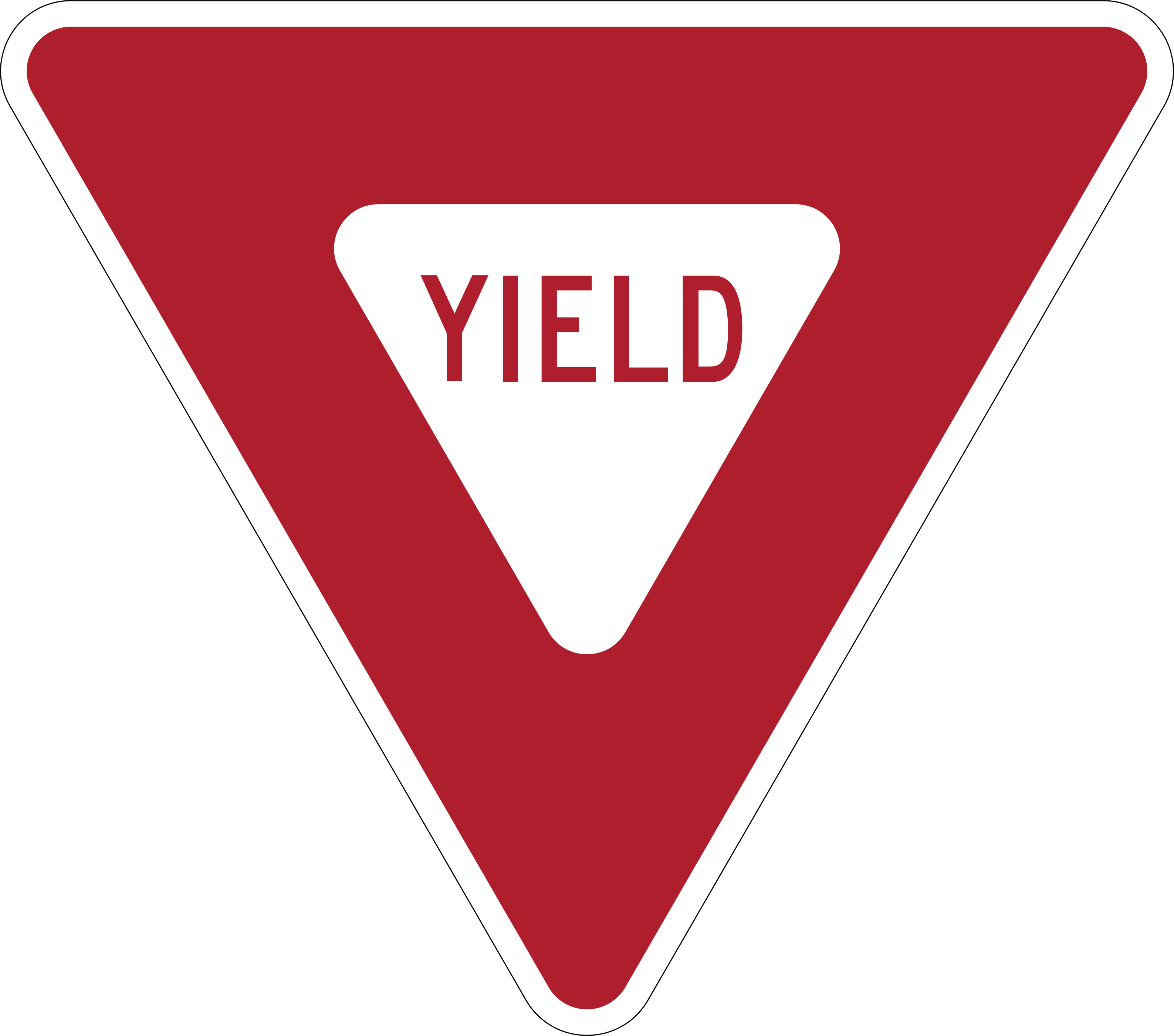
Yield 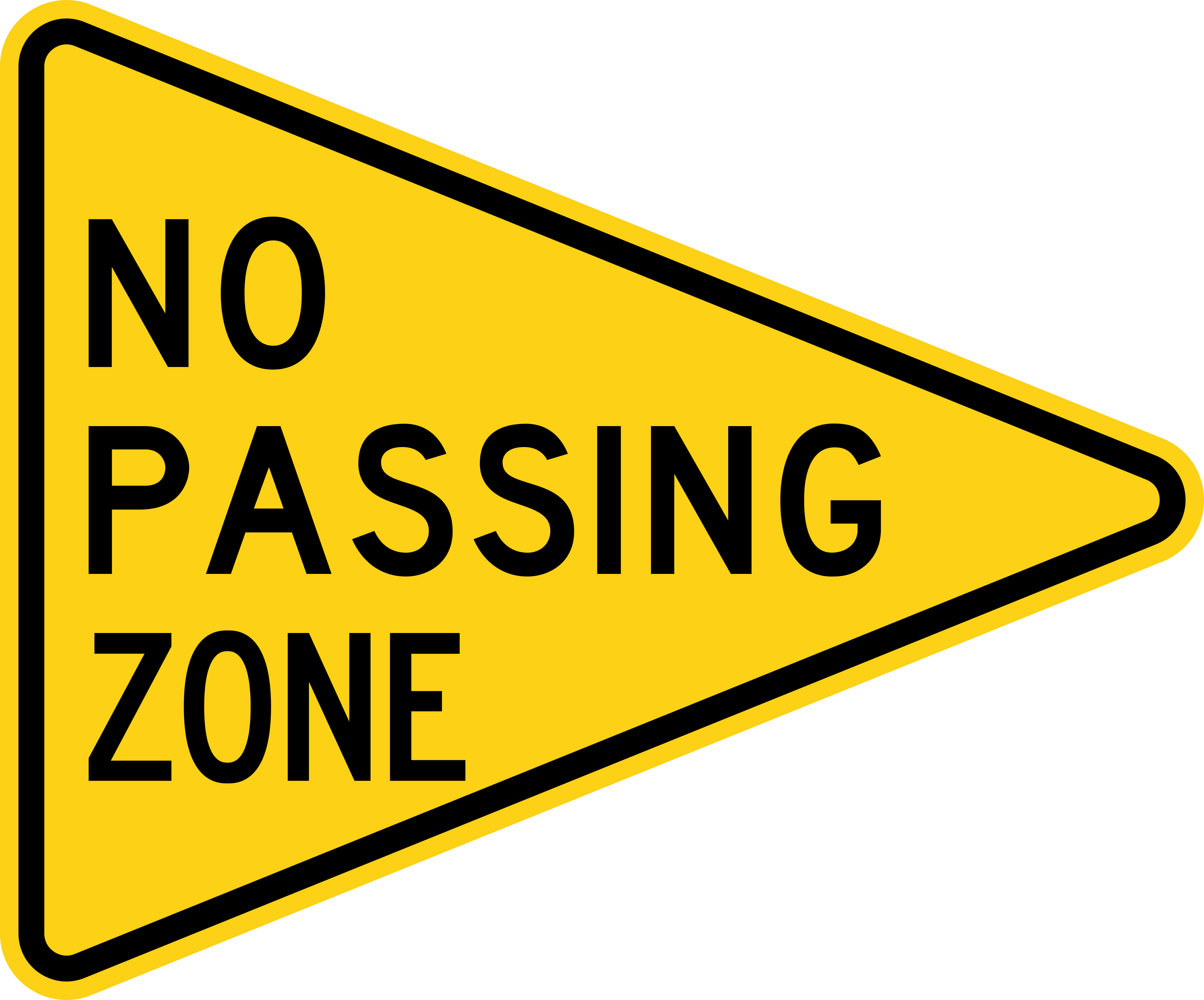
No passing zone 
Railroad advance warning 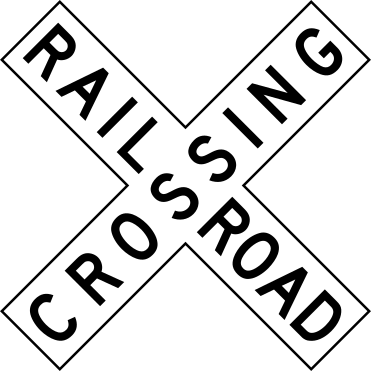
Railroad crossbuck
3 questions from the Louisiana practice test
1. What does the octagon shape tell a driver about a traffic sign?
- It identifies a no-passing zone
- It marks a railroad advance warning
- It is used exclusively for stop signs
- It marks a guide sign to a service
Show answer
It is used exclusively for stop signs. The octagon is reserved for stop signs, making its shape useful before the lettering can be read. A railroad advance warning uses a round yellow sign or a white crossbuck, and the sideways triangle identifies a no-passing zone. Service information is commonly shown on blue square or rectangular signs. If an octagonal sign comes into view, begin slowing and prepare for a complete stop rather than treating it as a general warning.
2. Which sign color means stop or do not?
- Fluorescent pink
- Amber
- Orange
- Red
Show answer
Red. Red carries a stop or prohibition message in the guide. It is used for stop and yield signs, along with DO NOT ENTER and WRONG WAY signs. Amber signals caution and preparation to slow, orange marks temporary traffic control, and fluorescent pink identifies incident management. A red sign therefore deserves an immediate check of the required action, not the assumption that it is merely a route or service marker.
3. What does a white railroad crossbuck mean?
- It permits passing across the tracks without looking
- It guarantees that no train can be approaching
- It marks a school crossing where vehicles have priority
- It is a regulatory sign with the same meaning as a yield sign
Show answer
It is a regulatory sign with the same meaning as a yield sign. The white crossbuck is a railroad regulatory sign and has the same meaning as a yield sign. The driver must approach prepared to give way, never assume the tracks are clear, and follow any additional signals or gates. It does not guarantee an empty crossing, grant vehicle priority, or make passing safe. Reduce speed, look and listen, and proceed only when the crossing can be cleared safely.
Practice this topic
Lock it in with road signs questions from the free Louisiana practice test. Every answer comes with a plain English explanation.
Source: the Louisiana Class D and E Driver's Guide, Chapter 3: Signs, Traffic Lights, and Pavement Markings. This lesson is a plain English summary, not the law itself; where it differs, the manual and the statute govern. Last checked 2026-09-27.