
Test 3 of 10 · 20 questions · Free 2026
DE Permit Practice Test 3
Jump to the test ↓A fixed 20 question set from the Delaware bank with answers and plain English explanations. The real DE exam is 32 questions, 81 percent to pass; take the full length version on the main practice page.
Question 1 of 20 · 0 right so far
All 20 questions in test 3
Every question below comes from the Delaware question bank on this page. Open a question to see the correct answer and the explanation. Nothing here is hidden behind a signup.
1. What penalty does Delaware set for a first aggressive driving conviction?
- A warning letter only
- A $100 to $300 fine and a behavior modification course within 90 days
- A one-year revocation
- A $1,500 fine
Show answer
A $100 to $300 fine and a behavior modification course within 90 days. Aggressive driving in Delaware means being convicted of three or more listed offenses, such as failure to yield, unsafe lane change, following too closely, or speeding, from continuous conduct. A first offense is fined $100 to $300, and the offender must complete a behavioral modification/attitudinal driving course within 90 days after conviction; skipping the course leads to suspension. A warning letter alone and a one-year revocation are not the listed penalty, and $1,500 is the minimum uninsured vehicle fine.
Study this in the handbook: Points, suspensions and serious speeding
2. After six months on a Delaware Level One permit, a teen wants to drive alone at 10:30 p.m. When is that allowed?
- When going directly to or from church, work, or school activities on school property
- Whenever a parent gives permission by phone
- Any night on weekends
- Never, under any circumstances
Show answer
When going directly to or from church, work, or school activities on school property. After the first six months, the permit holder may drive unsupervised from 6:00 a.m. to 10:00 p.m.; from 10:00 p.m. to 6:00 a.m. driving requires supervision. The exception lets the teen drive without supervision during those hours when going directly to and from church activities, work activities, and school activities on school property. A phone call from a parent does not count as supervision, weekends are not exempt, and the exception means the answer is not never.
Study this in the handbook: The Level One Learner's Permit and GDL rules
3. What should a driver do when approaching a railroad crossing where there is no room beyond the tracks?
- Enter the crossing and wait on the tracks
- Cross quickly while sounding the horn
- Stop before the tracks and wait until there is space to clear them
- Use the shoulder to create space beyond the crossing
Show answer
Stop before the tracks and wait until there is space to clear them. A driver must not begin crossing unless there is enough room for the vehicle on the far side. Entering a blocked crossing can leave the vehicle trapped on the tracks even when no train is immediately visible. A horn does not solve the space problem, and the shoulder is not a substitute for a clear exit. Wait before the crossing until traffic has moved and the entire vehicle can clear the rails.
Study this in the handbook: Railroad crossings, vehicle emergencies and crashes
4. What can happen to a minor's Delaware license after a DUI conviction involving alcohol?
- It cannot be affected unless BAC reaches .08
- It is restored after 30 days
- It is converted to a commercial license
- It may be revoked until the minor reaches age 21
Show answer
It may be revoked until the minor reaches age 21. The manual says a minor's license may be revoked until the minor reaches age 21 after conviction for driving under the influence of alcohol. That is a substantially longer consequence than a 30 day restoration, and the rule does not convert the license into another class. Waiting for .08 is also unsafe as a reading of the rule because the underage zero tolerance provision uses .02, while a DUI conviction can create the age 21 consequence. The cue is to separate the BAC threshold from the post-conviction revocation period.
Study this in the handbook: Alcohol, BAC and implied consent
5. What is required before making a turn on a flashing red arrow?
- A rolling slowdown without stopping
- A full stop, followed by a turn when a safe gap exists
- A green circular light in addition to the arrow
- A horn blast before entering the turn
Show answer
A full stop, followed by a turn when a safe gap exists. A flashing red arrow permits a turn in its direction only after a full stop. The stop creates time to select a safe gap in the main traffic flow, so merely slowing is insufficient. A separate green light and a horn blast are not listed prerequisites. After stopping, scan for opposing vehicles and pedestrians, signal as needed, and complete the turn only when the opening is safe.
Study this in the handbook: Traffic lights and arrows
6. Who must accompany a Delaware Class D learner permit holder?
- Any licensed driver
- A properly licensed driver over the age of 21
- A parent only
- No one after 30 days
Show answer
A properly licensed driver over the age of 21. The Class D learner permit authorizes its holder to operate a Class D vehicle only when accompanied by a properly licensed driver over the age of 21. Class D covers passenger cars, station wagons, pickups, utility vehicles and most panel trucks. The same permit also serves Driving Privilege Card learners, and the vehicles it covers are single vehicles, with a trailer, rated at no more than 26,000 pounds and built to carry fewer than 16 people.
7. An authorized emergency vehicle approaches with its siren active while you are near an intersection. What should you do?
- Move left and continue at the posted speed
- Stop immediately in the intersection so it can pass
- Drive clear of the intersection, then pull to the right and stop
- Follow the emergency vehicle through the intersection
Show answer
Drive clear of the intersection, then pull to the right and stop. Delaware law says an approaching authorized emergency vehicle with a siren or qualifying flashing lights has priority. If you are near an intersection, continue far enough to clear it, then drive immediately to the right edge or curb and remain there until the vehicle passes. Stopping inside the intersection can block the emergency route, while moving left may place you in its path. Trailing it through the intersection ignores the duty to pull right and wait. The practical sequence is clear the intersection, pull right, and wait unless a police officer gives different directions.
Study this in the handbook: Emergency vehicles and the Move Over law
8. A Delaware driver sees a pedestrian with a guide dog actively crossing. What action is required?
- Sound the horn briefly to guide the pedestrian
- Proceed first if the dog has not stepped into the lane
- Yield and allow the pedestrian to cross
- Stop only if a crossing guard is present
Show answer
Yield and allow the pedestrian to cross. A pedestrian using a guide dog has absolute right-of-way, so the driver must yield and prevent a conflict. The tempting horn choice is unsafe because the manual warns that a horn can confuse or frighten a blind pedestrian. Do not judge the crossing by whether the dog has entered the lane or whether a guard is nearby. Reduce speed, stop when needed, and wait until the pedestrian and dog are safely clear. A guide dog or white cane is the visual cue that calls for extra patience and a complete yield.
Study this in the handbook: Right of way at intersections
9. What kind of roadway information does this black and white ONE WAY sign provide?
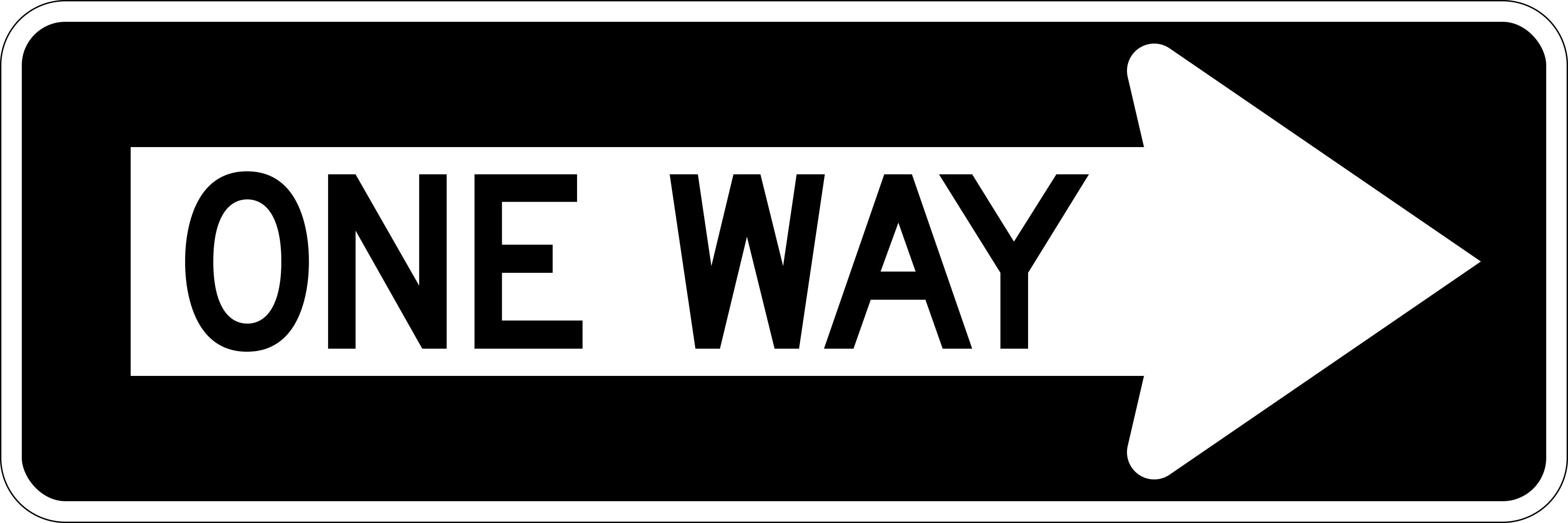
- The hours when parking is allowed
- The minimum speed for the roadway
- A restriction on pedestrian crossings
- The permitted direction of traffic
Show answer
The permitted direction of traffic. The ONE WAY sign communicates a traffic-direction rule for the roadway. It tells a driver that travel must follow the indicated direction, rather than allowing movement either way. The sign does not set a minimum speed, regulate pedestrian crossings, or establish parking hours. Before entering, compare the arrow with your intended movement and choose another route if the directions conflict. A useful habit is to read the arrow as applying to the street ahead, not merely to the turn being made at the current corner.
Study this in the handbook: Road signs by shape and color
10. What does the roundabout warning sign tell a driver to do?

- Stop permanently at the central island
- Accelerate and enter before traffic in the circle
- Reduce speed and yield to pedestrians and vehicles already in the circle
- Drive clockwise around the circle
Show answer
Reduce speed and yield to pedestrians and vehicles already in the circle. The roundabout warning combines two actions: reduce speed and yield to pedestrians and vehicles already circulating. Accelerating to enter first defeats the yielding requirement. The central island is not a stopping place, and traffic does not travel clockwise in Delaware roundabouts. Before entry, scan for people in the crosswalk and circulating traffic, then enter only when the gap is safe. Once inside, follow the circular roadway and prepare to yield again when exiting to pedestrians.
11. Why should a Delaware driver watch for sudden motorcycle movement near bridges and large trucks?
- Bridges remove the need for following distance
- Motorcycles always stop in the center of bridges
- Large trucks pull motorcycles toward them
- Crosswinds can move a motorcycle out of its lane
Show answer
Crosswinds can move a motorcycle out of its lane. Crosswinds can push a motorcycle out of its lane, especially on open stretches, bridges, and near the wind blast from a fast-moving large truck. The rider may need to change speed or direction quickly, so a driver should stay alert and avoid squeezing the motorcycle's space. Trucks do not pull motorcycles toward them, and bridge location does not justify reducing the gap. Watch the rider's lane position, keep a generous buffer, and be prepared to adjust smoothly rather than making a sudden pass.
Study this in the handbook: Following distance, trucks and motorcycles
12. What does the inverted triangle sign shown here require you to do?
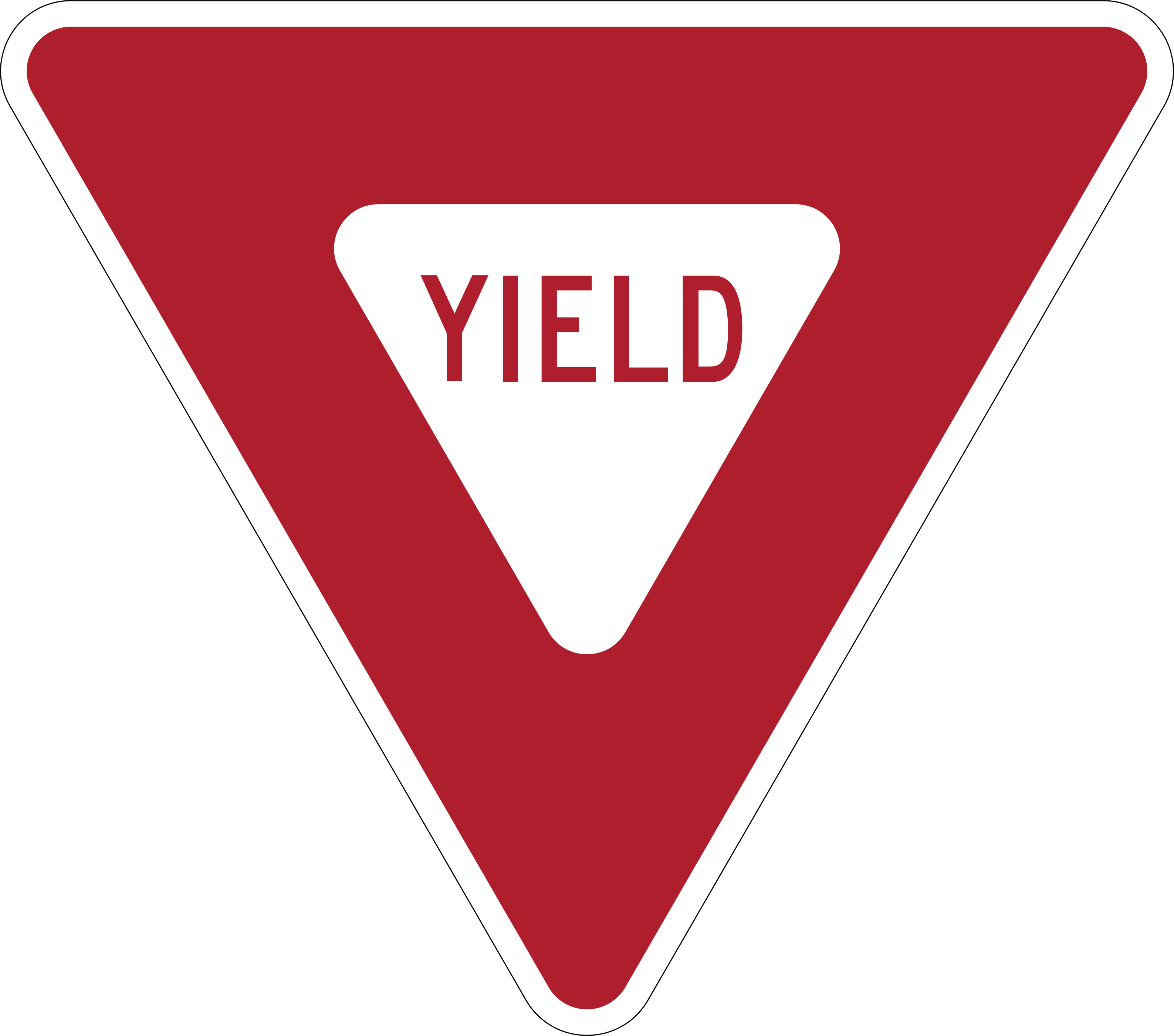
- Yield to traffic and pedestrians, stopping if necessary
- Stop every time before entering the intersection
- Enter first because the sign grants priority
- Use the lane only for turning right
Show answer
Yield to traffic and pedestrians, stopping if necessary. The inverted triangle identifies a yield sign. Slow as you approach, look both ways, and give priority to pedestrians and vehicles making lawful movements. Stop when needed for safety, but the sign does not impose an automatic stop in every approach. The stop-every-time option describes a stop sign, while the priority option reverses the meaning. The right-turn-only choice confuses a regulatory lane instruction with a right-of-way sign. Let the shape trigger the correct habit: reduce speed, scan left and right, yield, then move when the gap is safe.
Study this in the handbook: Road signs by shape and color
13. When a Delaware driver passes a bicycle in a lane wide enough to share, what minimum clearance is required?
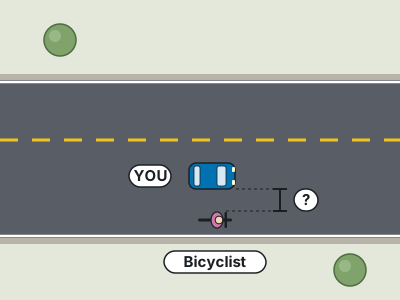
- Three feet
- Two feet
- One foot
- Six feet
Show answer
Three feet. Delaware sets a three-foot minimum when a vehicle passes a bicycle without changing lanes in an unusually wide travel lane. The driver must also slow down during that pass. One or two feet leaves the cyclist too close to the vehicle, while six feet is not the stated minimum. If the lane is too narrow for safe side-by-side travel, the driver must completely change lanes, even across a double yellow line. A practical cue is to assess the lane before overtaking: share only when there is room, reduce speed, and preserve three feet throughout.
Study this in the handbook: School buses, pedestrians and bicyclists
14. Can Delaware charge a driver with DUI when the measured BAC is below .08?
- Yes, but only when the driver is under 21
- No, because .08 is the only possible DUI threshold
- Yes, if evidence shows the driver was impaired
- No, because any BAC below .08 is automatically safe
Show answer
Yes, if evidence shows the driver was impaired. Delaware treats .08 or greater as conclusive evidence of being under the influence, but the law also permits a DUI charge below .08 when other evidence indicates impairment. The absolute-safe choice incorrectly turns a legal threshold into a guarantee of safe driving. The under-21 choice confuses this rule with separate underage provisions. The cue is the distinction between conclusive evidence at .08 and the broader impairment inquiry below that number.
Study this in the handbook: Alcohol, BAC and implied consent
15. At an uncontrolled intersection, what right-of-way practice does Delaware recommend?
- Yield to vehicles coming from the right, while considering yielding to all vehicles for safety
- Always enter first if traveling on the wider road
- Yield only to vehicles approaching from the left
- Assume the vehicle with greater speed goes first
Show answer
Yield to vehicles coming from the right, while considering yielding to all vehicles for safety. At an intersection without a stop sign, yield sign, or traffic signal, Delaware says drivers should yield to vehicles coming from the right. It also advises that the safest practice is to consider yielding to all vehicles before entering. Road width, approach speed, and a vehicle coming from the left do not create an automatic permission to proceed. The cue is to slow, scan every direction, and choose the cautious gap even when another driver appears obligated to yield.
Study this in the handbook: Right of way at intersections
16. What general speed rule applies in Delaware even when a posted maximum is higher?
- Drive no faster than is reasonable under existing conditions
- Drive at the posted maximum whenever traffic is light
- Match the speed of the fastest nearby vehicle
- Use the posted maximum unless precipitation begins
Show answer
Drive no faster than is reasonable under existing conditions. Delaware requires a reasonable speed under existing conditions, so a posted number is not permission to drive that fast in every circumstance. Weather, traffic density, visibility, and roadway hazards can make the maximum unsafe. The choices about light traffic and matching the fastest vehicle turn a maximum into an automatic target, which the manual rejects. A useful cue is to ask whether the chosen speed lets you control the vehicle and avoid striking a person, vehicle, or other conveyance. That safety judgment applies even before a sign changes.
Study this in the handbook: Delaware speed limits
17. How long is Delaware's behavior modification course, and how is completion reported?
- Two hours, self reported
- At least eight hours, with the provider notifying DMV electronically within 48 hours
- One day, no report needed
- 40 hours, reported by mail
Show answer
At least eight hours, with the provider notifying DMV electronically within 48 hours. The behavior modification attitudinal driving course is a minimum of eight hours long, is offered in all three counties, and costs $100 payable to the course provider. When you complete it, the provider sends notification electronically to the DMV within 48 hours. It is required after aggressive driving convictions and available in place of some speeding suspensions. Completion within 90 days is required after an aggressive driving conviction.
Study this in the handbook: Points, suspensions and serious speeding
18. At a Delaware yield sign, when may a driver proceed?
- Immediately, because a yield sign never requires slowing
- After yielding and only when the movement can be made safely
- Only after waiting for a green traffic signal
- After stopping for exactly ten seconds
Show answer
After yielding and only when the movement can be made safely. A yield sign requires the driver to give way to vehicles or pedestrians in or approaching the intersection, stopping if necessary. After yielding, the driver may proceed only when the movement can be made safely. The sign does not eliminate the need to slow or stop, and it does not require a green signal or an arbitrary ten-second wait. The cue is to look left and right, identify lawful road users, and enter only after the path is clear.
Study this in the handbook: Road signs by shape and color
19. When Delaware displays a flashing red signal, what must the approaching driver do?
- Immediate acceleration through the intersection
- A slowdown without stopping
- A complete stop, followed by proceeding only when safe
- A stop only when a pedestrian is visible
Show answer
A complete stop, followed by proceeding only when safe. A flashing red light has the same meaning as a stop sign. The driver must come to a complete stop and proceed only when the movement is safe. Merely slowing fails to satisfy the stop requirement, and accelerating through the intersection ignores the warning. Waiting for a pedestrian before stopping is also too narrow because vehicles and other hazards may be present. Treat the signal as a stop sign, scan the intersection, and continue only after yielding as needed.
Study this in the handbook: Traffic lights and arrows
20. What happens when a payment to the Delaware DMV is returned as uncollectible?
- Nothing, the transaction is voided
- A $100 fine
- Immediate arrest
- A $25 penalty fee, and suspension of the license or registration if not paid within 10 days
Show answer
A $25 penalty fee, and suspension of the license or registration if not paid within 10 days. If you present an uncollectible check or a returned card payment, a penalty fee of $25 is charged, and if the original amount plus the penalty is not paid within 10 days your driver's license and/or registration will be suspended. The Division mails a certified notice to the last known address, and the 10 days run from that mailing. The DMV accepts cash, checks, money orders, and major credit cards with proper identification, so a bounced payment is treated as still owed rather than voided.
QualitySpace is expanding to Delaware
We are a California-based independent insurance brokerage working on licensing in more states. We cannot help with Delaware insurance yet. Leave your email and we will let you know when we can.
Every question is written from the official Delaware Driver Manual. Need paper? Printable DE practice test with answer key.
Last verified 2026-10-05. How we check every question · Study all 205 as flashcards
Frequently asked questions
How many questions are on this Delaware practice test?
This fixed set has 20 questions. It is test 3 of 10 from the 205 question Delaware bank. The real DE exam asks 32 questions and you need 26 correct.
What is the passing score for the real Delaware test?
26 of 32 correct (approximately 81%) That figure comes from the official Delaware source cited on the DMV facts page.
How does this fixed test relate to the full Delaware bank?
Each numbered test is a fixed set of questions in a fixed order, so you can retake the same test later and compare. Every test mixes road signs and the other topics in about the same proportion as the full bank. Tests 1 to 10 together cover 200 of the 205 questions in the Delaware bank, each once. The full practice page mixes the whole bank at random.
Last verified 2026-10-05. See the Delaware DMV facts page for sourced state details.
Return to the full Delaware practice test · Study road signs