
Test 14 of 25 · 20 questions · Free 2026
DE Permit Practice Test 14
Jump to the test ↓A fixed 20 question set from the Delaware bank with answers and plain English explanations. The real DE exam is 32 questions, 81 percent to pass; take the full length version on the main practice page.
Question 1 of 20 · 0 right so far
All 20 questions in test 14
Every question below comes from the Delaware question bank on this page. Open a question to see the correct answer and the explanation. Nothing here is hidden behind a signup.
1. An overhead signal above a lane that changes direction during the day shows a red X over your lane. What does that display mean for you?
- You may enter if traffic in the lane is moving your direction
- You should leave the lane slowly after one more block of travel
- You cannot use the lane beneath that display at this time
- You may use the lane only for turning at the next corner
Show answer
You cannot use the lane beneath that display at this time. Special lights over a reversible lane show which lanes are open to a driver at that moment. A green arrow permits use of the lane beneath it, while a red X closes that lane to the driver. A steady yellow X warns that use is changing and the driver should move out promptly. Entering on a red X because traffic seems to flow the right way contradicts the control display.
Study this in the handbook: Pavement markings, signaling and roundabouts
2. Unless a sign posts a different speed, what is the limit on a divided road or a road with four or more lanes?
- 50 miles per hour, like a two-lane road
- 65 miles per hour, like Route 1
- 25 miles per hour, like a business district
- 55 miles per hour
Show answer
55 miles per hour. Delaware's table lists 55 miles per hour for divided roads and roads with four or more lanes, unless a sign posts a different limit. Controlled access highways such as turnpikes and expressways are also listed at 55. Two-lane roads are 50, business and residential districts are 25, and only Route 1 and Interstate 495 are listed at 65. Conditions may still call for a slower speed.
Study this in the handbook: Delaware speed limits
3. You drive past a crash where police and an ambulance are already at work. What should you do?
- Stop nearby in case they need extra help
- Keep moving and watch for people near the road
- Slow to a crawl so you can see what happened
- Pull onto the shoulder to take photos
Show answer
Keep moving and watch for people near the road. Do not stop at a crash unless you are involved or emergency help has not yet arrived. Keep your attention on your driving and keep moving, watching for people who might be in or near the road. Never drive to the scene of a crash, fire, or other disaster just to look, because you may block the way for police, firefighters, ambulances, tow trucks, and other rescue vehicles.
4. A small engine fire is burning and no chemical extinguisher is available. What may you use to smother it?
- Water from a bottle or hose
- Windshield washer fluid from the tank
- Fresh air, by opening the hood wide
- Dirt or sand
Show answer
Dirt or sand. If smoke comes from under the hood, get off the roadway. If no chemical fire extinguisher is available, use dirt or sand to smother the fire. Do not use water, because burning gas will float on it and spread the fire. If the fire gets out of control, move at least 100 feet away from the vehicle, because the gas tank may explode.
Study this in the handbook: Railroad crossings, vehicle emergencies and crashes
5. Why does the manual say you do not know you have had too much to drink until it is too late?
- Alcohol makes you feel tired right away after a drink
- The effects begin only after you finish your drinking
- Alcohol affects the judgment that tells you when to stop
- Your eyes get worse before your judgment does
Show answer
Alcohol affects the judgment that tells you when to stop. Alcohol affects the areas of your brain that control judgment and skill. In a way, it is like alcohol puts good judgment on hold, so you do not know when you have had too much to drink until it is too late. It is a little like a sunburn: by the time you feel it, it is already too late. Alcohol slows your reflexes, reduces your ability to see clearly, and makes you less alert.
Study this in the handbook: Alcohol, BAC and implied consent
6. You finish a sharp turn made with the hand-over-hand method. How should the wheel return to straight?
- Let it spin back by itself through your fingers
- Let go of the wheel completely for a moment
- Push it with one palm while it spins back
- Straighten it out by hand
Show answer
Straighten it out by hand. When turning sharp corners, turn the steering wheel using the hand-over-hand technique. When you complete the turn, straighten out the wheel by hand; letting it slip through your fingers could be dangerous. Keep both hands on opposite sides of the wheel when you are not turning. Look well down the road and to both sides so you can see where you need to steer before you get there.
7. At a four-way stop you come to a full stop first. A moment later a car stops on your right, and you both want to go straight. Who goes first?
- You, because you reached the intersection first
- The car on your right, because the right-hand vehicle always goes first
- The larger vehicle
- Whichever driver signals first
Show answer
You, because you reached the intersection first. At a four-way stop, the driver reaching the intersection first goes first, after coming to a complete stop. The vehicle on the right goes first only when more than one vehicle arrives at the same time. Since you stopped before the other car, you have priority, though you should still watch for anyone who has not yet stopped. You must also yield to any vehicle or pedestrian in or approaching the intersection before you start.
Study this in the handbook: Right of way at intersections
8. Which of these places does the manual list as somewhere to slow down because children are often present?
- Rural highways that have no houses near them
- Schools, playgrounds, and residential streets
- Interstate on-ramps
- Divided highways in daylight hours
Show answer
Schools, playgrounds, and residential streets. Wherever people or traffic gather, your room to maneuver is limited, so lower your speed. Schools, playgrounds, and residential streets often have children present, and you should always be alert for children crossing the street, running, or riding into it without looking. Other trouble spots include shopping centers, parking lots, rush hours, narrow bridges, tunnels, toll plazas, and railroad crossings.
Study this in the handbook: Seeing ahead and adjusting to conditions
9. Nothing controls an intersection, and drivers should yield to vehicles coming from the right. What does the manual say is the safest approach?
- Enter first and signal your intention clearly
- Yield only to vehicles that come from the right
- Consider yielding to all vehicles before entering
- Stop only if a vehicle from the left is closer
Show answer
Consider yielding to all vehicles before entering. At an intersection with no stop sign, yield sign, or traffic signal, drivers should yield to vehicles coming from the right. However, the manual says it would be safest to consider yielding to all vehicles before entering. Motor vehicle laws do not give anyone the right-of-way; they describe who must yield. When you can prevent a crash by yielding, it is the right thing to do.
Study this in the handbook: Right of way at intersections
10. A person on a bike seems about to move into your lane, but there is no immediate danger. How should you use your horn?
- Give it a light tap
- Sound a long continuous blast
- Hold it down until the rider stops
- Do not use it at all
Show answer
Give it a light tap. Your horn can get the attention of people who may not see you, and the manual says to use it whenever it will help prevent a crash. If there is no immediate danger, a light tap on the horn should be all you need, such as when a person on a bike appears to be moving into your lane. If there is danger, do not be afraid to sound a sharp blast. Never use the horn to hurry someone, point out an error, or greet a friend.
11. How is a shared center turn lane marked on each side in Delaware?
- By a solid yellow line and a broken yellow line
- By two solid white lines on both of its edges
- By a single broken white line down the middle
- By double broken yellow lines with red reflectors
Show answer
By a solid yellow line and a broken yellow line. A shared center lane is bordered on each side by a solid yellow line and a broken yellow line. On the pavement, left-turn arrows for one direction alternate with left-turn arrows for the other direction. Double broken yellow lines are the usual marking for reversible lanes instead, so do not mix the two. Enter the shared lane only to turn, and only after you are sure you can enter it safely.
12. A parent wants to hold a toddler on their lap for a short ride across town. What does the manual say?
- That is fine for trips under five miles
- Never hold a child on your lap unrestrained
- It is safe if the parent wears a belt
- It is allowed in the back seat only
Show answer
Never hold a child on your lap unrestrained. Never try to hold a child on your lap unrestrained. The safest place for a child to ride is in an appropriate car seat. Delaware law also sets car seat requirements by age and weight, and the driver receives a ticket for any unrestrained occupant. Short trips are no exception, since many crashes happen close to home. Read your vehicle and car seat manuals for proper installation.
13. You are parked at a curb and need to get out. Which door should you use when traffic is passing?
- The curb side door
- The street side door, opened quickly before traffic arrives
- Either door, as long as you open it slowly
- The street side door if you honk first
Show answer
The curb side door. You must never open the door of a vehicle so as to block traffic or endanger any person or vehicle. Instead, use the door on the curb side. Opening the street side door, quickly or slowly, still swings it into the path of passing vehicles and bicyclists, and a horn does not clear the lane. If you must use the street side, turn and check for traffic first.
14. Your right wheels drop off the pavement onto a rough shoulder. What should you do with the brakes?
- Jam on the brakes to stop as fast as possible
- Pump the brakes rapidly while steering back onto the pavement
- Hold the brake down hard and turn sharply
- Brake carefully or not at all, and take your foot off the gas
Show answer
Brake carefully or not at all, and take your foot off the gas. If you run off the pavement, do not panic and do not jam on the brakes. Brake carefully or not at all, take your foot off the accelerator, and grip the steering wheel tightly because the stress may twist it from your hands. Do not try to get back onto the pavement until the vehicle is under control, your speed is 15 mph or less, and you have checked traffic behind you.
Study this in the handbook: Railroad crossings, vehicle emergencies and crashes
15. Past the pictured sign, a raised median begins in the middle of the road. Where should you drive?

- On either side of the median
- To the right of the median
- To the left of the median
- Straddling the median's painted edge
Show answer
To the right of the median. This sign warns that you are approaching a divided highway, and its caption says to keep to the right. Once the median begins, traffic in your direction uses only the lanes to the right of it, while oncoming traffic uses the other side. Keep to the right of the median and of any traffic island or divider, just as on any roadway.
16. A raised island splits the road ahead, and the pictured sign is posted on its nose. Which way should you go around it?
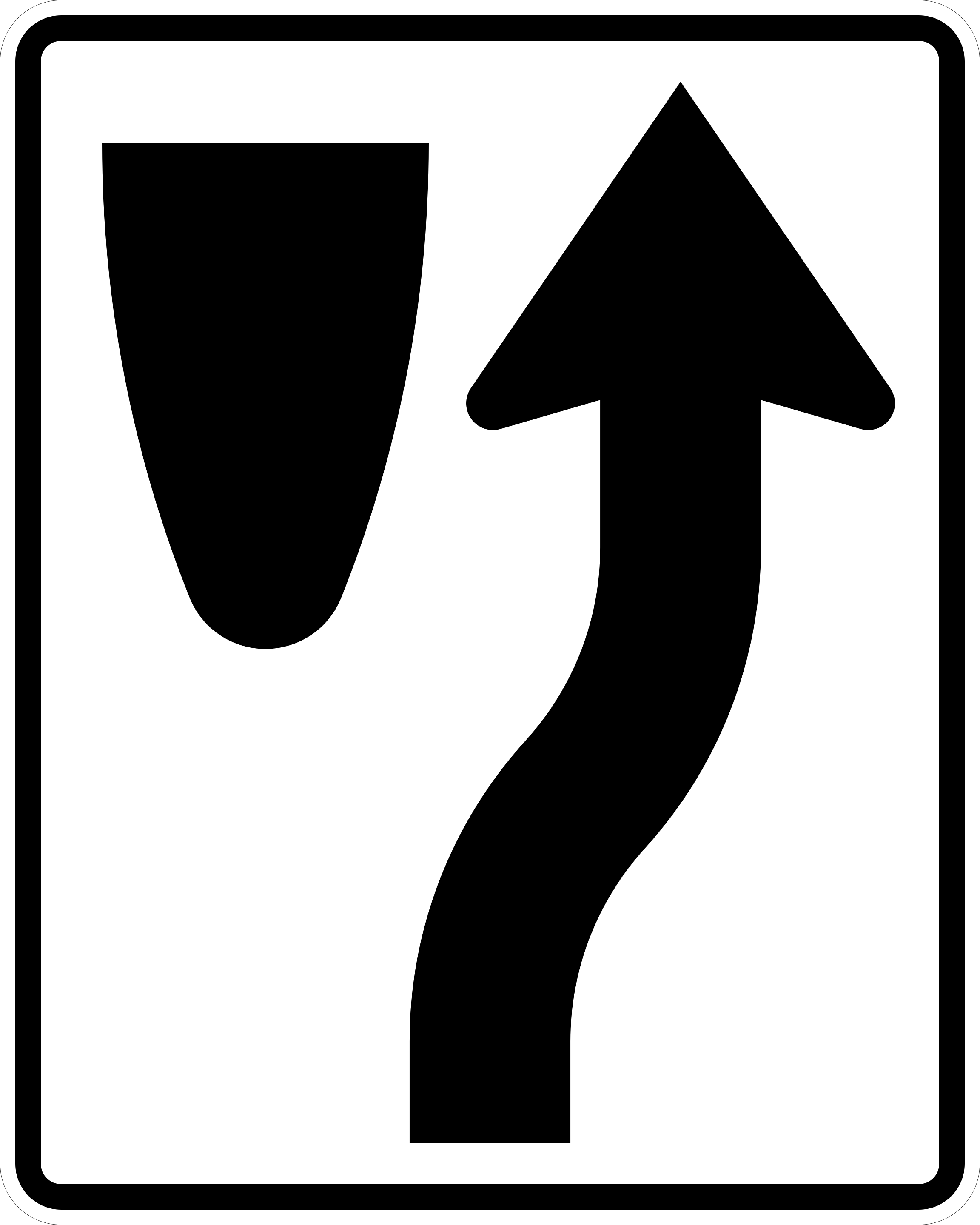
- To the left, if the left side looks clearer
- Over the island if it is low enough
- To the right of the island
- Either side, depending on your turn
Show answer
To the right of the island. This regulatory sign tells you to keep to the right of the traffic island or divider. Passing on the left would put you in a lane meant for traffic coming the other way or for another movement. Treat islands and medians like the roadway itself, keeping right. If you need to turn left later, do it at an intersection where the turn is allowed.
Study this in the handbook: Road signs by shape and color
17. A school bus ahead of you turns on its overhead yellow lights. About how long do those lights flash before the red lights start?
- About 30 seconds
- About 10 seconds
- About 2 minutes
- They start at the same moment as the red lights
Show answer
About 10 seconds. A school bus has two overhead alternately flashing yellow lights at the front and rear, and they switch on about 10 seconds before the overhead red lights begin to flash. They warn approaching drivers that the bus is about to stop to load or unload children. Slow down, approach with caution, and expect a stop, because children may be waiting for the bus or running to board it. Once the red lights and stop arm are active, you must stop.
Study this in the handbook: Right of way at intersections
18. How large a gap do you need when you merge with other traffic, change lanes, or enter a roadway?
- About one second
- About two seconds
- About four seconds
- About eight seconds
Show answer
About four seconds. A four second gap leaves room on both sides of your vehicle after the move. Placed in the middle of such a gap, you hold about three seconds behind the vehicle ahead while the vehicle now behind you holds a similar cushion. A one or two second gap can shrink quickly and force hard braking. Waiting for a much larger gap is not required when four seconds is available.
Study this in the handbook: Following distance, trucks and motorcycles
19. How far ahead should a safer driver try to look while traveling?
- At least 10 seconds ahead of the vehicle
- Only as far as the vehicle directly in front
- About two seconds ahead in all traffic
- Just far enough to read the next road sign
Show answer
At least 10 seconds ahead of the vehicle. Safer drivers tend to look at least 10 seconds ahead of their vehicle, which is the distance the vehicle travels in 10 seconds. Looking that far ahead gives time to slow down gradually or change lanes before a problem becomes urgent, helps you steer straighter, and saves fuel. In the city, 10 seconds is about one block; on the highway it is about a quarter of a mile.
Study this in the handbook: Seeing ahead and adjusting to conditions
20. You approach the pictured sign at a corner with no painted lines and no crossing paint. Where must you halt?
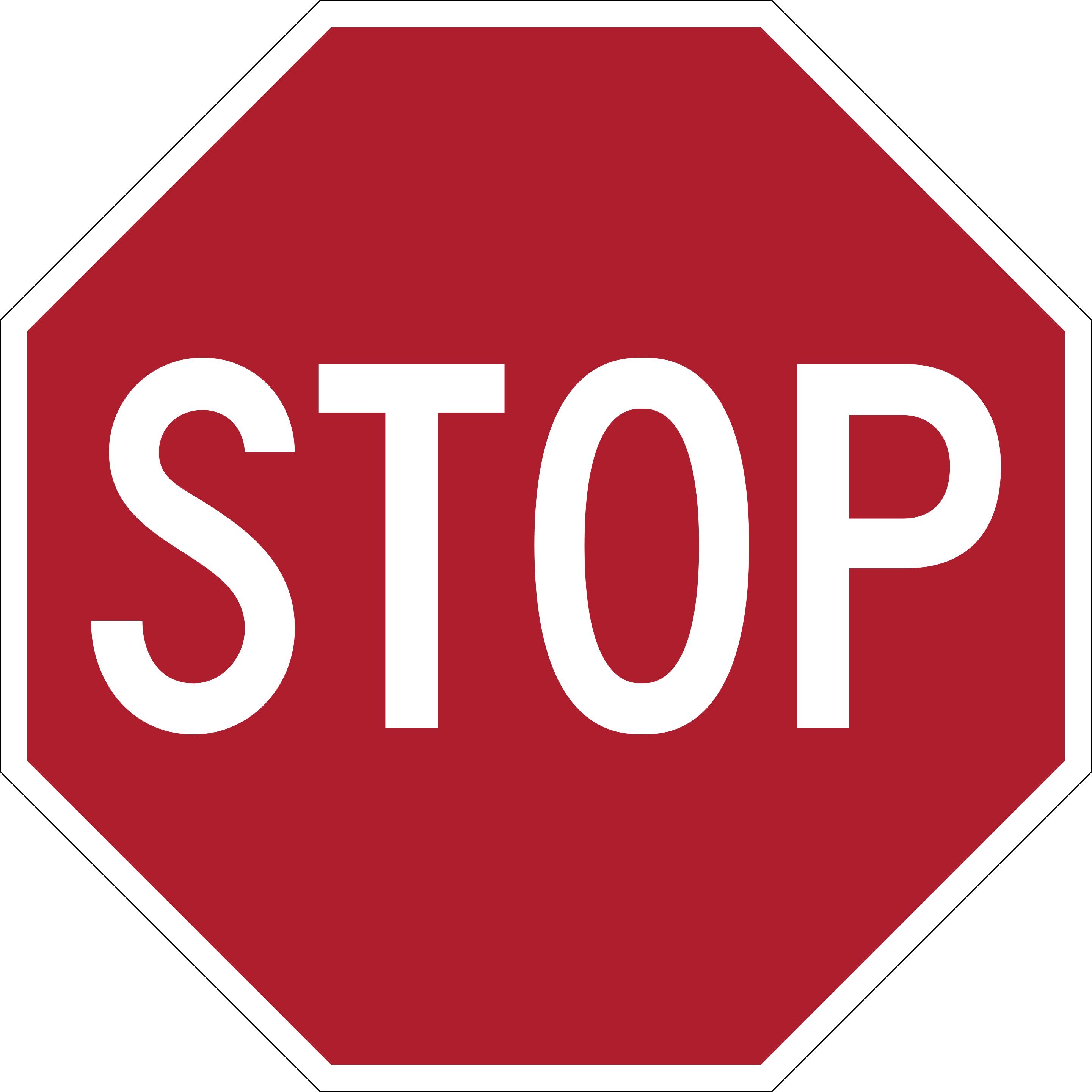
- Slow down and roll through the corner without fully halting
- Halt only after your vehicle has passed the corner post
- Halt in the middle of the junction and block turning traffic
- Halt fully at the line, crossing, or before the junction
Show answer
Halt fully at the line, crossing, or before the junction. The location for halting follows a clear order at the corner. Painted lines or a crossing area set the first halting point, and when neither exists the vehicle halts before entering the junction itself. Rolling through denies cross traffic and people on foot the predictable pause they expect. Halting too late, inside the junction, blocks turning vehicles. Brake early, halt fully at the correct point, scan in both directions, and proceed only when every lane and crossing is clear for your move.
Study this in the handbook: Road signs by shape and color
Every question is written from the official Delaware Driver Manual. Need paper? Printable DE practice test with answer key.
Last verified 2026-10-05. How we check every question · Study all 500 as flashcards
Frequently asked questions
How many questions are on this Delaware practice test?
This fixed set has 20 questions. It is test 14 of 25 from the 500 question Delaware bank. The real DE exam asks 32 questions and you need 26 correct.
What is the passing score for the real Delaware test?
26 of 32 correct (approximately 81%) That figure comes from the official Delaware source cited on the DMV facts page.
How does this fixed test relate to the full Delaware bank?
Each numbered test is a fixed set of questions in a fixed order, so you can retake the same test later and compare. Every test mixes road signs and the other topics in about the same proportion as the full bank. Tests 1 to 25 together cover every question in the Delaware bank once. The full practice page mixes the whole bank at random.
Last verified 2026-10-05. See the Delaware DMV facts page for sourced state details.
Return to the full Delaware practice test · Study road signs