
Test 16 of 25 · 20 questions · Free 2026
DE Permit Practice Test 16
Jump to the test ↓A fixed 20 question set from the Delaware bank with answers and plain English explanations. The real DE exam is 32 questions, 81 percent to pass; take the full length version on the main practice page.
Question 1 of 20 · 0 right so far
All 20 questions in test 16
Every question below comes from the Delaware question bank on this page. Open a question to see the correct answer and the explanation. Nothing here is hidden behind a signup.
1. At a signal, the green for through and right-turning traffic has ended, but the left-turn display is still green. What should the through traffic do?
- Continue straight since the left turn is still green
- Turn left along with the other drivers
- Prepare to stop, because only the left turn may continue
- Speed up to clear the intersection before the light changes
Show answer
Prepare to stop, because only the left turn may continue. When the green for the through and right-turn movements has ended but the left turn continues to be green, the left-turning traffic may keep going if it is safe. Straight-through and right-turning traffic should prepare to stop. The manual adds that drivers who are unable to stop should proceed with great caution. Always check the signal faces for your own lane instead of following the car beside you.
2. You turn a corner and face the pictured sign at the mouth of a one-way street coming toward you. What does it require?
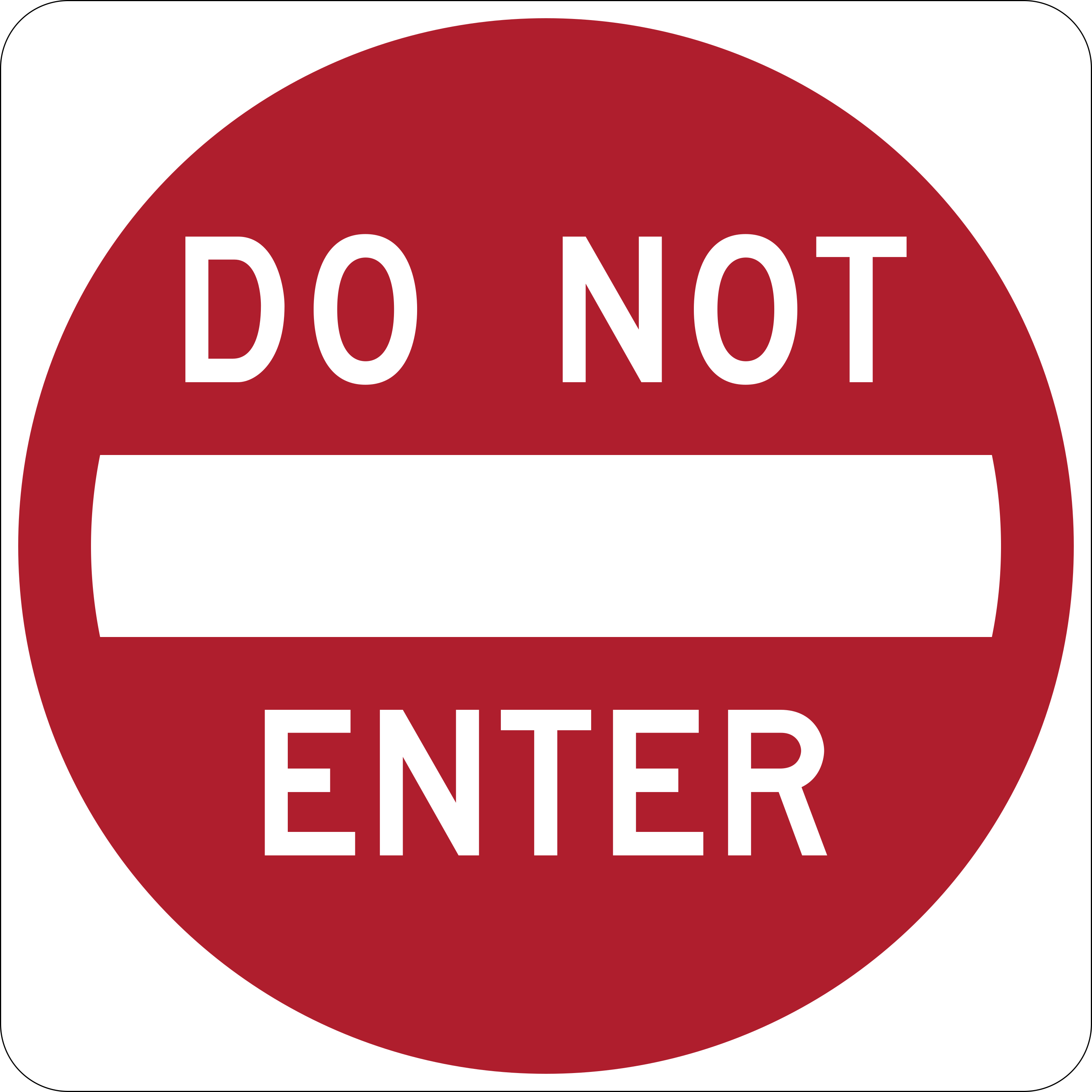
- Enter slowly with lights on
- Enter only to park
- Do not enter the marked street
- Enter if no cars are visible
Show answer
Do not enter the marked street. A street marked this way carries traffic toward you, so entering places your vehicle head-on with lawful flow. The ban holds even when the street looks empty, for parking, or with lights on, because an oncoming driver has no reason to expect you. Backing away or choosing the next correct entry protects both flows. Watch for the companion wrong-way cues, stay out of the marked entry, and reroute calmly rather than squeezing in and hoping others will move aside for you.
Study this in the handbook: Road signs by shape and color
3. Your vehicle has air bags. In which crash types do air bags alone not protect you, making belts essential?
- In side or rear crashes and rollovers
- Only in low speed parking impacts
- Only when the windshield is struck
- When another vehicle hits your front bumper
Show answer
In side or rear crashes and rollovers. Air bags mainly guard against striking the steering wheel, dashboard or windshield in a frontal crash. They do not protect in side or rear impacts or in a rollover, and they will not keep a driver behind the wheel in those events. Belts and air bags are designed to work together. Using belts in an air bag equipped vehicle also reduces injury risk from the bag system itself.
Study this in the handbook: Headlights, seat belts, phones and insurance
4. You see smoke from a fire near the highway. What does the manual say about driving to the scene to look?
- Do it if you drive slowly with your flashers on
- Never do it; you may block police and rescue vehicles
- Do it only if you plan to help at the scene
- Do it only when there is no other traffic nearby
Show answer
Never do it; you may block police and rescue vehicles. Never drive to the scene of a crash, fire, or other disaster just to look. You may block the way for police, firefighters, ambulances, tow trucks, and other rescue vehicles. Do not stop at a crash unless you are involved or emergency help has not yet arrived. Keep your attention on your driving, keep moving, and watch for people who might be in or near the road.
5. A person with a white cane is slowly crossing in front of you. Should you tap your horn to hurry them?
- Yes, a light tap helps them notice that you are there and wait
- Yes, if they are more than halfway across already
- Only if you have a green light at the time
- No, the horn could confuse or frighten a blind pedestrian
Show answer
No, the horn could confuse or frighten a blind pedestrian. Pedestrians using a guide dog or carrying a white cane have absolute right-of-way. Do not use your horn, because it could confuse or frighten the blind pedestrian. Wait for the person to finish crossing. The manual also lists blind pedestrians among the occasions when you should not use your horn, and says that sounding a horn is never a substitute for yielding to pedestrians.
Study this in the handbook: Right of way at intersections
6. You just left a high-speed highway for a slower local road. Why should you check your speedometer?
- Local speed limits are always 15 mph
- The speedometer is less accurate on local roads
- You may be going much faster than you think
- It is required at every speed limit sign
Show answer
You may be going much faster than you think. The best way not to speed is to know how fast you are going, so check the speedometer often. People are not very good at judging how fast they are going, and it is easy to travel much faster than you think. This is especially true when you leave high-speed roads and drive on much slower local roads, where your sense of speed is still set for the highway.
7. It is midday, but heavy fog means you cannot see beyond 1,000 feet. What does Delaware law require?
- Parking lights only, since the sun is still up at midday
- No lights until the sun has set
- Headlights only if your wipers are on
- Headlights on, because you cannot see past 1,000 feet
Show answer
Headlights on, because you cannot see past 1,000 feet. Delaware requires headlights, not parking lights, after sunset and before sunrise, any time you use your wipers, and any other time you cannot see beyond 1,000 feet. Fog that limits your view to less than that distance therefore calls for headlights even at noon. In fog, keep them on low beam, because high beams reflect back and create glare. Do not drive with parking lights alone.
Study this in the handbook: Headlights, seat belts, phones and insurance
8. You are driving toward a crosswalk where rapid-flashing beacons above the warning sign are actively flashing. What should you do?
- Slow down, look for people crossing on foot or bicycle, and give way as needed
- Maintain speed because flashing beacons never require drivers to give way
- Stop in the crosswalk and wave the waiting person across your lane
- Change lanes quickly to pass before the person steps off the curb
Show answer
Slow down, look for people crossing on foot or bicycle, and give way as needed. Flashing rectangular beacons warn that a pedestrian or bicyclist has activated the crossing device and may be entering the roadway. The motorist response is to slow down, search the crosswalk and its approaches, and yield as necessary. Holding speed or swerving around defeats the warning. Stopping inside the crosswalk itself blocks the path, so any stop should leave the crossing area clear for the person using it.
9. You come up behind a bicyclist in a lane too narrow for your car and the bike to share side by side. A double yellow center line is painted. What does Delaware law require to pass?
- Stay in your lane and pass with three feet of room
- Pass only by using the right shoulder
- Never pass, because the double yellow line forbids it
- Change lanes completely, crossing the double yellow if needed
Show answer
Change lanes completely, crossing the double yellow if needed. When the travel lane is too narrow for your vehicle and a bicycle to travel safely side by side, Delaware law requires you to change lanes completely to pass, including crossing a double yellow center line. Wait until oncoming traffic and visibility allow the move. Only in an unusually wide lane may you pass without changing lanes, and then you must slow down and leave at least three feet.
10. What is required for a person walking along a roadway after dark?
- Light colored shoes only
- Carrying a light or a reflector
- A companion walking alongside
- Staying within one block of home
Show answer
Carrying a light or a reflector. Walking along a roadway at night without carrying a light or reflector is illegal. Darkness reduces how early drivers can detect a person at the road edge, even on familiar streets. A light or reflector gives an earlier visual cue and helps separate the walker from dark background objects. Light colored clothing is also advised where possible, but clothing alone is not the stated legal carry requirement for night walking.
Study this in the handbook: School buses, pedestrians and bicyclists
11. You see the pictured sign, and trees block your view around the bend. How should you set your speed?

- Keep the posted speed until you see the bend
- So you can stop if something is just around the curve
- Fast enough to stay with the car behind you
- As fast as the road seemed safe last time
Show answer
So you can stop if something is just around the curve. You may not know what is just around a curve, even if you have driven the road many times. If a vehicle is stalled there, you must be able to stop. Whenever you come to a curve you cannot see around, adjust your speed so you can stop if necessary. Slow down before entering the curve so you do not have to brake in it.
Study this in the handbook: Seeing ahead and adjusting to conditions
12. You back into a parked car in a lot and cannot find its owner. What should you do?
- Leave, since no one was hurt
- Wait in your car for up to an hour, then go
- Leave a note with how to reach you and the time
- Call your insurance company later and say nothing else
Show answer
Leave a note with how to reach you and the time. If you are involved in a crash with a parked vehicle, you must try to locate the owner. If you cannot find the owner, leave a note in a place where it can be seen. The note should say how the owner can reach you and give the date and time of the crash. Simply driving away leaves the owner with damage and no way to contact you.
Study this in the handbook: Railroad crossings, vehicle emergencies and crashes
13. A person on foot crosses a highway in the middle of a block, away from any marked crosswalk or intersection. Who must yield the right-of-way?
- The person on foot must give way to vehicles
- Drivers must stop for anyone who steps off the curb
- Whoever reached that spot first
- Vehicles in the nearest lane only
Show answer
The person on foot must give way to vehicles. A person on foot must yield the right-of-way when crossing a highway other than within a marked crosswalk or an unmarked crosswalk at an intersection. Outside those expected crossing places, vehicle traffic has priority and the walker must choose a safe gap. Pedestrians also yield where a pedestrian tunnel or overhead crossing is provided. Drivers must still do everything they can to avoid striking a pedestrian.
Study this in the handbook: School buses, pedestrians and bicyclists
14. If an oncoming driver fails to dim bright headlights, where should you look to avoid being blinded?
- Toward the right side of the road
- Directly at the oncoming headlights
- At the center line until the vehicle passes
- Down at the dashboard until your eyes recover
Show answer
Toward the right side of the road. Looking toward the right side of the road keeps the bright lights out of your direct view while still showing enough of the road edge to stay on course. Flashing your headlights briefly can prompt the other driver to dim. Keeping your own bright lights on in return can blind both drivers. Staring at the lights or dropping your view to the dashboard removes the road from sight.
15. At an intersection, when is it especially important to look left and right even though cross traffic faces a red light or stop sign?
- When a police officer waves you on
- Only when the road is wet or icy
- Just after your light has turned green
- Only when turning left across traffic
Show answer
Just after your light has turned green. Some drivers hurry through an intersection as the light changes, and others may run a red light or stop sign. Looking left and right just after the light turns green checks for those late crossers before you move into their path. A green light alone does not clear the intersection. The check matters on dry roads and for straight travel as well as for turns.
16. A school bus is loading children on the far side of a divided roadway with four or more lanes, and you travel opposite the bus. How should you proceed?
- Stop opposite the bus until every child has left the roadway area
- Pass the bus at the posted speed without reducing speed
- Stop only if a child begins crossing toward your side of the road
- Proceed slowly past the area rather than stopping opposite the bus
Show answer
Proceed slowly past the area rather than stopping opposite the bus. The general duty is to stop before reaching a bus loading or unloading children from either direction. An exception applies on the opposite side of a highway having four or more lanes, where opposing traffic does not stop but must still proceed slowly. The slow pass accounts for children who may move unexpectedly near the roadway. Stopping in the opposing lanes is not required under that exception.
Study this in the handbook: Right of way at intersections
17. The pictured sign warns of a steep hill. Why does the manual suggest being ready to shift to a lower gear?

- To control speed and save the brakes
- To make the engine use less fuel
- To let the car coast faster downhill
- Because high gears are illegal on hills
Show answer
To control speed and save the brakes. The steep hill sign means slow down and be ready to shift to a lower gear to control speed and save brakes. A lower gear helps hold the vehicle back on the way down, so you do not rely on the brakes alone. Also check your mirrors when going down a steep grade, because large trucks and buses often build up speed and may be going too fast.
18. A friend has been drinking and wants to sober up quickly before driving home. What actually works?
- Drinking a few cups of strong coffee
- Taking a cold shower and some fresh air
- Exercising hard for about fifteen minutes
- Only waiting, because time is the only cure
Show answer
Only waiting, because time is the only cure. There is no way to sober up quickly. Coffee, fresh air, exercise, or cold showers will not help, because time is the only thing that will sober you up. A person who feels more awake after coffee still has the same alcohol in the blood. Plan ahead with a designated driver who does not drink, or use public transportation or a cab.
Study this in the handbook: Alcohol, BAC and implied consent
19. Your brakes fail, and pumping the pedal does not bring them back. What should you try next?
- Turn the key to lock to shut off the engine
- Pull the parking brake slowly
- Shift into park while the car is still moving
- Yank the parking brake as hard as you can
Show answer
Pull the parking brake slowly. If your brakes stop working, first pump the brake pedal several times. If that does not work, use the parking brake, pulling the handle slowly so you do not lock the rear wheels and cause a skid, and be ready to release it if the vehicle starts to skid. If that also fails, shift to lower gears and look for a safe place to slow to a stop off the roadway.
Study this in the handbook: Railroad crossings, vehicle emergencies and crashes
20. A car is close behind you as you prepare to park along the curb. What should you do about stopping for the space?
- Stop abruptly so the space is not taken by another driver
- Keep driving and look for a different space
- Stop only after flashing headlights at the driver behind you
- Back toward the curb quickly before the gap closes
Show answer
Keep driving and look for a different space. Before parking, check traffic in your rearview mirror. If a car behind you is following too closely, do not stop suddenly; continue driving and find another space. Stopping suddenly with a car close behind may result in a rear-end collision. When you do park, put on your turn signal early to warn other drivers. Flashing your headlights does not warn the driver behind you.
Every question is written from the official Delaware Driver Manual. Need paper? Printable DE practice test with answer key.
Last verified 2026-10-05. How we check every question · Study all 500 as flashcards
Frequently asked questions
How many questions are on this Delaware practice test?
This fixed set has 20 questions. It is test 16 of 25 from the 500 question Delaware bank. The real DE exam asks 32 questions and you need 26 correct.
What is the passing score for the real Delaware test?
26 of 32 correct (approximately 81%) That figure comes from the official Delaware source cited on the DMV facts page.
How does this fixed test relate to the full Delaware bank?
Each numbered test is a fixed set of questions in a fixed order, so you can retake the same test later and compare. Every test mixes road signs and the other topics in about the same proportion as the full bank. Tests 1 to 25 together cover every question in the Delaware bank once. The full practice page mixes the whole bank at random.
Last verified 2026-10-05. See the Delaware DMV facts page for sourced state details.
Return to the full Delaware practice test · Study road signs