
Test 3 of 10 · 20 questions · Free 2026
MN Permit Practice Test 3
Jump to the test ↓A fixed 20 question set from the Minnesota bank with answers and plain English explanations.
Question 1 of 20 · 0 right so far
All 20 questions in test 3
Every question below comes from the Minnesota question bank on this page. Open a question to see the correct answer and the explanation. Nothing here is hidden behind a signup.
1. When must Minnesota drivers use their headlights according to the vehicle-equipment section?
- Only between midnight and dawn on rural roads
- From sunset until sunrise and whenever the road ahead cannot be seen for at least 500 feet
- Only during rain, never during snow or fog
- Whenever another driver flashes headlights
Show answer
From sunset until sunrise and whenever the road ahead cannot be seen for at least 500 feet. The manual says to turn headlights on at sunset and keep them on until sunrise. It also requires them during rain, snow, hail, sleet, fog, or any time the road ahead cannot be seen for at least 500 feet. Limiting headlights to midnight through dawn on rural roads narrows the clock and location without support. A rain only rule leaves out snow and fog, which the manual lists expressly, and another driver flashing headlights is not the trigger. Turn the lights on before visibility becomes marginal and keep them on while darkness or weather limits what you can see.
Study this in the handbook: Headlights, special lights and required equipment
2. Two drivers reach an intersection without traffic lights at the same time. Which driver must yield in Minnesota?
- The larger vehicle always proceeds first
- The driver on the right yields to the driver on the left
- The driver traveling faster proceeds first
- The driver on the left yields to the driver on the right
Show answer
The driver on the left yields to the driver on the right. At an intersection without traffic lights or signals, Minnesota assigns the yield duty to the driver on the left when both drivers arrive at the same time. The right-side driver does not receive that duty merely because the vehicles are equal in size or speed. Vehicle size and approach speed do not replace the stated positional rule. Slow enough to identify the conflict, check both sides, and let the left-side driver yield before entering the intersection.
Study this in the handbook: Right of way and yielding
3. How many licensed drivers does Minnesota have, according to the manual?
- About 10 million
- About 500,000
- About 1 million
- More than 4.5 million
Show answer
More than 4.5 million. The Commissioner's message in the Minnesota Driver's Manual says there are more than 4.5 million licensed drivers in the state, and that number will only grow as the state implements the Driver's License for All law passed by the Legislature. Driver and Vehicle Services wants every one of those drivers, along with the pedestrians and cyclists who share the road, to know the laws and practices that lead to safe driving.
4. What does this DO NOT ENTER sign mean when it faces your vehicle?
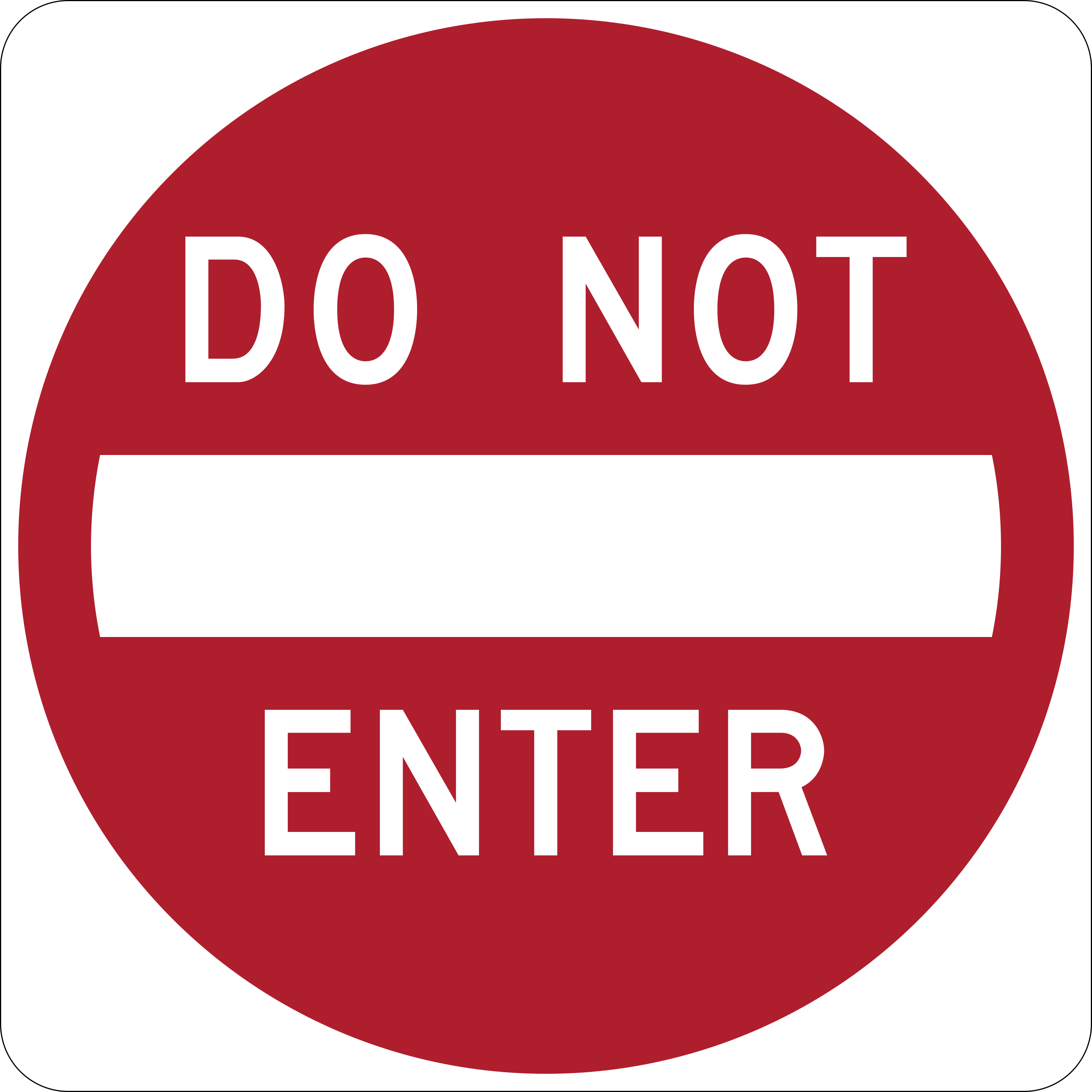
- Parking is prohibited only during business hours
- Enter slowly because cross traffic must yield
- Do not enter that lane or road
- The road is open in the opposite direction only after dark
Show answer
Do not enter that lane or road. A DO NOT ENTER sign means the driver must not enter the lane or road when the sign is facing the vehicle. Entering slowly because cross traffic must yield turns a prohibition into a cautious entry, which is still entry. A parking restriction during business hours describes a different kind of sign, and the sign offers no nighttime exception for the opposite direction. It is a regulatory sign, so you must obey it, and ignoring it can bring a traffic citation and a fine.
Study this in the handbook: Sign colors, shapes and regulatory signs
5. At what alcohol concentration can a person controlling a regular moving or parked vehicle be arrested for DWI in Minnesota?
- 0.08 percent or higher
- 0.04 percent or higher in every case
- 0.02 percent or higher
- 0.16 percent or higher only
Show answer
0.08 percent or higher. For a person in control of a moving or parked vehicle, Minnesota identifies 0.08 percent as the ordinary alcohol-concentration threshold for a DWI arrest. The 0.04 percent figure applies to commercial-vehicle driving, and an officer may also make an arrest at a lower concentration when alcohol-related driving errors can be proved. The 0.16 percent figure signals more severe penalties rather than the basic arrest threshold. Do not treat a parked vehicle as an automatic exception because physical control is included.
Study this in the handbook: How alcohol affects you and the DWI law
6. What happens to the license after a third DWI within 10 years in Minnesota?
- Loss for at least three years, and the license is canceled
- A 90 day revocation
- A one year revocation only
- A 30 day suspension
Show answer
Loss for at least three years, and the license is canceled. A third offense within 10 years of the first two brings loss of license for a minimum of three years and a canceled license, along with a required chemical use assessment, required ignition interlock, one year in jail or a $3,000 fine or both, a forfeited vehicle, and impounded plates. Ninety days and one year are the first and second offense minimums. A 30 day suspension is the first Not a Drop penalty for underage drivers.
Study this in the handbook: Implied consent and DWI penalties
7. How long is a Minnesota instruction permit valid?
- Six months
- 12 months
- Two years
- Four years
Show answer
Two years. A Minnesota instruction permit is valid for two years of practice driving with a licensed supervising driver in the front passenger seat. If the permit is lost or expires, a new one is valid for two years from the day you apply. Six months is the minimum time a learner 18 or younger must hold the permit before the road test, which is a different number. One year and four years are not the permit's life. The provisional license is also valid for two years.
Study this in the handbook: The instruction permit and provisional license
8. What does the pennant-shaped sign mark on a two-way highway?
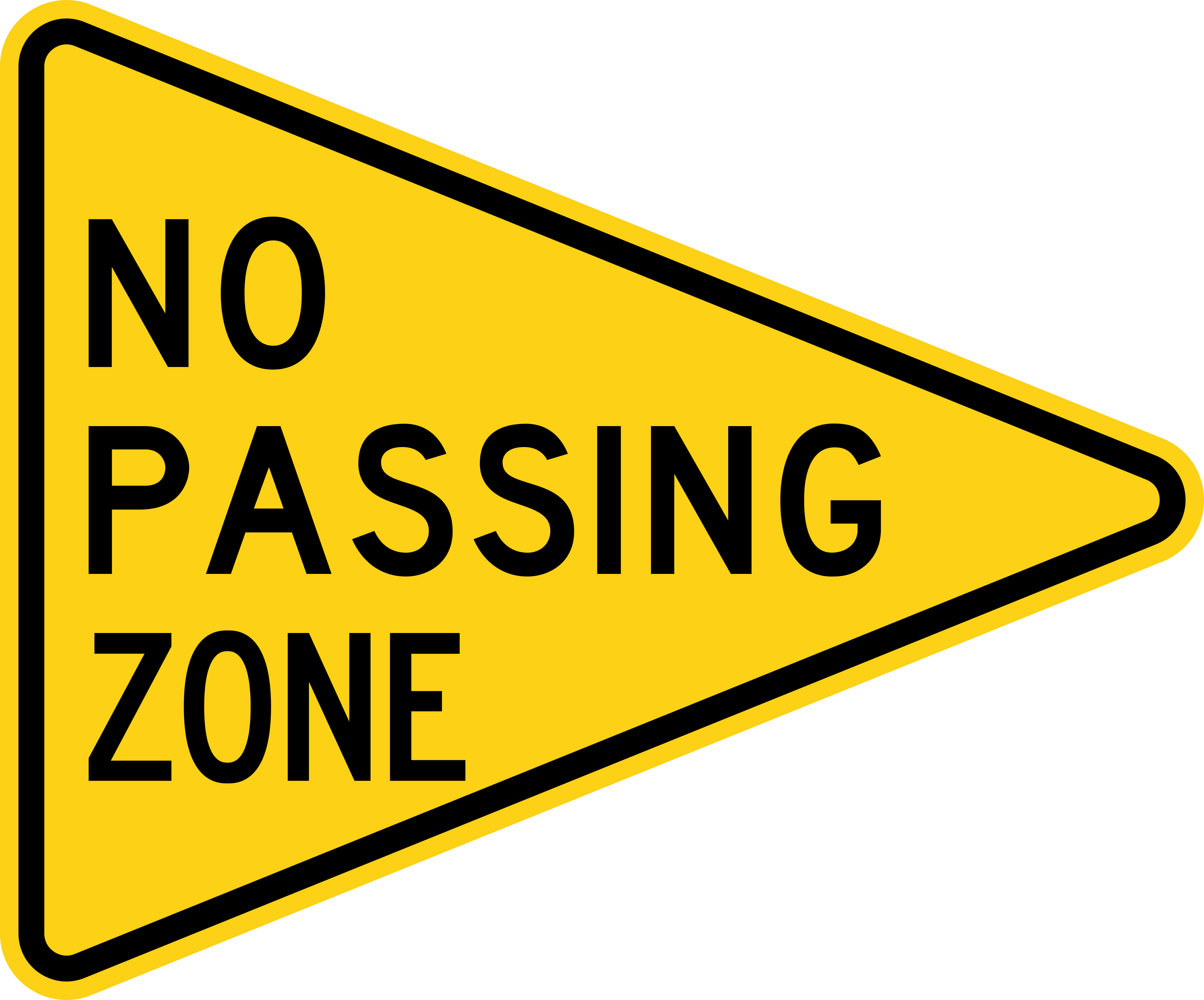
- A bicycle route with protected crossing priority
- The end of a no-passing zone
- The beginning of a no-passing zone
- A temporary lane for construction vehicles
Show answer
The beginning of a no-passing zone. The pennant on the left side of a two-way highway marks where a no-passing zone begins. It warns that passing ahead is illegal, so a driver should remain behind the vehicle ahead and wait for a legal opportunity farther along. The sign does not announce that restrictions have ended, create bicycle priority, or establish a construction lane. Its unusual shape and left-side placement are strong recognition cues. Do not cross a solid yellow line or pass simply because the opposing lane appears open.
Study this in the handbook: Warning, school, construction and guide signs
9. A steady yellow light appears while you approach an intersection. What does Minnesota's manual direct you to do?
- Accelerate so you pass before the light turns red
- Stop before entering if you can do so safely
- Back away from the intersection after entering it
- Stop in the intersection regardless of traffic position
Show answer
Stop before entering if you can do so safely. A steady yellow light means the signal is about to turn red. The driver should not enter the intersection if stopping safely is possible. If a safe stop is no longer possible, proceed through cautiously rather than braking abruptly or reversing. Accelerating to beat the red encourages a speed increase when caution is required. Once a driver is waiting in the intersection to turn, the manual says to complete the turn as soon as safe and not back up. Use the yellow indication as an early decision point: check distance, brake smoothly, and stop before the line when practical.
Study this in the handbook: Traffic signals, lane use signals and ramp meters
10. How long after leaving active military service does a Minnesota driver have to renew an expired license?
- 30 days
- There is no exception for military service
- Five years
- Within one year of separation or discharge, with the license and DD-214
Show answer
Within one year of separation or discharge, with the license and DD-214. You must renew your license within one year of your separation or discharge from active military service by presenting your Minnesota driver's license and your DD-214 discharge papers. The exception also covers a spouse, domestic partner or dependents under 26 who did not live in Minnesota during the service period. Documents can be submitted online or by mail to Driver and Vehicle Services in St. Paul.
11. Which other stopped vehicles receive the same Move Over treatment as an emergency vehicle when warning lights are activated?
- Any car parked legally at a shopping center
- Only vehicles displaying a state license plate
- Stalled or disabled vehicles and specified parked service vehicles
- Vehicles stopped without any warning lights
Show answer
Stalled or disabled vehicles and specified parked service vehicles. Minnesota extends the same protective passing rule to stalled or disabled vehicles and to listed service vehicles stopped with warning lights activated. That recognizes that people outside a disabled or working vehicle face traffic danger even when the vehicle is not an ambulance or police car. The shopping-center choice is far too broad, and an unlit vehicle does not match the stated condition. Scan shoulders and work areas early, move away when safe, or slow down and pass cautiously. The cue is stopped vehicle plus activated warning lights, with the rule covering more than emergency fleets.
Study this in the handbook: Emergency vehicles, the Move Over Law and traffic stops
12. What does a flashing yellow light or arrow require at an intersection?
- Speed up because cross traffic must yield
- Stop and wait until a steady green signal appears
- Treat it as a red light and remain stopped
- Proceed with caution and yield to road users already in the intersection
Show answer
Proceed with caution and yield to road users already in the intersection. A flashing yellow signal permits movement, but it does not remove the duty to watch for conflicts. Proceed cautiously and yield to vehicles or pedestrians already in the intersection. A driver turning left or making a U-turn must also yield to a close oncoming vehicle that creates an immediate hazard. The red-light choices are too restrictive, while speeding assumes a priority that the signal does not grant. The cue is the word caution: keep scanning, reduce risk at the conflict point, and yield whenever another road user is already in the intersection.
Study this in the handbook: Traffic signals, lane use signals and ramp meters
13. Under Minnesota's basic speed law, how should a driver choose a speed during poor weather?
- Drive exactly at the posted limit whenever visibility is reduced
- Use a speed reasonable for the weather, traffic, and road conditions
- Use the posted limit plus 10 mph on any wet road
- Match the speed of the fastest vehicle nearby
Show answer
Use a speed reasonable for the weather, traffic, and road conditions. Minnesota's basic speed law connects a safe speed to current conditions, including weather, traffic, and the road itself. A posted number is the maximum allowed speed, not a promise that it is safe in every situation. The choice requiring the posted limit during reduced visibility ignores that obligation. The 10 mph allowance belongs only to lawful passing on a qualifying two lane highway, so it cannot justify faster travel in rain. A useful cue is to reassess the road before relying on the sign, then slow enough to keep control and time to react.
Study this in the handbook: Speed limits and the basic speed law
14. What response is required when this railroad-crossing warning appears?

- Slow down, look both ways, and be prepared to stop
- Accelerate so you clear the tracks before a train arrives
- Stop only if the crossing gate is fully lowered
- Follow the vehicle ahead without checking the tracks
Show answer
Slow down, look both ways, and be prepared to stop. An advance railroad warning gives the driver time to prepare before reaching the tracks. Slow down, look carefully to the left and right, and be ready to stop because a train may be approaching and cannot stop quickly. Accelerating turns the warning into a race, while waiting for a fully lowered gate ignores crossings that use other devices or no active gate. A vehicle ahead cannot replace your own view. Reduce distractions and confirm that the crossing is clear before entering it.
Study this in the handbook: Warning, school, construction and guide signs
15. When tires lose their grip and the vehicle begins to skid, which action is advised?
- Turn sharply toward the nearest curb
- Stay calm and avoid slamming the brakes
- Accelerate until the tires regain grip
- Lock the steering wheel and brake harder
Show answer
Stay calm and avoid slamming the brakes. A skid means the tires have lost their grip on the road surface. Stay calm, avoid a sudden steering reaction, and do not slam on the brakes. Take your foot off the accelerator and brake until you can turn in the direction you want. Accelerating adds force without restoring traction, and locking the wheel removes your ability to guide the vehicle. A sharp curb turn can create a second hazard. The useful cue is to reduce inputs first, then steer only as traction returns and the desired path is available.
Study this in the handbook: Distraction, aggression, winter driving and skids
16. What vision must a Minnesota applicant have?
- 20/20 in both eyes
- At least 20/40 corrected or uncorrected, with at least 105 degrees of peripheral vision
- 20/70 with 90 degrees
- Any vision with glasses
Show answer
At least 20/40 corrected or uncorrected, with at least 105 degrees of peripheral vision. Your normal or corrected vision must be at least 20/40 and your peripheral vision must be at least 105 degrees. If your peripheral vision is less than 105 degrees or you fail the screening, you will be asked to see an eye doctor and return the report to the Driver Evaluation Unit. The screening is not a medical exam; it only checks the minimum standards.
Study this in the handbook: The written test, vision screening and road test
17. What is the safest response when smoke rises from beneath your vehicle's hood?
- Pull off, turn off the ignition, and leave the vehicle
- Open the hood and pour water on the engine
- Keep moving until the smoke disappears
- Rev the engine to clear the smoke
Show answer
Pull off, turn off the ignition, and leave the vehicle. Smoke under the hood can signal a vehicle fire, so the priority is to get away from traffic and away from the vehicle. The manual says to pull off the road, turn off the ignition, and exit the vehicle immediately. It also warns not to use water to put out the fire, because water will actually spread the blaze. Continuing to drive until the smoke clears leaves the danger active, and revving the engine does nothing to remove it. Treat smoke as an emergency warning and move yourself and passengers to a safe distance.
Study this in the handbook: Distraction, aggression, winter driving and skids
18. Which method does the manual recommend for maintaining a safe following distance in ideal conditions?
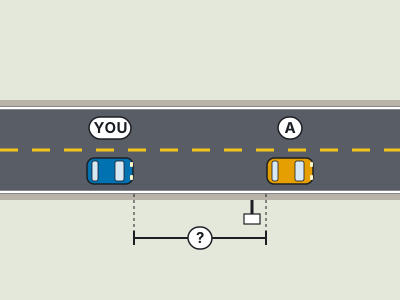
- Judge the gap only by looking in the rearview mirror
- Stay exactly one car length behind at every speed
- Use a fixed roadside point and count at least three seconds
- Follow as closely as possible when traffic is moving slowly
Show answer
Use a fixed roadside point and count at least three seconds. The three-second method uses a fixed object beside the road as a reference. When the vehicle ahead reaches that object, count through three seconds and check whether you arrive before the count ends. If you do, increase the gap by slowing gradually. A fixed car-length rule fails because stopping needs grow with speed and conditions, while mirror-only observation does not measure the space ahead. Poor weather or a longer vehicle calls for four or five seconds. The cue is time, not bumper distance: choose a point, count, and adjust.
Study this in the handbook: Following distance, night driving and freeways
19. What does a Minnesota School Zone sign indicate?
- A school or approved school crosswalk is ahead, so watch for children
- A school bus may be passed without checking traffic
- A pedestrian signal will stay green for all drivers
- The road becomes a no-passing zone in every direction
Show answer
A school or approved school crosswalk is ahead, so watch for children. A School Zone warning sign tells drivers that a school or approved school crosswalk is ahead. It also calls attention to children and the need to be prepared to stop. The sign does not permit passing a bus, guarantee a favorable signal, or create a universal no-passing rule. Reduce speed as appropriate, scan sidewalks and the crossing, and expect a child to enter the roadway unexpectedly. The pentagon shape and yellow or fluorescent yellow-green color can help with recognition, while the warning message guides the immediate driving response.
Study this in the handbook: Warning, school, construction and guide signs
20. What penalty does Minnesota impose for fleeing a police officer in a motor vehicle when no one is hurt?
- A $100 ticket
- A 30 day suspension
- A misdemeanor with a warning
- A felony with up to three years and one day in prison, a fine up to $5,000, or both
Show answer
A felony with up to three years and one day in prison, a fine up to $5,000, or both. Fleeing a police officer in a motor vehicle is a felony; you may be sentenced to up to three years and one day in prison, fined up to $5,000, or both. Under current Minnesota law, if someone is killed while fleeing the penalty rises to 40 years and $80,000, great bodily harm brings 7 years and $14,000, and substantial bodily harm 5 years and $10,000. Pull over promptly when signaled.
Study this in the handbook: Stop rules, school buses and fleeing police
QualitySpace is expanding to Minnesota
We are a California-based independent insurance brokerage working on licensing in more states. We cannot help with Minnesota insurance yet. Leave your email and we will let you know when we can.
Every question is written from the official Minnesota Driver's Manual. Need paper? Printable MN practice test with answer key.
Last verified 2026-10-05. How we check every question · Study all 208 as flashcards
Frequently asked questions
How many questions are on this Minnesota practice test?
This fixed set has 20 questions. It is test 3 of 10 from the 208 question Minnesota bank.
How does this fixed test relate to the full Minnesota bank?
Each numbered test is a fixed set of questions in a fixed order, so you can retake the same test later and compare. Every test mixes road signs and the other topics in about the same proportion as the full bank. Tests 1 to 10 together cover 200 of the 208 questions in the Minnesota bank, each once. The full practice page mixes the whole bank at random.
Last verified 2026-10-05. See the Minnesota DMV facts page for sourced state details.
Return to the full Minnesota practice test · Study road signs