
Printable MN Permit Practice Test
40 questions from the Minnesota question bank. Answer key on the last page. Last verified 2026-09-05 against the official Minnesota driver manual.
1. What is the recommended response to Minnesota warning signs?
- Ignore them until a traffic signal changes
- Recognize and react to the possible hazards they identify
- Use them only to locate motorist services
- Assume they prohibit every movement ahead
2. When approaching an oncoming vehicle within 1,000 feet, what beam setting is required?
- No lights until the vehicles meet
- High beams plus hazard flashers
- Parking lights only
- Low beam headlights
3. When must Minnesota drivers use their headlights according to the vehicle-equipment section?
- Only between midnight and dawn on rural roads
- From sunset until sunrise and whenever the road ahead cannot be seen for at least 500 feet
- Only during rain, never during snow or fog
- Whenever another driver flashes headlights
4. What happens to a Minnesota driver who drives over 100 mph?
- A $25 surcharge only
- Driving privileges are revoked for at least six months
- A warning on a first offense
- A 30 day suspension
5. When a vehicle is used to violate Minnesota’s school-bus stopping law, who may be penalized as the owner?
- The owner automatically receives five license points
- The owner or leaseholder may be guilty of a petty misdemeanor
- The owner is never involved if another person was driving
- The owner must surrender the vehicle permanently
6. When is driving below a posted minimum speed limit illegal under normal conditions?
- Whenever the driver is traveling below that posted minimum
- Only when a police officer is directing traffic
- Only on roads with a 55 mph maximum
- Never, because minimum limits are advisory
7. A Minnesota driver commits a second DWI within 10 years of the first. What is the minimum revocation?
- 90 days
- Three years
- One year
- Six months
8. What right-of-way consequence follows when a driver approaches a Minnesota intersection at an unlawful speed?
- The driver loses the privilege associated with lawful speed
- The driver gains priority over vehicles traveling legally
- The driver may disregard all yielding rules
- The driver keeps every right-of-way privilege unchanged
9. At what alcohol concentration does a Minnesota ignition interlock device prevent the vehicle from starting?
- 0.08 percent or above
- 0.04 percent or above
- 0.02 percent or above
- Any amount above zero
10. What must you do before entering a roundabout?
- Stop inside the circle before selecting an exit
- Yield to vehicles already circulating from the left
- Enter first because circulating traffic must yield
- Change lanes after entering to reach any exit
11. What is the alcohol content of 80-proof whiskey?
- 40 percent
- 80 percent
- 8 percent
- 20 percent
12. If you cannot move one lane away from a stopped emergency vehicle, how should you pass it?
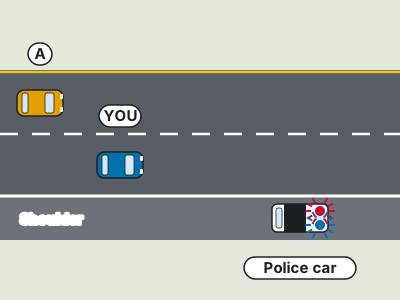
- Maintain speed because the shoulder is separate
- Slow down and pass with caution
- Stop in the travel lane until the vehicle leaves
- Pass on the shoulder without reducing speed
13. Two drivers reach an intersection without traffic lights at the same time. Which driver must yield in Minnesota?
- The larger vehicle always proceeds first
- The driver on the right yields to the driver on the left
- The driver traveling faster proceeds first
- The driver on the left yields to the driver on the right
14. What does a green arrow allow a driver to do?
- Turn in any direction without checking the roadway
- Turn safely in the direction of the arrow, subject to people already in the intersection
- Treat the arrow exactly like a flashing yellow signal
- Wait until the arrow changes to red before moving
15. How close may an ordinary vehicle follow a firefighting vehicle on an emergency run?
- It may follow within 100 feet during daylight
- It may follow within 50 feet if its lights are on
- It may not follow within 500 feet
- It may follow at any distance if traffic is light
16. What do Minnesota sign shapes and colors help a driver do before reading a sign up close?
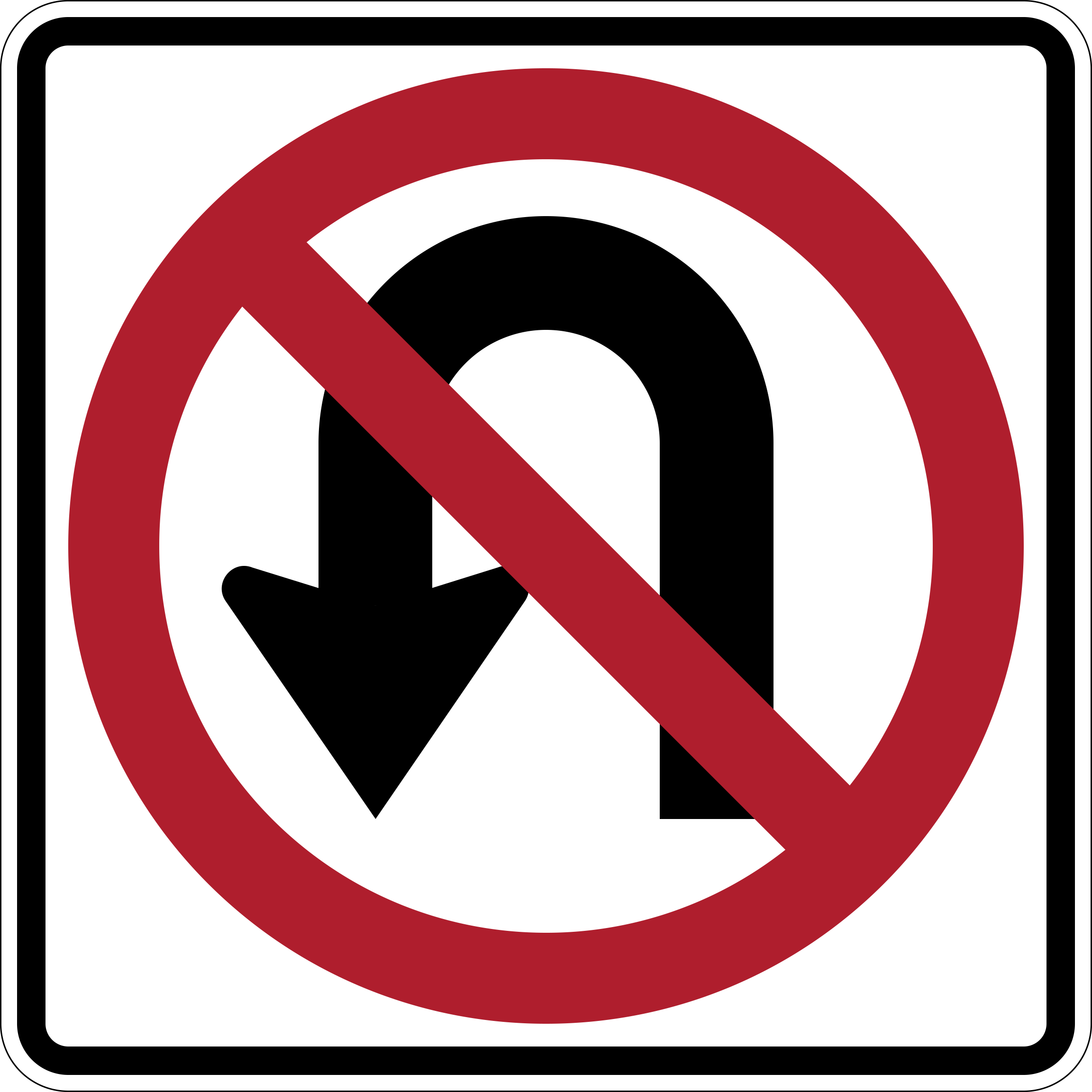
- Know that the sign applies only during construction
- Identify the exact fine for violating the sign
- Determine the distance to the nearest service station
- Get a general idea of what the sign means
17. Which of these can get a Minnesota license suspended?
- Renewing your license early
- Driving 5 mph under the limit in rain
- Letting someone use your license to buy alcohol for a person under 21
- Carrying a passenger in the back seat
18. After two consecutive failures of the Minnesota written test, what applies to the third and later attempts?
- A $10 fee is charged
- A six-month testing ban begins
- The applicant must take a road test instead
- The applicant permanently loses testing eligibility
19. About how fast does the body eliminate alcohol, according to the Minnesota manual?
- About three drinks per hour
- About one drink per hour
- Faster after coffee or a cold shower
- About one drink every 15 minutes
20. When must headlights be turned on for the normal daily cycle?
- At sunset and continuously until sunrise
- Only at midnight and during the morning commute
- Only when driving on an unlit freeway
- From sunrise until sunset
21. What must a driver do at a flashing red traffic light before proceeding?
- Come to a complete stop, yield, and proceed when the intersection is clear
- Slow down but continue without stopping if no car is close
- Treat it as a green light for the major roadway
- Stop only when a pedestrian is already crossing
22. Where may a person with a Minnesota Class D license drive a Neighborhood Electric Vehicle?
- On streets with speed limits of 35 mph or less
- On any street where the driver can reach 35 mph
- Only on private property
- Only on roads posted at 55 mph or higher
23. How many licensed drivers does Minnesota have, according to the manual?
- About 10 million
- About 500,000
- About 1 million
- More than 4.5 million
24. Which group may use strobe lamps under the Minnesota vehicle-equipment rules?
- Any truck weighing more than 10,000 pounds
- All delivery vans making a daytime stop
- Passenger vehicles with a roof-mounted warning sticker
- School buses, snow removal equipment, and rural mail carrier vehicles
25. How many supervised driving hours must a Minnesota teen log if a parent completes the parent class?
- At least 40 hours including 15 nighttime hours; 50 hours without the parent class
- 10 hours
- 100 hours
- 20 hours with no night driving
26. What does a steady downward green arrow over a reversible lane tell you?
- You must leave that lane immediately
- The lane is reserved for emergency vehicles
- You may drive in the lane below it
- Traffic may use the lane only to pass
27. Which of these is listed as grounds for revoking a Minnesota license?
- One parking ticket
- Failing to renew registration for one week
- A single speeding ticket 10 mph over
- Pleading guilty to three violations in one year of traffic laws that require a jail sentence
28. When may a Minnesota driver use hand and arm signals instead of the vehicle's turn signals?
- At night whenever the road has streetlights
- During daylight hours, when the hand signal can be seen
- Only while driving on a freeway
- Any time the vehicle's signal bulbs work
29. A Minnesota driver gave false information on a license application. How long is the license canceled?
- Permanently
- 30 days, whichever comes first
- 60 days or until the correct information is provided, whichever is longer
- Until age 21
30. If your headlights suddenly go out on a dark road, which action is recommended first?
- Stop in the traffic lane and turn off every electrical system
- Use the parking lights, hazard warning lights, or turn signals and guide the vehicle off the road
- Accelerate until another vehicle illuminates the roadway
- Open the hood immediately while the vehicle is moving
31. When driving in bad weather or poor road conditions, what speed choice is required?
- Drive exactly at the posted limit regardless of visibility
- Reduce speed as conditions require
- Increase speed to spend less time on the wet pavement
- Use the shoulder to avoid slowing in the travel lane
32. Which stopped vehicles are covered by Minnesota's move-over rule when their warning lights are activated?
- Only private passenger vehicles with a flat tire
- Only police cars displaying blue lights
- Only ambulances on interstate shoulders
- Stalled vehicles and listed service, maintenance, utility, construction, postal, and recycling vehicles
33. What does this DO NOT ENTER sign mean when it faces your vehicle?
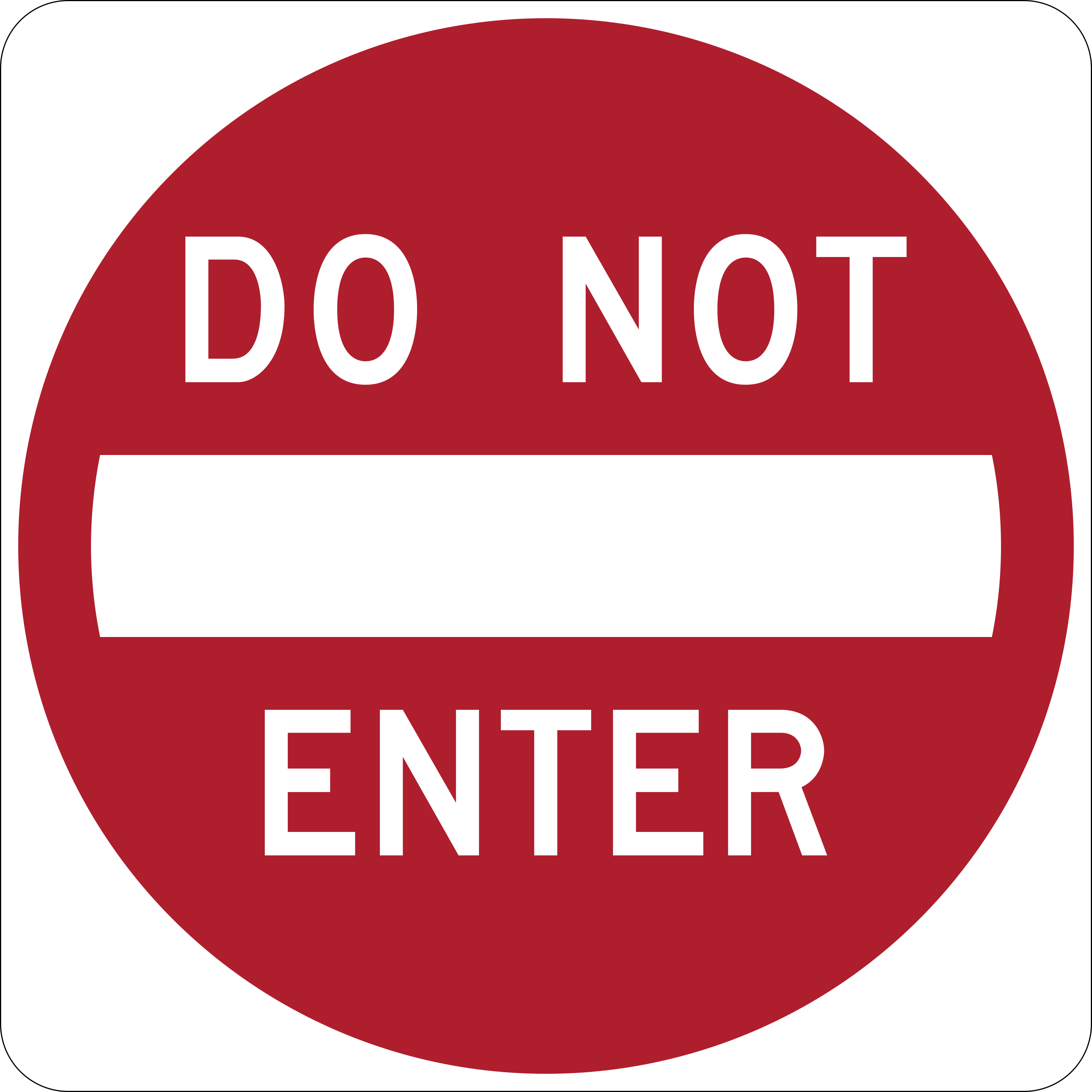
- Parking is prohibited only during business hours
- Enter slowly because cross traffic must yield
- Do not enter that lane or road
- The road is open in the opposite direction only after dark
34. When a school bus displays flashing red lights on a divided highway, which traffic is excepted from stopping?
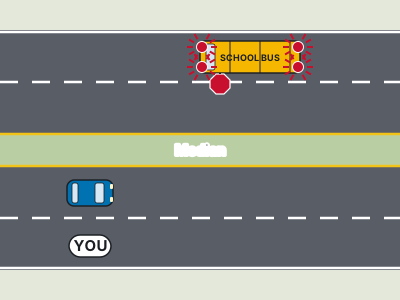
- Traffic approaching behind the bus on the same roadway
- Traffic following the bus in its lane
- Traffic traveling in the opposite direction on the other side of the divider
- Every vehicle because the roadway is divided
35. What does a green arrow at a Minnesota intersection mean?
- You may travel in any direction from the lane
- You must stop until a circular green light appears
- You may turn only after yielding to every vehicle behind you
- You may safely turn in the direction of the arrow
36. If the vehicle behind you is following too closely, what response does the manual recommend?
- Speed up until you are beyond its headlights
- Brake sharply to force it to increase space
- Slow down slightly and allow that vehicle to pass
- Move into the oncoming lane to block the driver
37. A Minnesota applicant under 18 has no living parents or guardian. Who may sign the license application?
- A close family member, an employer, or a spouse who is at least 18
- Only a court-appointed guardian named later
- A 16 year old sibling
- Nobody, so the teen must wait until 18
38. When must Minnesota drivers turn on their headlights?
- Only after midnight on roads outside cities
- At sunset until sunrise, and during listed weather or visibility conditions
- Only while driving in snow
- Only when another driver flashes headlights first
39. When may a driver exceed a 55 mph posted limit by up to 10 mph under Minnesota's speed rule?
- While lawfully passing another vehicle on a two-lane highway
- Whenever the road is empty
- When merging onto any freeway
- Whenever the driver is late
40. What action is prohibited inside a Minnesota roundabout?
- Changing lanes
- Yielding to vehicles already circulating
- Following the lane selected before entry
- Exiting when the driver's route is reached
Answer key
- 1. B
- 2. D
- 3. B
- 4. B
- 5. B
- 6. A
- 7. C
- 8. A
- 9. C
- 10. B
- 11. A
- 12. B
- 13. D
- 14. B
- 15. C
- 16. D
- 17. C
- 18. A
- 19. B
- 20. A
- 21. A
- 22. A
- 23. D
- 24. D
- 25. A
- 26. C
- 27. D
- 28. B
- 29. C
- 30. B
- 31. B
- 32. D
- 33. C
- 34. C
- 35. D
- 36. C
- 37. A
- 38. B
- 39. A
- 40. A