
Test 17 of 25 · 20 questions · Free 2026
MN Permit Practice Test 17
Jump to the test ↓A fixed 20 question set from the Minnesota bank with answers and plain English explanations.
Question 1 of 20 · 0 right so far
All 20 questions in test 17
Every question below comes from the Minnesota question bank on this page. Open a question to see the correct answer and the explanation. Nothing here is hidden behind a signup.
1. How much moving water can carry away most vehicles, even SUVs and pickups?
- 2 feet
- 6 inches
- 4 feet
- 6 feet
Show answer
2 feet. Minnesota's flooding advice says 2 feet of moving water can carry away most vehicles, including SUVs and pickup trucks. Higher ground clearance does not make a truck safe in a current. Six inches is enough to reach the bottom of a car and cause stalling, but it is not the carry-away figure. Four and six feet overstate how much water it takes. If a road is flooded, turn around and use another route.
Study this in the handbook: Distraction, aggression, winter driving and skids
2. Your light is green, but traffic is backed up on the far side of the intersection. What should you do?
- Enter and wait inside the intersection
- Go, since green gives you the right of way
- Creep into the crosswalk to hold a spot
- Wait until you can get all the way through
Show answer
Wait until you can get all the way through. You should not enter a signal-controlled intersection unless you can move through it immediately, continuously, and completely without blocking cross traffic. A green light does not let you pull in and stop in the middle. If you get stuck when the light changes, you block cross traffic and pedestrians. Edging into the crosswalk causes the same problem for people walking. Wait at the stop line until there is room on the far side.
Study this in the handbook: Warning, school, construction and guide signs
3. Where should you stop so that you do not block a crosswalk?
- With your front bumper just over the crosswalk edge
- Past it, so walkers can cross behind your vehicle
- Anywhere, because only marked crosswalks must stay clear
- Before it, leaving the crosswalk clear for walkers
Show answer
Before it, leaving the crosswalk clear for walkers. Minnesota says not to block a crosswalk with your vehicle when you stop at a marked or unmarked crosswalk. A marked crosswalk has solid white lines on the road, while an unmarked one is an area where a road meets a sidewalk with no lines painted. The rule covers both kinds, so a missing paint line does not change what you must do. Stop before the crosswalk and leave it clear for people crossing.
Study this in the handbook: Pedestrians, bicyclists and motorcycles
4. A school bus flagger stops you so buses can leave school property. When may you go?
- As soon as the last bus passes you
- After 30 seconds with no bus moving
- When the flagger or an officer directs you
- When the buses switch off red lights
Show answer
When the flagger or an officer directs you. You must stop for a school bus flagger who is directing traffic so buses can leave school property. Once stopped, you may not move until the flagger or a police officer tells you to go. Watching the last bus pass is not enough, because another bus or a student may still be coming. Waiting a set number of seconds is not the rule, and the flagger's direction matters here rather than the bus lights.
Study this in the handbook: Right of way and yielding
5. You are stopped in a traffic jam in Minnesota. May you read and answer a text message?
- Yes, the ban applies only while moving
- Yes, if the engine is idling in park
- No, the ban covers being stopped in traffic
- Only if you are 18 or older
Show answer
No, the ban covers being stopped in traffic. Minnesota bans using a cell phone or wireless device to text, email, or access the internet while driving, and the manual makes clear this includes while you are stopped in traffic. Sitting at a red light or in a jam still counts as driving. Shifting into park in a traffic lane does not change that. Age does not create an exception either; drivers 18 and older are covered, and drivers under 18 with a permit or provisional license face even tighter limits.
Study this in the handbook: Distraction, aggression, winter driving and skids
6. You come up behind a bicyclist in a no-passing zone. The oncoming lane is clear for a long way. What may you do?
- Nothing; stay behind until the zone ends
- Pass without crossing the center line
- Honk so the rider pulls over
- Cross the center line to pass when safe
Show answer
Cross the center line to pass when safe. You may cross the center line to pass a bicyclist, even where passing is otherwise banned, as long as it is safe. That lets you give the rider at least 3 feet of space. Squeezing by without crossing the line often leaves too little room. You are not required to wait until the zone ends when the oncoming lane is clear, and honking can startle the rider.
Study this in the handbook: Pedestrians, bicyclists and motorcycles
7. You are in the left lane of a four-lane road. The car in the right lane stops at a crosswalk. What should you do?
- Stop too and look for pedestrians
- Pass it slowly and carefully
- Honk to find out why it stopped
- Keep going; your lane is clear
Show answer
Stop too and look for pedestrians. It is illegal to pass a vehicle that has stopped for a pedestrian. The stopped car may be hiding someone who is about to step into your lane. When another vehicle stops at a crosswalk, look for pedestrians and be prepared to stop yourself. Passing slowly is still passing, and a clear lane in front of you does not mean the crosswalk is empty. Honking does not tell you whether someone is crossing.
Study this in the handbook: Pedestrians, bicyclists and motorcycles
8. When is the best time to decide how you will get home from a party where you might drink?
- After your last drink
- While you are still sober
- When you feel ready to leave
- Once you see how others get home
Show answer
While you are still sober. Because alcohol impairs judgment, Minnesota says it is crucial to make a plan while you are sober about how you will avoid impaired driving later. After drinking, you are likely to misjudge how impaired you are, so a decision made then is less reliable. Options include a designated driver who will not drink, a taxi or rideshare, a ride from a friend or family member, or staying overnight. Copying what others do is not a plan.
Study this in the handbook: How alcohol affects you and the DWI law
9. Can a cold medicine bought without a prescription lead to an impaired driving charge in Minnesota?
- Yes, if it impairs your driving
- No, only illegal drugs count
- No, the law covers just alcohol
- Only if a doctor prescribed it
Show answer
Yes, if it impairs your driving. Minnesota law prohibits driving while impaired by controlled or intoxicating substances. These include illegal drugs, prescription drugs, over-the-counter drugs such as cold medicines, and household products, any of which can cause drowsiness. So a store-bought medicine can be the basis of an impaired driving charge if it affects your driving. Read warning labels and follow your doctor's advice about effects. The law is not limited to alcohol or illegal drugs.
Study this in the handbook: How alcohol affects you and the DWI law
10. When you predict how hazards may affect you, which one does Minnesota call most critical?
- A car moving away from you
- A car parked at the curb
- A car stopped at a far signal
- A car moving into your path
Show answer
A car moving into your path. During the Predict step of SIPDE, you weigh the speed, distance, and direction of each hazard. Minnesota points out that cars moving into your path are more critical than those moving away or sitting still. A car pulling toward your lane can create a crash in seconds, so it deserves your attention first. Parked cars and cars stopped far ahead still need watching, but they are not the most urgent threat.
11. Fog becomes so thick that you cannot see a safe distance ahead. What should you do?
- Stop in your lane with hazards on
- Pull off the road and wait for it to clear
- Follow closely behind the taillights of the car ahead
- Speed up to get out of the fog
Show answer
Pull off the road and wait for it to clear. In thunderstorms or fog, slow down, increase your following distance, and be ready to stop. If you cannot see a safe distance ahead, Minnesota says to pull off the road and stop until visibility improves. Stopping in a travel lane invites a rear-end crash from drivers who cannot see you. Following someone's taillights closely leaves no room to stop, and speeding up makes the danger worse.
Study this in the handbook: Distraction, aggression, winter driving and skids
12. Which of these can warn you that a tire blowout may be about to happen?
- A sweet smell coming from the heater vents
- The fuel gauge dropping faster than normal
- A thumping sound or the wheel pulling aside
- The horn sounding weaker than it used to
Show answer
A thumping sound or the wheel pulling aside. A blowout is a burst tire that can throw your vehicle out of control. Before it happens, you may hear a thumping sound or feel the steering wheel pulling to the right or left. If a blowout occurs, hold the wheel tightly, steer straight, and ease off the gas, braking only once you have control. A sweet smell, a falling fuel gauge, and a weak horn point to other problems, not a failing tire.
Study this in the handbook: Distraction, aggression, winter driving and skids
13. Your car has airbags all around. Why do you still need a seat belt?
- Airbags inflate just in crashes above 50 mph
- Airbags do not keep you from being ejected
- Belts are required only for back seat riders
- Airbags are designed to replace seat belts
Show answer
Airbags do not keep you from being ejected. An airbag is a supplemental restraint system. It works together with seat belts to prevent injuries, but it is not designed to keep you from being thrown out of the vehicle. People ejected in a crash are likely to die or be seriously hurt, and the seat belt is what holds you in place. Airbags are not limited to high speeds, and belts are required in every seat, front and back.
Study this in the handbook: Seat belts, child seats, airbags and window rules
14. Before you pull out to pass on a two-lane road, what should you check besides oncoming traffic?
- Whether the car ahead is using its right signal
- Whether drivers behind you are preparing to pass
- How far the car ahead is from the next turn
- Whether the oncoming driver has seen your signal
Show answer
Whether drivers behind you are preparing to pass. When preparing to pass on a two-lane road, Minnesota tells you to make sure there is a safe distance between your vehicle and oncoming traffic. You must also check behind you to see whether other drivers are preparing to pass you. Only after both checks should you use your left turn signal and move into the left lane to pass.
Study this in the handbook: Passing, backing up and parking
15. According to Minnesota's manual, which of these people is a vulnerable road user?
- A person riding a horse
- A passenger in a pickup truck
- A city bus driver on a route
- A driver sitting in a parked car
Show answer
A person riding a horse. Vulnerable road users are people on highways, bikeways, sidewalks, or trails who have less protection than people in cars. The manual lists people riding two- or three-wheeled vehicles, using electric mobility devices, riding horses, walking, or using motorized scooters. They have no seat belts or airbags, so a crash is more likely to injure them. A pickup passenger, a bus driver, and someone in a parked car are all inside a vehicle's protection.
Study this in the handbook: Commercial vehicles, railroad crossings and work zones
16. On a two-lane road, you near the crest of a hill and can see only about 400 feet ahead. May you start passing?
- Yes, if you pass quickly
- Yes, if the oncoming lane looks empty
- Yes, if the line is dashed
- No, you need at least 700 feet of clear view
Show answer
No, you need at least 700 feet of clear view. Do not pass on a curve or hill where you cannot clearly see the road ahead for at least 700 feet. With only 400 feet of view, an oncoming car hidden beyond the crest could meet you head-on before you finish. Passing quickly or seeing an empty lane right now does not solve the problem, because you cannot see what is coming over the hill. Wait until you have a long, clear view.
Study this in the handbook: Passing, backing up and parking
17. Right after turning onto a ramp at night, you see this sign facing you. What has happened?
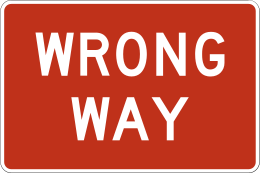
- You are driving into oncoming traffic
- The ramp ends soon in a merge
- The ramp is closed for repairs
- You missed a turn but are legal
Show answer
You are driving into oncoming traffic. A wrong way sign facing you means you have entered a lane of oncoming traffic and are traveling in the wrong direction. Ramps are a common place for this mistake, especially at night. Stop as safely as you can, and turn around or leave the lane before traffic comes toward you. The sign does not announce a merge or a repair closure, and you are not driving legally.
Study this in the handbook: Sign colors, shapes and regulatory signs
18. Thick fog has settled over a road with this sign. How fast should you drive?
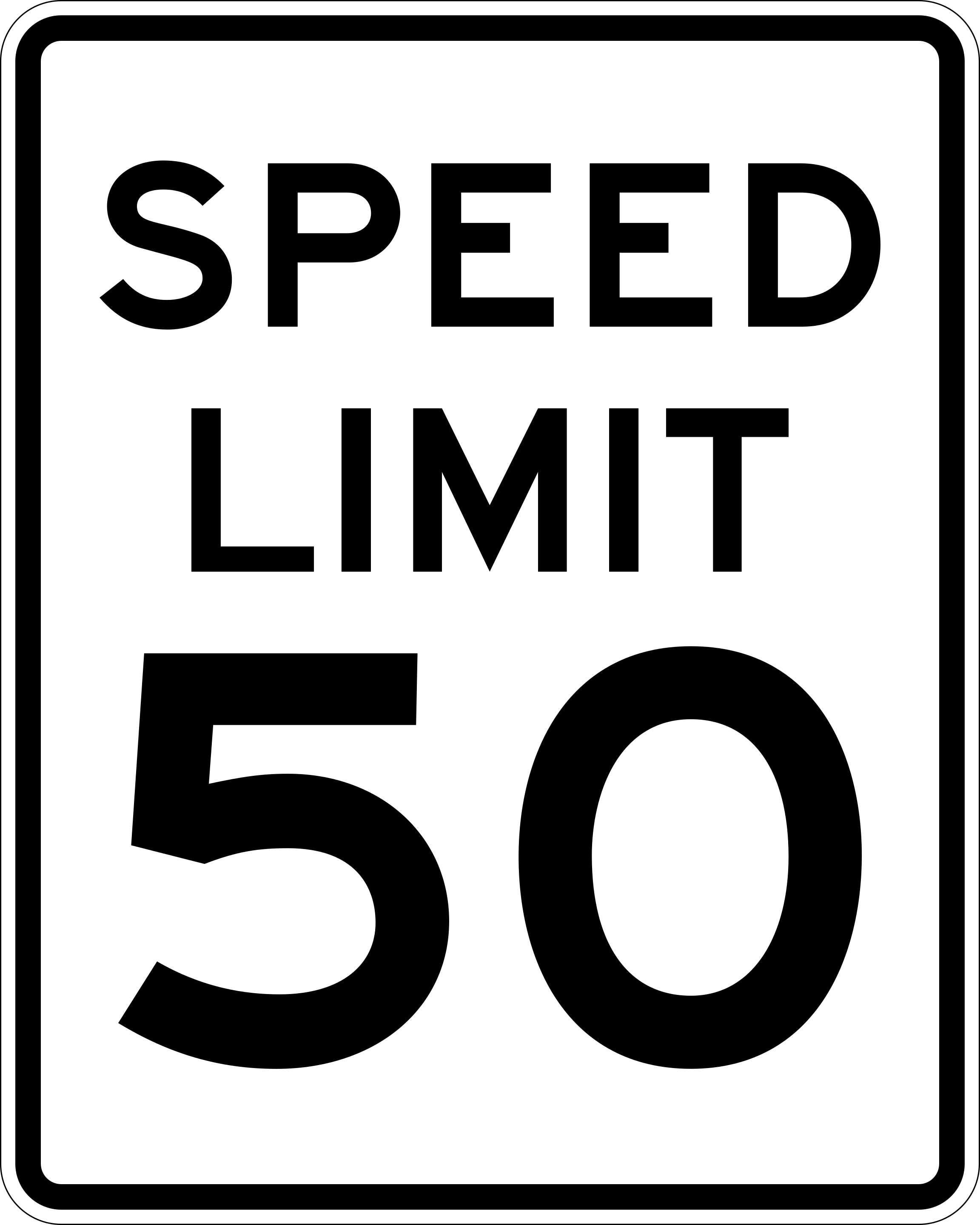
- Exactly 50 mph
- Up to 60 mph to keep up with traffic
- Slower than 50 if conditions require
- Any speed you feel is safe
Show answer
Slower than 50 if conditions require. A speed limit sign shows the maximum speed you may drive on that road. It does not mean that speed is safe in every condition. In fog, the basic speed law requires a speed reasonable for the weather, which may be well below 50 mph. Driving faster than the posted limit is illegal, even to keep up with traffic, and your own sense of safety does not let you go above the posted maximum.
Study this in the handbook: Sign colors, shapes and regulatory signs
19. You are halfway across a street on foot when the Don't Walk signal starts flashing. What should you do?
- Turn around and go back
- Keep crossing at a normal pace
- Stop where you are and wait
- Run as fast as you can
Show answer
Keep crossing at a normal pace. A flashing Don't Walk or raised hand means pedestrians should not start crossing. Those already in the intersection may keep walking to the other side at a normal pace. Turning around can confuse drivers and take longer. Stopping in the street leaves you in traffic, and running increases the chance of tripping or darting in front of a turning car. Drivers should also be patient with people finishing their crossing.
Study this in the handbook: Traffic signals, lane use signals and ramp meters
20. You are behind a bus at a railroad crossing that has an exempt sign. The bus does not stop. Is that legal?
- No, buses must stop at every crossing
- Only if a flagger waves it on
- Yes, but the driver still must look for trains
- No, the exempt sign means trains have priority
Show answer
Yes, but the driver still must look for trains. Some vehicles, such as buses and larger trucks, are usually required to stop at railroad crossings. An exempt sign means those bus and truck drivers may proceed without stopping, but they still need to look in both directions for trains. So the bus is following the law. A flagger is not needed for the exemption, and the sign is about which vehicles must stop, not about train priority.
Study this in the handbook: Sign colors, shapes and regulatory signs
Every question is written from the official Minnesota Driver's Manual. Need paper? Printable MN practice test with answer key.
Last verified 2026-10-05. How we check every question · Study all 500 as flashcards
Frequently asked questions
How many questions are on this Minnesota practice test?
This fixed set has 20 questions. It is test 17 of 25 from the 500 question Minnesota bank.
How does this fixed test relate to the full Minnesota bank?
Each numbered test is a fixed set of questions in a fixed order, so you can retake the same test later and compare. Every test mixes road signs and the other topics in about the same proportion as the full bank. Tests 1 to 25 together cover every question in the Minnesota bank once. The full practice page mixes the whole bank at random.
Last verified 2026-10-05. See the Minnesota DMV facts page for sourced state details.
Return to the full Minnesota practice test · Study road signs