
Test 2 of 10 · 20 questions · Free 2026
MN Permit Practice Test 2
Jump to the test ↓A fixed 20 question set from the Minnesota bank with answers and plain English explanations.
Question 1 of 20 · 0 right so far
All 20 questions in test 2
Every question below comes from the Minnesota question bank on this page. Open a question to see the correct answer and the explanation. Nothing here is hidden behind a signup.
1. When approaching an oncoming vehicle within 1,000 feet, what beam setting is required?
- No lights until the vehicles meet
- High beams plus hazard flashers
- Parking lights only
- Low beam headlights
Show answer
Low beam headlights. Minnesota requires headlights to remain on low beam when you are within 1,000 feet of an oncoming vehicle. The choice “High beams plus hazard flashers” keeps the bright beam that can glare into the other driver's eyes. Parking lights do not provide the required headlight setting, and turning lights off removes visibility at the moment both vehicles need it. The same passage covers following another vehicle at 200 feet or less, so the rule protects both approaching and leading drivers. Watch distance, dim early, and return to high beams only after the conflict zone has passed.
Study this in the handbook: Following distance, night driving and freeways
2. If you cannot move one lane away from a stopped emergency vehicle, how should you pass it?
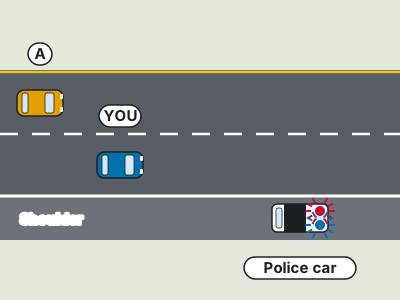
- Maintain speed because the shoulder is separate
- Slow down and pass with caution
- Stop in the travel lane until the vehicle leaves
- Pass on the shoulder without reducing speed
Show answer
Slow down and pass with caution. Minnesota's Move Over guidance requires a driver who cannot move a lane away, or who has only one lane in that direction, to slow down and pass with caution. The choice “Maintain speed because the shoulder is separate” keeps normal speed even though the rule calls for a deliberate reduction. The choice “Stop in the travel lane until the vehicle leaves” creates an unnecessary obstruction in the travel lane, and the choice “Pass on the shoulder without reducing speed” combines an unsafe shoulder maneuver with the wrong speed. Look well ahead for flashing lights, check whether a lane change is safe, and use the reduced-speed response when a full lane move is unavailable.
Study this in the handbook: Emergency vehicles, the Move Over Law and traffic stops
3. Where may a person with a Minnesota Class D license drive a Neighborhood Electric Vehicle?
- On streets with speed limits of 35 mph or less
- On any street where the driver can reach 35 mph
- Only on private property
- Only on roads posted at 55 mph or higher
Show answer
On streets with speed limits of 35 mph or less. A Class D license permits NEV operation only on streets whose speed limit is 35 mph or less. The restriction refers to the posted limit of the street, not the vehicle's ability to reach a particular speed. Private property is not the manual's stated boundary, and high-speed roads are outside the permitted category. Before entering a roadway, read its posted limit and confirm that it falls at or below 35 mph.
Study this in the handbook: Commercial vehicles, railroad crossings and work zones
4. Which stopped vehicles are covered by Minnesota's move-over rule when their warning lights are activated?
- Only private passenger vehicles with a flat tire
- Only police cars displaying blue lights
- Only ambulances on interstate shoulders
- Stalled vehicles and listed service, maintenance, utility, construction, postal, and recycling vehicles
Show answer
Stalled vehicles and listed service, maintenance, utility, construction, postal, and recycling vehicles. The move-over protection covers stalled or disabled vehicles as well as stopped service patrol, road maintenance, utility, construction, postal, and solid waste or recycling vehicles when their warning lights are activated. The other choices narrow the rule to police cars, ambulances, or private vehicles, leaving out the broader roadside group. When changing lanes is unsafe or there is only one lane in your direction, slow down and pass cautiously. Flashing warning lights should prompt both extra space and a careful scan for people working beside the roadway.
Study this in the handbook: Emergency vehicles, the Move Over Law and traffic stops
5. At an uncontrolled T-intersection, who has priority when the road you are on ends?
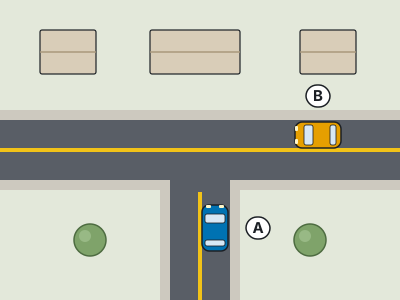
- Cross traffic on the continuing road
- The vehicle that reaches the pavement edge first
- The driver making the louder warning signal
- The vehicle turning from the ending road
Show answer
Cross traffic on the continuing road. A vehicle approaching an uncontrolled T-intersection from the road that ends must yield to all cross traffic on the road that continues. The ending road does not gain priority by arriving first or by signaling an intended turn. The through road's traffic may be moving in either direction, so check both approaches and wait for a safe opening before turning. Think of the pavement layout as the cue: the driver facing the cross street is entering another road and must give that road's traffic room to proceed.
Study this in the handbook: Right of way and yielding
6. What does an exempt sign allow certain bus and truck drivers to do at a railroad crossing?
- Stop only when the crossbuck is missing
- Ignore the crossing because trains must yield to buses and trucks
- Proceed without stopping while still looking in both directions for trains
- Cross without checking if the tracks appear empty
Show answer
Proceed without stopping while still looking in both directions for trains. An exempt sign permits bus and truck drivers who are usually required to stop at railroad crossings to proceed without stopping. It does not remove the duty to look in both directions for trains. The choices about ignoring the crossing, stopping only when a crossbuck is missing, or crossing without checking all omit the manual’s continuing safety instruction. Treat exempt as permission to continue without the usual stop, not as permission to stop observing the tracks. Slow down, scan both directions, and be ready to stop if a train or another warning requires it.
Study this in the handbook: Sign colors, shapes and regulatory signs
7. What does the sharp right-angle arrow warn you to do?

- Move into the opposing lane before the turn
- Continue at the current speed because the road remains straight
- Expect a traffic signal to control the next block
- Prepare for a sharp change in direction and slow to a safe speed
Show answer
Prepare for a sharp change in direction and slow to a safe speed. This warning describes a sharp change in the road's direction, so the driver should slow to a safe speed before entering it. Maintaining speed reduces control, and a traffic signal is a different warning. Moving into opposing traffic is not a turning requirement and creates a collision risk. Read the road beyond the sign, check for an advisory speed, and complete the needed deceleration while the vehicle is still straight. Then follow the lane through the turn without crossing into oncoming traffic.
8. Why should a Minnesota driver reduce speed on a gravel or dirt road?
- The posted limit automatically doubles on loose surfaces
- Stopping takes longer and skidding is easier when turning
- The road requires driving in the opposing lane
- Headlights cannot be used on an unpaved road
Show answer
Stopping takes longer and skidding is easier when turning. Loose road surfaces reduce traction and make vehicle response less predictable. The manual specifically advises slowing down on gravel or dirt because stopping takes longer and skidding is easier during a turn. The posted speed does not double, and the surface does not require a driver to use opposing traffic lanes. Headlights remain governed by visibility and other lighting rules. Enter a gravel stretch with a lower, controlled speed, leave extra following room, and brake smoothly before a curve. That combination gives the tires more opportunity to maintain contact with the road.
Study this in the handbook: Speed limits and the basic speed law
9. What maximum penalty does Minnesota law set if a death results while a driver is fleeing police in a motor vehicle?
- Up to one year in jail
- A $5,000 fine only
- Up to 40 years in prison, a fine up to $80,000, or both
- License revocation only
Show answer
Up to 40 years in prison, a fine up to $80,000, or both. Under Minnesota Statutes section 609.487, if the course of fleeing a peace officer results in death, the driver may be sentenced to up to 40 years in prison, fined up to $80,000, or both. Great bodily harm carries up to seven years and $14,000, and substantial bodily harm up to five years and $10,000. Fleeing without injury is itself a felony punishable by up to three years and one day and $5,000. Older manual figures of 10 years and $20,000 for a death are out of date.
10. A Minnesota driver's privileges were revoked for lack of insurance. Which step is part of reinstatement?
- Pay the $680 alcohol reinstatement fee
- Take a six hour behind-the-wheel course
- Wait until age 21
- Pay a $30 reinstatement fee and pass a written test
Show answer
Pay a $30 reinstatement fee and pass a written test. After an insurance revocation, the driver must pass a written test, pay a $30 reinstatement fee in addition to court fines, apply for a new license, and submit an insurance certificate from the insurer. The $680 fee belongs to alcohol-related revocations. The six hour behind-the-wheel course is part of Vanessa's Law reinstatement. Age 21 has nothing to do with this rule.
11. What alcohol concentration threshold does Minnesota identify for driving a commercial vehicle?
- 0.04 percent
- 0.02 percent
- 0.08 percent
- 0.16 percent
Show answer
0.04 percent. The manual gives commercial-vehicle driving a 0.04 percent alcohol-concentration threshold. That is lower than the 0.08 percent figure associated with a regular vehicle, so a commercial driver cannot use the regular-driver number as a safe substitute. The 0.02 percent value relates to an ignition-interlock starting threshold, while 0.16 percent is an aggravating level for more severe penalties. Identify the vehicle being operated before choosing which alcohol rule applies.
Study this in the handbook: How alcohol affects you and the DWI law
12. When children are present in a Minnesota school zone, what speed action is required?
- Keep the ordinary road speed without checking the area
- Accelerate through before more children arrive
- Slow down
- Stop in the travel lane until the zone is empty
Show answer
Slow down. The school-zone rule is triggered by children being present, and the driver's required response is to slow down. It does not say to speed up and clear the area, nor does it allow a driver to ignore the surroundings at the ordinary road speed. A full stop in the lane is also not the instruction unless another traffic control requires one. Reduce speed early, scan for children near the roadway, and remain ready to stop for someone entering the path.
Study this in the handbook: Speed limits and the basic speed law
13. What minimum age must an applicant meet to qualify for a Minnesota provisional license?
- 15 years
- 16 years
- 17 years
- 18 years
Show answer
16 years. A Minnesota provisional license applicant must be at least 16 years old. The choice “15 years” is the instruction-permit age range many new drivers associate with the graduated system, but it is below the stated provisional-license threshold. The choice “17 years” adds an unsupported extra year, and the choice “18 years” confuses this stage with the age requirement for a later under-21 Class D license. Age alone is not the entire application requirement: the manual also lists driver education, permit history, a supervised log, and a passed road test. Think of 16 as the minimum gate, followed by the training requirements.
Study this in the handbook: The instruction permit and provisional license
14. Which kind of sign is shown, and what must a driver do with it?
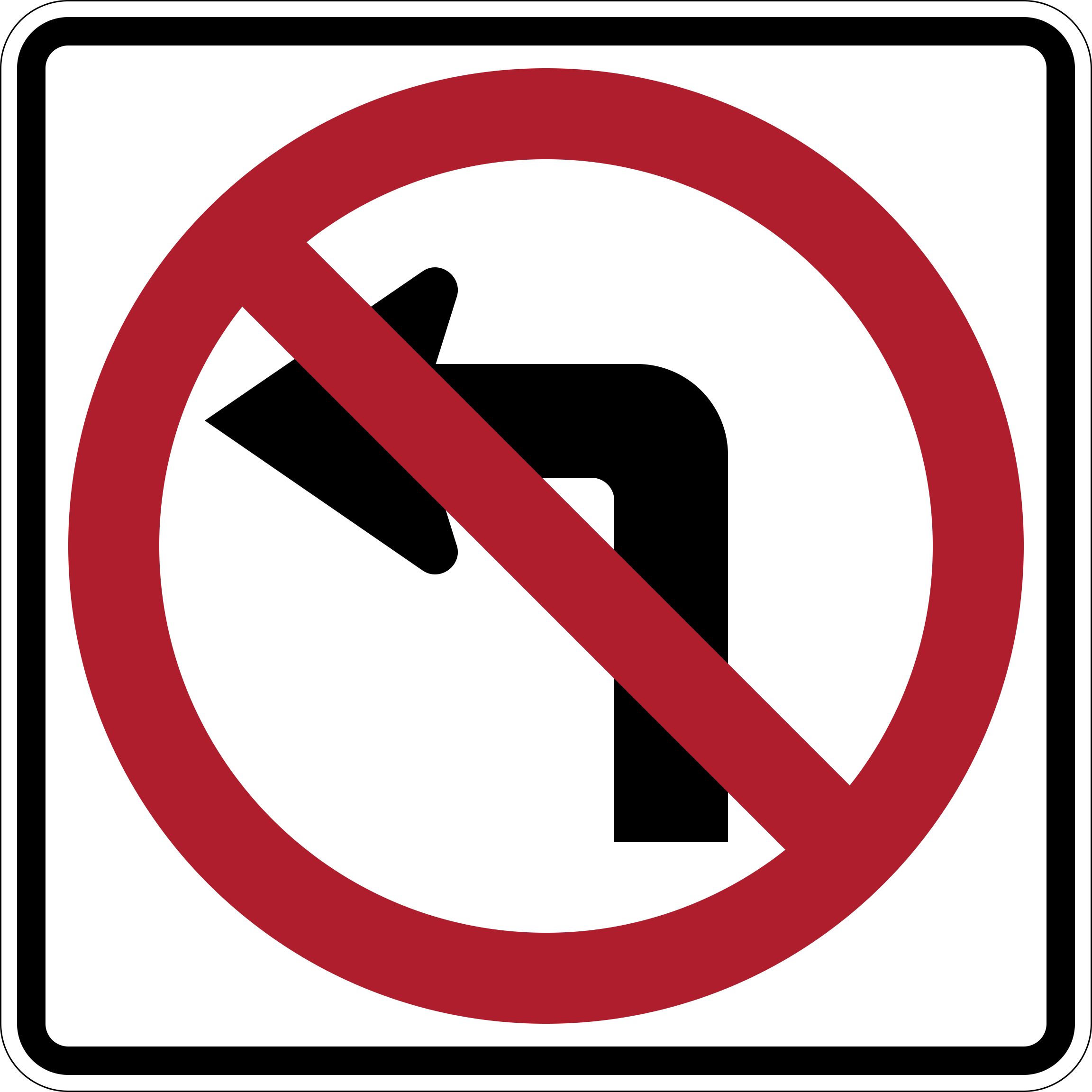
- A brown recreation sign that marks a park
- A green guide sign that is optional
- A regulatory sign that must be obeyed
- An orange construction sign that applies only to trucks
Show answer
A regulatory sign that must be obeyed. The pictured movement restriction is a regulatory instruction. Minnesota describes regulatory signs as directions tied to traffic laws, so a driver must obey the prohibition even when traffic is light or the maneuver looks harmless. The green choice confuses guidance with a legal command, brown signs point to historic or recreational locations, and orange signs manage construction areas. Before turning, scan for a red restriction symbol and compare it with the movement you intend to make. If the symbol covers that movement, choose another legal path.
Study this in the handbook: Sign colors, shapes and regulatory signs
15. What does a steady red X mean above a Minnesota freeway lane?
- You cannot drive in that lane
- You may use the lane for a left turn only
- You should accelerate before the lane closes
- The lane is reserved for buses
Show answer
You cannot drive in that lane. A steady red X is a lane use control signal that closes the lane to ordinary travel. The driver cannot drive in the lane while that indication is displayed. A flashing yellow X has a separate meaning, allowing use of the lane for a left turn with caution, while a yellow downward arrow tells the driver to prepare to move safely because the lane will close. The red X does not create a bus-only lane or invite acceleration. Check the overhead signal before entering a freeway lane and merge only when the adjacent movement is safe.
Study this in the handbook: Traffic signals, lane use signals and ramp meters
16. What should you anticipate at the intersection shown by this plus-shaped warning sign?

- A railroad crossing with a second track
- A hospital entrance with priority access
- An intersection ahead where you should prepare to yield
- A location where all turning is prohibited
Show answer
An intersection ahead where you should prepare to yield. The crossroad warning announces an intersection ahead. Prepare to yield because traffic may enter from the crossing roadway, and do not assume your route has priority. A hospital is identified by a service sign, a second railroad track is shown by a supplemental sign below a crossbuck, and the symbol does not prohibit every turn. As you approach, scan both sides, ease off the accelerator, and identify who has the right of way before entering the intersection.
Study this in the handbook: Warning, school, construction and guide signs
17. Which circumstance can lead to a felony DWI charge in Minnesota?
- A refusal to signal a lane change after drinking
- Any first DWI with no aggravating facts
- A DWI only when the vehicle was moving on a freeway
- A fourth DWI arrest within a 10-year period
Show answer
A fourth DWI arrest within a 10-year period. The manual lists a fourth DWI arrest within a 10 year period as one basis for a felony DWI charge. It also lists a previous felony DWI conviction and criminal vehicular homicide while under the influence. The choice about any first DWI with no aggravating facts treats every first offense as a felony, which overstates the rule. The freeway choice invents a road type condition, and failing to signal a lane change after drinking describes a traffic violation rather than one of the felony triggers. When reviewing prior incidents, count the 10 year window carefully.
Study this in the handbook: Implied consent and DWI penalties
18. When does a Minnesota Under 21 license expire?
- On the driver's 21st birthday, and then every four years on the birthday
- At age 25
- Every year
- Never until surrendered
Show answer
On the driver's 21st birthday, and then every four years on the birthday. If you are under 21 you receive a license marked Under 21, which expires on your 21st birthday and then expires every four years on your birthday. To get the under 21 Class D license, the manual says you must be at least 18 years old or have held a provisional license for 12 consecutive months with no convictions for alcohol, controlled substance, or crash related moving violations. Age 25, a yearly cycle, or no expiration at all do not match the stated schedule for this license.
Study this in the handbook: Provisional license limits, Vanessa's Law and the under 21 license
19. What does a solid white line with a bicycle insignia mark?
- A lane where cars may park during daylight
- An area reserved for bicycle or electric-assist bicycle traffic
- A passing lane for vehicles traveling in either direction
- A shoulder that motorcycles must use
Show answer
An area reserved for bicycle or electric-assist bicycle traffic. The marking identifies space for bicycle or electric-assist bicycle traffic, separating that use from ordinary vehicle lanes. It is not a parking area, a two-way passing lane, or a motorcycle-only shoulder. Drivers should recognize the bicycle symbol and avoid treating the marked space as an extra lane for convenience. When crossing such a lane to turn or enter a driveway, check carefully for approaching bicyclists and yield when required. The cue is the combination of solid white boundary and bicycle insignia: reserved bicycle space, not spare pavement for cars.
Study this in the handbook: Lines and lane markings
20. Who is responsible for making sure children riding in your vehicle use an age-appropriate restraint?
- Only the child’s parent, even when not present
- The driver
- The passenger sitting in the front seat
- The vehicle manufacturer
Show answer
The driver. The Minnesota manual places passenger-safety responsibility on the driver. That includes insisting that everyone wears a seat belt and making sure children are secured in an age-appropriate child restraint system. The parent-only choice may sound reasonable, but it does not remove the driver’s stated duty during the trip. Before moving, check that young passengers are properly buckled and that the restraint matches the child’s needs. This is an active responsibility, not something delegated to the front passenger. The cue is simple: the person controlling the vehicle must verify passenger protection.
Study this in the handbook: Seat belts, child seats, airbags and window rules
QualitySpace is expanding to Minnesota
We are a California-based independent insurance brokerage working on licensing in more states. We cannot help with Minnesota insurance yet. Leave your email and we will let you know when we can.
Every question is written from the official Minnesota Driver's Manual. Need paper? Printable MN practice test with answer key.
Last verified 2026-10-05. How we check every question · Study all 208 as flashcards
Frequently asked questions
How many questions are on this Minnesota practice test?
This fixed set has 20 questions. It is test 2 of 10 from the 208 question Minnesota bank.
How does this fixed test relate to the full Minnesota bank?
Each numbered test is a fixed set of questions in a fixed order, so you can retake the same test later and compare. Every test mixes road signs and the other topics in about the same proportion as the full bank. Tests 1 to 10 together cover 200 of the 208 questions in the Minnesota bank, each once. The full practice page mixes the whole bank at random.
Last verified 2026-10-05. See the Minnesota DMV facts page for sourced state details.
Return to the full Minnesota practice test · Study road signs