
Key points
Drive at a speed reasonable for weather, traffic and road conditions. Driving faster than the posted limit is illegal.
Source: Handbook p. 26
“you must drive at a speed that is reasonable for the current conditions, including weather, traffic and road conditions. Driving faster than the posted speed limit is illegal.”
Minnesota Driver's Manual, Handbook p. 26On two lane highways posted 55 mph or higher, you may go 10 mph faster while lawfully passing.
Source: Handbook p. 26
“On two-lane highways with a speed limit of 55 mph or higher, you can increase your speed by 10 mph when lawfully passing another vehicle.”
Minnesota Driver's Manual, Handbook p. 26It is illegal to drive slower than a posted minimum speed under normal conditions.
Source: Handbook p. 26
“It is illegal to drive slower than the posted minimum speed under normal conditions.”
Minnesota Driver's Manual, Handbook p. 26If you approach an intersection at an unlawful speed, you lose your right of way.
Source: Handbook p. 26
“If you approach an intersection at an unlawful speed, you lose the right-of-way privilege associated with driving at a lawful speed.”
Minnesota Driver's Manual, Handbook p. 26Unless signs say otherwise: 10 mph in alleys, 30 mph on urban or town roads, 55 mph elsewhere.
Source: Handbook p. 26
“10 mph in alleys 30 mph on urban or town roads 55 mph in all other locations that are not specified in this list”
Minnesota Driver's Manual, Handbook p. 26Extra fines apply at 20 mph or more over the limit, and over 100 mph means at least six months of revocation.
Source: Handbook p. 27
“Additional fines apply if you drive 20 mph or more over the limit. If you drive over 100 mph, your driving privileges will be revoked for at least six months.”
Minnesota Driver's Manual, Handbook p. 27Not slowing for a stopped emergency vehicle with flashing lights adds a surcharge of at least $25.
Source: Handbook p. 27
“You must slow down when you approach or pass a stopped emergency vehicle with flashing emergency lights. A surcharge of at least $25 is added to the speeding fine if you break this law.”
Minnesota Driver's Manual, Handbook p. 27On gravel or dirt roads, slow down because stopping takes longer and skids are easier.
Source: Handbook p. 27
“On gravel or dirt roads, you need to slow down because it takes longer to stop and is easier to skid when turning.”
Minnesota Driver's Manual, Handbook p. 27
Numbers to know
| Number | What it means | Manual |
|---|---|---|
| 55 mph, +10 mph | on two lane highways posted 55 mph or more, extra speed allowed while passing | Handbook p. 26 |
| 10, 30, 55 mph | default limits for alleys, urban or town roads, and elsewhere | Handbook p. 26 |
| 20 mph over; 100 mph, 6 months | extra fines threshold, and revocation for driving over 100 mph | Handbook p. 27 |
| $25 | minimum surcharge for not slowing for a stopped emergency vehicle | Handbook p. 27 |
Recognize these signs
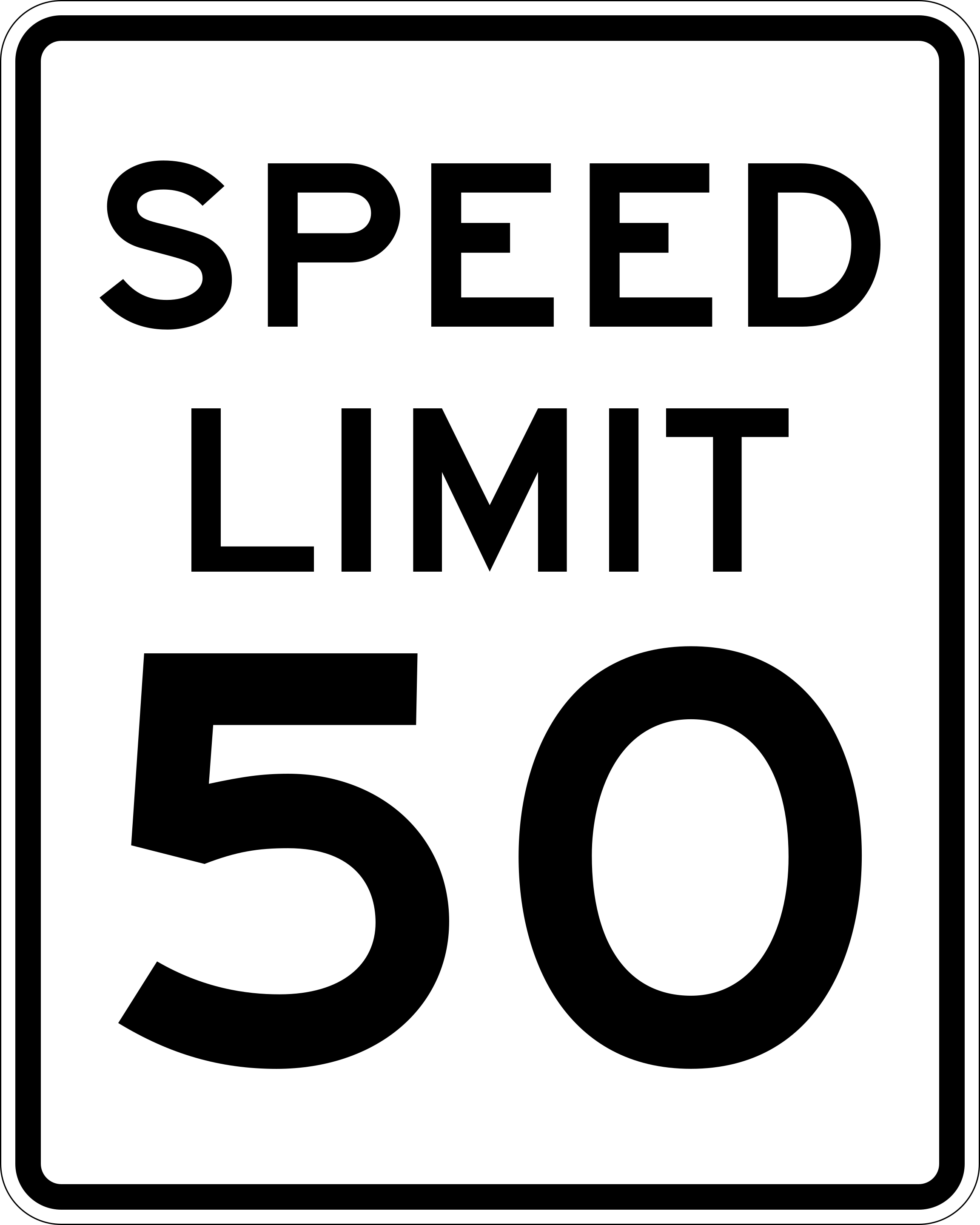
Speed limit
3 questions from the Minnesota practice test
1. What does Minnesota's posted speed limit represent?
- The minimum speed required in every condition
- The maximum speed allowed on that road
- A recommended speed that may be exceeded when traffic is light
- A speed that applies only when no warning signs are present
Show answer
The maximum speed allowed on that road. Minnesota describes a posted speed limit as the maximum speed allowed on that road. It is not merely a suggestion that can be exceeded when traffic is light, and it does not become a minimum requirement. The basic speed law still requires a reasonable speed for weather, traffic, and road conditions, so the posted number is an upper boundary rather than a promise that the road is safe at that pace. A driver should scan for a lower posted limit, then reduce speed when conditions worsen. The practical cue is maximum allowed speed, not automatic safe speed.
2. How far above the posted speed limit must a Minnesota driver travel before additional fines apply?
- 5 mph or more
- 20 mph or more
- 15 mph or more
- 10 mph or more
Show answer
20 mph or more. Minnesota adds additional fines when a driver travels 20 mph or more above the posted speed limit. The lower thresholds in the other choices do not match the figure stated in the manual, although speeding below that point can still bring a regular fine. The rule concerns the amount over the posted limit, not a special permission to exceed it. Read the sign first, compare the vehicle's speed with that number, and treat a 20 mph gap as a serious penalty threshold.
3. When may a driver exceed a 55 mph posted limit by up to 10 mph under Minnesota's speed rule?
- While lawfully passing another vehicle on a two-lane highway
- Whenever the road is empty
- When merging onto any freeway
- Whenever the driver is late
Show answer
While lawfully passing another vehicle on a two-lane highway. Minnesota permits the 10 mph increase only while lawfully passing another vehicle on a two-lane highway whose speed limit is 55 mph or higher. An empty road, a freeway merge, or a driver's schedule does not satisfy those conditions. The allowance is narrow and does not turn the posted limit into a general target above the sign. Confirm the highway has two lanes and that the pass itself is lawful before applying this exception.
Practice this topic
Lock it in with speed limits questions from the free Minnesota practice test. Every answer comes with a plain English explanation.
Source: the Minnesota Driver's Manual, Chapter 3: Traffic laws and vehicle operation. This lesson is a plain English summary, not the law itself; where it differs, the manual and the statute govern. Last checked 2026-09-27.