
Test 7 of 10 · 20 questions · Free 2026
MN Permit Practice Test 7
Jump to the test ↓A fixed 20 question set from the Minnesota bank with answers and plain English explanations.
Question 1 of 20 · 0 right so far
All 20 questions in test 7
Every question below comes from the Minnesota question bank on this page. Open a question to see the correct answer and the explanation. Nothing here is hidden behind a signup.
1. A Minnesota driver commits a second DWI within 10 years of the first. What is the minimum revocation?
- 90 days
- Three years
- One year
- Six months
Show answer
One year. A second offense within 10 years of the first brings a minimum one-year license revocation, possible required ignition interlock, one year in jail, a $3,000 fine or both, and impounded license plates. Ninety days is the first offense minimum. Three years is the minimum for a third offense within 10 years. Six months is the revocation for driving over 100 mph, a different offense.
Study this in the handbook: Implied consent and DWI penalties
2. Which of these can get a Minnesota license suspended?
- Renewing your license early
- Driving 5 mph under the limit in rain
- Letting someone use your license to buy alcohol for a person under 21
- Carrying a passenger in the back seat
Show answer
Letting someone use your license to buy alcohol for a person under 21. Minnesota's suspension list includes using, or allowing someone else to use, your license, permit or ID card to buy tobacco for someone under 18 or alcohol for someone under 21. Other listed causes include a fake license, failing to pay child support, falsely identifying yourself to police, and paying a DVS fee with a bad check. Renewing early, slowing down in rain and carrying a back seat passenger are lawful.
3. Which of these is listed as grounds for revoking a Minnesota license?
- One parking ticket
- Failing to renew registration for one week
- A single speeding ticket 10 mph over
- Pleading guilty to three violations in one year of traffic laws that require a jail sentence
Show answer
Pleading guilty to three violations in one year of traffic laws that require a jail sentence. The revocation list includes pleading guilty or forfeiting bail for three violations in a single year of any Minnesota traffic law or ordinance that requires a jail sentence on conviction. It also covers refusing or failing an alcohol test, fleeing police, driving over 100 mph, and failing to stop and render aid after a crash. A parking ticket, a short registration lapse and a single modest speeding ticket are not revocation grounds.
4. A Minnesota applicant under 18 has no living parents or guardian. Who may sign the license application?
- A close family member, an employer, or a spouse who is at least 18
- Only a court-appointed guardian named later
- A 16 year old sibling
- Nobody, so the teen must wait until 18
Show answer
A close family member, an employer, or a spouse who is at least 18. Normally a parent, court-appointed guardian, county foster parent or transitional living program director approves a minor's application. If the teen has no living parents or guardian, or is married or legally emancipated, a close family member, an employer or a spouse at least 18 may sign. A 16 year old sibling is not an adult signer. Waiting until 18 is not required, and a guardian need not be appointed first. The signer may later withdraw approval.
Study this in the handbook: The instruction permit and provisional license
5. May a Neighborhood Electric Vehicle be used for a Minnesota road test?
- No, unless it has four wheels and a roof
- Yes, if its registration is current
- Yes, but only on a 35 mph street
- No, it may not be used for a road test
Show answer
No, it may not be used for a road test. Minnesota specifically excludes NEVs from road tests. Registration, roadway speed, and the number of wheels do not create an exception to that statement. An NEV can be legally driven by a Class D license holder on qualifying streets, but that driving permission is separate from the vehicle requirements for a road test. Keep those two ideas apart: street use may be allowed while the NEV itself remains unavailable for the testing appointment.
Study this in the handbook: Commercial vehicles, railroad crossings and work zones
6. What may not a driver do when a vehicle ahead has stopped for a pedestrian in a crosswalk?
- Wait until the pedestrian has cleared the lane
- Remain stopped behind it
- Pass the stopped vehicle
- Yield to the pedestrian before continuing
Show answer
Pass the stopped vehicle. Passing a vehicle stopped for a pedestrian is prohibited because the stopped vehicle may be shielding someone in the crosswalk from your view. Remaining behind the vehicle, waiting for the pedestrian to clear the lane, and yielding all preserve the protected crossing. A clear-looking lane beside the stopped vehicle is not enough reason to continue. First look for the pedestrian and be prepared to stop. This rule is especially important near unmarked crossings, where a person may have the right of way even though painted lines are absent.
Study this in the handbook: Pedestrians, bicyclists and motorcycles
7. A regulatory sign tells a driver to do what?
- To identify a scenic attraction without imposing a rule
- To direct drivers to follow a traffic law
- To warn only of weather that may occur later in the day
- To show the color of the pavement ahead
Show answer
To direct drivers to follow a traffic law. Regulatory signs direct drivers to obey particular traffic laws, such as stopping, yielding, keeping a specified speed, or avoiding a prohibited movement. Ignoring one can lead to a citation and fine, so the sign communicates an enforceable requirement rather than general travel information. Scenic attractions use different guidance signs, weather warnings are not the defining purpose of regulatory signs, and pavement color is not their role. The cue is the sign's command: identify what action or restriction it sets, then follow it even when traffic appears light.
Study this in the handbook: Sign colors, shapes and regulatory signs
8. A school bus's red lights are flashing, but its stop arm does not swing out. What must a Minnesota driver do?
- Stop at least 20 feet from the bus
- Pass slowly because the arm failed
- Stop only if a child is visible
- Continue until the driver sees a hand signal
Show answer
Stop at least 20 feet from the bus. Flashing red bus lights require a stop even when the mechanical stop arm does not extend. The vehicle must be stopped at least 20 feet from the bus, so a failed arm is not permission to pass. Waiting for a visible child or a hand signal adds conditions that the rule does not require. Treat the red lights as the controlling warning and stop at the required distance. The only exception the manual lists is traffic going the opposite direction on a divided highway.
Study this in the handbook: Stop rules, school buses and fleeing police
9. When road conditions are poor, how should following distance change?
- Ignore time and follow by one vehicle length
- Reduce it to two seconds because traffic moves slower
- Keep exactly three seconds in every condition
- Increase it to a four- or five-second count
Show answer
Increase it to a four- or five-second count. The standard three-second count is intended for a standard-length vehicle in ideal conditions. Poor weather, slick pavement, or another adverse condition reduces the margin available for braking and steering, so Minnesota advises increasing the gap to a four- or five-second count. Keeping three seconds treats ideal conditions as universal. A shorter interval is especially risky because it leaves less time to recognize trouble ahead. Choose a roadside reference point, count after the lead vehicle passes, and add time whenever the environment or vehicle length demands it.
Study this in the handbook: Following distance, night driving and freeways
10. Blue signs along a highway generally direct motorists to what?
- Mandatory lane changes in a work area
- Services such as telephones, gas, food, or hospitals
- Warnings about curves and slippery pavement
- Names of interstate exits and route distances
Show answer
Services such as telephones, gas, food, or hospitals. Blue motorist-services signs help drivers locate practical services, including telephones, gas, food, motels, hospitals, and rest areas. They do not establish a traffic command, warn about a curve, or provide the primary route guidance associated with green signs. If a blue panel appears, use it to anticipate an available service and make any lane decision early and safely. Color recognition is useful at highway speed because it provides a quick category before the wording can be read. Confirm the symbol or text for the particular service.
Study this in the handbook: Warning, school, construction and guide signs
11. Where may a Minnesota 15 year old with a restricted farm work license drive alone?
- Anywhere in the state
- To perform farm work during daylight within 40 miles of the farmhouse
- Only on the farm itself
- Within 150 miles at any hour
Show answer
To perform farm work during daylight within 40 miles of the farmhouse. At age 15 you may qualify for a restricted farm work driver's license after completing driver education and passing a road test, and with it you may drive alone to perform farm work during daylight hours within 40 miles of the farmhouse. A parent or guardian presents a form and property tax statement at the road test. Special medical and moped permits are also available at 15.
Study this in the handbook: Provisional license limits, Vanessa's Law and the under 21 license
12. How far does an average car at 55 mph need to stop compared with a loaded tractor trailer, according to the Minnesota manual?
- 50 feet and 100 feet
- 400 feet for both
- 1,000 feet for the truck and 500 for the car
- 130 to 140 feet for the car and more than 400 feet for the truck
Show answer
130 to 140 feet for the car and more than 400 feet for the truck. An average passenger car traveling at 55 mph can stop within 130 to 140 feet, while a fully loaded tractor trailer may need more than 400 feet to stop completely. Following a commercial vehicle too closely also hides the road ahead, so leave extra room, never cut in front of a truck, and allow for speed limiters and other operating restrictions trucks face.
Study this in the handbook: Commercial vehicles, railroad crossings and work zones
13. When thunderstorms or fog prevent a safe view ahead, what is the safest response?
- Increase speed while using high beams continuously
- Reduce speed, use extra caution, and be prepared to stop
- Keep the same speed because weather does not change right of way
- Stop immediately in the lane without checking surrounding traffic
Show answer
Reduce speed, use extra caution, and be prepared to stop. Minnesota’s weather guidance emphasizes controlled speed and readiness to stop when thunderstorms or fog reduce visibility. High beams and extra speed, as suggested by the choice “Increase speed while using high beams continuously”, can make glare and stopping distance worse rather than restoring a safe view. If you cannot see a safe distance ahead, leave the roadway and stop until visibility improves, but do so through a deliberate maneuver rather than an abrupt lane stop. Watch lane position, traffic, and the road edge. The cue is visibility governs speed: less view means less speed and more space.
Study this in the handbook: Distraction, aggression, winter driving and skids
14. What does a solid yellow line on your side of the center line require?
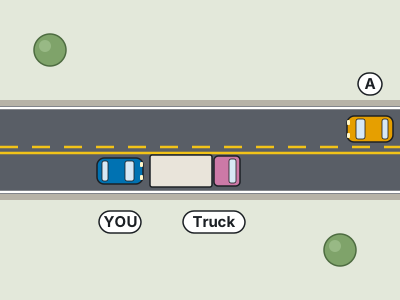
- You may pass whenever the road ahead looks clear
- You must not pass across that line
- You may use the line as a temporary parking boundary
- Only trucks are prohibited from crossing it
Show answer
You must not pass across that line. A solid yellow line separates opposing traffic and prohibits passing from the side where it appears. The choice “You may pass whenever the road ahead looks clear” is tempting because a clear view can make passing seem safe, but visibility does not override a no-passing marking. Yellow dashes have a different meaning, so do not confuse a broken line with the solid one beside your lane. Check the pavement before beginning a pass, especially on a two-lane road where crossing the center line places you among oncoming vehicles. The practical cue is solid yellow means stay behind, while yellow dashes may permit passing.
Study this in the handbook: Passing, backing up and parking
15. What should a pedestrian do when the raised hand or Don't Walk signal is flashing?
- Do not begin crossing; finish normally if already in the intersection
- Start crossing immediately before the hand becomes steady
- Run back to the curb even if already in the roadway
- Cross only after a driver waves you through
Show answer
Do not begin crossing; finish normally if already in the intersection. A flashing Don't Walk indication closes the opportunity to start a crossing, so a pedestrian still at the curb should wait. Someone already in the intersection may continue to the other side at a normal pace. Starting late creates pressure to hurry and increases exposure in the roadway. Running backward is not the stated response for a person already crossing, and a driver’s wave cannot replace the pedestrian signal. The simple memory cue is flashing hand means do not launch, but safely complete a crossing already underway.
Study this in the handbook: Traffic signals, lane use signals and ramp meters
16. What does a steady raised hand or Don't Walk signal mean to a pedestrian?
- Do not attempt to cross
- Cross normally if traffic appears light
- Begin crossing but stop in the center
- Wait for a vehicle to enter the crosswalk first
Show answer
Do not attempt to cross. A steady raised hand or Don't Walk signal tells pedestrians not to attempt a crossing. A light traffic gap does not override the signal, and entering only halfway still begins the prohibited movement. Someone already in the intersection should move to the nearest safe location as quickly and safely as possible, but a person waiting at the curb should remain out of the roadway. The key distinction is steady versus flashing: steady bars a new crossing, while flashing allows an existing one to be completed at a normal pace.
Study this in the handbook: Traffic signals, lane use signals and ramp meters
17. If a brake pedal suddenly sinks all the way to the floor, what should the driver try first?
- Switch off the ignition before touching the brakes again
- Turn the steering wheel sharply toward the nearest lane
- Pump the pedal to build pressure
- Press the accelerator to restore hydraulic pressure
Show answer
Pump the pedal to build pressure. A pedal that drops to the floor can indicate sudden brake failure. The first response is to pump the pedal in an attempt to rebuild pressure. If that fails, the manual advises slowly applying the emergency or parking brake, because a sudden application can start a skid. Turning sharply or pressing the accelerator does not restore braking control, and shutting off the ignition is not the initial response described here. The practical cue is a pedal with no pressure: pump it, stay composed, and use the remaining slowing options gradually while seeking a safe place to stop.
Study this in the handbook: Blowouts, brake failure and other vehicle emergencies
18. What traffic pattern does the arrow on this sign establish?
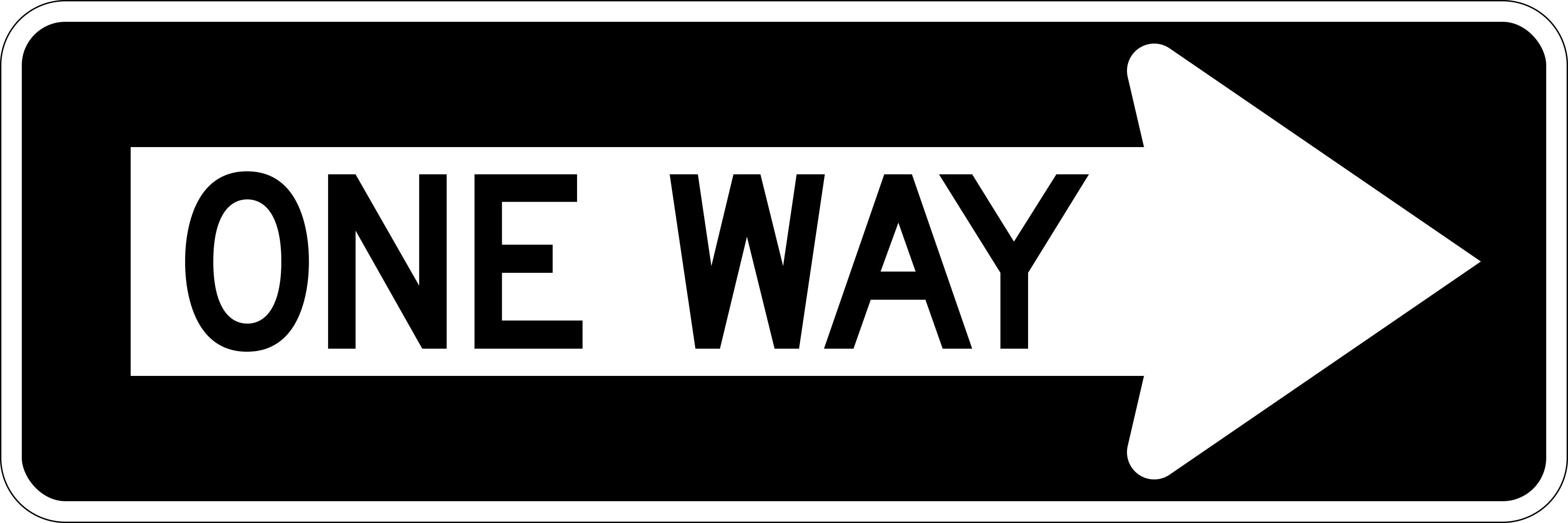
- Traffic in the specified lane flows only in the arrow's direction
- Traffic may travel either direction after yielding
- Only buses may use the lane
- The lane is reserved for left turns
Show answer
Traffic in the specified lane flows only in the arrow's direction. This sign establishes one-way movement, so vehicles in the specified lane must follow the arrow's direction. It does not create a two-way lane, and yielding does not permit a driver to travel against the posted flow. The bus-only choice describes a special-use lane, while the left-turn choice would require a lane-use control instruction. A useful cue is to look for the arrow's single direction and check nearby lane markings before entering. Treat the sign as a legal direction of travel, not as a suggestion about which way seems convenient.
19. What protection does a green arrow provide for a turn in the arrow's direction?
- The arrow permits movement only for pedestrians
- The driver must wait for a separate green circular signal
- The driver may turn only after yielding to every vehicle behind
- The turn should be protected from oncoming or crossing traffic
Show answer
The turn should be protected from oncoming or crossing traffic. A green arrow authorizes movement in the arrow's direction and normally protects that movement from oncoming or crossing traffic. It does not require waiting for a second circular green signal, and the signal is for the indicated vehicle movement rather than pedestrians. The phrase protected does not mean the driver can ignore people already in the intersection, however. Continue to look for pedestrians and unexpected hazards. The best cue is to follow the arrow's direction while maintaining a visual check of the turn path instead of treating the signal as permission to stop observing.
Study this in the handbook: Traffic signals, lane use signals and ramp meters
20. What does this lane-ending warning require from traffic in the right lane?

- Stop in the lane until a police officer directs movement
- Continue in the right lane because it gains priority
- Merge into left-lane traffic and yield
- Move onto the shoulder and pass the remaining lane
Show answer
Merge into left-lane traffic and yield. The warning shows two lanes becoming one, with the right lane ending. Drivers in that lane must merge into the left-lane traffic and yield while doing so. Continuing straight does not preserve priority after the lane ends, and stopping is not the ordinary merging procedure. The shoulder is not a passing lane. Signal, check the gap, and combine with traffic smoothly while following any work-zone directions. Looking early at the lane markings gives you time to merge without an abrupt movement.
Study this in the handbook: Warning, school, construction and guide signs
QualitySpace is expanding to Minnesota
We are a California-based independent insurance brokerage working on licensing in more states. We cannot help with Minnesota insurance yet. Leave your email and we will let you know when we can.
Every question is written from the official Minnesota Driver's Manual. Need paper? Printable MN practice test with answer key.
Last verified 2026-10-05. How we check every question · Study all 208 as flashcards
Frequently asked questions
How many questions are on this Minnesota practice test?
This fixed set has 20 questions. It is test 7 of 10 from the 208 question Minnesota bank.
How does this fixed test relate to the full Minnesota bank?
Each numbered test is a fixed set of questions in a fixed order, so you can retake the same test later and compare. Every test mixes road signs and the other topics in about the same proportion as the full bank. Tests 1 to 10 together cover 200 of the 208 questions in the Minnesota bank, each once. The full practice page mixes the whole bank at random.
Last verified 2026-10-05. See the Minnesota DMV facts page for sourced state details.
Return to the full Minnesota practice test · Study road signs