
Test 2 of 10 · 20 questions · Free 2026
AL Permit Practice Test 2
Jump to the test ↓A fixed 20 question set from the Alabama bank with answers and plain English explanations.
Question 1 of 20 · 0 right so far

All 20 questions in test 2
Every question below comes from the Alabama question bank on this page. Open a question to see the correct answer and the explanation. Nothing here is hidden behind a signup.
1. What does a round yellow railroad warning sign tell a driver?
- A railroad crossing is ahead, so the driver must slow and look both ways
- A roundabout is ahead and traffic moves counter-clockwise
- A no-passing zone begins immediately at the sign
- A road construction crew is working around the next curve
Show answer
A railroad crossing is ahead, so the driver must slow and look both ways. The advance railroad warning sign gives drivers time to prepare before reaching the tracks. Slow down, look carefully in both directions, and be ready to stop. It is not a roundabout instruction, a passing restriction, or a work-zone notice. The warning is especially important because a train cannot stop quickly, so a driver must make the crossing decision before entering the rail area.
Study this in the handbook: Railroad crossings
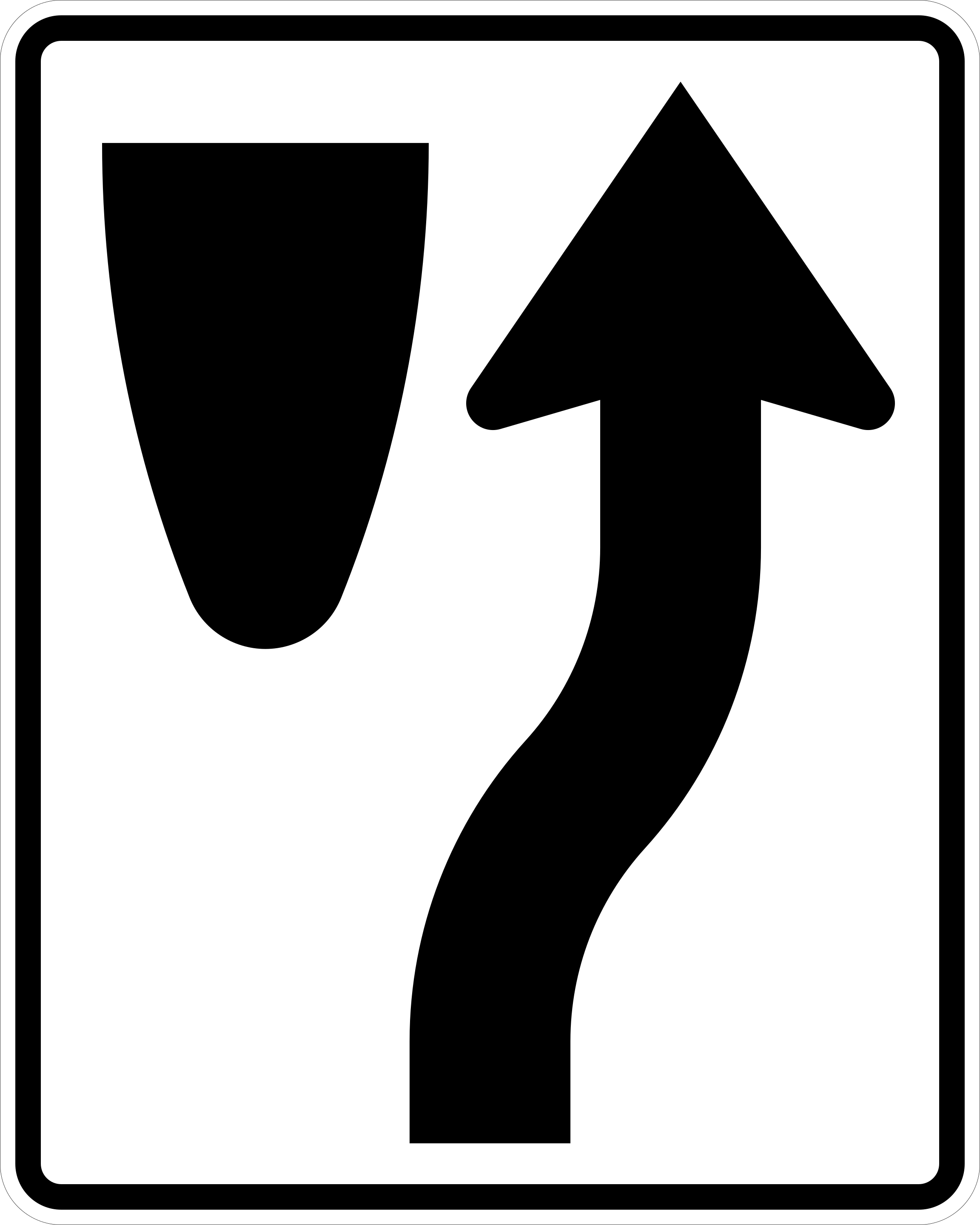
2. When a KEEP RIGHT sign marks an island or obstruction, where should the driver travel?
- Across the island if no vehicle is nearby
- To the left of the sign, against the arrow
- To the right of the sign and obstruction
- In the opposing lane until the obstruction ends
Show answer
To the right of the sign and obstruction. The keep-right instruction directs traffic around the right side of the marked island or obstruction. Crossing the island, moving against the arrow, or entering opposing traffic defeats the sign and creates a conflict point. Reduce speed, identify the usable lane, and follow the arrow around the object. The solid obstruction is the visual cue that makes this a required path rather than a lane preference.
Study this in the handbook: Sign types, regulatory signs and four way stops
3. In Alabama, at what blood alcohol content is it unlawful for a school bus or daycare driver to drive?
- .08% or more
- .02% or more
- .04% or more
- .10% or more
Show answer
.02% or more. Alabama sets different limits by driver type: .08 percent for most drivers, .04 percent for commercial vehicle operators, and .02 percent for both drivers under 21 and school bus and daycare drivers. So a school bus or daycare driver is covered at .02 percent or more. The .08 and .04 figures belong to other groups, and .10 percent is not a limit in the manual.
Study this in the handbook: Alcohol and the DUI law
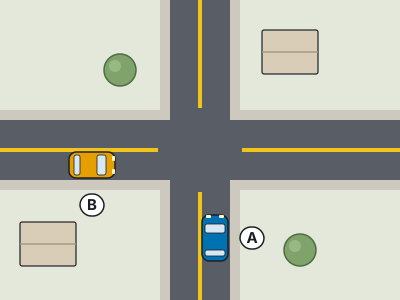
4. Two vehicles reach an uncontrolled intersection from different roads at about the same time. Which driver yields?
- The larger vehicle automatically proceeds first
- The driver on the right yields to the driver on the left
- The driver traveling faster yields
- The driver on the left yields to the driver on the right
Show answer
The driver on the left yields to the driver on the right. At an uncontrolled intersection, Alabama assigns the yield duty to the vehicle on the left when vehicles arrive from different roadways at about the same time. The driver on the right is the one to whom the left-side driver yields. Vehicle size and speed do not create the priority described here, so those choices add conditions absent from the rule. First determine whether signs or signals control the intersection. If they do not, compare the vehicles’ approach sides and use the simple left-yields-to-right cue before entering.
Study this in the handbook: Right of way and yielding
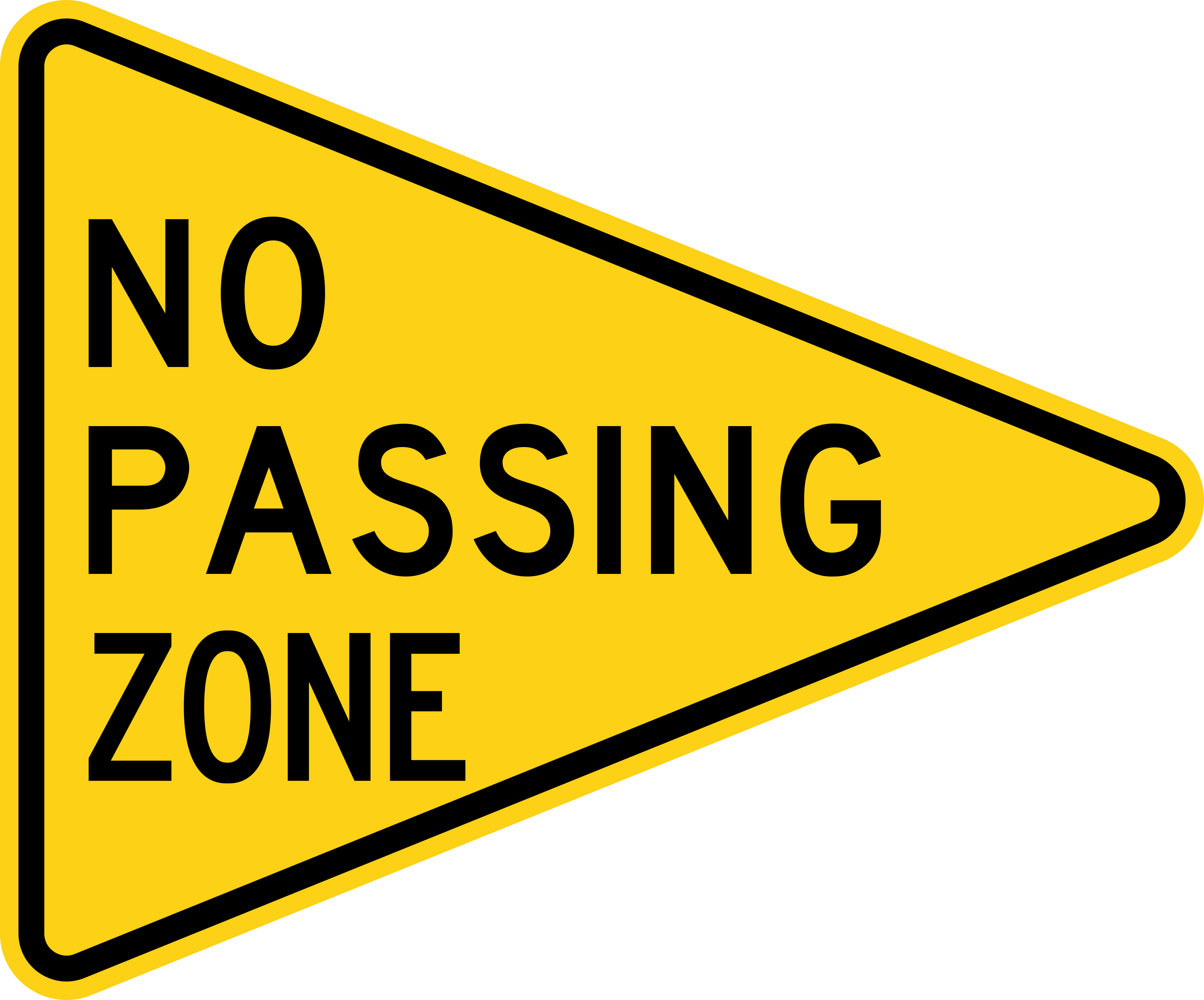
5. What does an Alabama NO PASSING ZONE sign mark?
- A temporary detour around construction
- A place where passing is required
- A lane reserved for slow vehicles
- A section where passing is prohibited
Show answer
A section where passing is prohibited. The NO PASSING ZONE sign marks the beginning of a section where passing is prohibited. The manual places it on the left side of a two-lane road, and it works alongside the solid yellow center stripes used where passing would be hazardous. The choice saying passing is required reverses the sign's purpose, while a slow-vehicle lane would describe a traffic-use instruction rather than a restriction on overtaking. It is not a detour marker either. Treat the sign as a cue to remain behind the vehicle ahead until the restriction ends and a pass can be completed safely.
Study this in the handbook: Sign types, regulatory signs and four way stops
6. What shape are warning signs usually, according to the Alabama manual?
- Rectangular shaped
- Circular shaped
- Diamond shaped
- Octagonal shaped
Show answer
Diamond shaped. Alabama says warning signs are usually diamond shaped, although the manual notes that some exceptions exist. The shape is a recognition cue that helps a driver identify a warning before there is time to read every detail. A circular sign is commonly used for railroad warnings, an octagon identifies STOP, and a rectangle is used for many regulatory or guide messages. Treat the diamond as a prompt to look for a hazard, then follow the symbol, wording, and posted speed guidance for the condition ahead.
Study this in the handbook: Sign types, regulatory signs and four way stops
7. When approaching a crest of a hill or a curve, what speed adjustment does the manual call for?
- Stop in the travel lane before every curve
- Accelerate so the vehicle spends less time there
- Maintain the maximum posted speed in all conditions
- Slow down before reaching the hill or curve
Show answer
Slow down before reaching the hill or curve. The manual lists hills and curves among locations where slower speeds are often required. Reducing speed before reaching the limited-visibility area gives the driver more time to detect an obstruction, oncoming traffic, or a changing road surface. Acceleration works against that safety margin, and a posted maximum is not a command to use that speed when conditions call for less. A full stop in every lane is unnecessary and can create a hazard. Use the roadway shape as the cue to ease off early, not after entering the blind portion.
Study this in the handbook: Curves, bicycles, motorcycles and large vehicles
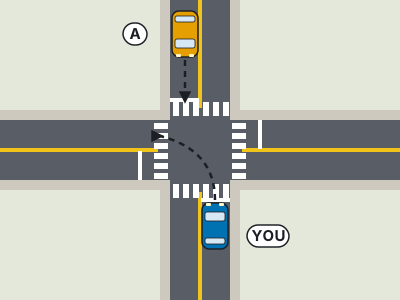
8. On a steady circular green signal, what must you do before turning left?
- Turn immediately because green gives every vehicle priority
- Yield to vehicles and pedestrians lawfully in the intersection
- Wait for a green arrow even when no restriction is posted
- Yield only to vehicles, never to pedestrians
Show answer
Yield to vehicles and pedestrians lawfully in the intersection. A steady circular green permits a driver to go straight or turn, but the movement is not a free pass through occupied space. Before turning left, look for people crossing and vehicles already lawfully using the intersection, then yield to them. The choice “Turn immediately because green gives every vehicle priority” wrongly treats the signal as automatic priority over everyone else. A green arrow would create a protected movement, but the choice “Wait for a green arrow even when no restriction is posted” invents a requirement that the manual does not impose for an ordinary green. Use the simple cue: green allows movement, while a clear path and proper yielding still control the turn.
Study this in the handbook: Traffic signals, arrows and lane use signals
9. On an Alabama roadway with four or more lanes, what must you do when approaching a stopped emergency vehicle with flashing lights?
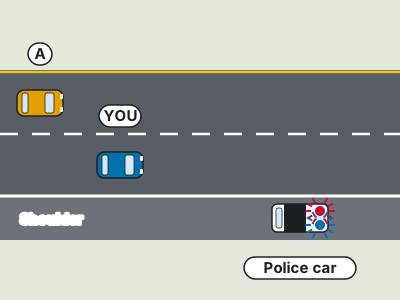
- Vacate the lane closest to the emergency vehicle
- Keep the same speed in the nearest lane
- Stop in the lane next to the emergency vehicle
- Move onto the shoulder and pass the emergency vehicle
Show answer
Vacate the lane closest to the emergency vehicle. Alabama's Move-Over Law requires motorists on roadways with four or more lanes to vacate the lane closest to a stopped emergency vehicle displaying flashing emergency lights, or a wrecker displaying flashing amber lights. If a lane change is unsafe or impossible, the driver must slow by at least 15 miles per hour below the posted limit. Maintaining speed beside the vehicle leaves workers exposed, while stopping next to it can obstruct the protected area. Check mirrors early, change lanes safely, or slow substantially when the adjacent lane cannot be used.
Study this in the handbook: The Move Over Law
10. What does the Alabama manual recommend for tires when driving in snow?
- Bald tires for better contact
- Snow treads on the drive wheels, while still driving below normal speed
- Overinflated tires
- Chains on all four wheels at all times
Show answer
Snow treads on the drive wheels, while still driving below normal speed. Snow treads on the drive wheels are recommended for general driving during snow because they greatly improve traction for starting and stopping. Do not be overconfident because you have them; you still must drive at less than normal speed. Start slowly to find out how slippery the road is, then adjust your speed to the situation, leaving extra room to stop on packed snow.
Study this in the handbook: Skids, hydroplaning, fog and hills
11. Before moving into another lane, what must a driver confirm?
- That the turn signal has been on for one second
- That the vehicle behind has slowed down first
- That safe clearance exists beside, ahead of, and behind the vehicle
- That the driver can see only the next lane in the mirror
Show answer
That safe clearance exists beside, ahead of, and behind the vehicle. A lane change requires a safe opening on all relevant sides, including beside the vehicle, ahead, and behind. Mirrors help, but they do not show every part of the blind spot, so a shoulder glance is also needed. The signal communicates intent but does not create clearance or grant a right to move. The choice “That the turn signal has been on for one second” invents a timing rule, and the choice “That the driver can see only the next lane in the mirror” accepts an incomplete check. Make the cue practical: signal, check mirrors, look over the shoulder, and move only after the full path is open.
Study this in the handbook: Passing, backing, lane changes and loads
12. In a skid involving a conventional rear-wheel-drive vehicle, easing off the gas helps by:
- Removing the need to steer
- Locking the front wheels immediately
- Making the rear wheels spin faster
- Letting the engine slow the rear wheels slightly
Show answer
Letting the engine slow the rear wheels slightly. For a conventional rear-wheel-drive vehicle, easing off the accelerator lets the engine act like a brake on the rear wheels. That can reduce the rear slide and give the front of the vehicle time to catch up while you steer. The faster-wheel choice reverses the manual's description, and no skid response removes the need for steering. Use gentle input: release the gas, avoid a sudden brake application, and work to keep the rear from outrunning the front.
Study this in the handbook: Skids, hydroplaning, fog and hills
13. What does an Alabama yield sign require when pedestrians or vehicles are crossing?
- Slow down and yield, stopping if necessary
- Maintain speed because the sign only gives advice
- Stop for exactly five seconds in every case
- Yield only to vehicles on the intersecting road
Show answer
Slow down and yield, stopping if necessary. A yield sign requires the driver to slow down and give the right of way to pedestrians crossing and vehicles on the intersecting street or highway. If the traffic situation requires it, the driver must stop. The sign does not merely suggest caution, so maintaining speed is unsafe. A fixed five-second stop is not the rule because the action depends on the traffic present. Pedestrians are included, which makes the choice “Yield only to vehicles on the intersecting road” incomplete. Approach with reduced speed, scan both directions, and be ready to stop before entering the conflict area.
Study this in the handbook: Sign types, regulatory signs and four way stops
14. What is the Alabama rule for a driver approaching a flashing red signal?
- Continue without slowing if the lane is clear
- Treat it the same as a flashing yellow signal
- Treat it the same as a STOP sign
- Stop only when a police officer is present
Show answer
Treat it the same as a STOP sign. A flashing red signal has the same meaning as a STOP sign. The driver must stop and then proceed only when the intersection can be entered safely and any applicable right-of-way duties are satisfied. Treating it like flashing yellow would reduce the required control, while continuing through a clear lane ignores the signal entirely. Police presence is not needed to activate the rule. At an unfamiliar intersection, identify the stop location, come to a complete stop, scan for traffic and pedestrians, and continue only after the way is clear.
Study this in the handbook: Stopping rules, school buses and emergency vehicles
15. What is the safest response if an Alabama vehicle has a blowout?
- Hold the steering wheel, steer straight, and ease off the accelerator
- Brake hard immediately
- Turn sharply toward the shoulder
- Shift into reverse while moving
Show answer
Hold the steering wheel, steer straight, and ease off the accelerator. During a blowout, hold the steering wheel firmly, steer straight, and ease up on the accelerator. Braking before control returns can make the vehicle less stable, so the hard-braking option is especially dangerous. A sharp turn may create a second loss of control before speed is reduced. Keep the vehicle pointed straight, let it slow, and brake only after control has been regained. A thumping sound or a pull to one side can warn of tire trouble, so respond calmly rather than making a sudden correction.
Study this in the handbook: Driving emergencies
16. Which seating areas are covered by Alabama’s child restraint requirement?
- Only the front seat
- Only the back seat
- Only a designated child seat row
- Both the front and back seats
Show answer
Both the front and back seats. Alabama’s manual applies the child restraint law to occupants of both front and back seats in the covered vehicle types. A back-seat-only answer is not the scope stated in this law summary. The front-seat-only choice is equally incomplete, and the manual does not create a special child-seat row. The key cue is the paired wording front and back. After identifying a covered vehicle and a child within the age range, check restraint compliance in either seating area rather than assuming the rule applies only behind the driver.
Study this in the handbook: Parking, safety belts and child restraints
17. What does a steady green arrow allow a driver to do?
- Enter only after the arrow changes to yellow
- Enter the intersection in the arrow's direction, yielding to lawful users
- Ignore pedestrians because opposing traffic must stop
- Make any movement from any approach lane
Show answer
Enter the intersection in the arrow's direction, yielding to lawful users. A steady green arrow authorizes entry into the intersection for the movement shown by the arrow, while the driver still yields to pedestrians and vehicles lawfully using the intersection. The arrow does not erase those obligations or authorize unrelated movements from every lane. The yellow-arrow choice delays the protected movement until it ends, which is the opposite of the signal's instruction. Scan the crosswalk and intersection before moving, then follow the arrow and any additional signal or sign that controls the turn.
Study this in the handbook: Traffic signals, arrows and lane use signals
18. An Alabama driver fails to surrender a suspended license within the time allowed. What extra fee is added at reinstatement?
- $25
- $50
- $100
- $500
Show answer
$50. Failing to surrender the driver license within the time allowed after it is canceled, revoked or suspended results in an additional $50 fee. That is on top of the base reinstatement fee of not less than $100. Twenty-five dollars is too low for this charge. Five hundred dollars is the first offense maximum fine for a mandatory liability insurance violation.
Study this in the handbook: Losing your license, points and phone laws
19. An Alabama driver reaches 24 or more points in a 2-year period. How long is the suspension?
- 180 days
- 120 days
- 365 days
- Permanent revocation
Show answer
365 days. At 24 or more points in a 2-year period, Alabama's schedule sets a 365 day suspension, the top of the ladder. One hundred eighty days is for 21 to 23 points and 120 days for 18 to 20. The point system suspends licenses; permanent revocation is not part of this schedule. Revocation is handled separately for listed offenses like a second DUI conviction.
Study this in the handbook: Losing your license, points and phone laws
20. Which of these Alabama drivers is exempt from the graduated license restrictions? Assume each is unmarried, is not the head of a household, and has not been legally relieved of minority status.
- A 17 year old who has held a valid license for 6 months or longer
- A 16 year old with a new license
- A 17 year old licensed last month
- A 15 year old with a learner license
Show answer
A 17 year old who has held a valid license for 6 months or longer. Alabama's GDL restrictions do not apply to drivers 18 or older, to 17 year olds who have held a valid license for 6 months or longer, to 16 year olds who are married or head of a household, or to minors legally relieved of minority status. A 16 year old with a new license and a 17 year old licensed only a month ago are still restricted. A 15 year old learner must drive with a qualified adult.
Study this in the handbook: The learner license and graduated license rules
QualitySpace is expanding to Alabama
We are a California-based independent insurance brokerage working on licensing in more states. We cannot help with Alabama insurance yet. Leave your email and we will let you know when we can.
Every question is written from the official Alabama Driver Manual. Need paper? Printable AL practice test with answer key.
Last verified 2026-10-05. How we check every question · Study all 200 as flashcards
Frequently asked questions
How many questions are on this Alabama practice test?
This fixed set has 20 questions. It is test 2 of 10 from the 200 question Alabama bank.
How does this fixed test relate to the full Alabama bank?
Each numbered test is a fixed set of questions in a fixed order, so you can retake the same test later and compare. Every test mixes road signs and the other topics in about the same proportion as the full bank. Tests 1 to 10 together cover every question in the Alabama bank once. The full practice page mixes the whole bank at random.
Last verified 2026-10-05. See the Alabama DMV facts page for sourced state details.