
Key points
Warning signs are black and yellow, except construction signs, which are black and orange.
Source: Handbook p. 44
“Warning signs are black and yellow, except those used in construction areas which are black and orange.”
Alabama Driver Manual, Handbook p. 44Fluorescent yellow signs mark pedestrian crossings and school zones.
Source: Handbook p. 44
“Fluorescent yellow indicates pedestrian crossings and school zones.”
Alabama Driver Manual, Handbook p. 44Warning signs are usually diamond shaped, with some exceptions.
Source: Handbook p. 44
“Warning signs are usually diamond shaped, but there are some exceptions.”
Alabama Driver Manual, Handbook p. 44The no passing zone pennant is on the left side of a two lane road.
Source: Handbook p. 48
“This sign is placed on the left side of a twolane road to warn of the beginning of a NO PASSING ZONE.”
Alabama Driver Manual, Handbook p. 48At a merge, drivers entering from the right must yield to traffic on the main route.
Source: Handbook p. 48
“Drivers entering from the right must yield to traffic on the main route”
Alabama Driver Manual, Handbook p. 48You must yield to pedestrians in the crosswalk at a pedestrian crossing.
Source: Handbook p. 49
“You must yield to pedestrians in the crosswalk.”
Alabama Driver Manual, Handbook p. 49A 3 foot minimum clearance is required when passing bicyclists.
Source: Handbook p. 50
“3 foot minimum clearance required when passing.”
Alabama Driver Manual, Handbook p. 50Guide signs are green for directions, blue for services and brown for recreation or culture.
Source: Handbook p. 51
“are green and white for motorist directions; blue and white for services; and brown and white for points of public recreational or cultural interest.”
Alabama Driver Manual, Handbook p. 51
Numbers to know
| Number | What it means | Manual |
|---|---|---|
| 3 feet | minimum clearance when passing a bicyclist | Handbook p. 50 |
Recognize these signs

Curve 
Stop ahead 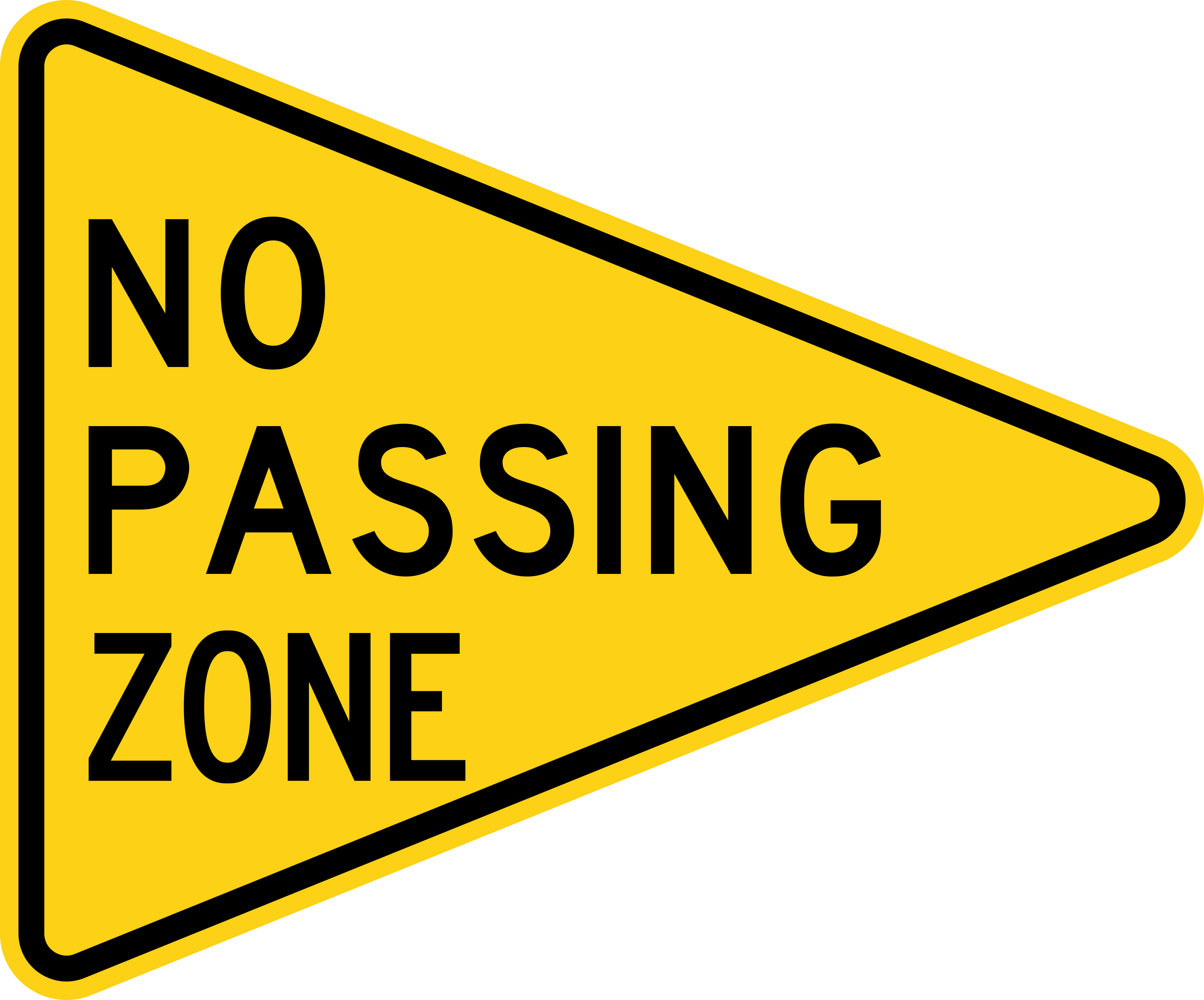
No passing zone 
Merge 
Pedestrian crossing 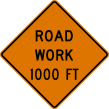
Road construction 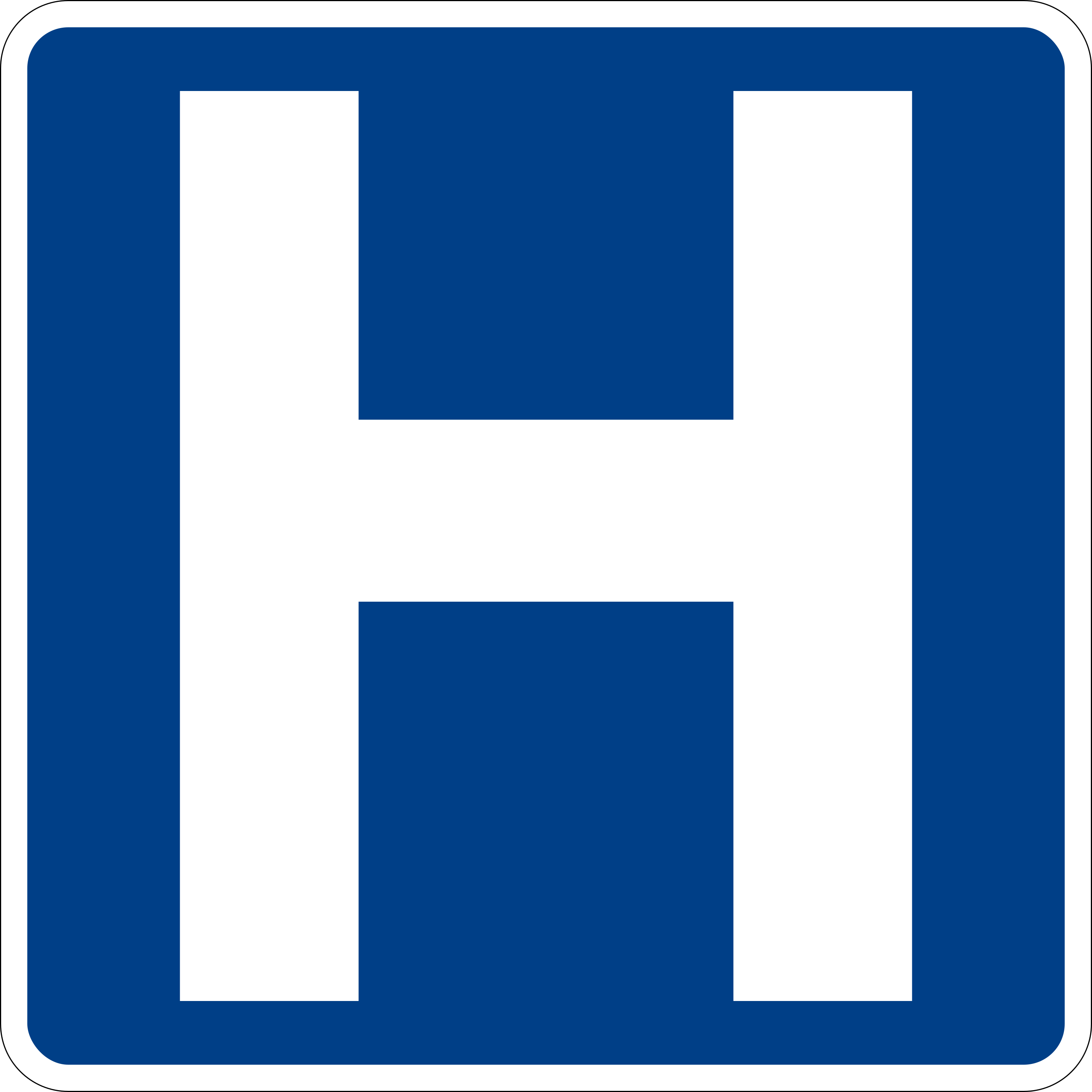
Hospital
3 questions from the Alabama practice test
1. What colors identify warning signs in Alabama, except for signs used in construction areas?
- Black and yellow, while construction signs are black and orange
- White and red, while construction signs are blue and white
- Green and white, while construction signs are black and yellow
- Orange and blue, while construction signs are white and red
Show answer
Black and yellow, while construction signs are black and orange. Warning signs normally use a black symbol or message on a yellow background. Construction areas are the important color exception, using black and orange instead. A green and white sign generally guides drivers, while white and red combinations are associated with regulatory messages. Do not choose a color pairing simply because orange suggests danger. On a practice question, first decide whether the sign warns about an ordinary roadway hazard or a temporary work area, then apply the matching color scheme. That quick classification helps distinguish a construction warning from a standard curve, crossing, or lane warning.
2. What colors are used for warning signs in construction areas?
- Black and white
- Black and orange
- Green and white
- Blue and white
Show answer
Black and orange. Warning signs in construction areas use black and orange. The black-and-white choice describes the usual appearance of regulatory signs, while green-and-white is used for motorist directions and blue-and-white identifies services. The orange color is the quick visual cue that a warning belongs to road work rather than ordinary hazards. Drivers should treat that color combination as a reason to slow down, look for workers or changing lanes, and follow any instructions in the work zone. The manual distinguishes construction warnings from the usual black-and-yellow warning signs.
3. A blue-and-white guide sign most likely identifies:
- Motorist directions
- Driver services
- A public recreational or cultural point
- A regulatory requirement
Show answer
Driver services. Blue and white guide signs identify services for drivers, such as a hospital, gas, food, or lodging. Green and white belongs to motorist directions, so that choice confuses the directional color with the service color. Brown and white marks public recreational or cultural points, making the option “A public recreational or cultural point” a destination category with a different color. A regulatory requirement is communicated by a regulatory sign, not by the blue service color. When reading a guide sign, use the color first, then the words or symbol to identify the kind of help or destination ahead.
Practice this topic
Lock it in with road signs questions from the free Alabama practice test. Every answer comes with a plain English explanation.
Source: the Alabama Driver Manual, Chapter 5: Signs, Signals and Road Markings. This lesson is a plain English summary, not the law itself; where it differs, the manual and the statute govern. Last checked 2026-09-27.