
Test 16 of 25 · 20 questions · Free 2026
AL Permit Practice Test 16
Jump to the test ↓A fixed 20 question set from the Alabama bank with answers and plain English explanations.
Question 1 of 20 · 0 right so far

All 20 questions in test 16
Every question below comes from the Alabama question bank on this page. Open a question to see the correct answer and the explanation. Nothing here is hidden behind a signup.
1. A round yellow sign with a black X and the letters RR appears beside your Alabama road. What is it telling you, and what should follow?
- A route junction is ahead; choose your lane early and proceed
- A rest area is near; maintain normal highway speed ahead
- A crossing is ahead; slow and look both ways
- A road crew is working ahead; change lanes at once to pass
Show answer
A crossing is ahead; slow and look both ways. The round yellow warning in Alabama announces a railroad crossing ahead and calls for slowing down, looking carefully in both directions, and being prepared to stop. A train cannot stop quickly, so the early warning gives you time to search the tracks before reaching them. Rest areas, work crews, and junctions use different messages and do not call for a track search. Ease off the accelerator when the round sign appears and keep scanning until the crossing itself is behind you.
2. Your right wheels drift off the pavement onto an Alabama shoulder at 45 miles per hour. Traffic beside you is light. What should you do?
- Brake to a stop half on the shoulder edge of the pavement
- Accelerate and climb the pavement edge quickly to return
- Swerve sharply back onto the pavement at highway speed
- Slow on the shoulder, then return gently
Show answer
Slow on the shoulder, then return gently. When wheels run off the pavement in Alabama, stay on the shoulder and reduce speed rather than swerving back, because a sharp return can throw the car off balance across the lane. Stopping astride the edge or charging the lip at speed can catch a tire and yank the steering. Slow while straight on the shoulder, check mirrors, and turn gently onto the pavement when pace is low. The pause costs seconds and avoids the cross lane skid a snap return creates.
Study this in the handbook: Driving emergencies
3. You plan to leave an Alabama freeway at the next exit. How should you prepare?
- Stay in the left lane until the exit, then cross quickly
- Get in the proper lane early, signal, and slow in the deceleration lane
- Slow down sharply while still in a through lane
- Signal only after entering the exit ramp
Show answer
Get in the proper lane early, signal, and slow in the deceleration lane. Leaving smoothly starts long before the ramp appears. Early lane placement avoids a hurried crossing of several lanes near the gore point. Waiting in the fastest lane and darting across invites sideswipes from drivers who cannot predict the move. Braking hard inside a through lane transfers the slowdown to everyone behind and risks a rear end strike. Signaling after reaching the ramp gives following drivers no useful warning. Get positioned early, show intent, and shed speed inside the lane built for that purpose.
4. You need to leave your car briefly on an Alabama street. A home driveway apron is open and no car is waiting to use it. May you park there?
- Yes, if you stay seated in the car the whole time
- Yes, for a short stop under ten minutes
- No, parking there is barred
- Yes, if you leave hazard lights flashing
Show answer
No, parking there is barred. A driveway entrance must stay clear so the people who use it can enter and leave without waiting for a stranger to move. Alabama lists parking in front of a driveway among the places where parking is not allowed. Staying in the car, keeping the stop brief, or flashing hazard lights does not create an exception. Choose a legal space that leaves the apron open, even when the driveway looks unused at that moment.
Study this in the handbook: Parking, safety belts and child restraints
5. Steam begins coming from under the hood in Alabama traffic. What should you do?
- Pull aside, turn off the engine, and leave the radiator cap closed
- Open the radiator cap slowly to release pressure
- Pour cold water into the radiator right away
- Keep driving until the temperature gauge falls
Show answer
Pull aside, turn off the engine, and leave the radiator cap closed. Steam signals that coolant is boiling and the system is under dangerous pressure. Stopping and shutting down lets heat stop building while avoiding burns from a cap released too soon. Removing the cap can spray scalding fluid, and adding cold water to a hot system can cause sudden steam or damage. Wait for cooling or professional help, keep people away from the front of the vehicle, and use warning devices if the stopping place creates a hazard.
Study this in the handbook: Driving emergencies
6. You plan a long trip on an Alabama interstate tomorrow and want to reduce drowsiness risk before you start. What preparation does the manual advise?
- Plan to rely on stay awake drugs once you feel sleepy on the road
- Take a nap or get enough rest before you start the long trip
- Skip rest and drink coffee only after drowsiness has started
- Start the trip sleepy and count on highway monotony to keep you alert
Show answer
Take a nap or get enough rest before you start the long trip. Drowsiness is a major danger on interstate driving, and preparation starts before the trip begins. For a long trip, the manual advises taking a nap beforehand rather than starting tired. On the road, regular breaks and getting out to walk and stretch also help. Stay awake drugs are not a safe substitute, because they can make driving even more hazardous when real sleep is needed.
Study this in the handbook: Losing your license, points and phone laws
7. You are driving in Alabama near dusk and you are unsure whether lights are needed yet. What should you do with your headlights?
- Leave lights off until darkness is complete
- Use parking lights alone until midnight
- Turn the headlights on low beam
- Switch to high beam and leave it there
Show answer
Turn the headlights on low beam. When fading light leaves doubt, low beams strike the balance between seeing and being seen. They light the road without the harsh bounce that high beams can create in fog or snow, and they help other road users spot your vehicle sooner. Parking lights alone do not give the same forward view or presence. Switching on early also builds a habit that carries into rain and dim mornings. If conditions worsen, slow down as well, because light alone cannot create distance that speed has already consumed.
Study this in the handbook: Night and winter driving
8. On a multi-lane two-way roadway in Alabama, when may a driver cross the center line?
- Only as part of a left turn maneuver
- Whenever passing a slower vehicle on the left
- At any point where no oncoming traffic is visible
- Only while returning from the shoulder to the lane
Show answer
Only as part of a left turn maneuver. On a multi lane road with traffic moving both ways, the center line is not a passing invitation. Crossing it belongs to the movement of turning left, where a driver briefly enters the opposing side to complete the turn. Passing, a clear view ahead, or returning from a shoulder do not create separate permission. Wait until the left turn can be made safely, yield to oncoming traffic, and keep the crossing short. Treating the line as a boundary protects both directions.
Study this in the handbook: Traffic signals, arrows and lane use signals
9. You stop at an Alabama stop sign, but buildings block your view of cross traffic. After that first stop, what may you need to do?
- Stop a second time if the blocked view reveals conflicting traffic
- Proceed slowly without stopping again in every case
- Back up and choose a different street at once
- Enter at normal speed once you have stopped once
Show answer
Stop a second time if the blocked view reveals conflicting traffic. One legal halt at the line does not ensure a clear view of the crossing road. Creeping to a better sight point can create a new conflict that deserves another halt. Rolling onward regardless repeats the blind entry the second stop prevents. Changing streets is unnecessary when a careful second look works. Inch forward, stop again if traffic conflicts, and enter only when both directions are clear.
Study this in the handbook: Speed limits
10. What movement does this sign forbid at the Alabama intersection where it stands?
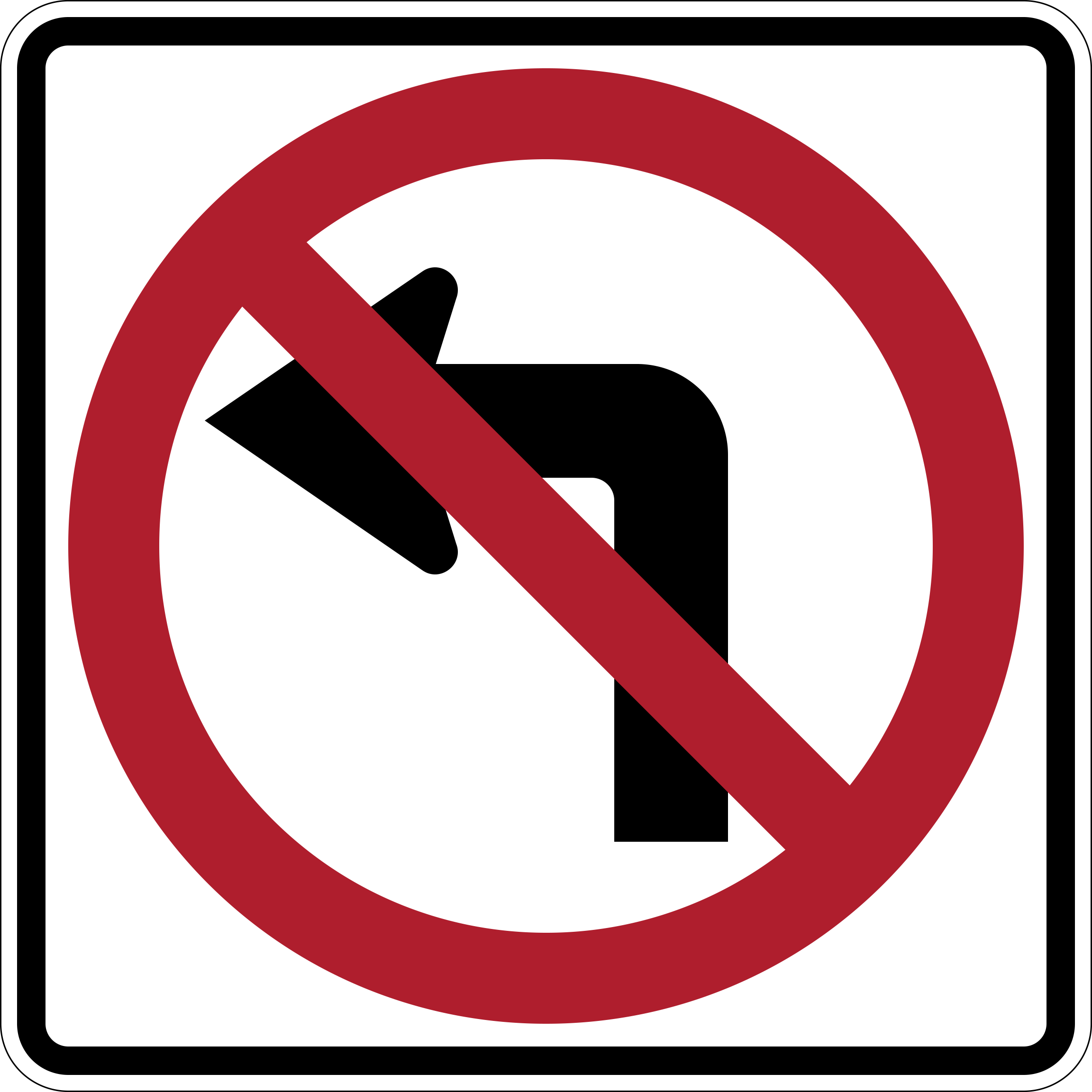
- Turning right onto the side street
- Continuing straight through the crossing
- Making a left turn at that intersection
- Backing around the corner after stopping
Show answer
Making a left turn at that intersection. A red slash across a turning arrow singles out one prohibited movement while other paths remain available. Straight travel continues lawfully, and a right turn stays open unless separate controls say otherwise. Backing around a corner introduces its own dangers and never answers what this symbol bans. Spotting the restriction early lets a driver choose a different block for reaching a destination on the left. Navigation plans should adapt before the intersection, using the next legal turn rather than swinging across opposing lanes against the posted direction.
Study this in the handbook: Sign types, regulatory signs and four way stops
11. You are about to start a car with a manual transmission in Alabama. What must you do before turning the ignition key?
- Turn the key first and press the clutch if the car moves
- Push the clutch pedal in before turning the ignition key
- Put the lever in a forward gear and ease out the clutch
- Press only the brake and leave the clutch out
Show answer
Push the clutch pedal in before turning the ignition key. Safety techniques begin when the driver steps into the car and should be used on every trip. The entering routine includes adjusting the seat and mirrors, checking that passengers are properly seated, and buckling the safety belt before switching on the ignition. For a vehicle with a manual transmission, the routine adds a specific starting step. The driver should push in the clutch before turning the ignition key. That order is part of the manual starting procedure for a hand shift vehicle.
Study this in the handbook: Good driving habits, turns and three point turns
12. In Alabama, how do the road rights of a person riding a bicycle compare with those of a person driving a motor vehicle?
- Both hold the same rights and responsibilities on the road
- Bicycle riders hold rights only inside marked bicycle lanes
- Drivers hold all rights, and bicycle riders must always yield
- Bicycle riders may ignore traffic laws that bind drivers
Show answer
Both hold the same rights and responsibilities on the road. A bicycle counts as a vehicle on Alabama roads, so its rider carries the same legal standing and the same duties as someone behind a wheel. Riders must obey signals, signs, and lane rules, while drivers must respect a rider as lawful traffic rather than an obstacle to brush past. Lane markings do not create or cancel those rights, and neither side may claim the whole road. Drivers should look for riders at intersections and driveways, leave passing room, and wait when space is tight. Equal standing works only when both sides act predictably.
Study this in the handbook: Good driving habits, turns and three point turns
13. At night in Alabama you dim your headlights for an oncoming driver, but that driver keeps high beams on. What should you do with your own lights?
- Flash your high beams repeatedly until the other driver dims
- Keep yours dimmed and look toward the right edge of the road
- Switch back to high beams so both drivers have equal light
- Speed up to get past the bright lights as quickly as you can
Show answer
Keep yours dimmed and look toward the right edge of the road. Dimming headlights when meeting or following another vehicle is required by law and is also sensible practice. Blinding an approaching driver in return helps no one, because that driver could crash, and oncoming traffic could crash into you instead. The manual is direct on this point: you prove nothing by blinding the approaching driver, and doing so only endangers yourself. Keep your own lights depressed and hold your lane while the other vehicle passes.
Study this in the handbook: Night and winter driving
14. At 8 in the morning you pass an Alabama school-zone sign listing hours that include this time, with amber lights flashing. What speed duty applies to you?
- The posted school-zone speed limit applies during those hours
- The ordinary street limit applies until a child enters the road
- A single 20 mph limit applies at every school in the state
- The sign can be ignored whenever its flashing lights are off
Show answer
The posted school-zone speed limit applies during those hours. A school-zone sign ties its limit to the hours printed on the sign, and the limit may also appear on a lighted sign with flashing amber lights. Morning travel inside those hours calls for the school-zone speed, not the ordinary street speed. Nothing in this rule creates one statewide number for every school, and a child does not need to enter the road before the duty begins. Read the hours early, slow before the zone, and hold the posted school speed through it.
Study this in the handbook: Sign types, regulatory signs and four way stops
15. When backing out of an Alabama driveway, which lane should the driver enter?
- The farthest lane with the lightest traffic
- Any lane, provided the horn is sounded
- The center turn lane until reaching full speed
- The nearest lane, without backing across other traffic lanes
Show answer
The nearest lane, without backing across other traffic lanes. Entering the nearest lane keeps a reversing vehicle out of paths used by faster through traffic. Crossing several lanes backward multiplies blind angles and forces other drivers to guess the intended direction. A light traffic count in a far lane does not remove that exposure. Horn use cannot claim a lane. The center turn lane is for turning movements, not a runway for gaining speed after reversing. Back slowly into the closest lane, straighten promptly, then change lanes later only after reaching normal forward visibility and signaling.
Study this in the handbook: Passing, backing, lane changes and loads
16. At an Alabama roundabout crosswalk, a pedestrian is still at the curb side. Which way should that pedestrian look for oncoming traffic before crossing?
- To the right only
- Straight ahead only
- Over the shoulder toward the exit
- To the left
Show answer
To the left. Traffic reaches the entry crosswalk from the pedestrian left side because vehicles approach the circle before yielding and entering. A leftward check at the curb catches that stream at the point where the first crossing decision is made. Looking only right, straight ahead, or back toward the exit misses the vehicles that can arrive first. Drivers share the job by yielding at the crosswalk, yet a pedestrian visible check adds a second layer of protection. After reaching the island area, the next check changes direction before the remaining crossing is finished.
Study this in the handbook: Roundabouts
17. The road is narrow in Alabama and you cannot pass a person on a bicycle with safe clearance. What should you do?
- Stay behind the rider until you can pass with safe clearance
- Follow closely and sound the horn to move the rider aside
- Squeeze past with less clearance on the narrow road
- Use the shoulder to get past the rider without waiting for room
Show answer
Stay behind the rider until you can pass with safe clearance. A narrow road with no safe passing clearance calls for patience behind the bicycle. Do not follow too closely and do not blast the rider with the horn to force room. Remain behind at a safe interval until you are able to pass with proper clearance. Crowding the rider, sounding the horn for space, and squeezing past or using the shoulder all create the close pass the rule is meant to prevent.
Study this in the handbook: Curves, bicycles, motorcycles and large vehicles
18. At an Alabama crossing with two tracks side by side, a small sign hangs below the crossbuck. What information does that lower sign give you?
- The distance to the nearest station
- The time the next train is due
- The speed of the next approaching train
- The number of tracks at the crossing
Show answer
The number of tracks at the crossing. When a crossing in Alabama has more than one track, a sign below the crossbuck indicates how many tracks there are. That count warns you that one train can hide another on a parallel track, so clearing the first track does not finish your check. No crossing sign posts train speeds, station distances, or schedules, and expecting posted times invites a fatal guess. Read the track count, slow down, and confirm every track is empty before any part of your car enters the crossing.
Study this in the handbook: Railroad crossings
19. During winter driving in Alabama, which maintenance check helps prevent carbon monoxide poisoning in your vehicle?
- Have the exhaust system checked regularly for leaks
- Warm up the motor in a closed garage before the winter trip
- Keep the exhaust system unchecked until symptoms appear
- Idle the motor with all windows closed tightly
Show answer
Have the exhaust system checked regularly for leaks. Carbon monoxide is odorless and deadly, and the risk rises in winter when drivers close the windows and warm the engine before traveling. One simple precaution is to have the exhaust system checked regularly to be sure it does not leak into the vehicle. Other precautions in the same list include not warming up the motor in a closed garage and not idling with every window closed tightly.
Study this in the handbook: Skids, hydroplaning, fog and hills
20. On an Alabama road with four lanes, a wrecker with flashing amber lights is stopped ahead in the lane beside yours. Traffic beside you leaves the nearest lane open. What must you do?
- Pass in the closest lane at full posted speed
- Vacate the lane closest to the wrecker when safe
- Stop behind the wrecker until its lights go off
- Honk and pass closely so workers hear you coming
Show answer
Vacate the lane closest to the wrecker when safe. On Alabama roadways with four or more lanes, motorists approaching emergency vehicles stopped with flashing lights, or wreckers showing flashing amber lights, must vacate the lane closest to that vehicle. An open neighboring lane makes that move available here, so passing close at speed ignores the protection the law builds for people working at the roadside. Stopping behind the wrecker blocks a travel lane without need, and a horn gives no physical shield. Move over early and pass with space to spare.
Study this in the handbook: Traffic stops, insurance and window tint
Every question is written from the official Alabama Driver Manual. Need paper? Printable AL practice test with answer key.
Last verified 2026-10-05. How we check every question · Study all 500 as flashcards
Frequently asked questions
How many questions are on this Alabama practice test?
This fixed set has 20 questions. It is test 16 of 25 from the 500 question Alabama bank.
How does this fixed test relate to the full Alabama bank?
Each numbered test is a fixed set of questions in a fixed order, so you can retake the same test later and compare. Every test mixes road signs and the other topics in about the same proportion as the full bank. Tests 1 to 25 together cover every question in the Alabama bank once. The full practice page mixes the whole bank at random.
Last verified 2026-10-05. See the Alabama DMV facts page for sourced state details.