
Test 23 of 25 · 20 questions · Free 2026
AL Permit Practice Test 23
Jump to the test ↓A fixed 20 question set from the Alabama bank with answers and plain English explanations.
Question 1 of 20 · 0 right so far
All 20 questions in test 23
Every question below comes from the Alabama question bank on this page. Open a question to see the correct answer and the explanation. Nothing here is hidden behind a signup.
1. Smoke and flame rise from under the hood of your Alabama car and no extinguisher is available. Which liquid must you avoid using on the fire?
- Water, because burning gasoline will float on it and spread the blaze
- Dirt scooped from the roadside shoulder and thrown over the flames
- Sand poured directly over the flames to cut off air to the fire
- A commercial extinguisher borrowed from a nearby driver or building
Show answer
Water, because burning gasoline will float on it and spread the blaze. Fuel spreading on water can carry flames outward and enlarge the burning area instead of smothering it. Dirt can cut off air when an extinguisher is missing. Sand works the same smothering way on a small engine fire. A proper extinguisher remains a suitable tool when available and safe to use. Get everyone away first, turn off the ignition, and fight only a tiny fire from a safe side.
Study this in the handbook: Driving emergencies
2. In Alabama, where should a person on a bicycle generally ride on a roadway?
- As close as possible to the center line of the roadway
- In the center of the travel lane on every roadway
- As close as practicable to the right curb or edge of the roadway
- On the far left edge, riding against moving traffic
Show answer
As close as practicable to the right curb or edge of the roadway. The right edge keeps a slower rider predictable and leaves the main part of the lane for faster traffic. Riding near the center line puts the bicycle in the path of passing and oncoming vehicles. Holding the middle of every lane blocks traffic without a reason, and riding on the far left against moving traffic closes the gap from the wrong direction. The general edge rule has exceptions for passing, preparing for a left turn, and avoiding hazards, so scan and signal before moving out.
Study this in the handbook: Good driving habits, turns and three point turns
3. Two solid yellow lines run down the center of your Alabama road in both directions. The driver ahead is slow and the road looks straight. What do those lines forbid?
- Passing only at night or in rain
- Turning left into a private driveway
- Passing only for traffic in your direction
- Passing for traffic in both directions
Show answer
Passing for traffic in both directions. Two solid yellow center lines in Alabama replace the broken line when passing is barred for traffic in both directions. A straight looking stretch does not reopen the maneuver, because the double solid pattern already records the judgment that crossing is unsafe here. The ban reaches both streams, not just yours, and it governs passing rather than every left turn movement into a driveway. Keep your lane behind slow traffic until markings change and a lawful passing section begins.
Study this in the handbook: Pavement markings
4. Before turning left across an oncoming motorcyclist in Alabama, what must a driver be sure of?
- The speed of the motorcycle before making the left turn
- That the motorcyclist will brake and wave the car through
- That a motorcycle is always traveling below 30 mph
- That the rider has seen the car and will change lanes
Show answer
The speed of the motorcycle before making the left turn. Small frontal profiles make motorcycle speed unusually hard to judge, and left turns across their path produce many serious injuries. Looking once is not enough when a narrow vehicle can be hidden by glare, pillars, or other traffic. Look again and settle speed in mind before committing. Riders are not required to brake, wave anyone through, or vacate a lane for a turning car. If arrival time feels uncertain, wait. A short delay beats misjudging a closing rider by even one second.
Study this in the handbook: Curves, bicycles, motorcycles and large vehicles
5. You travel on a two-lane Alabama road posted at 35 miles per hour. A stopped emergency vehicle is ahead and changing lanes is impossible. How must you pass it?
- At 10 miles per hour directly beside the vehicle doors
- At 25 miles per hour, because traffic happens to be light
- At 35 miles per hour in the center of your travel lane
- Far over in your lane, at 20 miles per hour
Show answer
Far over in your lane, at 20 miles per hour. On a two lane Alabama road posted at 25 miles per hour or more, a driver who cannot change lanes must move as far away as possible within the lane and slow to 15 miles per hour below the posted limit. Posted 35 therefore calls for 20 miles per hour here, not full speed down the middle. Ten miles per hour belongs to roads posted at 20 or less, while 25 subtracts too little. Hugging the far edge at the reduced speed protects anyone standing beside the stopped vehicle.
Study this in the handbook: Traffic stops, insurance and window tint
6. You are driving a long vehicle, longer than a passenger car, on a dry Alabama road in clear weather. Traffic ahead moves steadily. What following count should you use?
- Two seconds, since a longer count applies only in rain or snow
- Four or five seconds, because a longer vehicle needs more room
- One car length for every ten miles per hour of speed
- Three seconds in all weather, whatever size the vehicle is
Show answer
Four or five seconds, because a longer vehicle needs more room. The two-second rule is the basic count, and the handbook raises it to a four or five second count when road or weather conditions are not good. The same passage adds that the increased limit also applies when you are driving a vehicle longer than a car. A long vehicle therefore needs the enlarged count even on a dry, clear day. Length, like poor conditions, leaves less margin to stop smoothly, so pick a fixed object and keep the longer interval.
Study this in the handbook: Phones, fatigue, following distance and crashes
7. Before backing a vehicle in Alabama, what check does the manual call a good practice?
- Sound the horn twice before shifting into reverse gear
- Turn on hazard lights and rely only on the mirrors
- Back out quickly before other traffic can approach
- Walk fully around the vehicle to check for people or obstacles behind it
Show answer
Walk fully around the vehicle to check for people or obstacles behind it. A full walk around reveals small children, pets, toys, and low obstacles that mirrors and windows cannot show from the driver seat. That check happens before anyone depends on a backup camera or a quick glance. Horn taps cannot confirm the area is empty. Hazard lights warn others but do not clear the path. Speed while reversing shrinks the time available to stop for someone stepping behind the bumper. After the circuit, back slowly, keep looking rearward over the shoulder, and stop immediately if the view becomes uncertain.
Study this in the handbook: Passing, backing, lane changes and loads
8. Which set lists the documents Alabama requires at a traffic stop?
- Driver license, vehicle title, and insurance card for the owner only
- Driver license, proof of insurance, and vehicle registration
- Proof of insurance, inspection sticker, and purchase receipt
- Vehicle registration, passport, and driver license application
Show answer
Driver license, proof of insurance, and vehicle registration. Three items form the roadside document set: a driver license, proof that liability coverage is in force, and the vehicle registration. A title proves ownership for transfers, yet it is not part of the stop set. An owner only insurance card misses the need to show coverage for the vehicle being operated, and an inspection sticker or purchase receipt cannot substitute for registration. A passport and a license application also fail to show current driving and vehicle credentials. Keeping those three items reachable helps the stop proceed without unnecessary reaching or delay.
Study this in the handbook: Traffic stops, insurance and window tint
9. Your car stalls on railroad tracks in Alabama and has a manual transmission. What may move it off the tracks?
- Pushing it backward by hand while traffic waits
- Coasting in neutral until the car leaves the rails
- Running the starter while the car is in neutral
- Running the starter while the car is in low or second gear
Show answer
Running the starter while the car is in low or second gear. A stalled manual transmission car on the tracks may roll clear by cranking the starter with low or second gear engaged. The starter motor nudges the vehicle without a running engine. Neutral provides no drive through the wheels, so rolling depends only on slope. Hand pushing places people beside a live crossing and wastes urgent seconds. When the vehicle still will not clear and a train approaches, abandon it and move away from the crossing at once.
Study this in the handbook: Driving emergencies
10. When will a small amount of alcohol affect an Alabama driver more strongly than it ordinarily would?
- After drinking a large cup of coffee
- On an empty stomach rather than with food present
- When the drink is served very cold
- During daylight instead of nighttime driving
Show answer
On an empty stomach rather than with food present. An empty stomach lets alcohol reach the bloodstream with less delay, so a modest drink can hit harder than expected. Coffee changes alertness feelings without removing alcohol, and serving temperature has no protective value. Daylight offers better visibility yet does nothing to offset impairment growing inside the body. Individual response also shifts from day to day, making past tolerance an unreliable guide. Eating beforehand may soften the rise, though it never licenses driving after drinking. The dependable safeguard remains separating drinking from driving entirely, using another driver or staying put until fully sober.
Study this in the handbook: Alcohol and the DUI law
11. In Alabama fog, visibility becomes impossible and watching the road leaves you weary. What should you do?
- Pull fully off the road, leave lights on, and wait until it clears
- Stop in the travel lane with headlights off
- Continue slowly by following the centerline closely
- Park partly on the shoulder with lights off
Show answer
Pull fully off the road, leave lights on, and wait until it clears. When sight distance collapses, continuing by guesswork risks leaving the lane or striking a stopped vehicle. Getting fully clear of travel lanes removes your car from the path of others who may still be moving. Keeping lights on makes the parked vehicle more visible at the roadside. Rest until the fog lifts enough to see and stop comfortably within your view, rather than returning because a schedule feels pressing.
Study this in the handbook: Skids, hydroplaning, fog and hills
12. What Alabama rule applies to a driver traveling far more slowly than normal traffic?
- Never drive so slowly that you block normal safe traffic
- Slow drivers must always travel in the left lane of the roadway
- A driver may hold a slow speed in the left lane while using hazard lights to warn following traffic
- Driving slowly is banned only while traveling on interstate highways
Show answer
Never drive so slowly that you block normal safe traffic. Traffic moving at normal safe speeds needs a predictable flow. A driver who crawls far below that pace interferes with other traffic and can invite risky passes or rear end conflicts, even apart from any posted minimum. Slow drivers are not required to use the left lane, and that lane does not excuse blocking traffic. The rule is not limited to interstate highways. Keep pace with lawful traffic when conditions allow, or choose a safer place to pull off if your vehicle cannot keep up.
Study this in the handbook: Speed limits
13. While following Alabama traffic, brake lights flare and your following gap begins shrinking. What should your right foot do?
- Hover over the accelerator to maintain flow
- Rest on the floor until a stop becomes certain
- Shift promptly onto the brake pedal, ready to stop
- Press the brake fully regardless of traffic behind
Show answer
Shift promptly onto the brake pedal, ready to stop. Early foot placement buys precious fractions when the vehicle ahead slows harder than expected. Waiting for certainty consumes the very margin that following distance was meant to provide. Slamming the pedal blindly can transfer danger to drivers behind, so readiness differs from panic application. A prepared foot allows smooth pressure matched to the closing rate. Mirrors and brake lights together shape that judgment. Habits formed in calm traffic become automatic during surprises, which is why repositioning at the first sign of compression belongs in everyday driving rather than only during emergencies.
Study this in the handbook: Phones, fatigue, following distance and crashes
14. Why is excessive speed more dangerous at night, according to the Alabama manual?
- Headlights lose brightness as speed rises, so the road ahead turns completely dark
- You can see only as far as your headlights carry, which may leave too little stopping distance
- Other drivers cannot judge your speed after dark, so they pull out in front of you
- Tires lose their grip on cool night pavement faster than they do at the same speed by day
Show answer
You can see only as far as your headlights carry, which may leave too little stopping distance. At night you can see only as far as your headlights carry. At high speeds that does not leave you sufficient stopping distance, because a hazard may appear within the beam too close to stop for. The manual also says posted limits exist mainly to protect you from the unexpected, such as a deer leaping out or an accident ahead. Slowing down at night gives your eyes and your brakes the distance they need.
15. An Alabama street carries a ONE WAY sign with its arrow pointing left, while your route would be easier going right. Which way may you travel?
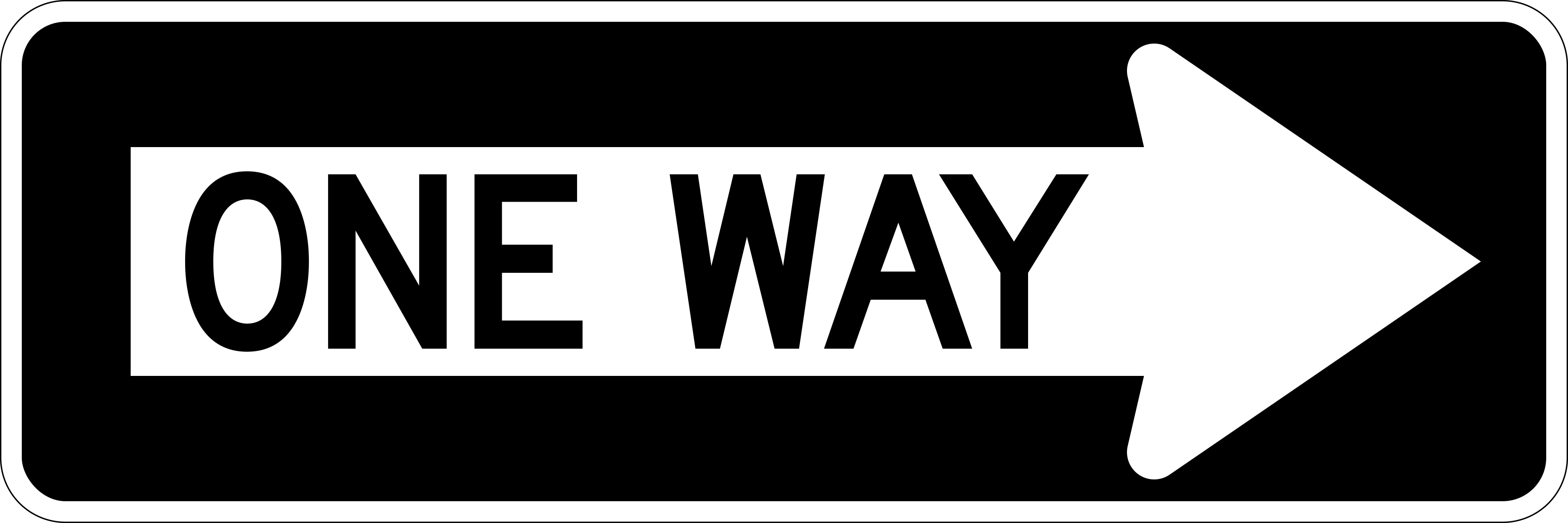
- Right, if the street looks empty for a block
- Only left, following the direction the arrow shows
- Either way at night when traffic is light
- Right, after a brief stop at the corner
Show answer
Only left, following the direction the arrow shows. A ONE WAY sign in Alabama allows travel only in the direction its arrow indicates. An empty block or light night traffic does not open the opposite direction, because drivers entering lawfully from side streets expect vehicles from one side only. Stopping first does not cure a wrong direction entry either. Follow the arrow to the next lawful turn, even when the shortcut tempts you, and watch for the same signs at each new street you join.
Study this in the handbook: Sign types, regulatory signs and four way stops
16. Your Alabama traffic light shows a steady round red and cross traffic has thinned to nothing. When may you proceed straight?
- At once, because the crossing street is empty
- Only after the signal turns green
- After a slow roll to the far side
- After flashing your headlights twice
Show answer
Only after the signal turns green. A steady circular red in Alabama requires you to stop and remain stopped until the signal turns green. An empty crossing street does not end the red early, and rolling through or flashing lights cannot substitute for the green indication. Right or left movements after stopping follow separate allowances, but straight travel waits for green. Plant your stop behind the line, keep scanning for people crossing, and move only when the green actually appears.
Study this in the handbook: Traffic signals, arrows and lane use signals
17. In Alabama, how is a skid handled differently in a front-wheel-drive vehicle?
- Brake firmly so the front wheels regain grip first
- Turn the steering wheel opposite the rear slide only
- Step lightly on the gas so the front wheels pull faster and catch up
- Shift into reverse to slow the sliding rear end
Show answer
Step lightly on the gas so the front wheels pull faster and catch up. Front drive pulls from the front axle, so a gentle increase in power can help the front end regain pace and straighten the vehicle. Pressing lightly is key, because a heavy input could spin the driven wheels. Braking hard risks locking wheels and extending the slide, while shifting toward reverse is dangerous during motion. If space ahead is too limited for gentle power, easing off and steering with the rear slide is the safer fallback described for tight situations.
Study this in the handbook: Skids, hydroplaning, fog and hills
18. At an Alabama two-lane roundabout, black-and-white ONLY signs are posted before the entrance. What does the left-lane sign permit?
- Left turns, U-turns, or through traffic only
- Right turns only, with no through traffic
- Right turns or through traffic only
- U-turns only, with left turns prohibited
Show answer
Left turns, U-turns, or through traffic only. Lane choice in a two lane circle needs to settle before entry because a late change creates crossing paths near the island. The left side serves drivers who plan to turn left, reverse direction, or continue straight through the circle. A right turn belongs on the right side instead, where the exit comes sooner. Reading the black and white lane signs early gives time to yield, enter through a safe gap, and leave by the planned road without swerving across another vehicle path.
Study this in the handbook: Roundabouts
19. While a driver is actually turning in Alabama, who has the right of way over the motor vehicle?
- Pedestrians in or near the intersection
- The turning driver, over everyone else
- Bicyclists only when riding on a sidewalk
- Drivers approaching from behind the turning car
Show answer
Pedestrians in or near the intersection. During an actual turn, both hands belong on the wheel and people on foot hold priority over the vehicle. That rule shapes the whole maneuver: scan the crosswalk area before the front tires start to swing, then keep watching while the car rolls through. Giving priority to traffic behind, or to yourself as the turning driver, reverses the stated order. A person walking may be partly hidden by a post or parked car, so pause when sight lines are poor.
Study this in the handbook: Good driving habits, turns and three point turns
20. You park facing uphill where there is a curb in Alabama. Which way should you turn your front wheels?
- Toward the curb, then shift to reverse
- Straight ahead, with no parking brake
- Away from the curb, and shift into low gear or PARK
- Toward the edge of the road, as on a road with no curb
Show answer
Away from the curb, and shift into low gear or PARK. Uphill parking with a curb calls for wheels turned away from that curb, plus low gear or PARK and the hand brake set. If the vehicle rolls backward, the turned front tire meets the curb and helps stop the roll. Wheels aimed toward the curb suit downhill parking, while the toward the edge rule covers hills without curbs. Straight wheels and no brake leave nothing to catch the car if holding power fails.
Study this in the handbook: Curves, bicycles, motorcycles and large vehicles
Every question is written from the official Alabama Driver Manual. Need paper? Printable AL practice test with answer key.
Last verified 2026-10-05. How we check every question · Study all 500 as flashcards
Frequently asked questions
How many questions are on this Alabama practice test?
This fixed set has 20 questions. It is test 23 of 25 from the 500 question Alabama bank.
How does this fixed test relate to the full Alabama bank?
Each numbered test is a fixed set of questions in a fixed order, so you can retake the same test later and compare. Every test mixes road signs and the other topics in about the same proportion as the full bank. Tests 1 to 25 together cover every question in the Alabama bank once. The full practice page mixes the whole bank at random.
Last verified 2026-10-05. See the Alabama DMV facts page for sourced state details.